Echinodorus 'Hot Pepper'
Echinodorus 'Hot Pepper'
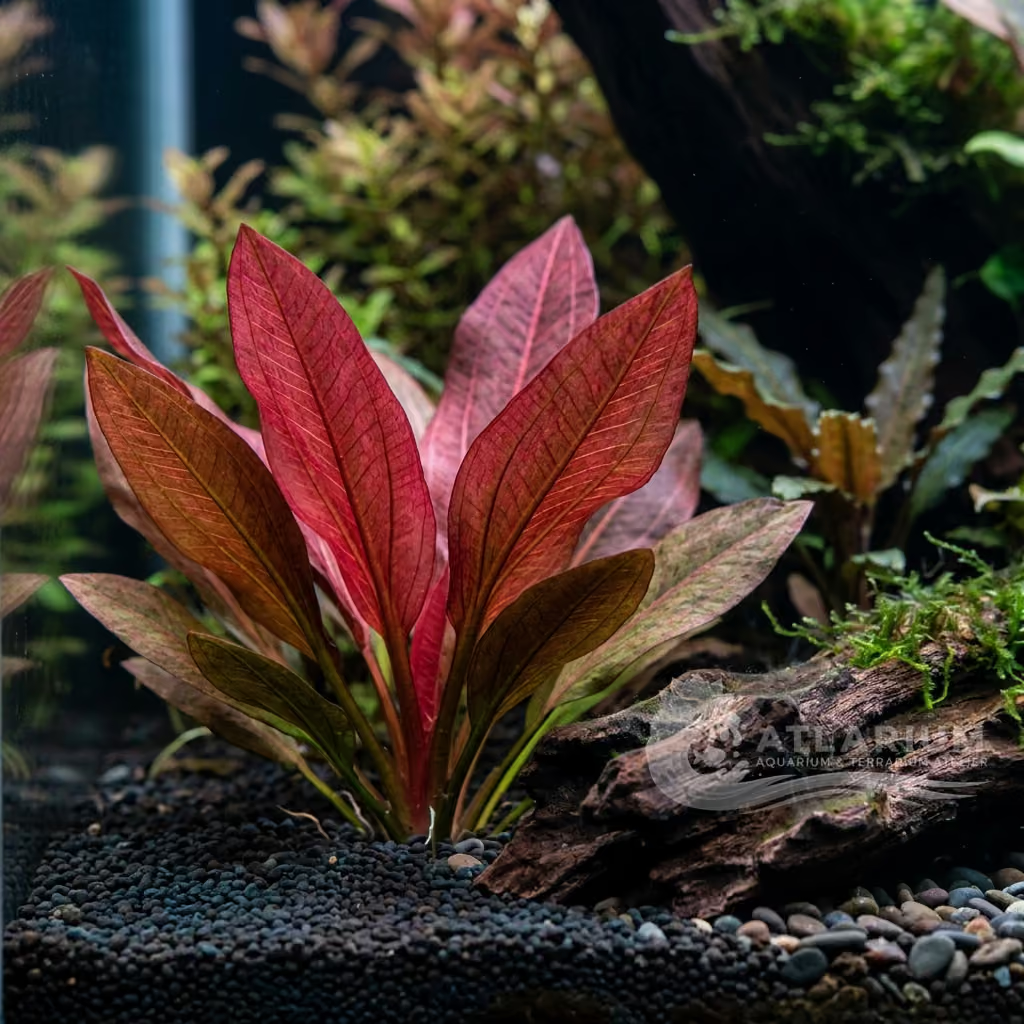
Echinodorus 'Hot Pepper' is a fiercely vibrant hybrid sporting highly elongated, extremely narrow leaves that burst with an intensely saturated, fiery reddish-pink hue.
Water Temperature
20 - 28 °C
pH Value
6 - 8
Water type
Freshwater
Light
Medium
CO2
Medium
Expected height
40 cm
Expected width
20 cm
GH
4 - 20 dGH
KH
0 - 21 dKH

Species description
Geographical Origin and Habitat: This violently colored, structurally distinct botanical cultivar does not exist in nature. Echinodorus "Hot Pepper" is a fiercely vibrant commercial hybrid created specifically for the high-end aquascaping hobby. It was meticulously crossbred from wild South American Amazon Sword stock to produce a fast-growing, intensely narrow, and blindingly bright red centerpiece. In the aquarium, it behaves perfectly like a wildly resilient, deeply rooted, massive amphibious rosette plant completely adapted to submerged life.
Taxonomy & Genetics: Scientifically classified within the Alismataceae family, "Hot Pepper" is a highly prized, modern elite cultivar famous for its extreme coloration. Taxonomically, it is a highly complex hybrid. Genetically, it completely suppressed the traits for broad, massive leaves found in typical swords. Its defining genetic feature is a massive mutation forcing the production of incredibly narrow, sword-like leaves that are completely saturated with unstable, hyper-concentrated neon red and hot-pink anthocyanin pigments.
Physical Structure: The architectural structure of the "Hot Pepper" sword is aggressively dominant, violently fast-growing, and towering. It is a gigantic rosette plant completely lacking vertical stems. The foundation is a massive, incredibly thick, tuberous subterranean rhizome that deploys an aggressive, deep-reaching root system. The leaves erupt tightly from the crown on incredibly long, stiff petioles. The foliage is strictly narrowly lanceolate, highly elongated (reaching 30-40 cm), and perfectly flat, acting like vertical spears.
Color & Texture: The coloration is absolutely explosive, violently chaotic, and visually dominating. Grown submerged under intense lighting, the long, narrow leaves erupt in a blindingly bright, glowing neon-red or hot pink. As the spear-like leaves age, the red pigments break down, leaving a vibrant, bright apple-green center while retaining a striking fiery red margin along the edges. The texture is intensely rigid, heavily leathery, and perfectly smooth, completely lacking any dimples or ruffled edges.

Care, breeding and tankmates
Lighting & CO2: It is a massive, incredibly energy-hungry titan that demands extreme light to maintain its violent color. While it will technically survive in shaded aquariums, its spectacular genetics will completely fail; the blinding hot pinks and neon reds will vanish entirely, the leaves will fade to a dull muddy green, and it will stretch upward. To unlock the violent explosion of its "hot pepper" red colors, blasting, high-intensity LED lighting is absolutely mandatory. Pressurized CO2 drastically speeds up its explosive growth.
Nutrition & Substrate: As a highly specialized, intensely pigmented Amazon Sword hybrid, the "Hot Pepper" is a terrifyingly aggressive, obligate root feeder. Its massive root system strictly demands a very deep (minimum 7 cm / 3 inches), heavily nutrient-dense substrate. It absolutely demands premium aquasoil heavily enriched with iron and macro-nutrient root tabs directly beneath the massive tuber to fuel its intense neon red pigmentation. If starved of root nutrients, the towering colored leaves will quickly turn pale, turn yellow, and dissolve.
Water Chemistry: Originating from highly stabilized nursery conditions, it is practically invincible regarding standard water parameters. It thrives effortlessly in heated tropical aquariums (22-28°C) and is exceptionally adaptable, comfortably tolerating both soft, acidic blackwater and rock-hard, highly alkaline tap water (pH 6.0 - 8.0). The single most critical environmental requirement is absolute chemical stability. It drastically prefers stable, unchanging parameters over perfectly optimized ones. It demands strong water flow to keep it clean.
Space Management & Placement: Due to its absolute monstrous height (capable of reaching 30-40 cm), intensely narrow, spear-like leaves, and blinding neon-red color, "Hot Pepper" is strictly a solitary, commanding background centerpiece for large aquariums (minimum 200 liters). It MUST be planted singularly, completely isolated in the exact center background. Because it grows as a massive, towering rosette, it provides a violently dominant, vertical red anchor that violently draws the eye upward without shadowing the midground due to its narrow leaves.
Pruning: Pruning is a simple, massive, and highly necessary procedure. Never attempt to trim the incredibly thick, narrow spear-like leaves in half; the cut edge will instantly turn black, rot, and destroy the aesthetic. To prune dead, yellowing, or excessively tall older leaves that are breaching the surface, you must reach down to the absolute base of the massive rosette and cleanly slice the incredibly thick petiole directly at the crown. It rarely spreads via runners; instead, it slowly forms an impenetrable, red core.
Risks & Diseases: The absolute greatest threat to the "Hot Pepper" sword is Green Spot Algae (GSA) and nutrient starvation. Because the massive, smooth, red spear-like leaves are long-lasting, they act as vertical landing pads for devastating Green Spot Algae if phosphate levels drop or light is too intense without adequate CO2. Once GSA aggressively spots the red leaves, it cannot be cleaned off and ruins the neon-red aesthetic. If root nutrients are exhausted, the colossal plant will violently cannibalize itself.

Geographic origin and distribution
This violently colored, structurally distinct botanical cultivar does not exist in nature. Echinodorus "Hot Pepper" is a fiercely vibrant commercial hybrid created specifically for the high-end aquascaping hobby. It was meticulously crossbred from wild South American Amazon Sword stock to produce a fast-growing, intensely narrow, and blindingly bright red centerpiece. In the aquarium, it behaves perfectly like a wildly resilient, deeply rooted, massive amphibious rosette plant completely adapted to submerged life.
Origin
Selective breeding and cultivarsAmazon, Orinoco, and GuianasExtra-Amazon South America

Plant profile
- Placement
- Background
- Given its striking appearance and potential size, 'Hot Pepper' is best utilized as a dramatic centerpiece or a prominent mid-to-background plant. It requires unobstructed light to maintain its intense colors, so careful placement to avoid shading from taller plants is crucial. Ensure sufficient space for its broad rosette to spread.
- Botanical form
- Rosette
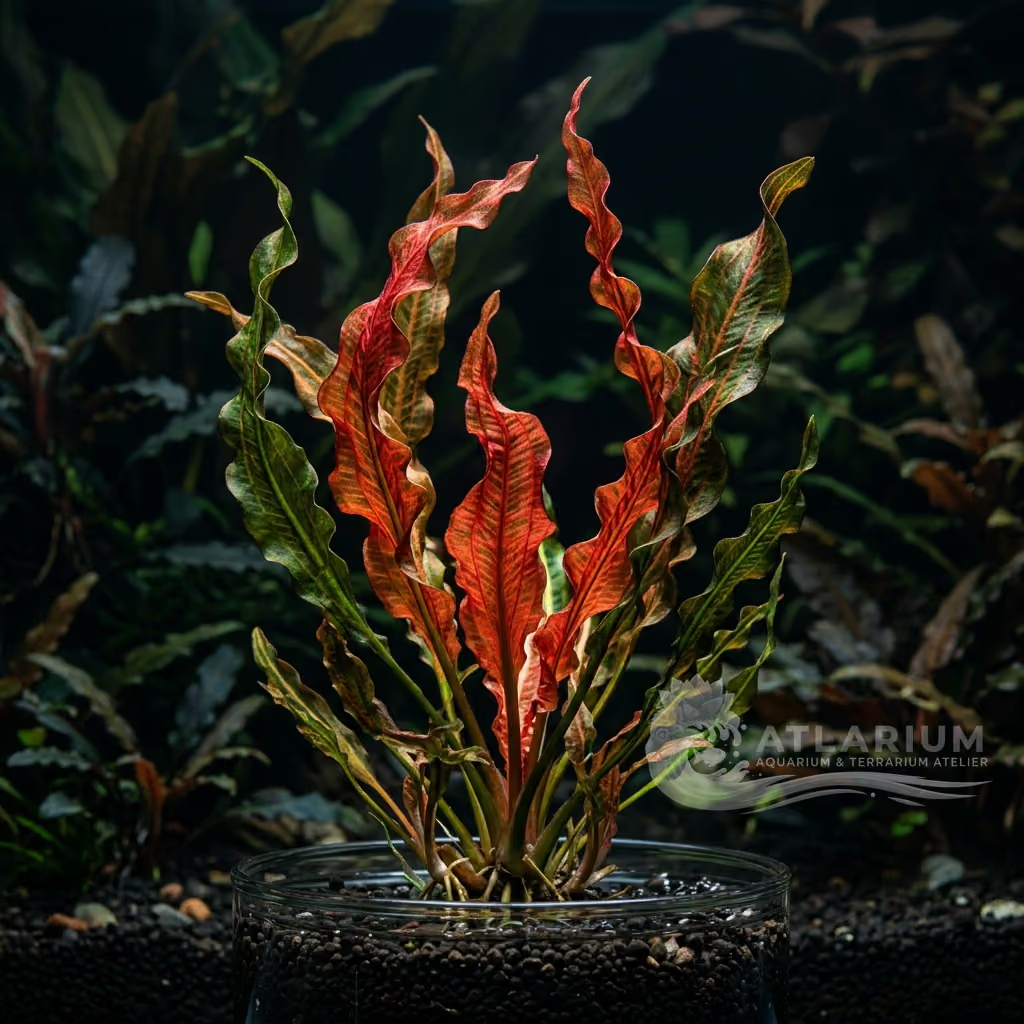
- This spectacular hybrid forms a large, spreading rosette. Its most defining characteristic is the striking coloration of the leaves, which are typically a vibrant mix of bright green, red, and pink, often with a mottled or speckled pattern. The leaves are broad and slightly undulated, creating a highly textured and visually arresting focal point.
- Growth
- Fast
- Under optimal high-tech conditions (strong light, CO2, heavy fertilization), the growth rate is fast and vigorous. It rapidly produces new, brightly colored leaves. In less ideal conditions, growth slows significantly, and the plant will lose much of its vibrant red mottling, reverting to a more standard green appearance.
- Substrate
- High
- A deeply enriched, nutrient-dense substrate is mandatory for this heavy-feeding cultivar. Specialized planted aquarium soil or a deep layer of laterite/clay-based substrate supplemented with iron-rich root tabs is highly recommended. The strong root system requires ample space and continuous access to nutrients to sustain the plant's stunning colors and robust size.
- Column fertilization
- Recommended
- Supplemental liquid fertilization is essential to maintain the intense colors of 'Hot Pepper'. Regular dosing of a comprehensive fertilizer, specifically one rich in iron and trace elements, ensures the plant can readily absorb the micronutrients needed for optimal pigmentation directly from the water column.
- Root fertilization
- Required
- Intensive root fertilization is the cornerstone of keeping this plant vibrant. Frequent application of high-quality, iron-fortified root tabs placed deep within the root zone is necessary. This targeted feeding provides a steady stream of macronutrients to support the massive root structure and vibrant foliar display.
- Trimming
- Regular
- Regular pruning of the older, outer green leaves encourages the plant to channel its energy into producing fresh, fiery red central foliage. Always sever the leaves closely at the central crown to maintain a clean appearance. Trimming also manages the plant's overall footprint in the tank.
- Propagation
- Rhizome division
- Propagation is usually achieved via adventitious plantlets that form on flowering stalks or runners. These plantlets can be separated and replanted once they have developed an independent root system. Division of a robust, mature rhizome is also possible but should be undertaken carefully.
- Sensitivity
- Moderate
- It is highly dependent on strong, unshaded light to maintain its signature bright red color; shading will cause the entire plant to revert to green. The crown must remain exposed above the substrate. It is generally hardy but will display pale, washed-out colors if iron is deficient.
- Layout role
- Background, accent
- It acts as a brilliant, eye-catching focal point that adds an intense pop of fiery red to the midground or background. Its contrasting colors (red center, green perimeter) provide immense visual depth. It pairs wonderfully with bright green stem plants or dark, intricate hardscape materials.

Image gallery
Licensed images linked to the species or, when marked, to the closest representative taxon.

Related species
Recommendations grouped by close relatives, companion choices, and similar care.