Hygrophila corymbosa
Hygrophila corymbosa
Indestructible amphibious giant from Southeast Asia. Thrives across all lighting conditions, but grows explosively under high light, rapidly forming dominant thickets.
Water Temperature
20 - 28 °C
pH Value
6 - 8
Water type
Freshwater
Light
Medium
CO2
Low
Expected height
60 cm
Expected width
20 cm
GH
4 - 20 dGH
KH
2 - 18 dKH

Species description
Geographical Origin and Habitat: Endemic to the tropical and subtropical river basins, sprawling floodplains, and vast marshlands of Southeast Asia, particularly India, Thailand, and Malaysia. Hygrophila corymbosa is an incredibly robust, towering, true amphibious stem plant. It behaves as a dominant pioneer species, naturally colonizing shallow, sun-baked muddy margins. It is a wildly aggressive, fast-growing survivor perfectly evolved to exploit the wet season by rapidly breaching the water surface to flower terrestrially.
Taxonomy & Genetics: Scientifically classified within the Acanthaceae family, H. corymbosa (frequently called Temple Plant or Giant Hygro) is the foundational, wild-type species of a massive complex of commercial cultivars. Taxonomically, it is globally recognized by its incredibly thick, rigid, almost wood-like stems and massive broad leaves. Genetically, it is completely hard-wired for extreme vertical gigantism and rapid terrestrial adaptation. Its DNA completely lacks the mechanism for producing deep red pigments.
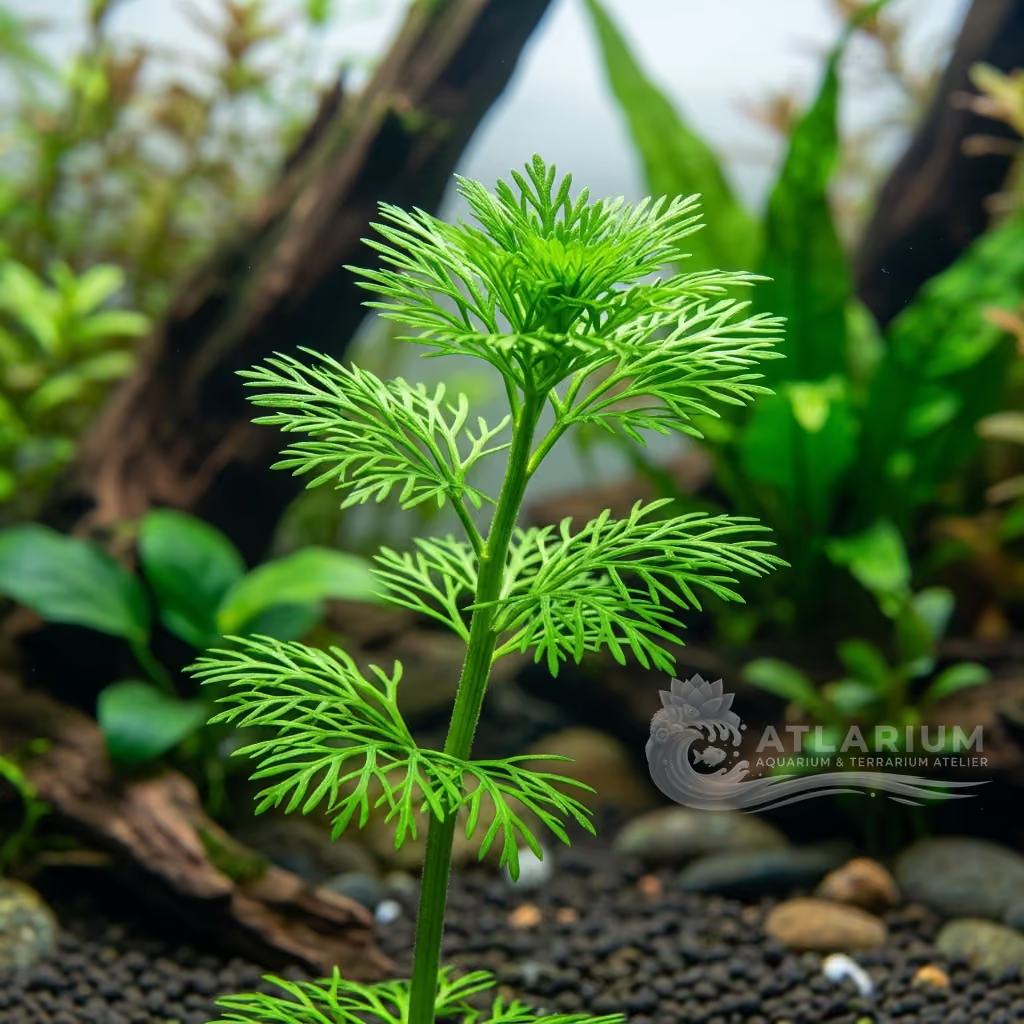
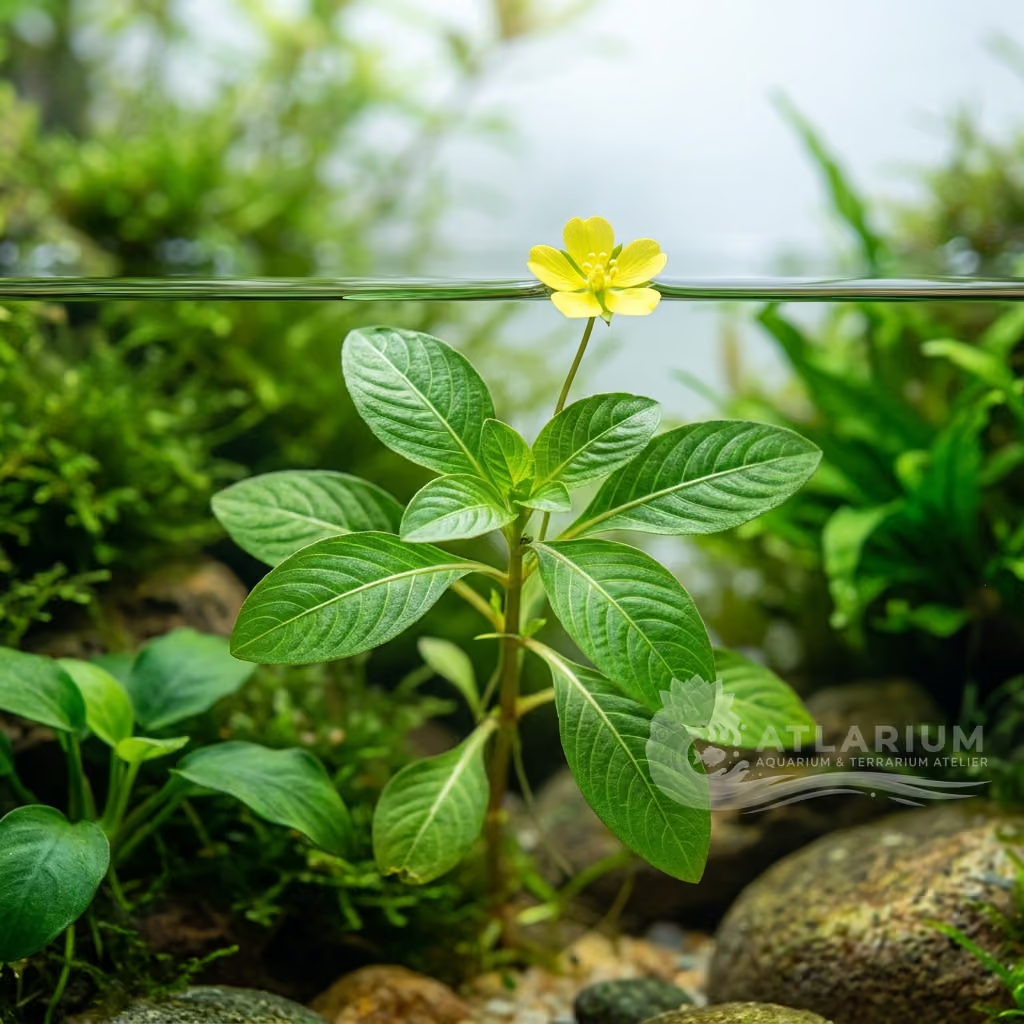
Physical Structure: The architectural structure of H. corymbosa is overwhelmingly dominant, aggressively vertical, and fiercely structural. It is a gigantic, heavily branched stem plant. The foundation is an exceptionally thick, rigid, brittle stem that behaves almost like a submerged shrub. It deploys massive, aggressive white roots directly from the lower stem nodes. The leaves are arranged oppositely along the thick stem. The foliage is strictly broadly lanceolate to ovate, massive (reaching 10-15 cm long), and thick.
Color & Texture: The coloration is distinctly pure, intensely solid, and brilliantly uniform. Grown submerged under standard lighting, the massive, thick stems and broad leaves are a solid, glowing bright apple-green to a rich emerald-green. The underside of the leaves often displays a brilliant silvery-white hue. Because it lacks dark red pigments, it remains pure green even under high light, though the topmost leaves may lightly blush a faint bronze. The texture is intensely rigid, heavily leathery, and smooth.

Care, breeding and tankmates
Lighting & CO2: It is an incredibly resilient, nearly indestructible titan that will survive in almost any lighting condition. While it will effortlessly grow in low-light, low-tech aquariums (though the lower leaves will drop), under medium to high-intensity LED lighting, its growth rate becomes terrifyingly explosive, capable of growing several centimeters per week. If severely shaded, the massive stems become bare. While it absolutely does not require pressurized CO2, adding it will drastically accelerate its towering vertical growth.
Nutrition & Substrate: As a colossal, wild-type aquatic stem plant, H. corymbosa is a terrifyingly aggressive, obligate heavy feeder that demands massive amounts of both root and water-column nutrients. Its massive root system demands a deep (minimum 7 cm), heavily nutrient-dense substrate enriched with iron root tabs. However, it specifically requires massive amounts of Potassium in the water column. If Potassium is depleted, the massive green leaves will instantly develop distinctive pinholes, turn yellow, and dissolve into mush.
Water Chemistry: Originating from the tropical floodplains of Asia, it is practically invincible regarding standard water parameters. It thrives effortlessly in heated tropical aquariums (22-28°C) but is also exceptionally adaptable to unheated tanks (down to 20°C). It comfortably tolerates both soft, acidic blackwater and rock-hard, highly alkaline tap water (pH 6.0 - 8.0). The single most critical environmental requirement is absolute chemical stability and continuous Potassium dosing. It prefers slow to moderate water flow.
Space Management & Placement: Due to its absolute monstrous size (capable of reaching 50-60+ cm in height and massive width) and wildly dominant nature, this plant is strictly reserved as an extreme background centerpiece or corner plant for medium to large aquariums. It MUST be planted in distinct groups, ensuring space between the massive stems to prevent self-shading. Because it grows as a towering, heavily branching aquatic shrub, it will rapidly form a breathtaking, impenetrable green wall that will aggressively breach the water surface.
Pruning: Pruning is a constant, brutal, and necessary procedure if you wish to keep the plant fully submerged. Because the plant naturally wants to breach the surface, you must aggressively "top" the thick, rigid stems using heavy aquascaping scissors. The cut edge will violently branch out with two new side shoots, rapidly transforming the single stem into a massive, dense bush. You can immediately replant the massive cut tops directly into the substrate. If unpruned, it will grow completely out of the tank.
Risks & Diseases: The absolute greatest threat to this titan is Potassium deficiency and severe self-shading. Because its growth rate is so violently fast, it will rapidly strip the water column of Potassium, instantly resulting in characteristic "pinhole rot" across all older leaves. The massive leaves will literally dissolve from the inside out. The second major risk is self-shading; the massive upper canopy will completely block light from reaching the bottom of the tank, causing the lower stem to rot and drop all its leaves.

Geographic origin and distribution
Endemic to the tropical and subtropical river basins, sprawling floodplains, and vast marshlands of Southeast Asia, particularly India, Thailand, and Malaysia. Hygrophila corymbosa is an incredibly robust, towering, true amphibious stem plant. It behaves as a dominant pioneer species, naturally colonizing shallow, sun-baked muddy margins. It is a wildly aggressive, fast-growing survivor perfectly evolved to exploit the wet season by rapidly breaching the water surface to flower terrestrially.
Origin
South and Southeast Asia

Plant profile
- Placement
- Background
- Due to its sheer size, broad leaves, and rapid vertical growth, it is strictly a background plant in all but the most massive aquariums. It should be planted in small groups, allowing enough space between stems so the broad leaves do not entirely block light from the lower sections. Its large, light green leaves provide an excellent contrast to fine-leaved or reddish plants. It is commonly used to hide heaters and filter intakes.
- Botanical form
- Stem
- It features very thick, sturdy, upright stems supporting large, broad, lanceolate leaves. Under typical aquarium lighting, the leaves are a bright, light green, but intense lighting can sometimes coax out subtle bronze or reddish hues near the surface. The plant has a very imposing, substantial presence in the aquascape. Its thick stems can sometimes become slightly woody near the base as the plant matures.
- Growth
- Fast
- The growth rate is exceptionally fast when provided with good light and ample nutrients. It easily breaks the water surface and will readily grow emersed, where it may produce small, beautiful purple flowers. Frequent, sometimes weekly, pruning is required to keep it from dominating the aquarium and shading out everything else. Cutting the tops encourages prolific side shoots, quickly creating a massive, bushy thicket.
- Substrate
- High
- This large plant develops an extensive, powerful root system that greatly appreciates a deep, nutrient-rich substrate. An active aquasoil or a dirted tank provides an ideal foundation for its massive growth potential. However, it is very adaptable and will grow successfully in plain gravel or sand, especially if supplemented heavily with root tabs. Ensuring a substrate depth of at least 2-3 inches is necessary to anchor its large, buoyant stems.
- Column fertilization
- Required
- Consistent liquid column fertilization is highly beneficial due to the plant's massive foliar surface area. It readily absorbs NPK and trace elements directly from the water, making it a great biological filter for heavily stocked tanks. Dosing a potassium-rich liquid fertilizer is crucial to prevent the older leaves from deteriorating and developing holes. Daily or bi-weekly comprehensive dosing yields the healthiest, largest leaves.
- Root fertilization
- Recommended
- Root feeding produces spectacular results and is highly recommended, even if the plant also feeds from the water column. Placing root tabs directly beneath the stems in an inert substrate ensures the plant has the energy needed for its rapid, large-scale growth. A rich soil environment prevents the lower stem from rotting and dropping leaves, a common issue in nutrient-poor setups. It readily utilizes any nutrients available in the substrate.
- Trimming
- Regular
- Trimming is straightforward: simply cut the thick stem with strong scissors. The plant will rapidly produce side shoots from the remaining nodes, creating a denser bush. The cut tops are perfect for replanting to expand the group.
- Propagation
- Cuttings
- Propagation is incredibly easy and highly successful. Simply cut the top portion of a stem and replant it deeply into the substrate; it will root within a few days. The original, rooted bottom section will quickly produce two or more new side shoots from the cut node, leading to a much bushier plant. Even individual leaves left floating can sometimes develop roots, demonstrating its remarkable vitality.
- Sensitivity
- Moderate
- It is highly tolerant of varying water parameters, making it excellent for beginners. Its main vulnerability is potassium deficiency, which is easily remedied with proper dosing. It resists algae well due to its vigorous growth rate.
- Layout role
- Background
- It serves as a dominant background structural element in the aquascape. Its broad leaves offer a stark contrast to fine-leaved species and provide hiding spots for fish. It is often used to create a dense, jungle-like atmosphere.

Image gallery
Licensed images linked to the species or, when marked, to the closest representative taxon.

Related species
Recommendations grouped by close relatives, companion choices, and similar care.