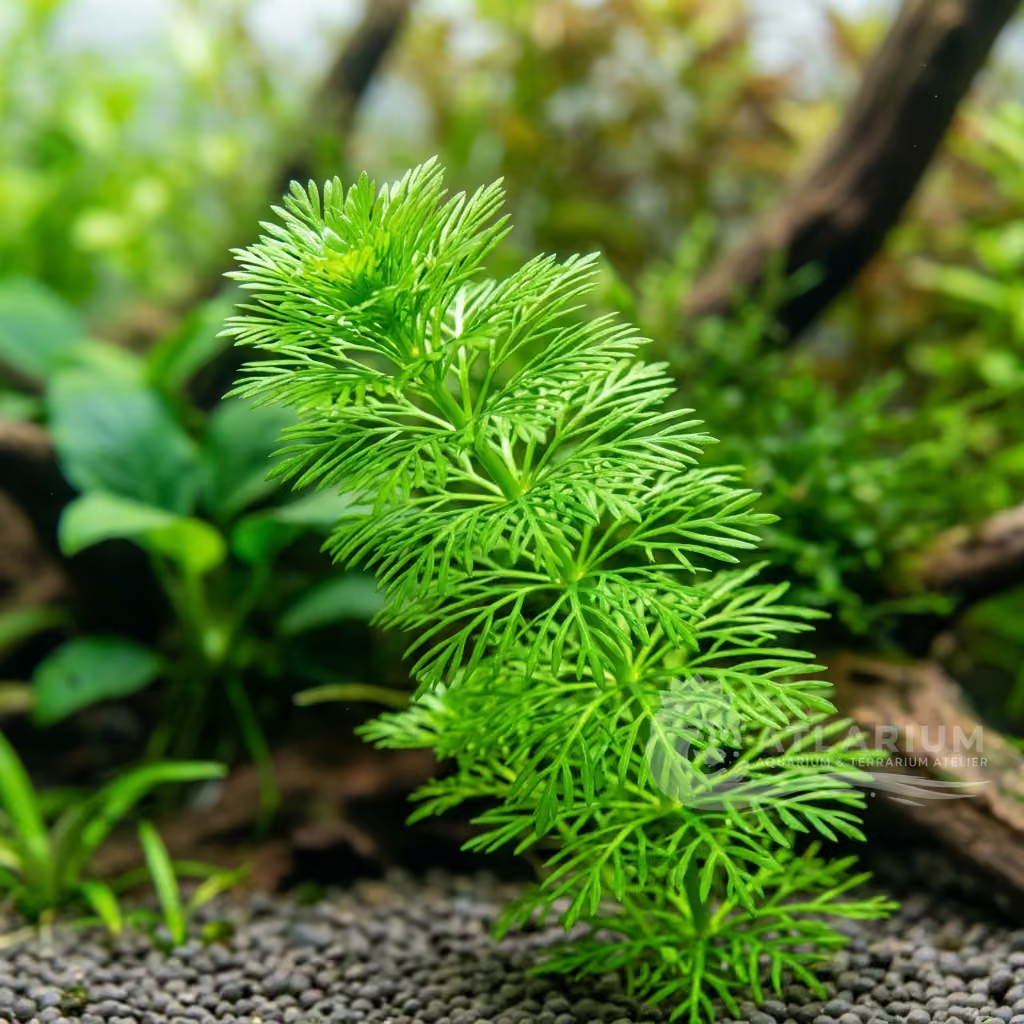
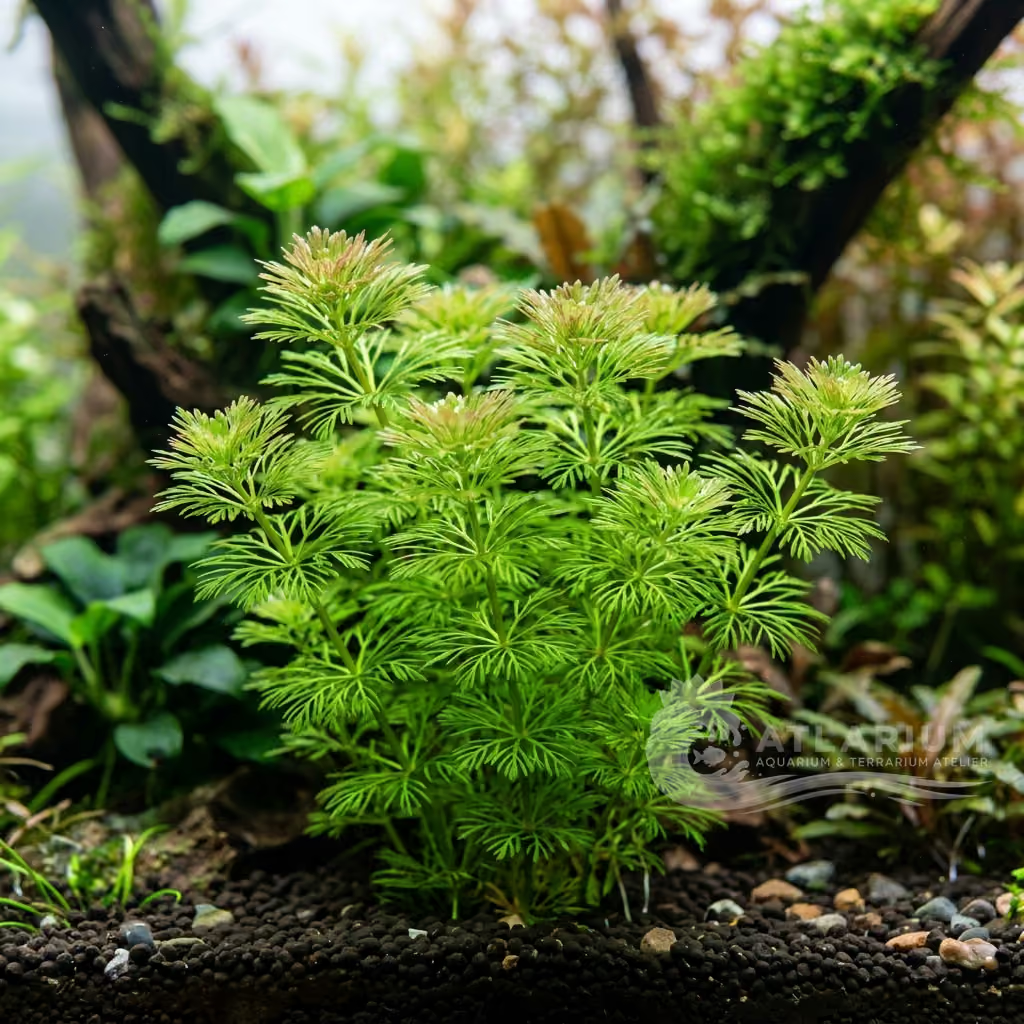
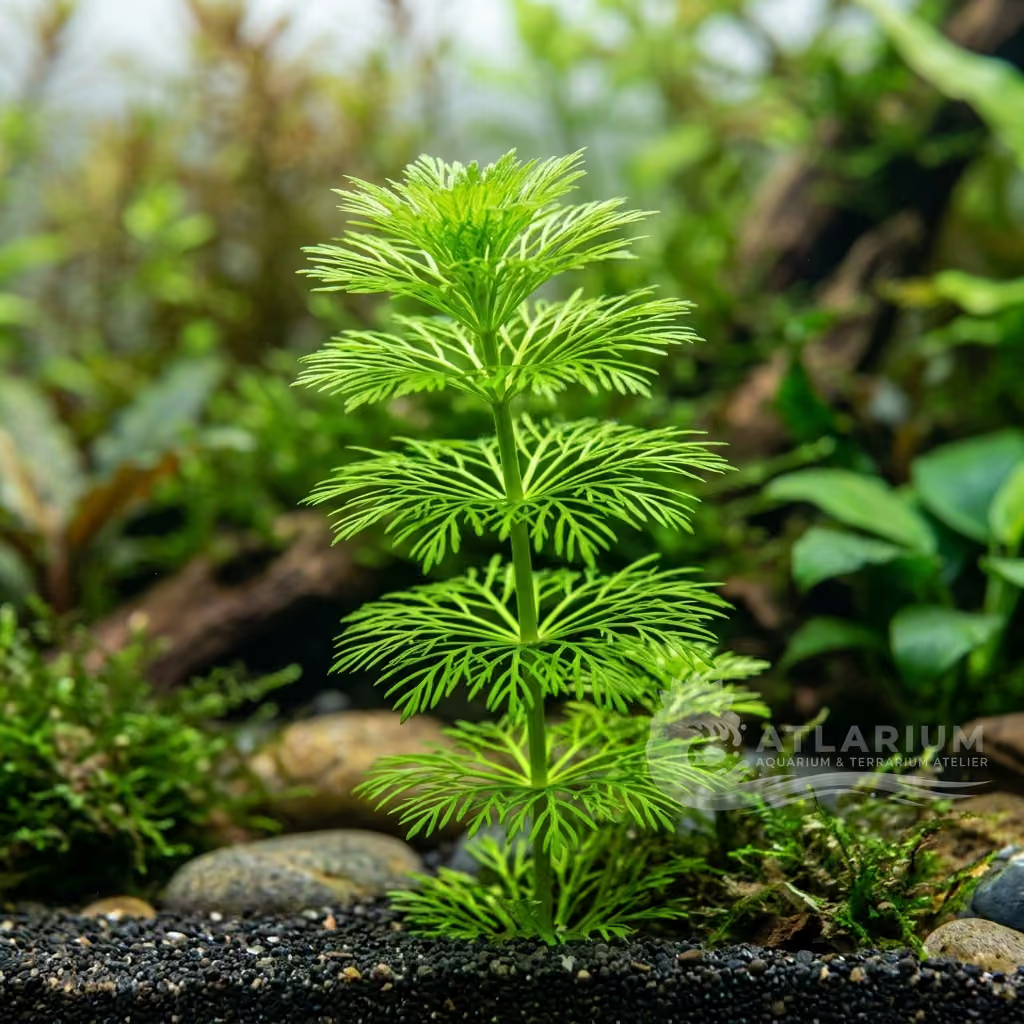
Fittonia verschaffeltii
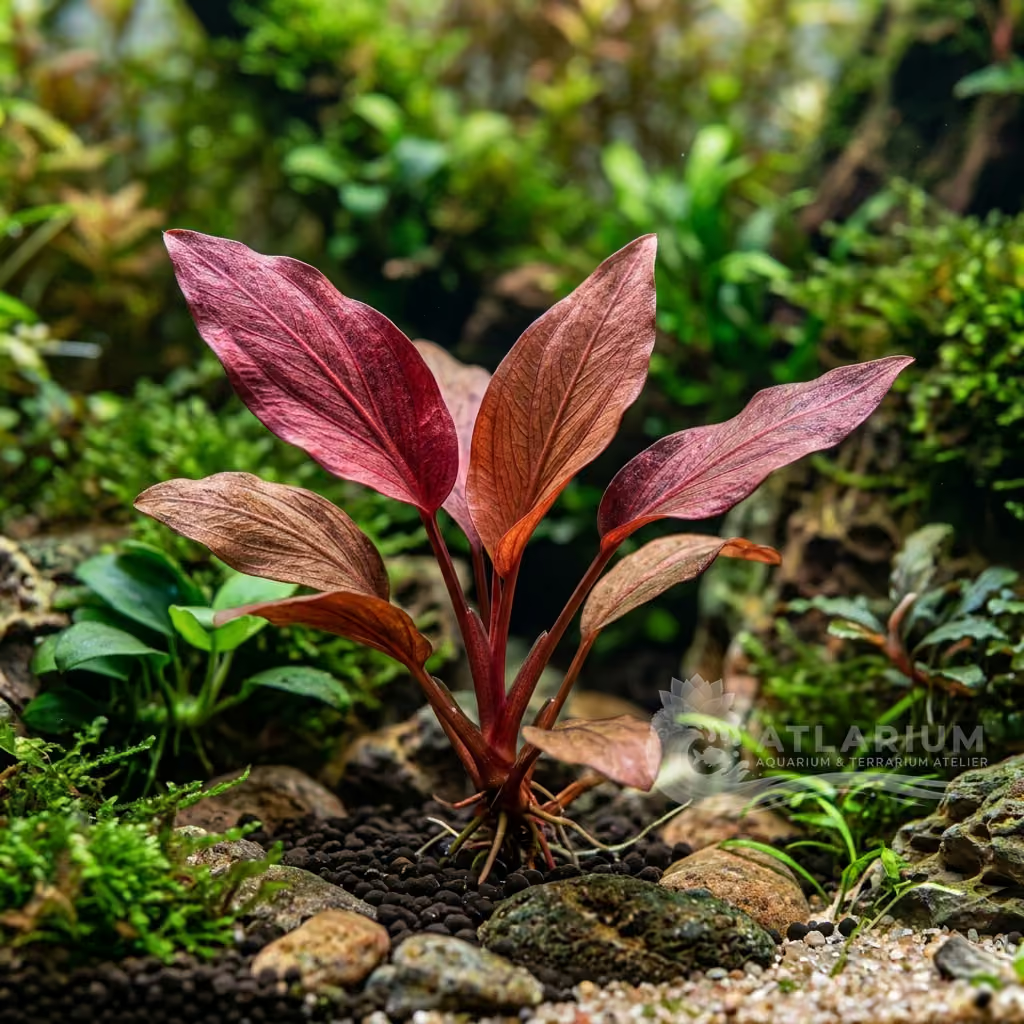
Fittonia albivenis
Fittonia verschaffeltii is an aquarium plant belonging to the Acanthaceae family, characterized by a medium growth rate and ideal for placement in the midground.
Water Temperature
20 - 28 °C
pH Value
6 - 7.5
Water type
Freshwater
Light
Medium - High
CO2
Low
GH
4 - 20 dGH
KH
2 - 15 dKH

Species description
Geographical Origin and Habitat: This fascinating aquatic species has its geographical origin in the warm tropical regions of Asia and South America, where it inhabits clear river systems with weak to moderate current. It is commonly found both submerged and partially emersed along sandy or muddy banks. Additionally, its occurrence is highly associated with shaded banks and shallow water basins.
Taxonomy & Genetics: From a taxonomic point of view, it belongs to the Acanthaceae family and is assigned to the Fittonia genus. Its genetics reflect a high degree of adaptation to seasonal variations in water and chemical parameters of its native waters, assuring its resilience.
Physical Structure: The physical structure of the plant is characterized by a stem botanical form with well-proportioned and elastic stems or rosettes. Under proper lighting conditions, it develops a stable root system capable of anchoring firmly into the riverbed.
Color & Texture: The color of the leaves presents as a bright and natural green, with translucent shades and fine textures that increase the perception of visual depth. The leaf texture is smooth or slightly wrinkled depending on aquarium conditions.

Care, breeding and tankmates
Lighting & CO2: Optimal lighting to support the plant's development ranges from medium to high, depending on the desired leaf density. Constant CO2 injection is recommended to support effective photosynthesis and prevent tissue decay.
Nutrition & Substrate: The plant benefits from a rich, porous substrate coupled with a balanced liquid fertilization in the
Water Chemistry: The ideal water chemistry includes a slightly acidic or neutral pH (6.0 - 7.5) and a moderate carbonate hardness KH (1.0 - 10.0). The optimal water temperature must be kept stable between 20.0 and 28.0 °C.
Space Management & Placement: Regarding space management, the plant should be positioned in the midground, spacing the stems adequately to avoid shaded areas. It is ideal for creating dynamic layouts in natural aquascaping.
Pruning: Pruning must be performed regularly by topping the upper part or thinning the densest clumps with suitable scissors. Propagation is successfully achieved through cuttings replanted directly into the soil.
Risks & Diseases: The main risks are related to the development of parasitic algae on old leaves and tissue necrosis if essential nutrients are lacking. Good filtration and regular water changes prevent most diseases.

Geographic origin and distribution
This fascinating aquatic species has its geographical origin in the warm tropical regions of Asia and South America, where it inhabits clear river systems with weak to moderate current. It is commonly found both submerged and partially emersed along sandy or muddy banks. Additionally, its occurrence is highly associated with shaded banks and shallow water basins.
Origin
South and Southeast AsiaAmazon, Orinoco, and GuianasExtra-Amazon South America

Plant profile
- Placement
- Midground
- It is strictly suitable for terrariums, paludariums, or the emergent areas of a riparium. Plant it in the foreground or midground of the land section where its vibrant leaf patterns can be easily seen. It prefers high humidity but needs its leaves exposed to the air.
- Botanical form
- Stem
- It is a low-growing, creeping terrestrial herb famous for its deeply veined, highly contrasted leaves (often dark green with vivid white, pink, or red veins). The leaves are broad, ovate, and slightly fuzzy. It does not possess adaptations for underwater gas exchange.
- Growth
- Medium
- In its preferred humid, warm, emersed environment, it has a moderate growth rate, spreading outwards to form a dense mat. If placed completely underwater, its 'growth rate' is actually a slow process of decomposition. Regular pruning in a terrarium keeps it compact and encourages branching.
- Substrate
- High
- It requires a moist, well-draining, nutrient-rich soil, such as standard potting mix or specialized terrarium soil. It should be planted above the water line or in an emersed planter where its roots can access moisture without being completely waterlogged. Root suffocation occurs quickly in pure aquatic substrates.
- Column fertilization
- Recommended
- Water column fertilization is irrelevant for this plant since it should not be grown underwater. In a riparium setup where its roots touch the water, it can extract nutrients from the aquarium water, acting as a nitrate sink.
- Root fertilization
- None
- Root feeding in a terrestrial soil medium is the primary way this plant receives nutrients. Regular use of a balanced terrestrial plant fertilizer or a rich soil base is necessary to keep its vibrant colors intact. In emergent setups, root tabs in the marginal soil work well.
- Trimming
- Occasional
- Pinching back the stems encourages a bushier, more compact growth habit. Regular pruning prevents the plant from becoming excessively leggy. Trimmed stems can be used for propagation.
- Propagation
- Cuttings
- Propagation is very easy via stem cuttings in a high-humidity environment. Simply cut a stem with at least two nodes and plant it directly into moist soil or sphagnum moss. Roots will quickly develop from the buried nodes, establishing a new plant.
- Sensitivity
- Moderate
- This plant will melt and rot quickly if kept permanently submerged in an aquarium. It is sensitive to dry air and requires high humidity. It also dislikes direct, intense sunlight which can scorch its delicate leaves.
- Layout role
- Midground, group
- Ideal for adding striking colors and intricate patterns to the land portion of a paludarium. It provides an excellent contrast to typical green terrarium mosses. Its low profile makes it a perfect foreground plant for terrestrial setups.

Related species
Recommendations grouped by close relatives, companion choices, and similar care.