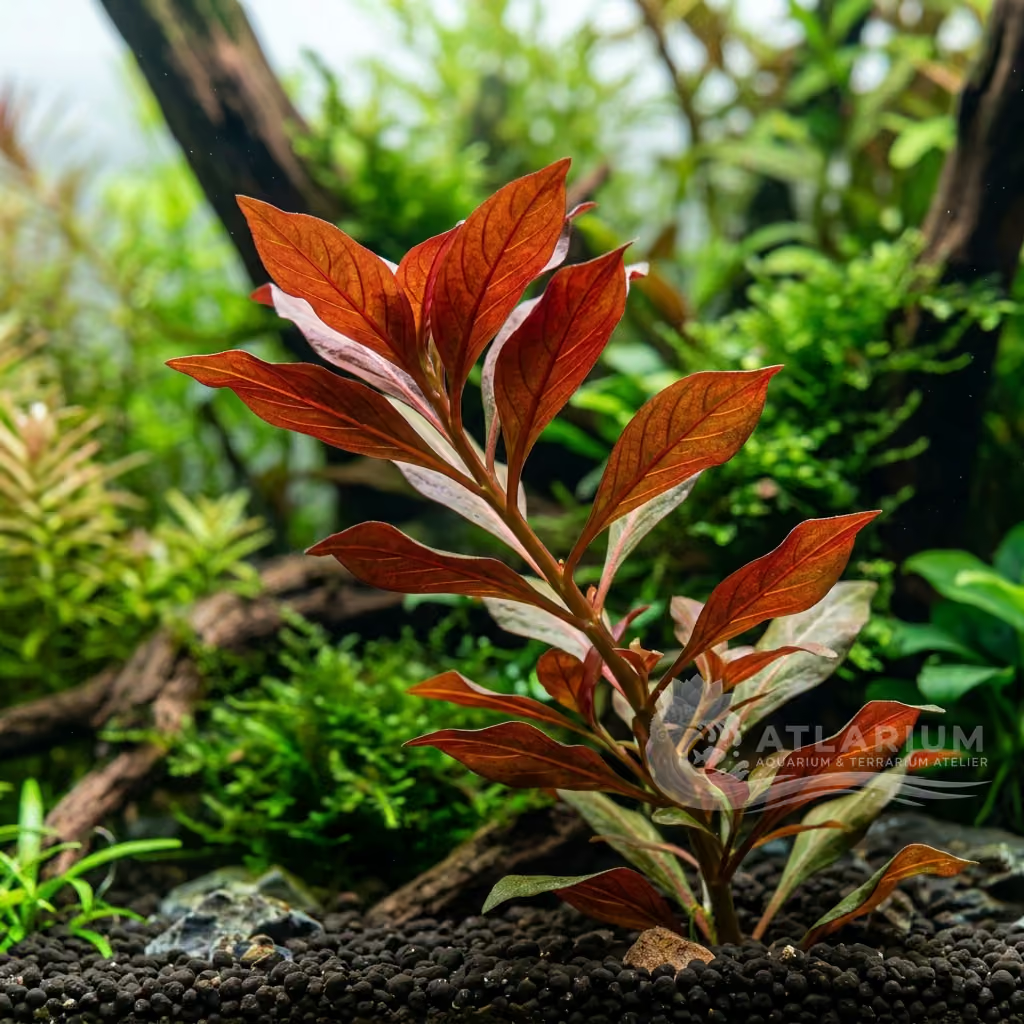
Hemigraphis repanda
Strobilanthes sinuata
Known as 'Dragon's Tongue', this terrestrial plant from Southeast Asia features striking narrow leaves. Best suited for moist emersed setups rather than true aquariums.
Water Temperature
20 - 28 °C
pH Value
6 - 7.5
Water type
Freshwater
Light
Medium - High
CO2
Low
Expected height
20 cm
Expected width
10 cm
GH
4 - 20 dGH
KH
2 - 15 dKH

Species description
Geographical Origin and Habitat: Hemigraphis repanda is native to the warm, humid tropical rainforests of Southeast Asia, particularly Malaysia and Indonesia. It grows in the understory of rainforests, on constantly damp muddy soils and along the shaded edges of marshy forest streams.
Taxonomy & Genetics: It belongs to the Acanthaceae family and is commonly known as 'Dragon's Tongue' due to the bizarre shape of its leaves. Genetically, it has adaptations typical of warm-humid climate terrestrial plants; it is not a true aquatic plant and permanent submersion blocks its main metabolic functions.
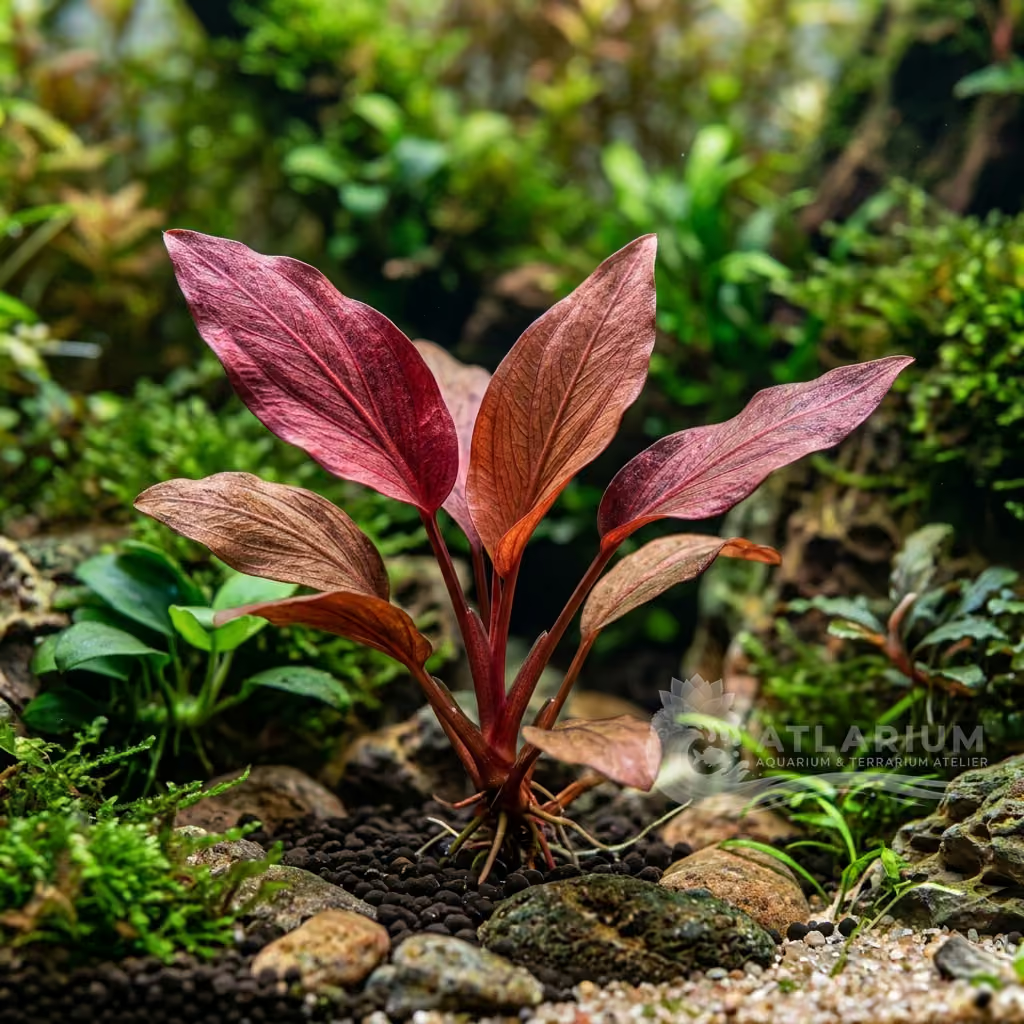
Physical Structure: It features thin, erect, moderately rigid stems with closely spaced internodes in the emersed form. The leaves are long, narrow, ribbon-like, and have strongly crinkled, serrated, and wavy margins, giving the plant an unusual, almost prehistoric look.
Color & Texture: It is highly valued for the dark, dramatic color of its leaves: the upper surface ranges from dark green-gray to almost black brown-purple, while the lower surface shows a very bright magenta-purple color. The leaf texture is rigid, rough, and jagged.

Care, breeding and tankmates
Lighting & CO2: If placed submerged in the aquarium, it requires very intense lighting to stimulate the survival of leaf tissues. CO2 can help temporarily, but it will not stop the physiological decay caused by the lack of oxygen to the roots.
Nutrition & Substrate: Requires a soil rich in organic nutrients in emersed cultivation (paludarium). In the submerged aquarium, it absorbs very few nutrients from the
Water Chemistry: Prefers pH between 6.0 and 7.5 and is tolerant of hardness. The optimal temperature is between 20 and 28 °C; it fears cold temperature drops in both air and water, which cause stem rot.
Space Management & Placement: Its ideal natural placement is in the emersed or semi-emersed zone of a paludarium or humid tropical terrarium. In the aquarium, place it in the center section as a temporary visual accent (maximum 2-3 months).
Pruning: Pruning consists of manual removal of deteriorated submerged leaves and trimming the main emersed stems to stimulate the development of new lateral shoots and keep the plant compact.
Risks & Diseases: The main risk is root deterioration and leaf rot if the plant is forced into submerged life for long periods. In a humid terrarium, it can suffer from fungal attacks if air ventilation is absent.

Geographic origin and distribution
Hemigraphis repanda is native to the warm, humid tropical rainforests of Southeast Asia, particularly Malaysia and Indonesia. It grows in the understory of rainforests, on constantly damp muddy soils and along the shaded edges of marshy forest streams.
Origin
South and Southeast Asia

Plant profile
- Placement
- Midground
- This plant is perfect for the foreground or midground of a terrarium, vivarium, or the land section of a paludarium. It stays relatively low and creeps along the ground, making it an excellent bordering plant or ground cover in humid environments. It should never be used in a fully aquatic setup.
- Botanical form
- Stem
- Dragon's Tongue is recognized by its narrow, elongated, and deeply serrated leaves that resemble grass or miniature ribbons. The top of the leaves is a deep, dark greenish-black, while the underside features a striking burgundy or reddish-purple hue. It grows in a rosette-like clumping fashion with creeping stems.
- Growth
- Medium
- In an emersed setup with high humidity and moderate to bright indirect light, it exhibits a moderate growth rate. It spreads outward rather than upward, slowly forming a textured mat of grassy leaves. Submerging the plant will completely halt its growth and inevitably lead to its death.
- Substrate
- Low
- Hemigraphis repanda is a terrarium or paludarium species that performs poorly when fully submerged, requiring a moist but well-aerated terrestrial soil mix. It prefers a rich, loamy substrate with a depth of 5-8 cm to accommodate its spreading root structure. The soil should retain moisture to keep the roots hydrated but must offer excellent drainage to prevent root rot. Ensuring the roots have access to a nutrient-dense terrestrial medium will promote its distinctively narrow, dark-colored leaves.
- Column fertilization
- Recommended
- Water column dosing does not apply to this species as it is not a true aquatic plant and will perish if grown underwater. If used in a riparium setup where only its roots are suspended in the aquarium water, it can extract dissolved nutrients, helping to purify the water, but the leaves must remain dry.
- Root fertilization
- None
- It demands a high-quality, well-aerated terrestrial substrate that retains moisture without becoming soggy. Adding organic compost, worm castings, or terrarium-safe slow-release fertilizer will encourage vigorous growth and enhance its dark, dramatic colors. The soil should be kept damp, mimicking a tropical forest floor.
- Trimming
- Occasional
- Minimal pruning is required for this slow-spreading plant. You may occasionally need to trim away older, yellowing, or damaged leaves at the base to maintain a tidy appearance. If the clumps become too dense over time, they can be divided to rejuvenate the plant's growth.
- Propagation
- Cuttings
- Propagation is straightforward and is usually done by division. A mature clump can be gently pulled apart at the roots into smaller sections, each with its own root system and foliage. These smaller divisions can then be replanted in moist terrarium soil where they will establish quickly.
- Sensitivity
- Moderate
- The primary cause of failure with this plant in the hobby is attempting to keep it submerged, which results in rapid rotting. It also requires constant high humidity; if the air is too dry, the delicate tips of the leaves will become crisp and brown. It prefers indirect light and can bleach if exposed to harsh, direct sunlight.
- Layout role
- Midground, paludarium, riparium, accent
- In terrariums and paludariums, it serves as a fantastic, dark-colored ground cover that contrasts beautifully with lighter green mosses and broad-leaved tropical plants. Its grass-like texture adds variety to the landscape, creating miniature grassy knolls or defining the edges of water features in emergent setups.

Related species
Recommendations grouped by close relatives, companion choices, and similar care.