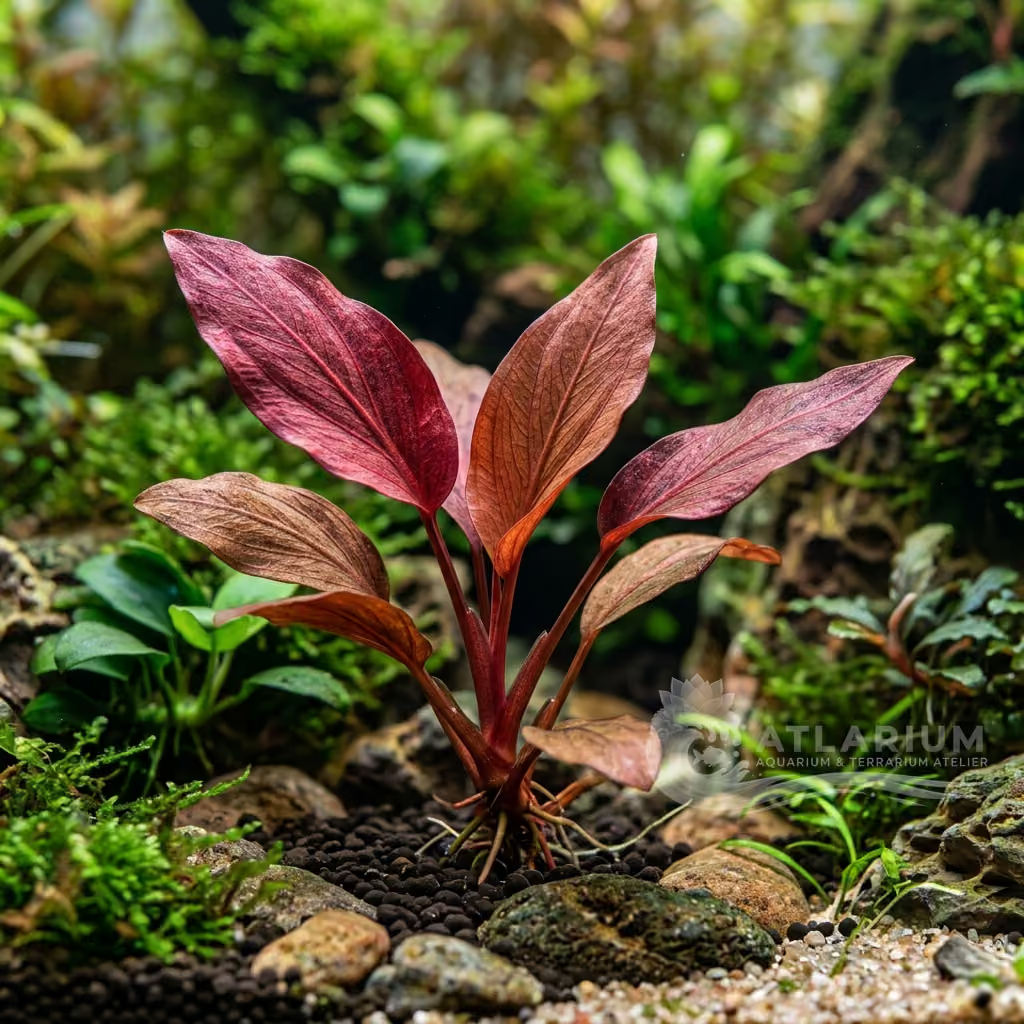
Hemigraphis colorata
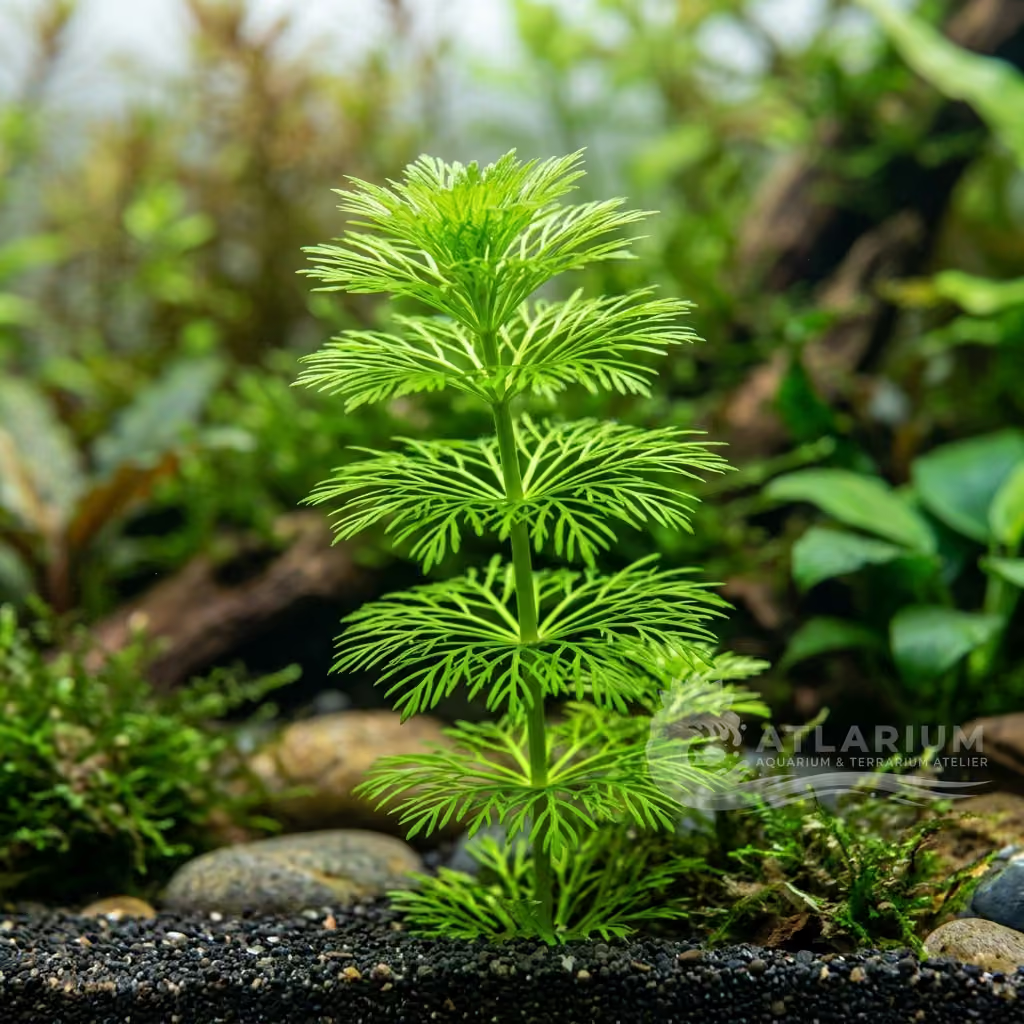
Strobilanthes alternata
Hemigraphis colorata: a beautiful terrarium or paludarium plant with wrinkled dark green and purple leaves. Can be used in aquariums only temporarily.
Water Temperature
20 - 28 °C
pH Value
6 - 7.5
Water type
Freshwater
Light
Medium - High
CO2
Low
Expected height
30 cm
Expected width
15 cm
GH
4 - 20 dGH
KH
2 - 15 dKH

Species description
Geographical Origin and Habitat: Hemigraphis
Color & Texture: ata is native to tropical Asia, particularly the Sunda Islands and the Indonesian archipelago. It inhabits the humid and shaded understory of warm rainforests, growing on bare muddy soils or forest stream banks where atmospheric humidity is constantly near 100%.
Taxonomy & Genetics: It belongs to the Acanthaceae family and is often confused with similar species in the aquarium trade. Like most species of the genus Hemigraphis, it is not a true aquatic plant; genetically, it cannot adapt permanently to submerged life, and its leaf stomata do not function properly under water.
Physical Structure: It features erect or partially creeping stems that can reach 20-30 cm in height. The leaves are large, opposite, ovate or elliptical in shape, with slightly serrated margins and a characteristic wrinkled, puckered surface that increases leaf evaporation area in its natural terrestrial form.
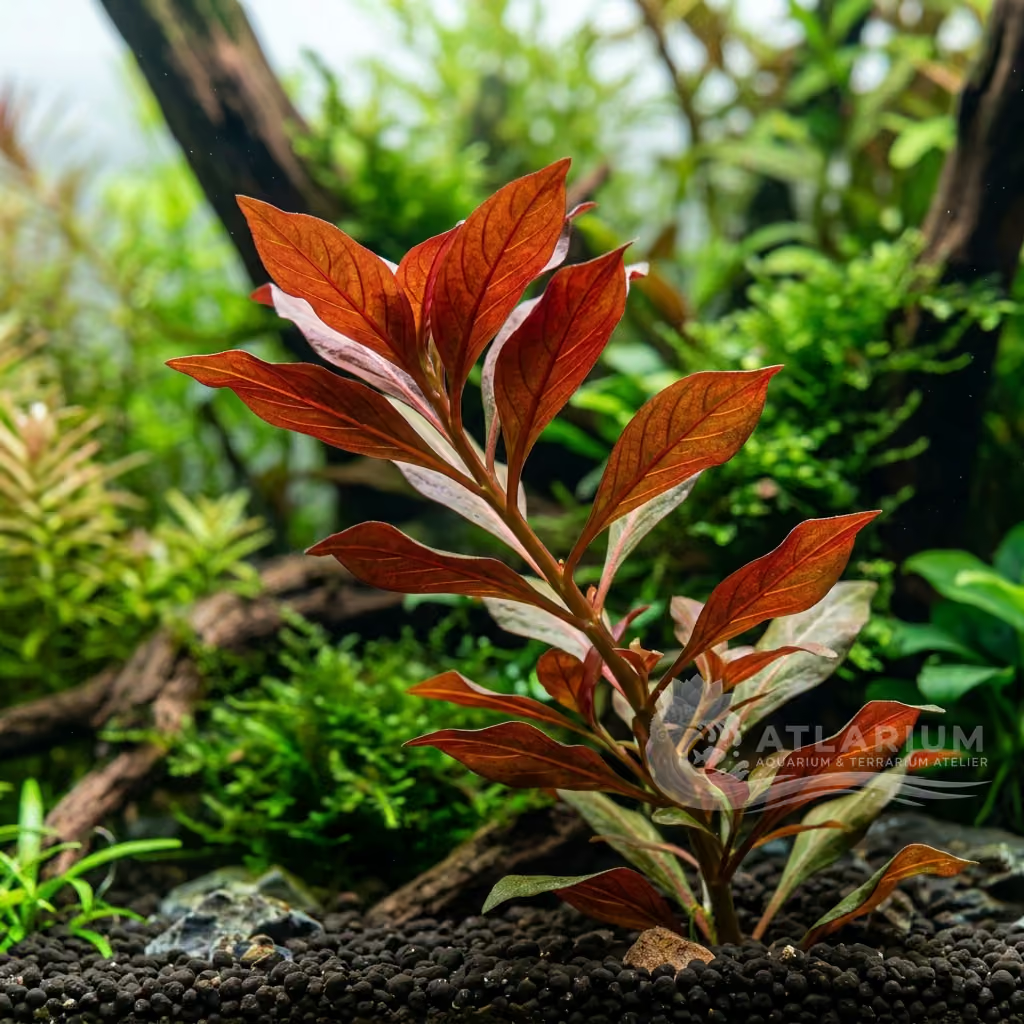
Color & Texture: It is appreciated for its spectacular color contrast: the upper leaf surface is dark green with grayish-blue metallic shades, while the underside is a bright, deep violet-purple. The thick, wrinkled leaf texture provides a unique and sculptural visual appearance.

Care, breeding and tankmates
Lighting & CO2: In the aquarium, it requires strong, constant lighting to prolong its submerged survival. CO2 injection helps maintain submerged photosynthetic processes, but is unable to stop the long-term decline of the plant.
Nutrition & Substrate: Prefers moist substrates rich in humus and organic nutrients when grown emersed in a terrarium. In the aquarium, it requires a fertile substrate, but its absorption capacity is significantly limited by forced submersion.
Water Chemistry: Tolerates soft to moderately hard water, with a neutral to slightly acidic pH (6.0-7.5). The optimal temperature is between 20 and 28 °C; it is highly sensitive to cold water currents and sudden temperature drops.
Space Management & Placement: Position exclusively in the emersed section of paludariums, ripariums, or humid tropical terrariums. If placed in an aquarium, it must be considered a temporary ornamental plant (maximum duration 2-3 months) for the midground or background.
Pruning: Pruning is done by trimming the apical branches to encourage lateral branching and prevent the plant from becoming too tall and untidy. Damaged or decaying leaves underwater must be removed immediately to prevent water pollution.
Risks & Diseases: The main and unavoidable risk in the aquarium is the progressive rotting of stems and dropping of leaves due to cellular anoxia caused by permanent submersion. In a humid terrarium, it can be affected by mealybugs or root rot if drainage is insufficient.

Geographic origin and distribution
Hemigraphis
Origin
South and Southeast Asia

Plant profile
- Placement
- Midground
- It is best suited for the emergent sections of paludariums, ripariums, or terrariums where its roots can remain moist but its leaves are exposed to air. In these setups, it serves beautifully as a midground or background terrestrial accent. It should never be permanently placed fully submerged in an aquarium.
- Botanical form
- Stem
- The plant is characterized by its heavily puckered or corrugated oval leaves, which feature a metallic dark green top and a vibrant purple underside. The stems have a creeping habit and will root at the nodes when they touch moist soil. The striking contrast of colors makes it a highly attractive foliage plant.
- Growth
- Medium
- When grown emersed in high humidity with good lighting, its growth rate is moderate to fast. It will quickly spread across the moist soil, forming a low, dense mat. If mistakenly placed fully submerged, its growth will halt entirely, and it will slowly degrade over a period of weeks to months.
- Substrate
- High
- Hemigraphis colorata is not a true aquatic plant and requires a well-draining, nutrient-rich terrestrial or paludarium soil to thrive long-term. Its extensive root system demands a deep substrate layer of 6-10 cm to securely anchor the plant and access moisture without remaining completely submerged. A peaty, moisture-retentive yet breathable soil mix is ideal for supporting its vibrant, colorful foliage. If kept in an aquarium, it will eventually rot, so its substrate should strictly be elevated above the water line in a humid environment.
- Column fertilization
- Recommended
- Because this plant should not be grown underwater, water column fertilization is irrelevant for its long-term care. In a riparium setup where its roots hang in the water, it will absorb nutrients from the water column, aiding in overall water filtration. However, the foliage must remain strictly above the water line.
- Root fertilization
- None
- It thrives in a nutrient-rich, well-draining potting mix or specialized terrarium soil. Providing root tabs or a rich compost will encourage vibrant leaf coloration and robust growth in emergent setups. The root zone must be kept consistently moist but never waterlogged or stagnant.
- Trimming
- Occasional
- Regular pruning helps keep the plant compact and encourages bushier growth in terrarium environments. You can pinch back the growing tips to prevent it from becoming too leggy or sprawling too far. Remove any dead or decaying leaves promptly to maintain a clean environment and prevent fungal issues.
- Propagation
- Cuttings
- Propagation is incredibly easy in emersed conditions. Simply take stem cuttings containing a few nodes and place them in moist soil or sphagnum moss. The cuttings will root readily within a couple of weeks, especially if kept in a humid environment like a propagation box.
- Sensitivity
- Moderate
- The most critical sensitivity is to prolonged submersion; its leaves will melt, and the stem will rot if kept underwater. It requires high humidity to prevent the edges of its leaves from crisping and turning brown. It is also sensitive to intense, direct sunlight, which can scorch its delicate foliage.
- Layout role
- Midground, Background, paludarium, riparium, accent
- It acts as a stunning color accent in terrariums and the emergent zones of paludariums, providing deep purple hues rarely seen in other plants. Its textured leaves add immense visual interest and contrast well with smooth-leaved tropicals. It effectively bridges the gap between the water feature and the terrestrial background.

Related species
Recommendations grouped by close relatives, companion choices, and similar care.