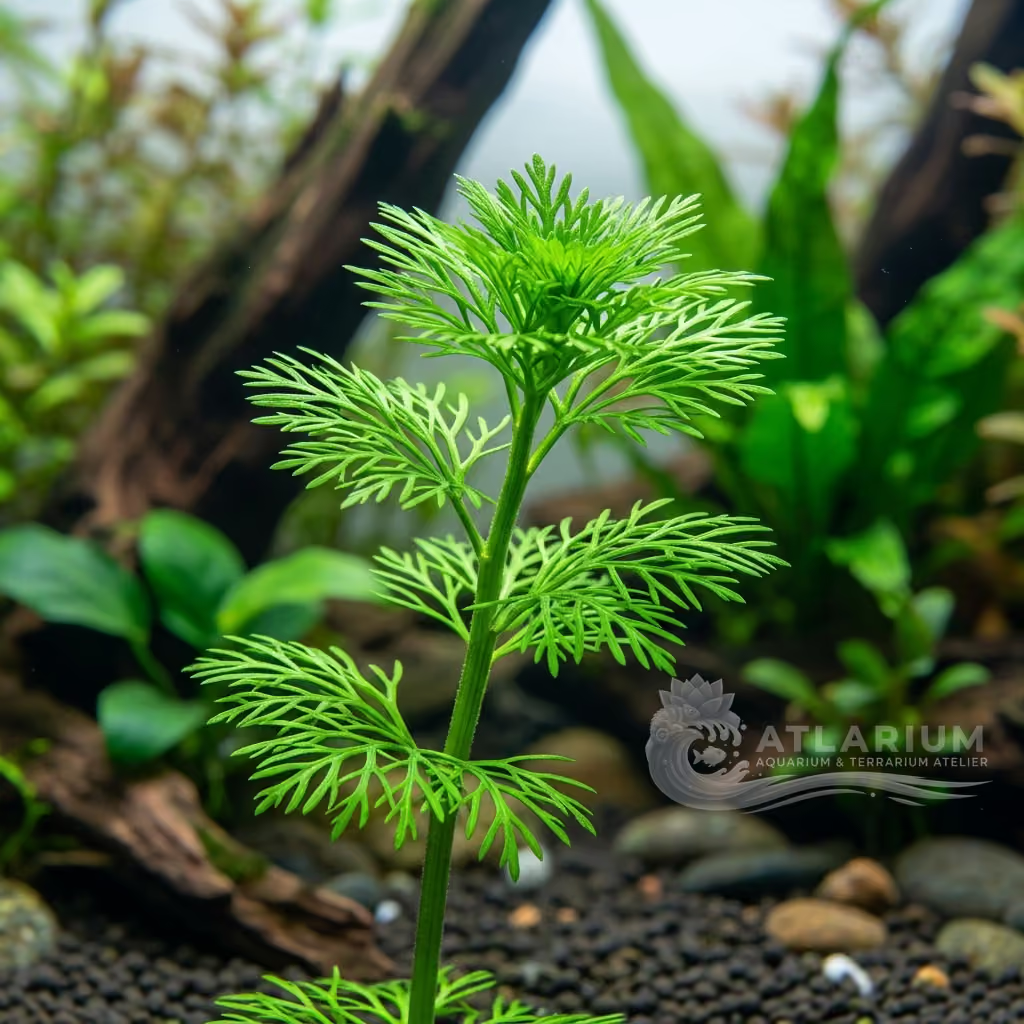
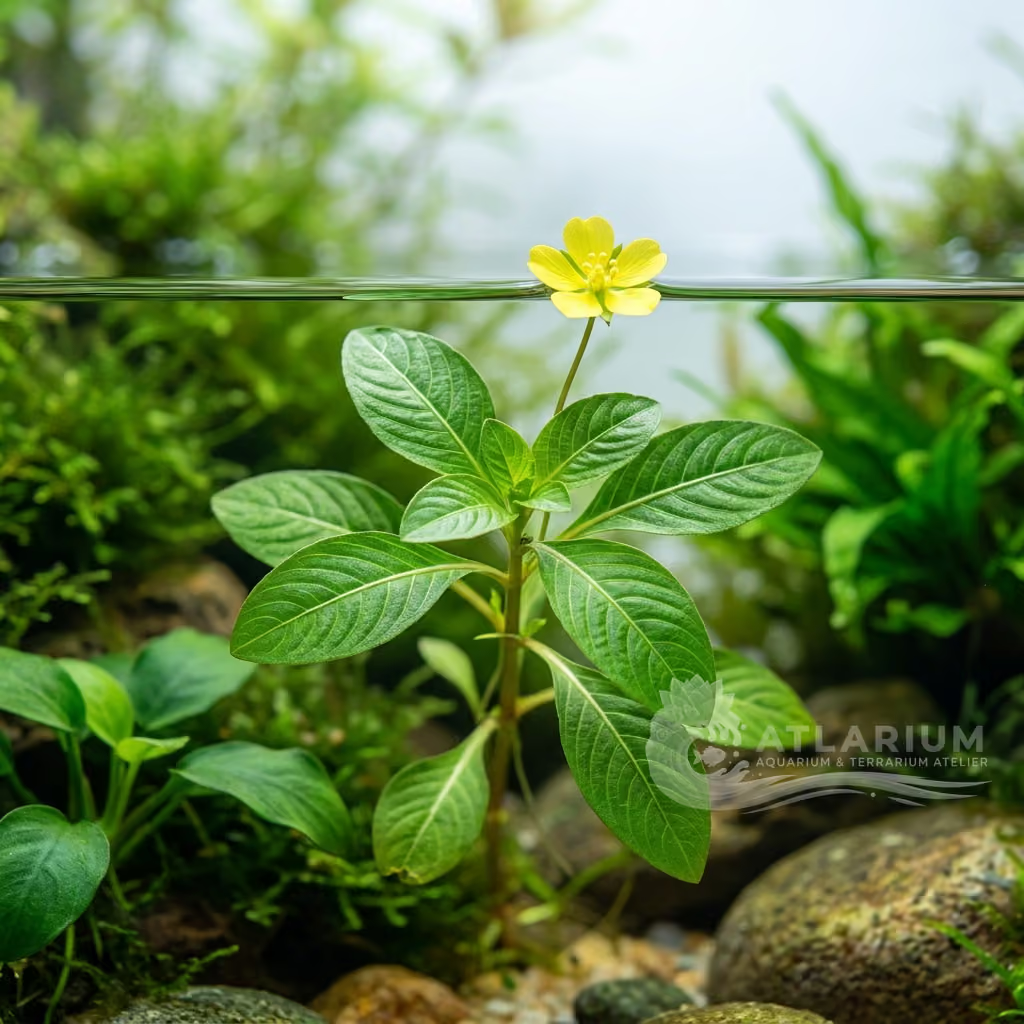
Hygrophila corymbosa "Siamensis"
Hygrophila corymbosa
Highly resilient and popular variant from Thailand. Grows effortlessly in low-tech setups but unlocks a stunning bronze-red blush under high-intensity LED light.
Water Temperature
20 - 28 °C
pH Value
6 - 8
Water type
Freshwater
Light
Medium
CO2
Low
Expected height
40 cm
Expected width
20 cm
GH
4 - 20 dGH
KH
2 - 18 dKH

Species description
Geographical Origin and Habitat: Endemic primarily to Thailand (hence the name "Siamensis") and surrounding regions of Southeast Asia. Hygrophila corymbosa "Siamensis" is an incredibly popular, robust, and highly adaptable geographical variant of the standard Giant Hygro. It behaves identically as a dominant pioneer amphibious stem plant, colonizing shallow, sun-baked muddy river margins. It is a wildly aggressive survivor perfectly evolved to grow densely submerged before violently breaching the water surface during the dry season.
Taxonomy & Genetics: Scientifically classified within the Acanthaceae family, H. corymbosa "Siamensis" is a globally recognized, highly prized geographical cultivar. Taxonomically, it is visually distinguished from the pure wild-type H. corymbosa by possessing significantly narrower, more lanceolate leaves and a slightly more compact internode structure. Genetically, it shares the extreme vertical gigantism traits, but its DNA allows the uppermost leaves to blush a distinct, beautiful bronze-red when exposed to intense light.
Physical Structure: The architectural structure of "Siamensis" is overwhelmingly dominant, aggressively vertical, and fiercely structural, yet more elegant than the standard wild-type. It is a massive, heavily branched stem plant. The foundation is a thick, rigid stem that deploys aggressive white roots directly from the lower nodes. The leaves are arranged oppositely. The foliage is strictly narrowly lanceolate, highly elongated (reaching 10-15 cm long), and densely packed along the stem, creating a massive flowing bush.
Color & Texture: The coloration is distinctly pure, highly dynamic, and visually striking. Grown submerged under standard lighting, the thick stems and long, narrow leaves are a solid, glowing bright apple-green. However, under blasting high-intensity LED lighting, the newest uppermost leaves violently shift to a stunning, translucent reddish-bronze or copper hue. The underside of the leaves often displays a silvery-white color. The texture is intensely rigid, slightly leathery, and perfectly smooth.

Care, breeding and tankmates
Lighting & CO2: It is an incredibly resilient titan that will survive in almost any lighting condition. While it will effortlessly grow in low-light aquariums (remaining pure green), under high-intensity LED lighting, its growth rate becomes terrifyingly explosive, and it unlocks its signature bronze-red blushing on the upper canopy. If severely shaded, the massive stems become bare. While it absolutely does not require pressurized CO2, adding it will drastically accelerate its towering vertical growth and density.
Nutrition & Substrate: As a colossal aquatic stem plant, "Siamensis" is a terrifyingly aggressive, heavy feeder that demands massive amounts of both root and water-column nutrients. Its root system demands a deep (minimum 7 cm), heavily nutrient-dense substrate enriched with iron root tabs. However, exactly like all Hygrophila, it specifically requires massive amounts of Potassium in the water column. If Potassium is depleted, the long leaves will instantly develop distinctive pinholes, turn yellow, and dissolve.
Water Chemistry: Originating from the tropical floodplains of Thailand, it is practically invincible regarding standard water parameters. It thrives effortlessly in heated tropical aquariums (22-28°C) but is also exceptionally adaptable to unheated tanks (down to 20°C). It comfortably tolerates both soft, acidic blackwater and rock-hard, highly alkaline tap water (pH 6.0 - 8.0). The single most critical environmental requirement is absolute chemical stability and continuous Potassium dosing. It prefers slow to moderate water flow.
Space Management & Placement: Due to its absolute monstrous size (capable of reaching 50+ cm in height) and wildly dominant nature, this plant is strictly reserved as an extreme background centerpiece for medium to large aquariums. It MUST be planted in distinct groups, creating a "street" or massive bush effect. Because it grows as a towering, heavily branching aquatic shrub with elegant narrow leaves, it will rapidly form a breathtaking, impenetrable green and bronze wall that will aggressively breach the water surface.
Pruning: Pruning is a constant, brutal, and necessary procedure if you wish to keep the plant fully submerged. Because the plant naturally wants to breach the surface, you must aggressively "top" the thick, rigid stems using heavy aquascaping scissors. The cut edge will violently branch out with two new side shoots, rapidly transforming the single stem into a massive, dense, bronze-tipped bush. You can immediately replant the massive cut tops directly into the substrate.
Risks & Diseases: The absolute greatest threat to this titan is Potassium deficiency and severe self-shading. Because its growth rate is so violently fast, it will rapidly strip the water column of Potassium, instantly resulting in characteristic "pinhole rot" across all older leaves. The massive leaves will literally dissolve from the inside out, leaving bare stems. The second major risk is self-shading; the massive upper bronze canopy will completely block light, causing the lower stem to rot and drop all its leaves.

Geographic origin and distribution
Endemic primarily to Thailand (hence the name "Siamensis") and surrounding regions of Southeast Asia. Hygrophila corymbosa "Siamensis" is an incredibly popular, robust, and highly adaptable geographical variant of the standard Giant Hygro. It behaves identically as a dominant pioneer amphibious stem plant, colonizing shallow, sun-baked muddy river margins. It is a wildly aggressive survivor perfectly evolved to grow densely submerged before violently breaching the water surface during the dry season.
Origin
South and Southeast Asia

Plant profile
- Placement
- Background
- Due to its height and bushy growth habit, it is ideally suited for the midground or background of the aquarium. It forms an excellent backdrop when planted in groups, providing shelter for fish and creating a natural, dense jungle look. Regular trimming can help maintain it at a midground level if desired.
- Botanical form
- Stem
- It features opposite, lanceolate leaves that are typically bright green and somewhat broader than the standard Hygrophila corymbosa. The stems are thick and sturdy, allowing the plant to reach the water surface and even grow emersed if not trimmed. In open tops, it may produce small, delicate purple flowers.
- Growth
- Fast
- This variety exhibits a very fast growth rate, especially under high light and CO2 injection, requiring frequent pruning to keep it in check. Under moderate lighting without CO2, it still grows steadily but at a more manageable pace. Its rapid growth makes it an excellent choice for outcompeting algae in newly established tanks.
- Substrate
- High
- It develops a strong and extensive root system, so a nutrient-rich substrate is highly beneficial for its long-term health. While it can adapt to plain gravel or sand with root tabs, aqua soil provides the best environment for rapid establishment. A deep substrate layer allows the roots to anchor securely and access necessary minerals.
- Column fertilization
- Recommended
- Regular dosing of a comprehensive liquid fertilizer is recommended to support its fast growth and large leaf mass. Potassium and iron supplements are particularly important to prevent yellowing or necrosis of the older leaves. It draws a significant portion of its nutrients directly from the water column through its stem and leaves.
- Root fertilization
- Recommended
- While it absorbs many nutrients from the water, root tabs inserted into the substrate will significantly boost its growth and overall vitality. A nutrient-rich base layer or periodic root fertilization ensures the extensive root network has access to essential minerals. This dual-feeding approach leads to the healthiest and most robust specimens.
- Trimming
- Regular
- Trim the plant by cutting the stem down to the desired height. It responds by throwing out multiple side shoots, becoming bushier and more compact. The robust tops are easily replanted to increase the population.
- Propagation
- Cuttings
- Propagation is extremely straightforward and involves taking stem cuttings and replanting them directly into the substrate. Cut the stem just above a leaf node and remove the lowest pair of leaves before planting to encourage new root growth. Even a single healthy leaf left floating can sometimes develop roots and a new stem.
- Sensitivity
- Moderate
- It is virtually indestructible under normal aquarium conditions, making it a classic beginner plant. Potassium deficiency is its only common ailment, easily fixed with liquid dosing. It can occasionally attract algae on older leaves if the water flow is poor.
- Layout role
- Midground, Background
- It excels as a fast-filling background plant that adds bright green volume. Its reliable, upright growth provides a structured, jungle-like aesthetic. It is perfect for contrasting with red plants or fine-leaved species.

Image gallery
Licensed images linked to the species or, when marked, to the closest representative taxon.

Related species
Recommendations grouped by close relatives, companion choices, and similar care.