Encyclopaedia

PlantFreshwaterEasy
©AI Generated·Proprietary

Hygrophila polysperma

Hygrophila polysperma

Known as 'Dwarf Hygro', this incredibly resilient and fast-growing Asian stem plant adapts to almost any conditions. Under intense light, its top leaves develop lovely copper or pale pink tones.

Taxonomy
Class:Magnoliopsida
Order:Lamiales
Family:Acanthaceae
Genus:Hygrophila
Species:Hygrophila polysperma

Share

Check out Hygrophila polysperma on Atlarium

PracticeRecognition quizzesPhotos, names, origins, and puzzles to review Atlas species.Open quizzes
Water Temperature

18 - 28 °C

pH Value

6 - 8

Water type

Freshwater

Light

Low

CO2

Low

Expected height

40 cm

Expected width

15 cm

GH

4 - 20 dGH

KH

2 - 21 dKH

Species description

Geographical Origin and Habitat: Hygrophila polysperma, also known as "Dwarf Hygro" or Indian Swampweed, is native to the water basins of Southeast Asia, particularly northern India and Bhutan. In its natural environment, it relentlessly colonizes rivers, streams, and swamps with unstable water levels. Unfortunately, due to careless release by aquarists, it has become a highly invasive alien species in the waterways of North America (Florida, Texas) and Europe, where it forms asphyxiating mats that destroy local ecosystems.
Taxonomy & Genetics: It belongs to the vast Acanthaceae family. The term *polysperma* indicates its pronounced aptitude to produce enormous quantities of seeds (when grown emersed) in the light blue flowers that bloom at the leaf axils. Despite this, in the aquarium (and often in nature) its multiplication occurs primarily asexually (clonal fragmentation) with staggering propagation rates.
Physical Structure: It possesses extremely thin, flexible yet tough caulescent stems that can branch in every direction. The lanceolate or elliptical leaves with entire margins grow opposite and decussate in pairs along the stem, measuring 3 to 6 cm. It develops a very robust tangle of dense white roots at every submerged node, transforming into a trap for bottom sediments.
Color & Texture: Basically, it is a pale, uniform grass-green plant. However, it possesses very interesting phenotypic plasticity: if exposed to extremely powerful light sources (like under a modern LED fixture), the last 2-4 apical leaves at the top of the stem develop a wonderful copper, golden, or pale pink pigmentation. The leaf surface is soft and delicately smooth.

Care, breeding and tankmates

Lighting & CO2: More than an easy plant, it is an "immortal" plant. It is capable of thriving even in the darkest corners of old tanks with T8 lighting, enduring long periods in inhospitable conditions. Logically, strong light compacts its internodes, colors it bronze, and makes it creep. A CO2 system is considered a waste for this plant: it will grow massively even drawing only natural carbon from the water, but if you administer gas, you will literally have to prune it every 3 days.
Nutrition & Substrate: A pioneer plant and incredible pollutant remover. Planting it in inert substrates (washed gravel) does not stop it, as it absorbs all its needs (NH3, NO3, PO4) from its leaf pores and adventitious roots in the water column within a few days. It is perfect for maturing an aquarium (the so-called "Dry Start" or "Walstad" method), removing excess ammonia released from new soil and preventing algae blooms.
Water Chemistry: Chemical conditions are irrelevant to its survival. Whether the pH is acidic (5.5) or basic (8.5), whether the GH borders on osmosis water or is liquid chalk, *H. polysperma* will simply adapt and continue to produce biomass. The accepted thermal range goes from the 18°C typical of cold or subtropical water up to summer peaks of 30°C.
Space Management & Placement: Its unstoppable herbaceous and carpeting nature forces it to be firmly confined to the background or the sides of the aquarium. Often the stems bend horizontally to colonize new space even before reaching the surface. The bushes will thicken, creating inaccessible dens, perfect refuges for fry, shrimp (Neocaridina), or small cyprinids.
Pruning: Prepare your scissors and your patience. It requires drastic "topping" operations very frequently. You can grab the entire grove with your hands and scythe it down to half height without the slightest fear of killing it. The truncated stems will react by emitting double or triple shoots in a few days. The disposal of the cut cuttings must be managed by burning them, throwing them in closed trash, or freezing them, NEVER flushing them down toilets or waterways, to prevent ecological disasters.
Risks & Diseases: It is a formidable fighter against algae, as it wins food competitions, but paradoxically it can become a "pest" itself if not contained. Chemically it is demanding on a single factor: Potassium (K). The attentive aquarist will immediately notice a potassium deficiency by observing the old and basal leaves of the Hygrophila: within a few hours they will fill with tiny black holes bordered with yellow (necrosis), ruining the bush.

Geographic Origin and Distribution

Hygrophila polysperma, also known as "Dwarf Hygro" or Indian Swampweed, is native to the water basins of Southeast Asia, particularly northern India and Bhutan. In its natural environment, it relentlessly colonizes rivers, streams, and swamps with unstable water levels. Unfortunately, due to careless release by aquarists, it has become a highly invasive alien species in the waterways of North America (Florida, Texas) and Europe, where it forms asphyxiating mats that destroy local ecosystems.

Origin

South and Southeast AsiaNorth AmericaEurope, Mediterranean, and West AsiaCosmopolitan or introduced

Plant profile

Placement
Background
Best placed in the background or midground of the aquarium where its rapid vertical growth can be easily managed. It can form dense thickets when planted in groups. Suitable for concealing equipment or softening harsh hardscape edges.
Botanical form
Stem
Features an upright stem structure with elongated, light green leaves arranged in opposite pairs. Under higher light, the top leaves can develop an attractive brownish-red tint. Its appearance can vary significantly based on light and nutrient availability.
Growth
Fast
Exhibits a very fast growth rate, often reaching the water surface within a short period. This rapid growth makes it an excellent candidate for outcompeting algae in newly established tanks. Frequent pruning is necessary to keep it compact.
Substrate
None
Hygrophila polysperma is an incredibly hardy and undemanding stem plant that can grow in almost any substrate. Its roots develop rapidly, anchoring the plant firmly whether planted in plain gravel or nutrient-rich aqua soil. While it primarily absorbs nutrients from the water column through its leaves and stem, providing a fine-grained substrate of 3 to 5 cm depth helps maintain its vigorous growth.
Column fertilization
Recommended
Highly efficient at absorbing nutrients directly from the water column through its leaves and adventitious roots. Regular dosing of a comprehensive liquid fertilizer ensures vibrant foliage and strong stems. It acts as a great indicator plant for overall nutrient levels.
Root fertilization
None
While not strictly necessary, an enriched substrate or the addition of root tabs will promote robust root development. A strong root system helps anchor its fast-growing stems securely in the substrate. It can thrive perfectly well in plain sand or gravel if the water column is rich in nutrients.
Trimming
Regular
Requires frequent and sometimes aggressive trimming to prevent it from shading neighboring plants. Simply cut the stem at the desired height; new shoots will quickly form at the cut nodes. The trimmed tops can be easily replanted to propagate the group.
Propagation
Cuttings
Easily propagated through stem cuttings; replanting the healthy tops is the most straightforward method. Even small fragments left floating in the aquarium can develop roots and new leaves. This prolific nature makes it a very easy plant to share and multiply.
Sensitivity
Moderate
Extremely hardy and tolerant of a wide range of water conditions, making it relatively immune to minor fluctuations. It is generally resistant to most common aquarium plant diseases. Can sometimes melt slightly when first introduced to significantly different water parameters, but recovers swiftly.
Layout role
Background
Functions perfectly as a fast-growing background filler that adds lush, bright green texture to the layout. Its dense growth provides excellent hiding spots for fry and shy fish species. Can be shaped into distinct bushes with disciplined trimming.

Image gallery

Licensed images linked to the species or, when marked, to the closest representative taxon.

Related species

Recommendations grouped by close relatives, companion choices, and similar care.

Variants and close relatives

Same atlas type, nearby scientific identity, genus, or family.

Hygrophila polysperma ''Ceylon''

Hygrophila polysperma ''Ceylon''

Hygrophila polysperma ''Ceylon''

View details->
Hygrophila polysperma 'Big leaf'

Hygrophila polysperma 'Big leaf'

Hygrophila polysperma 'Big leaf'

View details->
Hygrophila polysperma 'Sunset' ('Rosanervig')

Hygrophila polysperma 'Sunset' ('Rosanervig')

Hygrophila polysperma 'Sunset'

View details->
Hygrophila corymbosa

Hygrophila corymbosa

Hygrophila corymbosa

View details->
Hygrophila corymbosa ''Angustifolia''

Hygrophila corymbosa ''Angustifolia''

Hygrophila corymbosa ''Angustifolia''

View details->
Hygrophila corymbosa ''Red''

Hygrophila corymbosa ''Red''

Hygrophila corymbosa ''Red''

View details->
Hygrophila corymbosa "Siamensis"

Hygrophila corymbosa "Siamensis"

Hygrophila corymbosa "Siamensis"

View details->
Hygrophila difformis

Hygrophila difformis

Hygrophila difformis

View details->
Hygrophila difformis 'Weiß-Grün'

Hygrophila difformis 'Weiß-Grün'

Hygrophila difformis 'Weiß-Grün'

View details->
Hygrophila lacustris

Hygrophila lacustris

Hygrophila lacustris

View details->
Hygrophila stricta

Hygrophila stricta

Hygrophila stricta

View details->
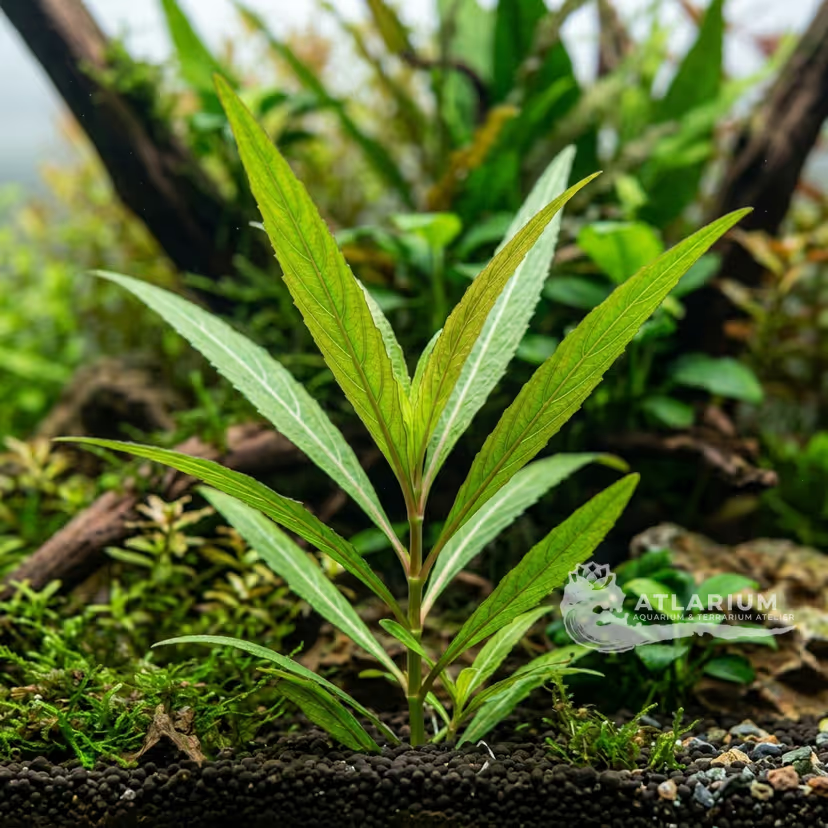
Pinnate Hygrophila

Pinnate Hygrophila

Hygrophila pinnatifida
View details->
Willow-leaf hygrophila

Willow-leaf hygrophila

Hygrophila ringens

View details->
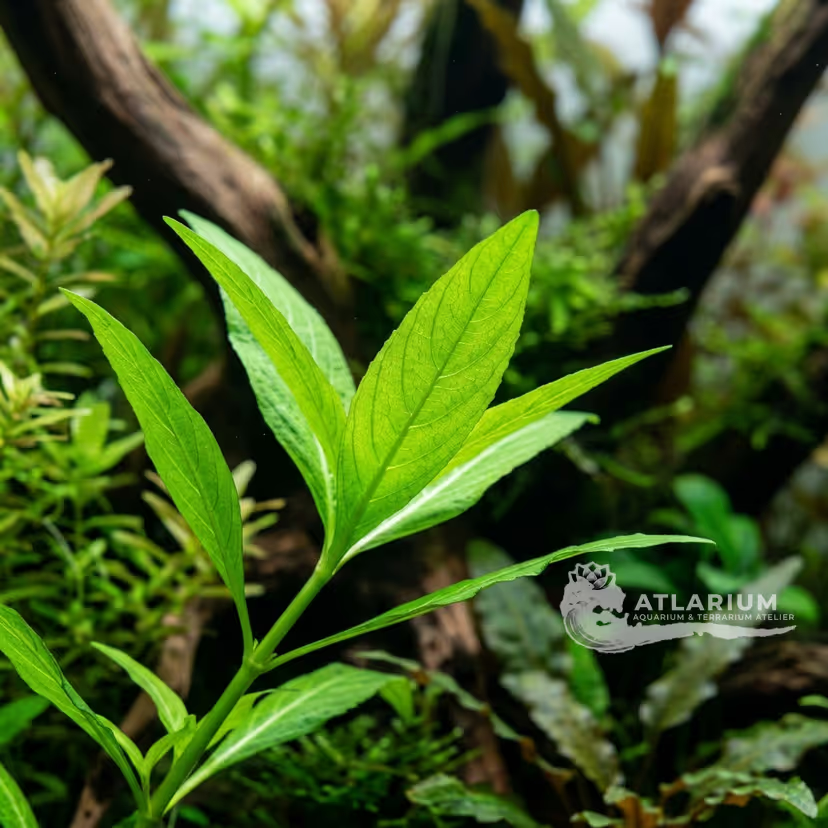
Hygrophila corymbosa 'Stricta'

Hygrophila corymbosa 'Stricta'

Hygrophila corymbosa "Stricta"
View details->
Hygrophila guianensis

Hygrophila guianensis

Hygrophila guianensis

View details->
Hygrophila corymbosa 'Aroma'

Hygrophila corymbosa 'Aroma'

Hygrophila corymbosa ''Aroma''

View details->

Recommended companions

Compatible cards from coherent ecosystems with matching parameters.

Green babaulti shrimp
Invertebrate

Green babaulti shrimp

Caridina cf. babaulti "Green"

View details->
Ramshorn Snail
Invertebrate

Ramshorn Snail

Planorbella duryi

View details->
Orange dwarf crayfish (CPO)
Invertebrate

Orange dwarf crayfish (CPO)

Cambarellus patzcuarensis "Orange"

View details->
White Pearl Shrimp
Invertebrate

White Pearl Shrimp

Neocaridina zhangjiajiensis var. White

View details->
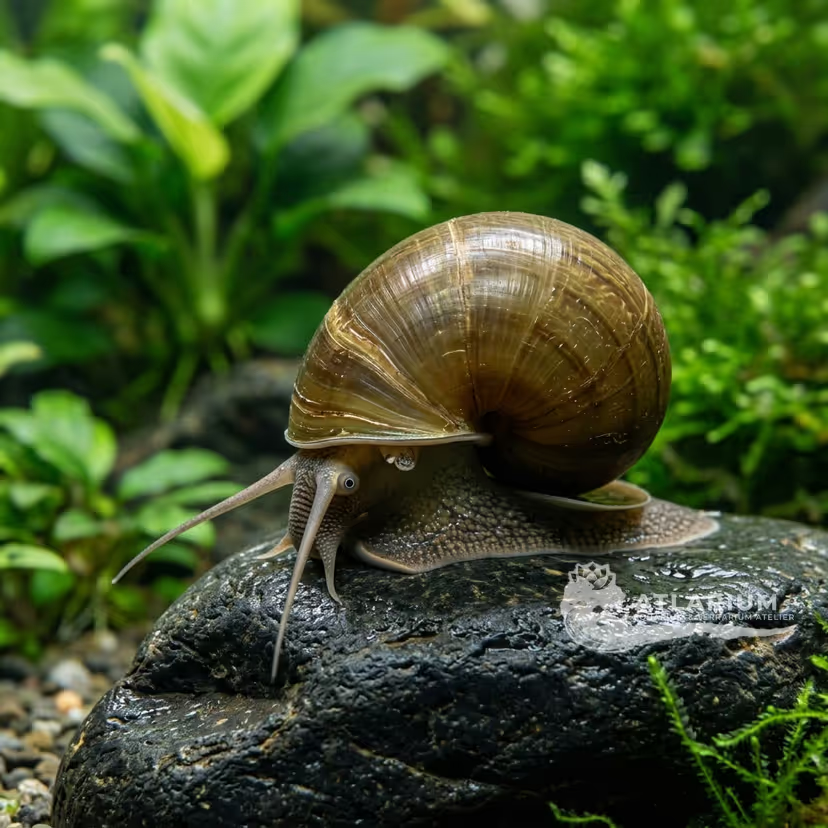
Malaysian Trumpet Snail
Invertebrate

Malaysian Trumpet Snail

Melanoides tuberculata
View details->
Asian apple snail
Invertebrate

Asian apple snail

Pila ampullacea

View details->
Bladder snail
Invertebrate

Bladder snail

Physella acuta

View details->
Channelled apple snail
Invertebrate

Channelled apple snail

Pomacea canaliculata

View details->
Chinese mystery snail
Invertebrate

Chinese mystery snail

Cipangopaludina chinensis

View details->
Ear pond snail
Invertebrate

Ear pond snail

Radix auricularia

View details->
European river snail
Invertebrate

European river snail

Viviparus viviparus

View details->
Florida apple snail
Invertebrate

Florida apple snail

Pomacea paludosa

View details->
Giant ramshorn snail
Invertebrate

Giant ramshorn snail

Marisa cornuarietis

View details->
Great pond snail
Invertebrate

Great pond snail

Lymnaea stagnalis

View details->
Great ramshorn snail
Invertebrate

Great ramshorn snail

Planorbarius corneus

View details->
Hercules snail
Invertebrate

Hercules snail

Brotia herculea

View details->

Similar care

Cards with similar requirements, difficulty, habitat, and husbandry profile.

Hygrophila balsamica

Hygrophila balsamica

Hygrophila balsamica

View details->
Hygrophila sp. 'Bihar'

Hygrophila sp. 'Bihar'

Hygrophila sp. "Bihar"

View details->
Hemigraphis colorata

Hemigraphis colorata

Hemigraphis colorata

View details->
Hemigraphis traian

Hemigraphis traian

Hemigraphis traian

View details->
Hygrophila angustifolia

Hygrophila angustifolia

Hygrophila angustifolia

View details->
Hemigraphis repanda

Hemigraphis repanda

Hemigraphis repanda

View details->
Hygrophila corymbosa 'Kompakt'

Hygrophila corymbosa 'Kompakt'

Hygrophila corymbosa 'Kompakt'

View details->
Hygrophila sp. 'Bold'

Hygrophila sp. 'Bold'

Hygrophila sp. 'Bold'

View details->
Fittonia verschaffeltii

Fittonia verschaffeltii

Fittonia verschaffeltii

View details->
Hygrophila costata

Hygrophila costata

Hygrophila costata

View details->
Cryptocoryne aponogetifolia

Cryptocoryne aponogetifolia

Cryptocoryne aponogetifolia

View details->
Cryptocoryne beckettii

Cryptocoryne beckettii
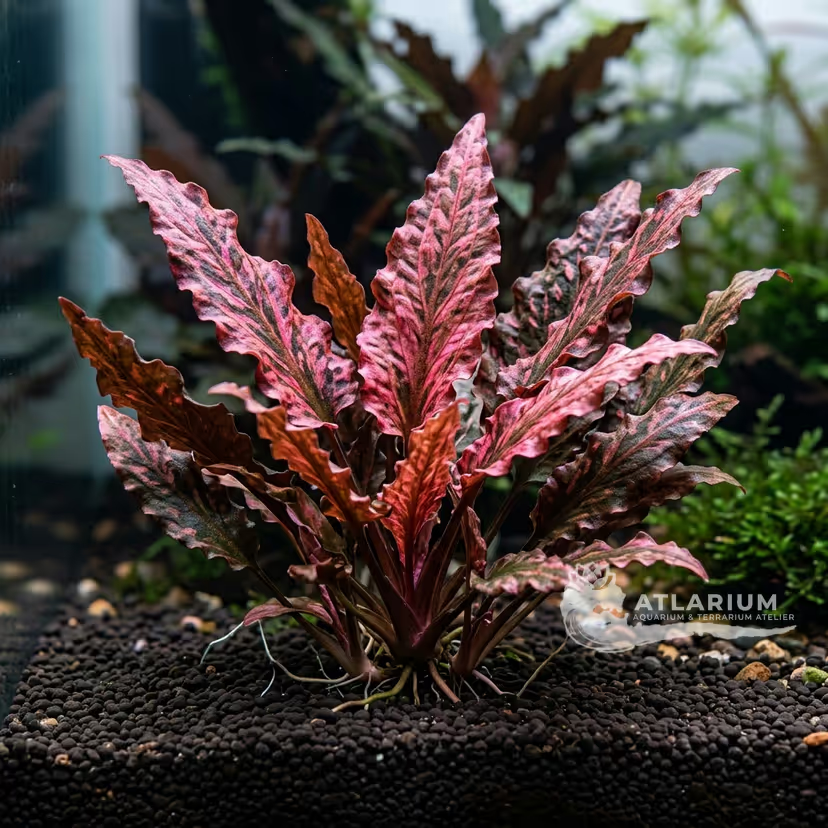
Cryptocoryne beckettii

View details->
Cryptocoryne beckettii "Petchii Pink"

Cryptocoryne beckettii "Petchii Pink"

Cryptocoryne beckettii "Petchii Pink"

View details->
Cryptocoryne beckettii "Petchii"

Cryptocoryne beckettii "Petchii"
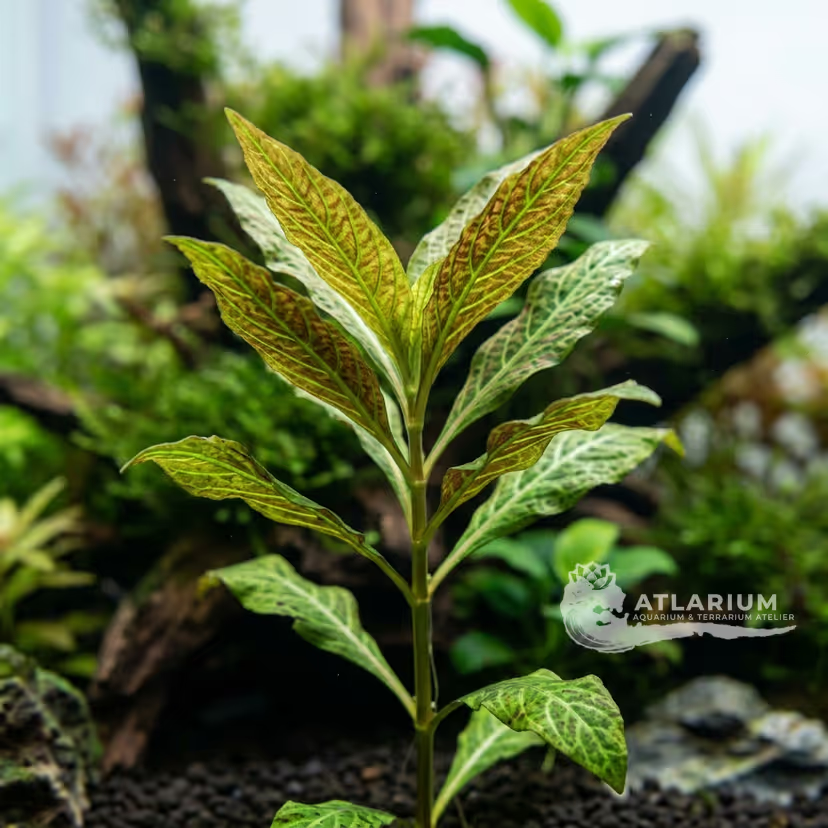
Cryptocoryne beckettii "Petchii"

View details->
Hygrophila sp. 'Tiger'

Hygrophila sp. 'Tiger'

Hygrophila sp. 'Tiger'

View details->
Synnema triflorum

Synnema triflorum

Synnema triflorum

View details->
Last updated: 06/30/2026