Java Fern
Leptochilus pteropus pteropus
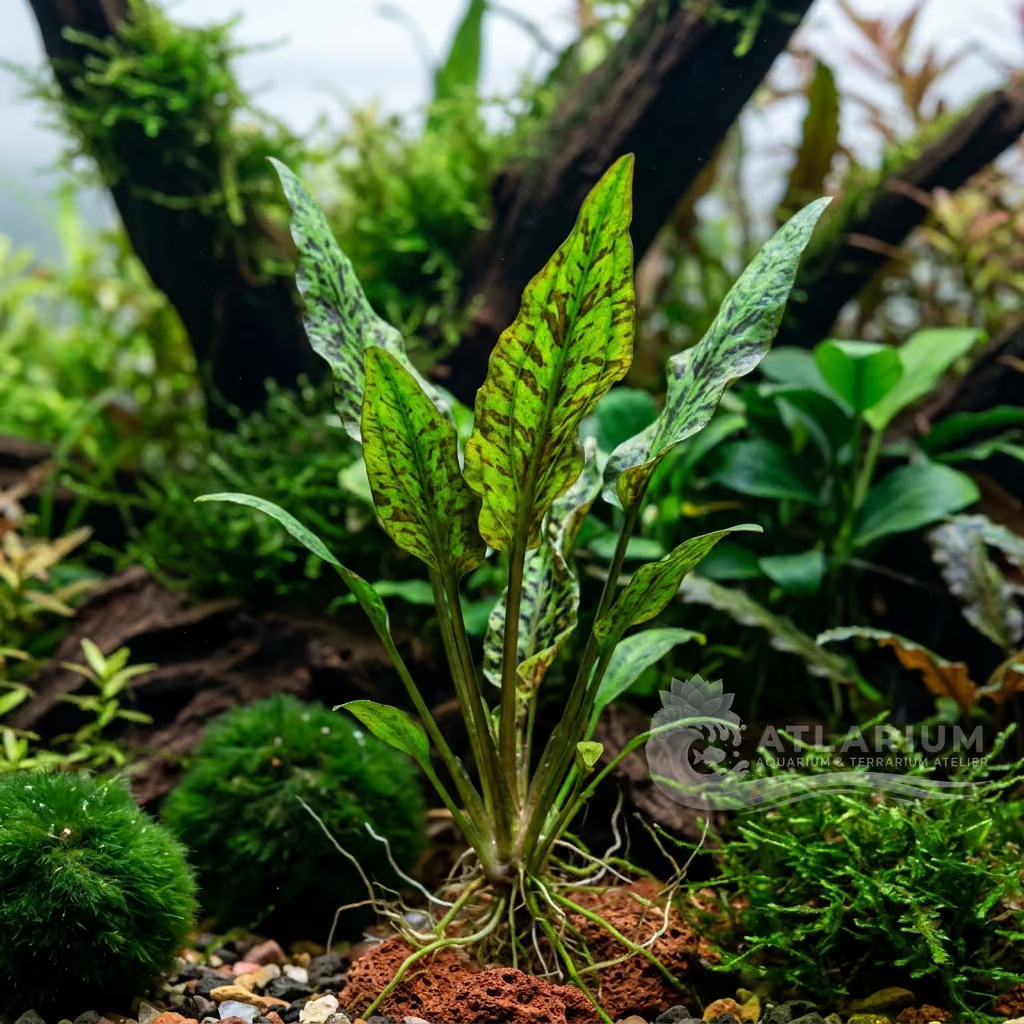
An incredibly hardy and popular epiphytic fern. It features tough, dark green, lanceolate leaves. It must be attached to wood or rocks; burying the horizontal green rhizome in gravel or sand will cause it to rot and die.
Water Temperature
20 - 28 °C
pH Value
6 - 8
Water type
Freshwater
Light
Bassa / Media
CO2
Bassa (Non Necessaria)
Expected height
35 cm
Expected width
20 cm
GH
4 - 20 dGH
KH
2 - 15 dKH

Species description
Geographical Origin and Habitat: Microsorum pteropus is native to Southeast Asia, widely distributed across countries like India, Thailand, Malaysia, and the Philippines. It is a rheophilic aquatic fern that grows anchored to rocks and driftwood along shaded forest streams and rivers. In the wild, it is found both submerged and emersed in areas with very high atmospheric humidity.
Taxonomy & Genetics: Belonging to the Polypodiaceae family, it is commonly known as "Java Fern." Genetically, it is an extremely hardy and stable plant, known for producing dark spores on the underside of its leaves for sexual reproduction, alongside vegetative propagation from the rhizome.
Physical Structure: It features a creeping, woody rhizome from which brown adventitious roots and erect, lanceolate fronds up to 20-30 cm long develop. The roots are designed to anchor the plant securely to hard surfaces rather than absorb nutrients from the soil.
Color & Texture: The leaves display a uniform, deep dark green color. The texture is robust and wrinkled (bullate), with clearly visible main veins. The texture is leathery and rigid to the touch, protecting the plant from herbivorous fish.

Care, breeding and tankmates
Lighting & CO2: Requires low to moderate lighting. Under too intense light, the leaves tend to burn, turn black, and get covered in algae. CO2 injection is not essential, but it promotes steadier growth and healthier fronds.
Nutrition & Substrate: It is an epiphytic plant and the rhizome must never be buried in the substrate (sand or gravel), as the lack of oxygen will cause it to rot and kill the plant. Anchor it to driftwood or rocks. It absorbs nutrients from the water column, demanding potassium.
Water Chemistry: Extremely tolerant of various chemical parameters. It thrives in temperatures between 18 and 30°C (64-86°F), with an optimal pH range of 5.0 to 8.0. It adapts well to soft or very hard water.
Space Management & Placement: Positioned in the midground or background anchored to the hardscape. It should be placed in shaded or indirect light areas. Secure it to the support using thread or cyanoacrylate glue.
Pruning: Pruning is limited to removing old or blackened fronds by cutting them at the base of the rhizome. It propagates by dividing the rhizome into sections with at least 3-4 leaves, or by harvesting adventitious plantlets that form on leaf tips.
Risks & Diseases: Rhizome rot if buried is the main risk. Potassium deficiency manifests as black spots and holes in the leaves. The dark spots (sori) on the underside of the leaves are not a disease, but the plant's reproductive spores.

Geographic origin and distribution
Microsorum pteropus is native to Southeast Asia, widely distributed across countries like India, Thailand, Malaysia, and the Philippines. It is a rheophilic aquatic fern that grows anchored to rocks and driftwood along shaded forest streams and rivers. In the wild, it is found both submerged and emersed in areas with very high atmospheric humidity.
Origin
South and Southeast Asia

Plant profile
- Placement
- Background
- It is ideally placed in the midground or background, attached to rocks, driftwood, or decorations. Its distinct leaf shape provides an excellent focal point or contrasting texture. Over time, it will form dense clusters that offer great hiding spots for aquatic life.
- Botanical form
- Epiphyte, Fern
- It is an epiphytic fern characterized by a thick horizontal rhizome and distinct elongated leaves. The root system consists of dark, hair-like roots designed primarily for anchoring rather than nutrient absorption. Variations in leaf shape and texture depend heavily on the specific cultivar.
- Growth
- Slow
- Like most epiphytic ferns, it has a slow growth rate. Leaves develop gradually from the creeping rhizome over weeks and months. This slow pace makes it a low-maintenance choice that requires very infrequent pruning.
- Substrate
- None
- This plant should never be planted directly into the substrate. The rhizome must remain exposed to the water column, otherwise it will rot and the plant will die. It is best attached to hardscape materials where its roots can anchor onto rough surfaces.
- Column fertilization
- Required
- Water column fertilization is the primary method of feeding this plant. A light, regular dose of a complete liquid fertilizer is usually sufficient for optimal health. Being a slow grower, it does not rapidly deplete nutrients from the water.
- Root fertilization
- None
- Root fertilization is completely unnecessary and ineffective for this species. Because it is an epiphyte and not planted in the soil, it cannot access nutrients in the substrate. All feeding should be done via liquid fertilizers.
- Trimming
- Occasional
- Trimming involves simply cutting away older, damaged, or algae-covered leaves at the base. Do not cut the leaves in half, as the remaining portion will die. Pruning encourages the rhizome to produce fresh, healthy foliage.
- Propagation
- Rhizome division
- Propagation is very easy and occurs naturally through two methods. The rhizome can be cut into smaller pieces, each with at least a few leaves, and reattached elsewhere. Alternatively, small plantlets will naturally develop on the tips or undersides of older leaves and can be detached when roots form.
- Sensitivity
- Sensitive
- It is incredibly hardy and tolerates a wide range of water parameters and temperatures. It is prone to developing black spots if potassium is deficient. High light without adequate CO2 can lead to algae accumulation on its slow-growing leaves.
- Layout role
- Midground, Background, Epiphyte
- It is a staple midground or background plant used to naturalize hardscape. Its dark, textured leaves provide excellent contrast against bright green stem plants. It is perfect for low-tech, low-maintenance aquarium setups.

Related species
Recommendations grouped by close relatives, companion choices, and similar care.