Flame Moss
Taxiphyllum sp. 'Flame'
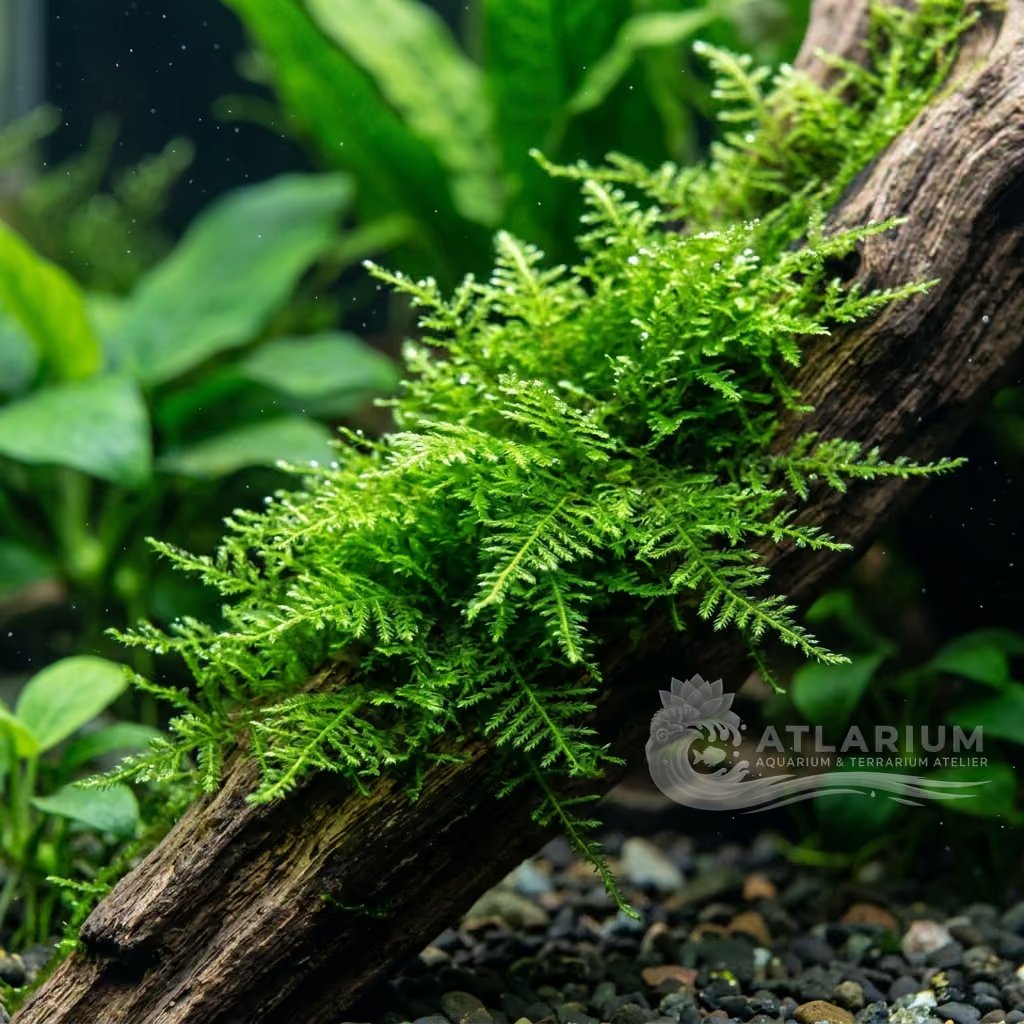
Flame Moss is famous for its unique upward-twisting, spiral growth. Highly versatile, it benefits from moderate lighting and CO2 to express its vertical flame-like shape.
Water Temperature
20 - 28 °C
pH Value
5.5 - 7.5
Water type
Freshwater
Light
Bassa / Media
CO2
Bassa (Ma esalta le spirali fiammeggianti)
Expected height
10 cm
Expected width
10 cm
GH
4 - 20 dGH
KH
2 - 15 dKH

Species description
Geographical Origin and Habitat: Flame Moss does not have a precisely documented wild geographic origin. It is widely believed to originate from tropical freshwater environments in Southeast Asia, particularly slow-flowing rivers and shaded forest streams in countries like Thailand, Malaysia, or Indonesia. In these natural habitats, it grows as a rheophyte or epiphyte, anchoring itself securely to submerged logs, water-splashed rocks, and exposed roots along wet banks, benefiting from a constant but gentle water flow.
Taxonomy & Genetics: Belonging to the Hypnaceae family and classified under the genus Taxiphyllum, this moss has not yet been fully described at the species level, being commonly referred to as Taxiphyllum sp. 'Flame'. Genetically and taxonomically, it shares close morphological affinities with other members of the genus, such as Java Moss (Taxiphyllum barbieri), but is distinguished by a stable genetic mutation that determines its unique vertical spiral growth.
Physical Structure: The physical structure of Flame Moss is unique among aquarium mosses. Instead of branching out in a chaotic or prostrate manner, it develops thick, compact shoots that grow strictly vertically. Each shoot twists slightly as it grows upward, creating a spiral helical shape that mimics the appearance of tiny green flames. The rhizoids are short and specialized, designed to anchor the plant to hard surfaces rather than absorb nutrients.
Color & Texture: The color is a deep, saturated forest green that becomes slightly lighter and brighter at the active growing tips. The texture of the shoots is dense, compact, and slightly rough to the touch. Under intense lighting and adequate water flow, its visual consistency appears highly defined and structured, offering a strong geometric contrast to wilder, messier mosses.

Care, breeding and tankmates
Lighting & CO2: Flame Moss is highly versatile: it tolerates low-light conditions, but to express its signature vertical and spiral growth pattern, it benefits from moderate to high lighting. While CO2 injection is not strictly mandatory for survival, a steady supply significantly accelerates its otherwise slow growth rate and makes the shoots visibly thicker, more rigid, and geometrically defined.
Nutrition & Substrate: As a moss lacking a true root system, Flame Moss does not draw nutrients from the substrate. It relies entirely on water column fertilization, absorbing a balanced mix of micro and macronutrients directly through the surface of its shoots. It must never be planted directly into the substrate, as burying the base will prevent water circulation and cause it to rot.
Water Chemistry: It prefers cool to moderate temperatures, ideally between 20°C and 26°C; prolonged exposure to temperatures above 28°C can halt growth and lead to browning of the shoots. It is highly tolerant of pH (5.5 - 7.5) and water hardness, though it thrives best in soft to moderately hard water. It is sensitive to overdoses of liquid carbon (glutaraldehyde) or harsh algaecides.
Space Management & Placement: Its strictly upright growth makes it perfect for placement on hardscape elements in the midground or background. It is exceptional for covering vertical branches or creating miniature "trees" by attaching it to the tops of driftwood. Care should be taken not to shade it completely under large-leafed plants, which would cause the lower sections to thin out and detach.
Pruning: Pruning is done by trimming the shoots horizontally with sharp aquascaping scissors, which encourages dense lateral branching. The trimmed fragments can be easily reused for propagation: simply tie or glue them with cyanoacrylate gel to a new hard surface, where they will quickly begin their vertical growth once again.
Risks & Diseases: The primary risk is the accumulation of organic waste and detritus within its dense vertical shoots, which can suffocate the moss and trigger outbreaks of filamentous or black brush algae (BBA). Maintaining good water circulation and gently siphoning the moss during water changes is essential. If heavily infested with algae, it is often best to prune away the affected areas as chemical treatments can harm the moss.

Geographic origin and distribution
Flame Moss does not have a precisely documented wild geographic origin. It is widely believed to originate from tropical freshwater environments in Southeast Asia, particularly slow-flowing rivers and shaded forest streams in countries like Thailand, Malaysia, or Indonesia. In these natural habitats, it grows as a rheophyte or epiphyte, anchoring itself securely to submerged logs, water-splashed rocks, and exposed roots along wet banks, benefiting from a constant but gentle water flow.
Origin
South and Southeast Asia

Plant profile
- Placement
- Epiphyte
- Best attached to horizontal pieces of driftwood or flat rocks to highlight its vertical growth pattern. When placed in the foreground or midground, it creates the illusion of small green flames reaching upwards. It should be placed in areas with moderate water flow to keep it clean. Avoid burying it in the substrate.
- Botanical form
- Moss
- Highly distinctive due to its strictly vertical growth habit, with shoots that twist and spiral slightly as they grow upwards. This gives the appearance of a green campfire, hence the name 'Flame Moss'. The fronds are relatively thick and robust compared to other Taxiphyllum species. It maintains this unique shape even under varying light intensities.
- Growth
- Slow
- Grows at a slow to moderate pace, depending largely on lighting and CO2 availability. It takes some time to establish and begin its characteristic upward spiraling growth. Once settled, it steadily increases in height and density. It requires less frequent trimming than faster-growing mosses like Java moss.
- Substrate
- None
- Flame Moss does not draw nutrients from the substrate, relying entirely on the water column to feed its upward-growing shoots. It attaches itself to hardscape elements via rhizoids, meaning it should be tied or glued to rocks and wood rather than planted in the soil. The substrate composition and depth play no role in its health or anchoring ability.
- Column fertilization
- Required
- Relies completely on the water column for its nutritional needs. A standard dosing regime of trace elements and macronutrients is sufficient to keep it healthy. It is not a heavy feeder, so lean dosing is often adequate. Maintaining stable water parameters helps ensure consistent, upward growth.
- Root fertilization
- None
- Lacks true roots and attaches itself using rhizoids. Consequently, substrate fertilizers are of no use to this plant. All feeding occurs directly through the leaf surfaces. It must be tied or glued to hardscape to establish itself properly.
- Trimming
- Occasional
- Trimming should be done carefully to maintain its vertical 'flame' appearance. Simply cut across the top of the moss horizontally to reduce its height and encourage denser growth from the base. The lower layers rarely die off if the moss is kept at a reasonable height. Siphon away any loose trimmings to prevent unwanted spreading.
- Propagation
- Cuttings
- Propagated easily by dividing the main clump or using the trimmings. Cut sections can be tied down to a new piece of hardscape using cotton thread or fishing line. Ensure the moss is spread thinly when attaching it, to allow light to reach all parts. It will slowly anchor itself and begin growing upwards again.
- Sensitivity
- Moderate
- Susceptible to algae growth if exposed to intense light without sufficient CO2 and nutrients. It can trap detritus easily due to its dense, upright structure, so adequate flow is important. It may melt if exposed to high doses of liquid carbon or certain medications. Generally, it is quite hardy once established.
- Layout role
- Midground, Background, Epiphyte, accent
- Offers a unique structural element in aquascaping due to its verticality. It is often used to create the appearance of tall grass or miniature pine forests on hardscape. It provides excellent contrast when placed next to plants with broad leaves or horizontal growth patterns. It is also highly favored in shrimp tanks for grazing.

Related species
Recommendations grouped by close relatives, companion choices, and similar care.