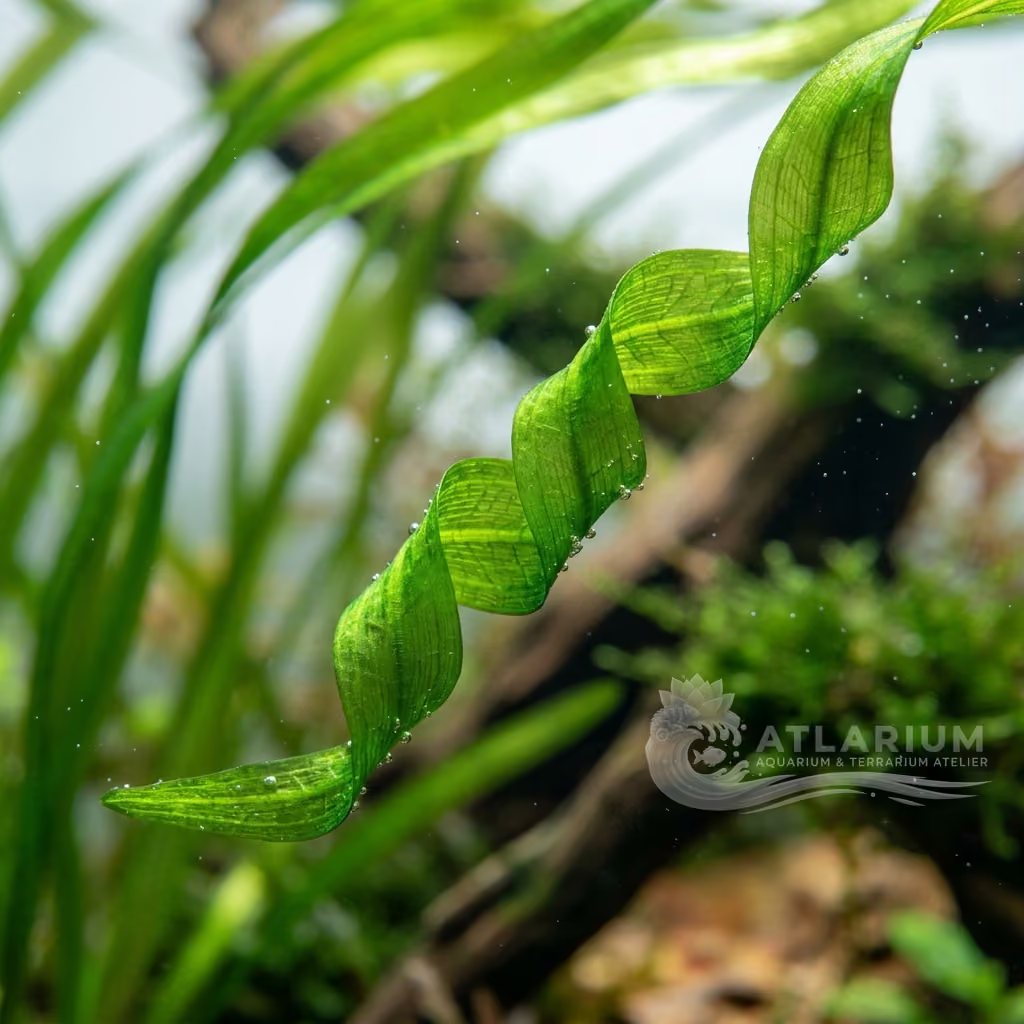
Taxiphyllum taxirameum
Taxiphyllum taxirameum
Taxiphyllum taxirameum is a robust and adaptable moss known for its medium growth rate, making it ideal for midground placement in aquariums. It is widely used to enrich layouts with natural textures, providing shelter and a lush appearance.
Water Temperature
12 - 30 °C
pH Value
5 - 8
Water type
Freshwater
Light
Low to High
CO2
Low - High
Expected height
10 cm
Expected width
10 cm
KH
0 - 14 dKH

Species description
Geographical Origin and Habitat: Taxiphyllum taxirameum, often confused or marketed under similar names to other Asian mosses, originates from the humid, temperate regions of Asia, particularly found in countries like Taiwan, China, and Japan. In its natural habitat, it typically grows submerged or semi-submerged, firmly anchoring itself to rocks, logs, and woody debris along slow to medium-flowing streams. It prefers environments with clean, oxygenated water, often in areas sheltered from direct sunlight, where it can thrive by forming dense cushions.
Taxonomy & Genetics: Belonging to the Hypnaceae family, Taxiphyllum taxirameum shares morphological and genetic characteristics with other aquatic mosses commonly used in aquascaping. The genus Taxiphyllum is vast and includes several species with pinnate or bipinnate branching structures, which sometimes makes precise classification difficult without microscopic analysis. Correct identification is crucial to avoid confusion with closely related species such as Taxiphyllum barbieri (Java moss) or Taxiphyllum sp. 'Flame', although each presents distinctive peculiarities in growth form and branching. As a bryophyte, it lacks a true vascular system, absorbing nutrients directly from the water through its specialized "leaves" or filids.
Physical Structure: The physical structure of Taxiphyllum taxirameum is characterized by thin, irregularly branched stems that form a dense, interwoven mass. Its small "leaves," which are technically filids, are closely arranged along the branches, giving the moss a delicate and feathery appearance. This moss develops fine, filamentous rhizoids that allow it to firmly anchor itself to any surface, such as driftwood, rocks, or mesh, rather than rooting in a substrate in the traditional vascular plant manner. Its growth habit is typically horizontal or slightly erect, tending to spread and cover the surfaces to which it is attached.
Color & Texture: The predominant color of Taxiphyllum taxirameum is a bright, vibrant green, which can range from a medium to a darker shade depending on lighting conditions and nutrient availability. Under intense light and adequate fertilization, the green tends to be more intense and lush. Its texture is incredibly soft and velvety to the touch, creating an appealing visual contrast with harder elements in the aquarium. This feathery appearance and green hue contribute to a natural and calming aesthetic, making it a valuable addition to aquascapes aiming to replicate pristine underwater environments.

Care, breeding and tankmates
Lighting & CO2: Taxiphyllum taxirameum is remarkably versatile regarding lighting, thriving in conditions from low to intense light. Under low light, it will grow slower and with less density, but will still maintain a healthy appearance. Moderate to intense lighting, however, will stimulate faster growth and denser branching, making the moss more compact and vibrant in color. Although not strictly necessary, CO2 supplementation can significantly accelerate its growth and improve its overall health, leading to a more robust structure and a livelier green. Without CO2, the moss will still grow, but at a more subdued pace and with less opulence.
Nutrition & Substrate: This moss absorbs nutrients primarily from the
Water Chemistry: Taxiphyllum taxirameum exhibits remarkable tolerance to a wide range of water parameters, making it suitable for various aquarium types. The ideal temperature ranges between 12.0 and 30.0 C, indicating great flexibility. For pH, it tolerates values from 5.0 to 8.0, embracing both acidic and alkaline waters, though it slightly prefers neutral to slightly acidic values for optimal growth. Carbonate hardness (KH) can range from 0.0 to 14.0, suggesting it adapts well to both soft and hard water. Maintaining stable parameters within these ranges is more important than targeting specific values, as sudden fluctuations can stress the plant.
Space Management & Placement: With its medium growth rate and ability to anchor to various surfaces, Taxiphyllum taxirameum is ideally placed in the midground of the aquarium. It can be skillfully used to soften the harsh lines of driftwood or rocks, creating a natural, aged effect and adding visual depth. It excels at covering aquarium equipment, such as filters or heaters, integrating them seamlessly into the landscape. Furthermore, it can be tied to small stones or fragments to create a movable "carpet" or used to form green walls, providing shelter for fish and invertebrates and enhancing the aquatic habitat's biodiversity.
Pruning: Regular pruning is essential to maintain Taxiphyllum taxirameum in good health and to control its shape and density. Without pruning, the moss can become excessively dense, accumulating detritus and shading lower sections, leading to stunted growth or decay. Trimming longer or older sections helps to promote new, more vigorous growth and to maintain the desired form. The trimmed pieces can be reused to propagate the moss elsewhere in the aquarium by tying them to new surfaces, thus helping to expand the green layout.
Risks & Diseases: While Taxiphyllum taxirameum is generally robust, it can be susceptible to common issues if conditions are not optimal. Algae proliferation, particularly filamentous or brush algae, is the biggest risk, often indicating an imbalance between light and nutrients. Poor water circulation can lead to detritus accumulation within the filids, suffocating the moss and encouraging algae growth. Nutritional deficiencies may manifest as yellowing or bleaching of the tips. It is rare for moss to be affected by specific aquatic plant diseases, but stressful environmental conditions can weaken it, making it more vulnerable to secondary problems.

Geographic origin and distribution
Taxiphyllum taxirameum, often confused or marketed under similar names to other Asian mosses, originates from the humid, temperate regions of Asia, particularly found in countries like Taiwan, China, and Japan. In its natural habitat, it typically grows submerged or semi-submerged, firmly anchoring itself to rocks, logs, and woody debris along slow to medium-flowing streams. It prefers environments with clean, oxygenated water, often in areas sheltered from direct sunlight, where it can thrive by forming dense cushions.
Origin
East AsiaSouth and Southeast Asia

Plant profile
- Placement
- Midground
- This moss is best attached to hardscape materials such as driftwood or rocks, creating natural-looking focal points. It should be positioned in areas with moderate water flow to prevent debris accumulation. It can also be spread over stainless steel mesh to form moss walls or carpets.
- Botanical form
- epiphyte or epilith
- This is a creeping aquatic moss with delicate, finely branched fronds that create a feathery texture. It readily anchors itself to various surfaces using specialized rhizoids. The overall appearance is highly versatile, easily adapting to the shape of the surface it colonizes.
- Growth
- Medium
- Its growth rate is slow to moderate, depending heavily on light intensity and CO2 availability. Under low light, it grows steadily but sparsely, whereas high light promotes a denser structure. Frequent trimming encourages horizontal branching.
- Substrate
- None
- Taxiphyllum taxirameum is a versatile moss that does not require any substrate, as it naturally attaches itself to hardscape materials. Its delicate rhizoids are designed to anchor tightly to rocks, driftwood, or mesh rather than burying into soil. This plant absorbs all its necessary nutrients directly from the water column through its leaves. Attempting to plant it in substrate may lead to the decay of its lower sections due to lack of water flow.
- Column fertilization
- Recommended
- Water column fertilization is the primary method of delivering nutrients to this rootless plant. Liquid fertilizers rich in potassium and micronutrients are highly beneficial. Heavy macronutrient dosing is usually unnecessary unless the tank is heavily planted with fast-growing species.
- Root fertilization
- None
- Root tabs or nutrient-rich substrates have no direct effect on this moss, as it lacks a true root system. It relies entirely on its leaves to absorb dissolved minerals from the water. Therefore, substrate fertilization should be reserved for other rooted plants in the aquarium.
- Trimming
- Occasional
- Trimming should be done regularly using sharp scissors to maintain its shape and prevent the lower layers from dying off due to lack of light. Cut pieces can easily float away, so it is advisable to siphon them out during water changes. Removing dead or algae-covered sections promotes healthier regrowth.
- Propagation
- Cuttings
- Propagation is incredibly simple and simply involves cutting or pulling apart a clump of the moss. The divided portions can then be tied or glued to new pieces of hardscape. Every small fragment has the potential to grow into a completely new colony.
- Sensitivity
- Moderate
- Like most mosses, it is highly sensitive to liquid carbon supplements (glutaraldehyde), which can cause it to melt. It is also prone to accumulating detritus, making it susceptible to hair algae if water circulation is poor. Ensure a clean environment and avoid extreme temperature fluctuations.
- Layout role
- Epiphyte, Nano, Midground, group
- It is widely used to soften the harsh edges of hardscape and provide a natural, aged look to the aquarium. The intricate structure offers excellent hiding places for shrimp and small fry. In aquascaping, it is an invaluable tool for creating details and enhancing depth.

Related species
Recommendations grouped by close relatives, companion choices, and similar care.