Vesicularia montagnei "Christmas Moss"
Vesicularia montagnei "Christmas Moss"
Vesicularia montagnei "Christmas Moss" is a versatile midground moss, valued for its distinctive branching and slow growth rate. It creates lush, textured accents on hardscape or as a foreground carpet, significantly enhancing the natural aesthetic of any aquascape.
Water Temperature
15 - 30 °C
pH Value
5 - 7
Water type
Freshwater
Light
Low to High
CO2
Low - High
KH
0 - 14 dKH

Species description
Geographical Origin and Habitat: Vesicularia montagnei, commonly known as Christmas Moss, originates primarily from Southeast Asia, where it thrives in humid, shaded environments. This includes regions like Japan, Thailand, and the Philippines, often found growing submerged or emersed on rocks, driftwood, and riverbanks in slow-moving streams or flooded areas. Its natural habitat suggests a preference for clean, stable water conditions and moderate light exposure.
Taxonomy & Genetics: Belonging to the family Hypnaceae, Vesicularia montagnei is a true moss, a bryophyte well-adapted to aquatic life, though not strictly an aquatic plant. The "Christmas Moss" moniker is derived from its unique, densely branched fronds that resemble the triangular shape of a fir tree or Christmas tree when healthy and well-established. Distinguishing it from similar mosses often requires close observation of its leaf shape and branching patterns, which are more regular and compact than some other Vesicularia species.
Physical Structure: Christmas Moss exhibits a distinctive branching structure, forming small, triangular fronds that layer upon each other to create a dense, bushy appearance. Each stem is relatively delicate, adorned with numerous tiny, overlapping leaves that contribute to its characteristic textured look. This moss anchors itself to surfaces using fine rhizoids, which are not true roots but serve primarily for attachment rather than nutrient absorption.
Color & Texture: In optimal conditions, Christmas Moss displays a vibrant, rich green coloration, ranging from bright emerald to a deeper forest green depending on light intensity and nutrient availability. The texture is soft and feathery to the touch, creating a lush, velvety carpet when grown densely. When stressed or lacking nutrients, its color may dull or show hints of brown, losing its characteristic vibrancy.

Care, breeding and tankmates
Lighting & CO2: Christmas Moss is adaptable to a wide range of light intensities, from low to high, though moderate lighting typically encourages its most desirable compact growth and rich coloration. Under low light, growth will be slower and less dense, while high light can accelerate growth but also increase the risk of algae accumulation if not managed correctly. While not strictly necessary, CO2 supplementation significantly boosts its growth rate and promotes a more vigorous, bushy appearance, resulting in faster establishment and denser coverage.
Nutrition & Substrate: As an epiphyte, Christmas Moss primarily absorbs nutrients directly from the
Water Chemistry: This moss thrives in a broad range of water parameters, preferring temperatures between 15.0 and 30.0 °C, with cooler temperatures sometimes enhancing its compact growth. A slightly acidic to neutral pH of 5.0-7.0 is ideal, though it can tolerate slightly higher pH levels. The KH tolerance is quite wide, from 0.0 to 14.0, indicating its adaptability to various water hardness levels, but stable parameters within these ranges are always best to prevent stress.
Space Management & Placement: Christmas Moss is best placed in the midground of an aquascape, where it can be attached to driftwood, rocks, or even stainless steel mesh to create stunning natural formations. Its slow to moderate growth makes it manageable, yet it can form dense cushions or "moss trees" when allowed to grow undisturbed. Ensure good water circulation around the moss to prevent debris accumulation and support healthy growth.
Pruning: Regular pruning is essential to maintain the desired shape and density of Christmas Moss, as well as to prevent it from becoming too thick, which can lead to lower sections rotting due to lack of light and circulation. Overgrown moss can also trap debris, contributing to algae issues. Pruning encourages bushier growth and helps maintain its characteristic triangular form, promoting a healthier and more aesthetically pleasing plant.
Risks & Diseases: Christmas Moss is generally robust, but its primary vulnerability lies in algae infestation, particularly thread or hair algae, which can easily become entangled in its fine fronds. Poor water quality, excessive light, or nutrient imbalances often trigger algae outbreaks. While specific diseases are rare for mosses, lack of essential nutrients or prolonged exposure to unfavorable water conditions can lead to browning, melting, or overall decline.

Geographic origin and distribution
Vesicularia montagnei, commonly known as Christmas Moss, originates primarily from Southeast Asia, where it thrives in humid, shaded environments. This includes regions like Japan, Thailand, and the Philippines, often found growing submerged or emersed on rocks, driftwood, and riverbanks in slow-moving streams or flooded areas. Its natural habitat suggests a preference for clean, stable water conditions and moderate light exposure.
Origin
South and Southeast AsiaEast Asia

Plant profile
- Placement
- Midground
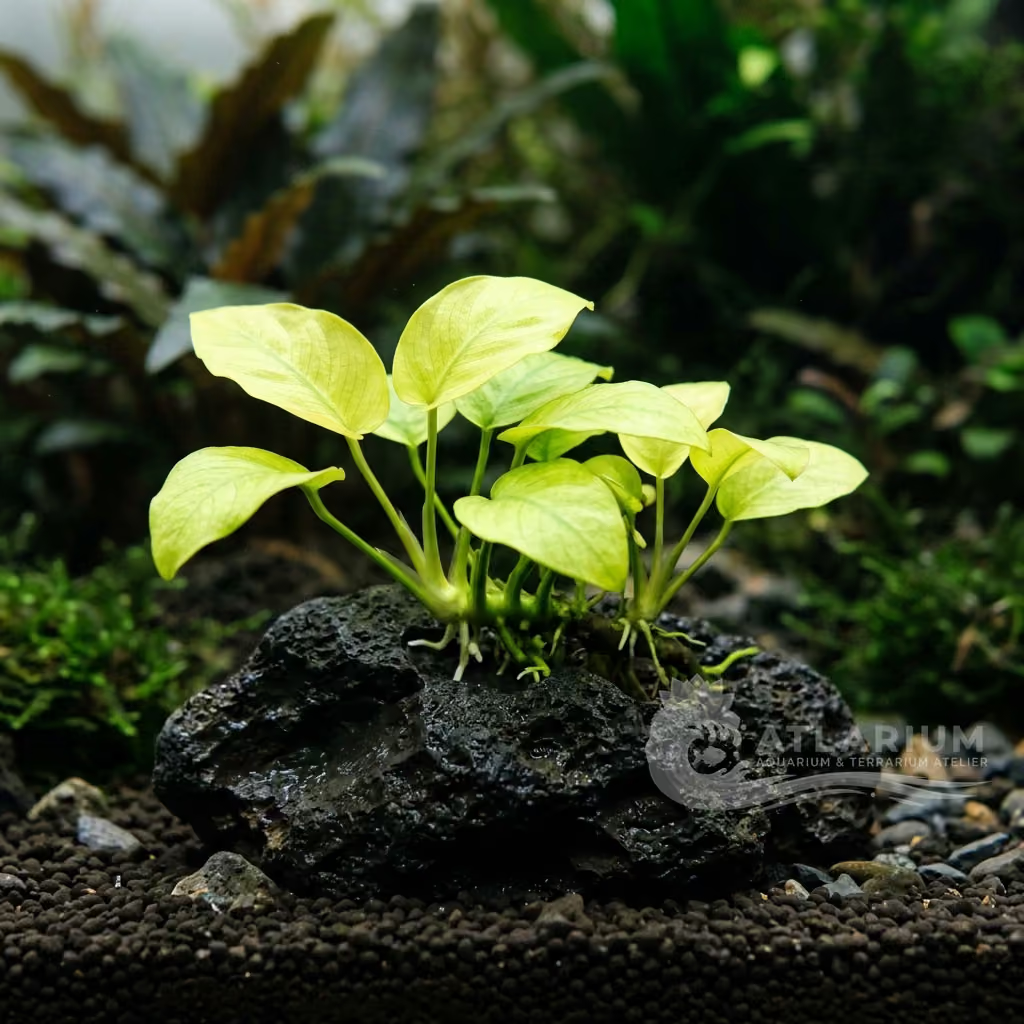
- This moss is best utilized attached to hardscape elements such as driftwood or rocks. Tying or gluing Vesicularia montagnei "Christmas Moss" to roots allows it to create a beautiful aged appearance in the aquascape. It should be placed in areas with moderate to good water flow to keep it clean. It can also be used as a foreground carpet if secured to meshes.
- Botanical form
- epiphyte or epilith
- Vesicularia montagnei "Christmas Moss" forms dense, intertwined cushions or creeping mats. It lacks true roots and instead uses rhizoids to anchor itself to various surfaces. Its regular triangular fronds resembling fir trees provide exceptional texture and detail to miniature aquascapes. The fine leaf structure acts as an excellent refuge for microfauna and shrimp.
- Growth
- Slow
- The growth rate of Vesicularia montagnei "Christmas Moss" is generally slow to moderate, depending on environmental factors. Higher light intensity and CO2 injection will modestly increase its growth pace and make it more compact. Its slow growth is advantageous as it requires less frequent maintenance. Cooler water temperatures often yield healthier and tighter fronds.
- Substrate
- None
- Christmas Moss (Vesicularia montagnei) operates entirely as an epiphyte, meaning it draws zero nutrients from aquarium substrates. This moss should be affixed to porous rocks or textured driftwood, allowing its tiny rhizoids to grip the surface tightly. All of its nutritional intake occurs directly through its leafy fronds from the surrounding water column. Planting it in soil or sand will restrict flow and induce rotting, so it relies completely on hardscape rather than substrate for support.
- Column fertilization
- Recommended
- Because it relies entirely on the water column for sustenance, liquid fertilization is essential for Vesicularia montagnei "Christmas Moss". It appreciates a steady supply of micronutrients, especially iron, to maintain a deep green coloration. Avoid large, sudden spikes in nutrients as this can trigger hair algae growth within the moss. Regular, small doses of fertilizer yield the best results.
- Root fertilization
- None
- Root fertilization is completely unnecessary for Vesicularia montagnei "Christmas Moss" as it does not possess a true root system. Substrate additives and root tabs will have no direct benefit for this epiphyte. It is strictly a column feeder that absorbs what it needs through its foliage. Focus entirely on maintaining appropriate water chemistry and liquid dosing.
- Trimming
- Occasional
- Trimming Vesicularia montagnei "Christmas Moss" is straightforward but requires some care to prevent small clippings from spreading uncontrollably. Using sharp aquascaping scissors, trim the outer layers to maintain its compact shape. It is highly recommended to siphon the water out simultaneously while cutting to catch the trimmings. A rigorous trimming session will encourage a denser, more attractive regrowth.
- Propagation
- Cuttings
- Propagating Vesicularia montagnei "Christmas Moss" is incredibly simple and can be done at any time. Simply pull apart or cut a clump of the moss into smaller portions. These fragments can then be attached to new hardscape pieces using cyanoacrylate superglue or cotton thread. Over time, each small piece will anchor itself and grow into a new, full cushion.
- Sensitivity
- Moderate
- Like many mosses, Vesicularia montagnei "Christmas Moss" is prone to accumulating detritus, which can lead to unsightly algae blooms if ignored. It is generally sensitive to high doses of liquid carbon (glutaraldehyde), which can cause the delicate fronds to turn white and die. Algae eaters like Amano shrimp or Cherry shrimp are invaluable for keeping the moss clean. Ensure adequate water flow to flush out debris.
- Layout role
- Epiphyte, Nano
- Vesicularia montagnei "Christmas Moss" serves as a crucial detailing plant in the aquascape, softening the harsh edges of rocks and wood. It creates a sense of maturity and age, making a newly setup tank look like an ancient, natural biotope. It is exceptionally well-suited for nano aquariums and shrimp breeding setups. Its unique regular triangular fronds resembling fir trees create a highly sought-after aesthetic.

Related species
Recommendations grouped by close relatives, companion choices, and similar care.