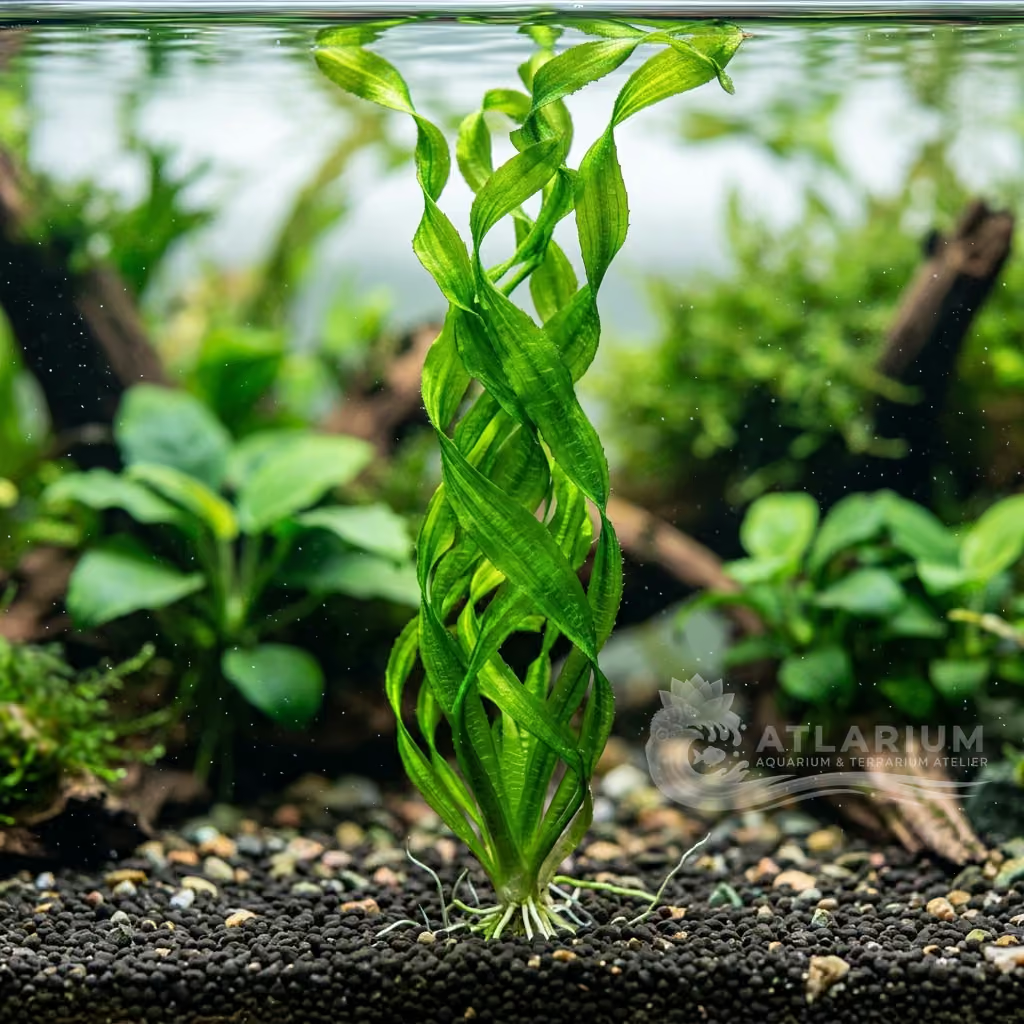
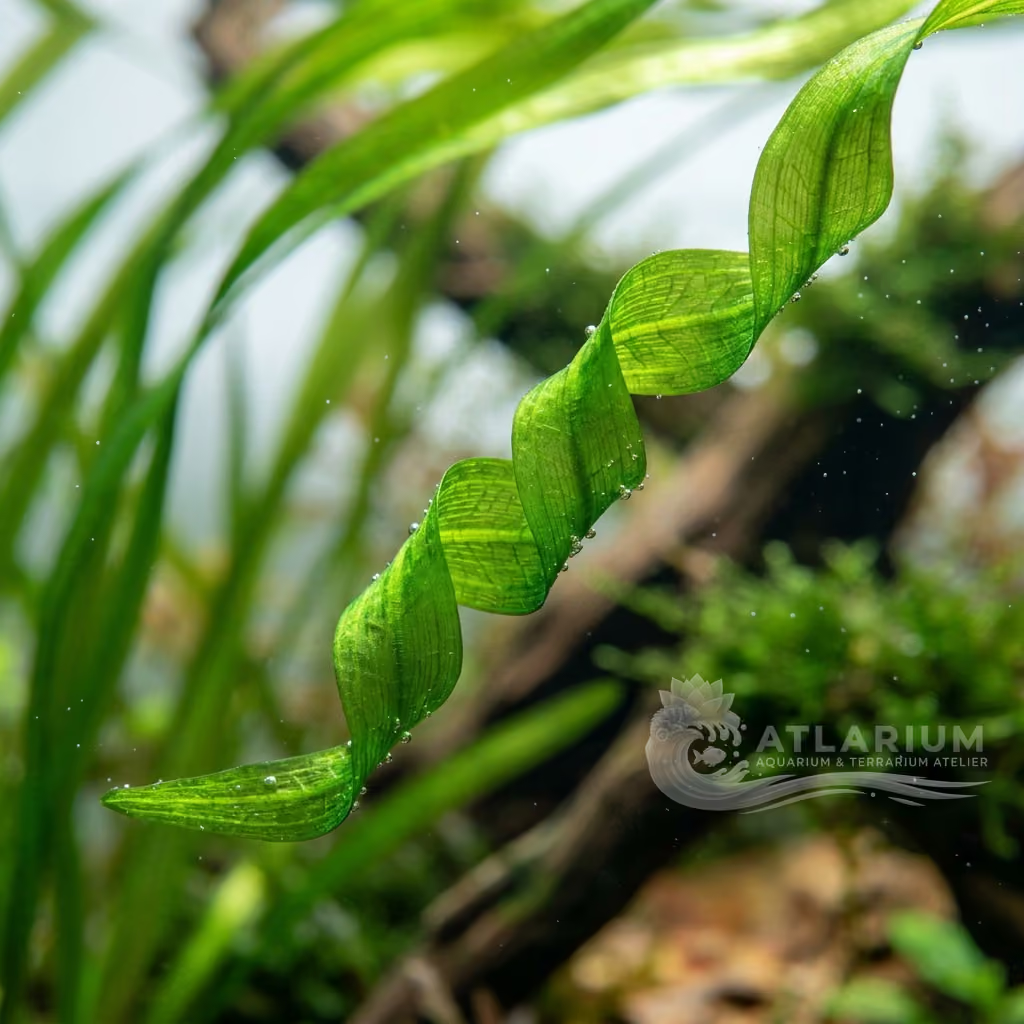
Taxiphyllum sp. "Spiky Moss"
Taxiphyllum sp. "Spiky Moss"
Taxiphyllum sp. "Spiky Moss" is an attractive and resilient moss, perfect for the midground in freshwater aquariums, valued for its dense growth and distinctive spiky texture.
Water Temperature
12 - 34 °C
pH Value
5 - 8
Water type
Freshwater
Light
Low to High
CO2
Low - High
Expected height
10 cm
Expected width
10 cm
KH
0 - 14 dKH

Species description
Geographical Origin and Habitat: This Taxiphyllum, commonly known as "Spiky Moss," is believed to originate from the tropical and subtropical regions of Asia, although its exact species identification remains undetermined, hence the "sp." designation. Its natural habitat often sees it growing attached to submerged rocks or driftwood along the banks of clear, flowing streams, benefiting from moderate current and good oxygenation. Wild growth conditions are characterized by a wide tolerance for varying water qualities and light intensities, reflecting its resilience in the aquarium environment as well.
Taxonomy & Genetics: Belonging to the Hypnaceae family, Taxiphyllum sp. "Spiky Moss" is a pleurocarpous moss, meaning it grows in a creeping and branching manner, forming dense mats. The "sp." designation in its scientific name indicates that it is either a species not yet formally described or identified within the Taxiphyllum genus, or a cultivated variant with unique characteristics. Its popularity is primarily due to its distinct morphology and relatively easy cultivation, making it a staple in contemporary aquascaping.
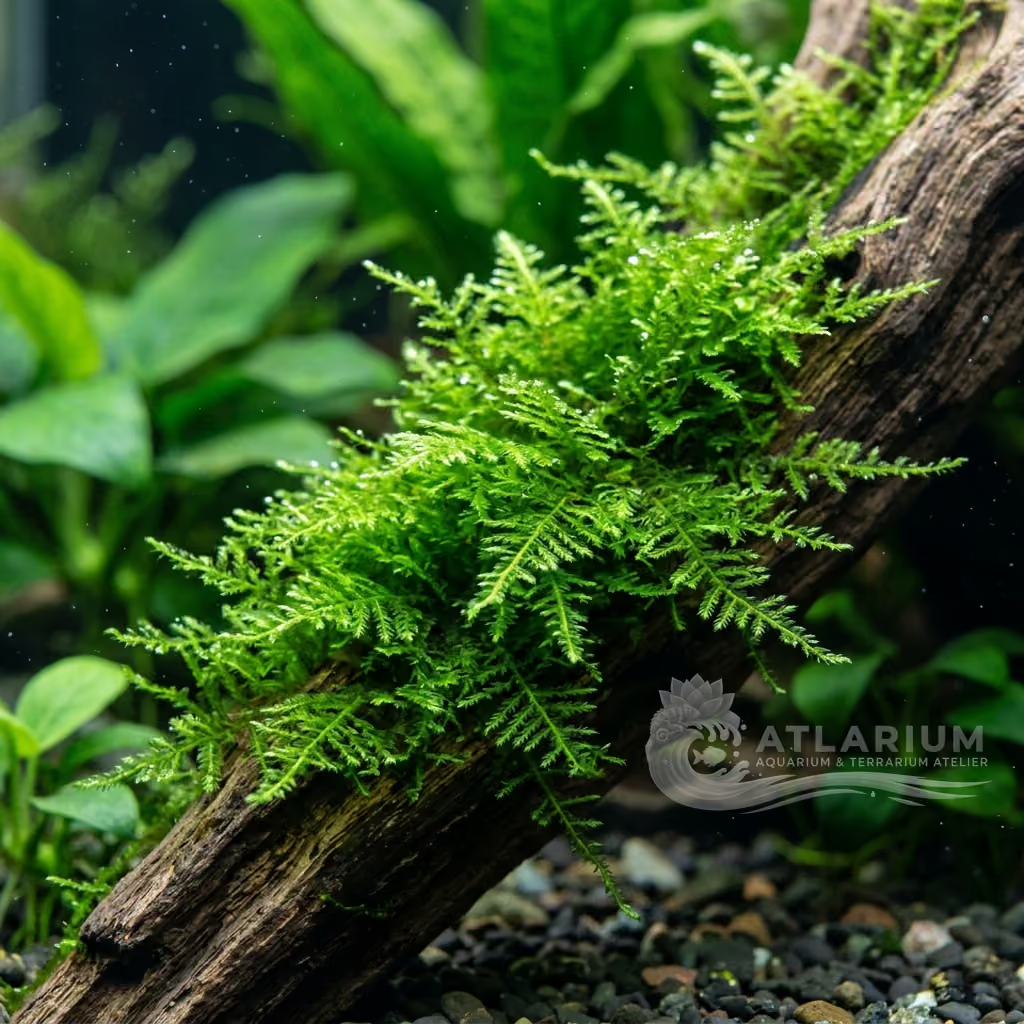
Physical Structure: The physical structure of "Spiky Moss" is what gives it its common name, characterized by compactly branched fronds that feature small, pointed, and tightly arranged leaves, creating a "spiky" or "prickly" effect. This dense and intricate growth develops in multiple layers, giving the moss a three-dimensional appearance and significant visual depth. It attaches tenaciously to substrates like rocks and driftwood using thin, non-rooting rhizoids, which allow it to anchor itself without absorbing nutrients from the substrate itself.
Color & Texture: The color of Taxiphyllum sp. "Spiky Moss" is a vibrant, bright green under good lighting and adequate nutrient supplementation, which can intensify to a deeper, darker green under more moderate light conditions. Its texture is surprisingly lush and dense, forming soft yet structured cushions that add significant visual interest to the aquarium. This "spiky" appearance contributes to creating a sense of naturalness and complexity, while also providing excellent shelter for microfauna and small fish.

Care, breeding and tankmates
Lighting & CO2: "Spiky Moss" exhibits remarkable flexibility regarding lighting, thriving in conditions from low to high light intensity. With more intense light and CO2 supplementation, the moss will develop faster, denser, and more compact growth, also intensifying its green coloration. While CO2 injection is not strictly necessary for its survival, its presence is highly recommended to optimize growth and achieve the more pronounced characteristic "spiky" form. Ensuring good water circulation is equally important, as it helps distribute nutrients and prevent detritus buildup on the moss.
Nutrition & Substrate: As an epiphytic moss, Taxiphyllum sp. "Spiky Moss" absorbs most of its nutrients directly from the water column and does not require a rich substrate for its growth. However, it greatly benefits from balanced liquid fertilization that includes both macronutrients (nitrogen, phosphorus, potassium) and micronutrients (iron, manganese, etc.). Adequate iron supply is particularly important for maintaining a vibrant green coloration and preventing yellowing. A specific substrate is not necessary, but it can be tied or allowed to grow on rocks or driftwood.
Water Chemistry: "Spiky Moss" is remarkably tolerant of a wide range of water parameters, thriving in temperatures ranging from 12.0 to 34.0 C, with a pH between 5.0 and 8.0, and a carbonate hardness (KH) from 0.0 to 14.0. This broad tolerance makes it suitable for almost all types of freshwater aquariums, from Asian biotopes to more general setups. However, like most aquatic plants, it prefers stable and clean conditions; avoiding extreme fluctuations and sudden changes in water parameters is crucial for its long-term health.
Space Management & Placement: Due to its nature as a moss and its ability to attach to surfaces, "Spiky Moss" is extremely versatile for midground placement in an aquascape. It can be tied or glued to driftwood and rocks to create lush moss effects on "trees" or "mountains," or used to soften transitions and hide equipment. Its dense growth also makes it ideal for creating small carpets on the substrate, adding depth and texture to the landscape. Its adaptability allows designers to use it in various creative ways to achieve the desired effect.
Pruning: Regular pruning is essential to maintain the desired shape of "Spiky Moss" and prevent excessive organic matter buildup that could suffocate it or encourage algae growth. Without pruning, the moss can become too dense and begin to decompose in the inner parts, compromising its overall health. Pruning stimulates more compact and bushy growth, helping to keep its appearance fresh and vibrant. This process is fundamental for the long-term management of the moss in a planted aquarium.
Risks & Diseases: The main risk for Taxiphyllum sp. "Spiky Moss" is algae infestation, particularly filamentous or brush algae, which can get trapped within its dense fronds. This problem is often exacerbated by excessive or unbalanced lighting, an excess of nutrients in the water column, or poor water circulation. While not particularly susceptible to specific aquatic plant diseases, an unhealthy environment can lead to stunted growth or decline. Keeping the aquarium clean and well-balanced is the best defense against these issues.

Geographic origin and distribution
This Taxiphyllum, commonly known as "Spiky Moss," is believed to originate from the tropical and subtropical regions of Asia, although its exact species identification remains undetermined, hence the "sp." designation. Its natural habitat often sees it growing attached to submerged rocks or driftwood along the banks of clear, flowing streams, benefiting from moderate current and good oxygenation. Wild growth conditions are characterized by a wide tolerance for varying water qualities and light intensities, reflecting its resilience in the aquarium environment as well.
Origin
South and Southeast AsiaEast Asia

Plant profile
- Placement
- Midground
- Best utilized by attaching it to hardscape elements like wood or rocks in the midground or background. It tends to grow quite large and thick, making it less suitable for delicate foreground details. It requires adequate space to showcase its prominent, spiky growth pattern. Ensure good flow to prevent detritus buildup.
- Botanical form
- moss / liverwort or fern prothallium
- Features large, thick, and distinctly pointed fronds that resemble small green spikes, giving it a somewhat coarse texture. It is often described as a larger, more aggressive version of Christmas moss. The side shoots vary in length, creating an irregular, deeply textured appearance. It forms very thick, deep green mats.
- Growth
- Medium
- Grows relatively fast, especially when provided with strong light and CO2. It quickly forms large, imposing clumps that can dominate smaller hardscape pieces. Its robust growth means it requires more frequent trimming than slower-growing mosses. If left unchecked, it will aggressively cover surrounding surfaces.
- Substrate
- None
- Spiky Moss possesses no true root system, rendering the aquarium's substrate depth and composition entirely irrelevant to its cultivation. It prefers to be bound to textured hardscape, where it deploys short rhizoids to maintain a firm grip in the current. All essential elements are directly absorbed from the surrounding water, bypassing the substrate completely.
- Column fertilization
- Recommended
- Relies completely on the water column to meet its nutritional needs. Occasional dosing of liquid fertilizers will keep it growing vigorously and maintain its deep green coloration. It is very efficient at pulling nitrates from the water. A balanced nutrient profile helps prevent the lower layers from deteriorating rapidly.
- Root fertilization
- None
- Lacks a true root system and only uses rhizoids to anchor itself. Substrate fertilizers provide no benefit to this moss. It must receive all its nutrition directly from the surrounding water. It should never be planted into the gravel or soil.
- Trimming
- Occasional
- Requires regular and sometimes aggressive trimming to manage its fast growth and thick structure. Because it grows so densely, the lower layers are very prone to dying off if light cannot penetrate. Trimming helps keep the patch secure on its hardscape. Loose trimmings must be removed to prevent them from taking over the tank.
- Propagation
- Cuttings
- Propagation is incredibly easy through simple division. Cut or tear a section from the main plant and attach it to a new surface using glue or thread. Even small fragments will quickly establish themselves and grow into large clumps. It is an excellent moss for quickly covering large areas of hardscape.
- Sensitivity
- Moderate
- Very robust but can be prone to collecting dirt and detritus due to its dense, spiky nature. This can lead to localized algae issues if water flow is insufficient. It is generally tolerant of a wide range of temperatures and parameters. Liquid carbon should be used cautiously, as with most mosses.
- Layout role
- Epiphyte, Nano, Midground, group
- Excellent for creating large, dramatic textures in the midground or background of an aquascape. Its coarse, spiky appearance provides strong contrast against fine-leaved stem plants. It is very effective for hiding equipment or softening large, bulky pieces of hardscape. It provides substantial cover for fish fry and shrimp.

Related species
Recommendations grouped by close relatives, companion choices, and similar care.