PlantFreshwaterEasy
©AI Generated·Proprietary
Glossadelphus zollingeri
Glossadelphus zollingeri
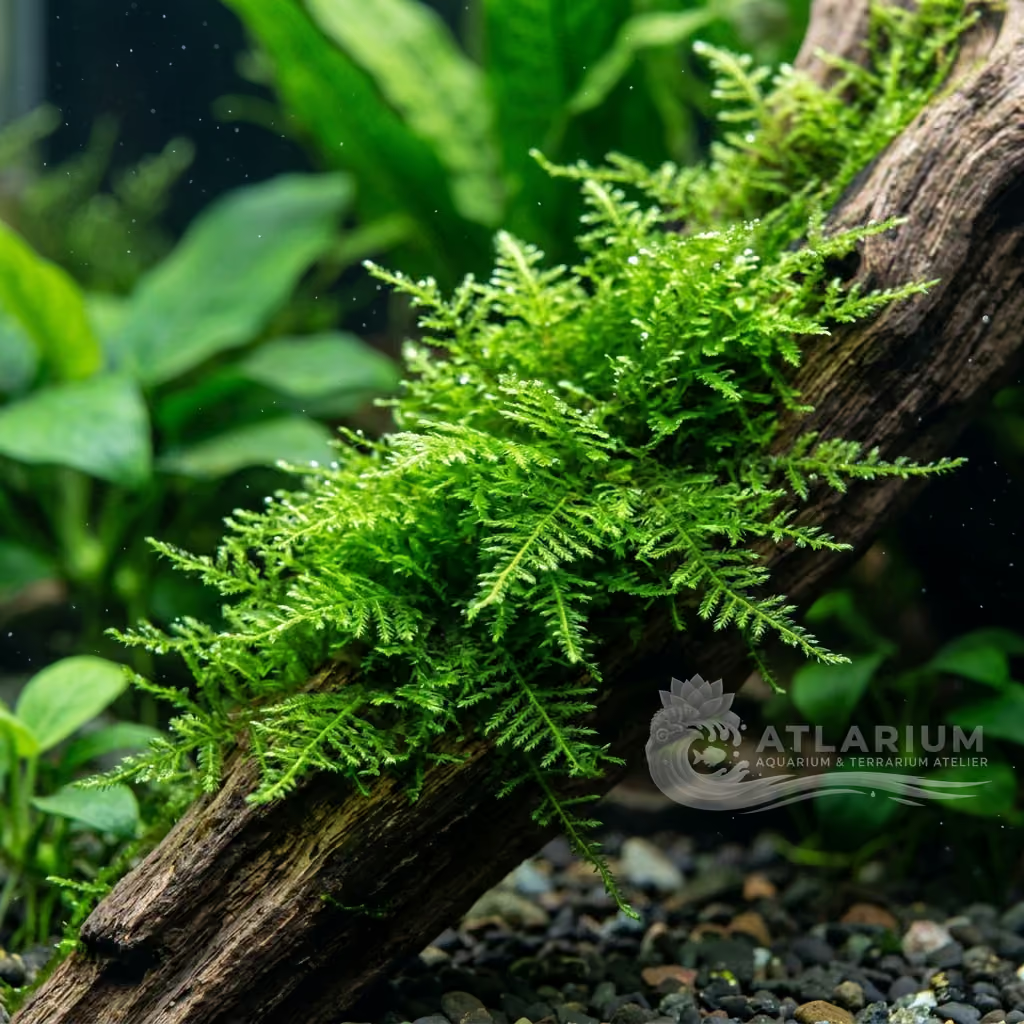
Glossadelphus zollingeri: a rare and decorative aquatic moss for the midground, with a medium growth rate. Forms dense green cushions anchored to rocks and driftwood.
- Taxonomy
- Class:LiliopsidaOrder:HypnalesFamily:HypnaceaeGenus:GlossadelphusSpecies:Glossadelphus zollingeri
Share
Check out Glossadelphus zollingeri on Atlarium
Water Temperature
15 - 28 °C
pH Value
5 - 7.5
Water type
Freshwater
Light
Low
CO2
Low
GH
0 - 20 dGH
KH
0 - 14 dKH
Species description

Geographical Origin and Habitat: Glossadelphus zollingeri is a moss native to the tropical regions of Southeast Asia, particularly Indonesia (Java and Sumatra). It grows in humid forest environments, attached to wet rocks near waterfalls, stream banks, and rock faces sprayed by water, adapting to low light conditions in the forest understory.
Taxonomy & Genetics: It belongs to the Hypnaceae family and is still a relatively uncommon moss species in the aquarium trade. Genetically and physiologically, it features leaf cells with thickened walls that make it resistant to the mechanical stress of water flow, allowing tenacious anchoring via rhizoids.
Physical Structure: It features creeping, flattened, and densely branched stems that grow in close contact with solid surfaces. The tiny leaves are ovate-lanceolate in shape with slightly serrated tips. It does not develop roots but anchors firmly to rocks, wood, or other rough supports.
Color & Texture: The color is a deep, intense dark green, taking on lighter and brighter shades at the growing tips. The texture is extremely dense, fine, and compact, creating the appearance of a soft, velvety cushion covering the hardscape elements of the aquarium.
Care, breeding and tankmates

Lighting & CO2: Adapts well to low to moderate light conditions; too intense lighting can encourage algae settlement among its fronds. CO2 is not essential, but it stimulates denser growth and a higher rate of propagation.
Nutrition & Substrate: As an epiphytic moss, it must not be buried in the substrate. It absorbs necessary nutrients directly from the
Water Chemistry: Prefers soft to medium-hard water, with a slightly acidic to neutral pH between 6.0 and 7.2. The ideal temperature is between 18 and 26 °C; it suffers in excessively warm water (above 27 °C), where it can yellow and decay.
Space Management & Placement: Excellent for the midground, anchored to rocks, wood, or cracks in the hardscape using cotton thread (which will decompose over time) or aquarium cyanoacrylate glue. It is perfect for small aquariums and nano tanks.
Pruning: Pruning consists of periodically trimming the cushion with sharp scissors to keep it compact and prevent the underlying parts from rotting due to lack of light. The removed portions can be reused to colonize other supports.
Risks & Diseases: The main risk is the accumulation of dirt and organic debris between the dense stems, which can suffocate the moss and promote the growth of filamentous or brush algae. Good water movement and efficient filtration are essential.
Geographic Origin and Distribution

Glossadelphus zollingeri is a moss native to the tropical regions of Southeast Asia, particularly Indonesia (Java and Sumatra). It grows in humid forest environments, attached to wet rocks near waterfalls, stream banks, and rock faces sprayed by water, adapting to low light conditions in the forest understory.
Origin
South and Southeast Asia
Plant profile

- Placement
- Midground
- It is an excellent choice for the foreground or midground, where it can be attached to small stones or prominent pieces of wood to create natural, creeping accents. Its dense, downward-growing habit makes it ideal for simulating weeping foliage over hardscape edges. Ensure it is placed in an area with good circulation but moderate light, as overly intense lighting can invite algal growth. It provides superb grazing grounds and shelter for dwarf shrimp.
- Botanical form
- Epiphyte
- This moss features creeping, irregularly branched stems densely covered with small, slightly flattened, and overlapping green leaves. The overall texture is very soft and slightly spongy, with the fronds often arching gracefully downwards. Its deep green coloration contrasts beautifully against lighter hardscape materials. The dense, mat-like growth habit makes it a very appealing, textured addition to detailed aquascapes.
- Growth
- Medium
- The growth rate is generally slow to moderate, depending heavily on the availability of CO2 and the lighting intensity. When provided with injected CO2 and cooler water temperatures, it forms dense, compact cushions more rapidly. Without CO2, it will survive but growth will be extremely slow and potentially sparse. Regular, careful trimming is recommended to encourage lateral branching and a thicker overall mass.
- Substrate
- None
- This moss is an epiphyte and lacks true roots, making the type of substrate in the aquarium irrelevant to its nutritional needs. It utilizes small rhizoids to attach itself to hard surfaces. It should never be planted into gravel, soil, or sand, as burying it will lead to immediate rotting. It is best grown tied or glued to rocks, driftwood, or stainless steel mesh.
- Column fertilization
- Recommended
- Liquid column fertilization is the only effective way to nourish this plant. Dosing a high-quality, comprehensive liquid fertilizer containing both macro and micronutrients is recommended. It is crucial to maintain a lean dosing regimen to avoid nutrient spikes that trigger algae, which can easily ruin the moss. Consistent, low-dose column fertilization produces the most stable and attractive growth.
- Root fertilization
- None
- Root fertilization is entirely inapplicable to Glossadelphus zollingeri. Having no roots, it cannot absorb nutrients from soil or root tabs. Applying fertilizers to the substrate will yield no benefits for this moss and should only be done for neighboring rooted plants.
- Trimming
- Occasional
- It rarely needs trimming due to its exceptionally slow growth. Maintenance mostly involves removing decaying parts or pulling out stray algae strands. If it overgrows its boundaries, simply snip the creeping edges.
- Propagation
- Cuttings
- Propagation is very simple and is achieved by manual division. A healthy clump can be gently pulled apart or snipped with scissors into smaller portions. These fragments can then be tied with cotton thread or glued using cyanoacrylate to new pieces of hardscape. Given good water conditions, the divided pieces will attach themselves and begin to form new, dense patches.
- Sensitivity
- Moderate
- It requires extremely clean water and is highly susceptible to being smothered by detritus. Algae blooms are its biggest enemy, as they can quickly cover its slow-growing fronds. Consistent water changes and good filtration are mandatory for success.
- Layout role
- Midground, Epiphyte, Nano
- Excellent for creating a dark, natural-looking moss carpet directly over hardscape elements. It is widely used in highly detailed nature aquariums to add a sense of maturity. Its creeping habit makes it perfect for softening the transition between rocks.
Image gallery
Licensed images linked to the species or, when marked, to the closest representative taxon.

Related species
Recommendations grouped by close relatives, companion choices, and similar care.