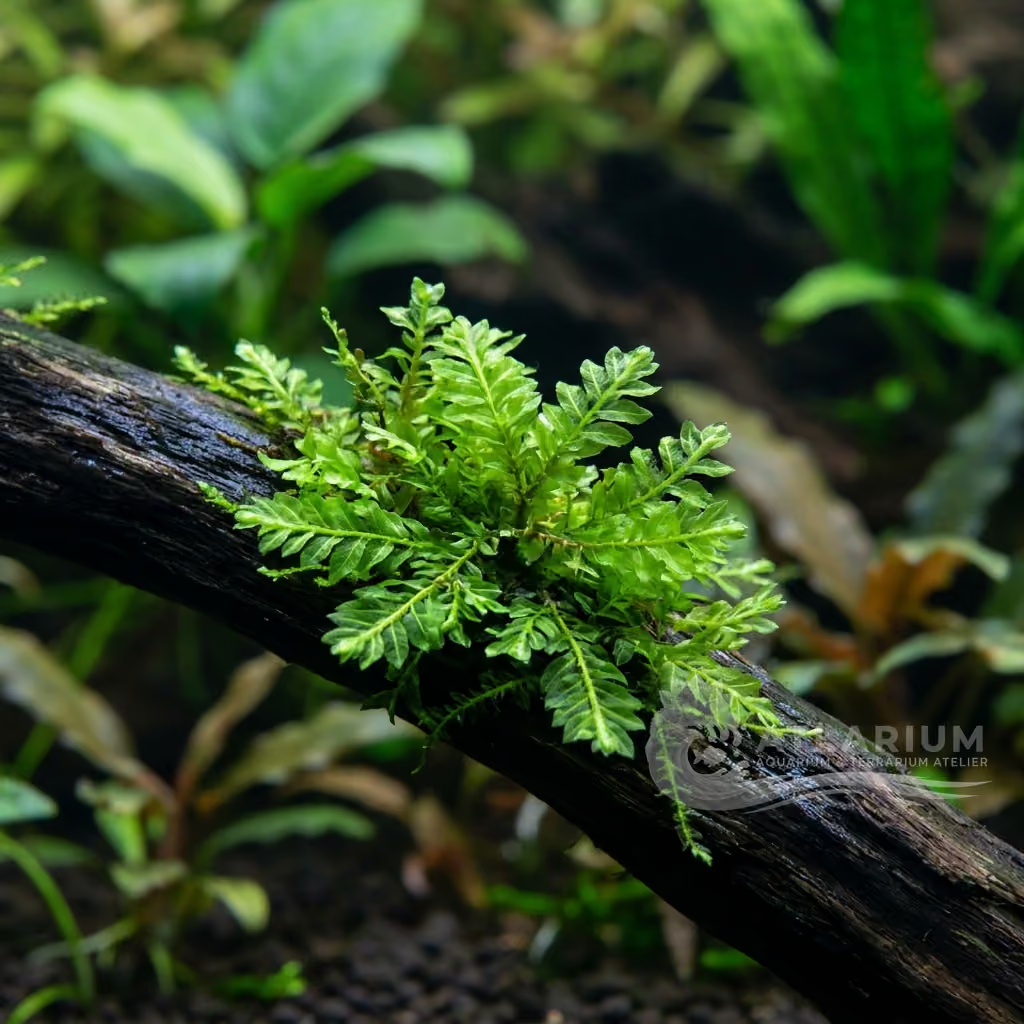
Amblystegiaceae sp. "Manaus"
Amblystegiaceae sp. "Manaus"
Tropical South American moss known as Queen Moss. Adaptable to low light, but thrives and grows denser with moderate to high light and CO2 injection.
Water Temperature
15 - 28 °C
pH Value
5.5 - 7.5
Water type
Freshwater
Light
Medium - High
CO2
Low
GH
0 - 20 dGH
KH
0 - 14 dKH

Species description
Geographical Origin and Habitat: This aquatic moss, commercially known as "Queen Moss" or "Manaus Moss", originates from the tropical regions of South America, specifically the area surrounding the city of Manaus in the Amazon basin of Brazil. In the wild, it colonizes the margins of slow-flowing rivers, shaded forest streams, and humid rainforest wetlands. It grows anchored to fallen logs, wet rocks, and submerged or partially emersed plant debris, benefiting from the high humidity and organic-rich waters of the Amazonian forest.
Taxonomy & Genetics: It belongs to the Amblystegiaceae family, a group of pleurocarpous mosses widely distributed in damp and aquatic environments. The exact classification at the genus and species level remains tentative in the aquarium hobby, where it is referred to simply as Amblystegiaceae sp. "Manaus". Genetically, it exhibits adaptations typical of tropical shade mosses, including high photosynthetic efficiency under low light and a cellular structure built to retain moisture during short dry spells.
Physical Structure: It features a creeping, highly branched growth structure. The moss filaments or fronds are dense and grow mostly horizontally or slightly cascading, forming thick, compact cushions. Rhizoids, which are small root-like structures, are used solely to anchor the plant firmly onto rough surfaces of wood and rocks, while the moss absorbs water and nutrients directly through its single-cell-thick leaves.
Color & Texture: It possesses a bright green color, ranging from deep emerald green to lighter, golden-green tips during active growth. The visual texture is extremely fine and feathery, with tiny leaves densely packed along the branches. To the touch, the moss is soft, flexible, and sponge-like, providing an ideal shelter for microfauna, fry, and small invertebrates like dwarf shrimp.

Care, breeding and tankmates
Lighting & CO2: It tolerates a wide range of light conditions, from very low to high. Under moderate to high light combined with CO2 injection, growth becomes significantly faster and denser, with more pronounced branching. While CO2 is not mandatory, it improves the overall health of the moss and prevents the shaded inner sections of the clumps from dying off.
Nutrition & Substrate: It does not require any fertile substrate, as it is an epiphyte that absorbs nutrients directly from the
Water Chemistry: It thrives in soft, slightly acidic water typical of its native Amazonian habitats, with an optimal pH range between 5.5 and 7.5. However, it can adapt to moderately hard conditions. The ideal temperature range is 20°C to 28°C; constant temperatures above 29°C can cause the moss to turn yellow and die.
Space Management & Placement: As an epiphyte, it is ideal for placement in the midground of the aquarium, attached to driftwood, roots, or rocks. It can be secured using nylon line, biodegradable cotton thread, or aquarium-safe cyanoacrylate glue. Over time, the moss will anchor itself to the hardscape, covering surfaces with a lush green carpet.
Pruning: Pruning is done simply by trimming overgrown clumps with sharp aquascaping scissors. It is important to net out and remove the trimmed pieces from the water to prevent them from spreading and clogging filters. Regular trimming keeps the moss compact and prevents the base from rotting due to light deprivation.
Risks & Diseases: The main risk is the accumulation of organic detritus within the filaments, which can promote cyanobacteria or hair algae growth. Keeping dwarf shrimp (such as Neocaridina or Caridina) is highly beneficial, as they constantly clean the moss. Sudden parameter swings or harsh algaecides can also damage the plant.

Geographic origin and distribution
This aquatic moss, commercially known as "Queen Moss" or "Manaus Moss", originates from the tropical regions of South America, specifically the area surrounding the city of Manaus in the Amazon basin of Brazil. In the wild, it colonizes the margins of slow-flowing rivers, shaded forest streams, and humid rainforest wetlands. It grows anchored to fallen logs, wet rocks, and submerged or partially emersed plant debris, benefiting from the high humidity and organic-rich waters of the Amazonian forest.
Origin
Amazon, Orinoco, and Guianas

Plant profile
- Placement
- Midground
- It is ideally placed attached to hardscape materials such as driftwood, rocks, or mesh pads in the foreground or midground. Because it does not root into the substrate, it must be tied down with cotton thread or fishing line until its rhizoids anchor naturally. Placing it in an area with gentle to moderate water flow helps keep it free of detritus. It should not be buried in gravel or sand, as the covered portions will quickly rot.
- Botanical form
- Moss
- This moss features delicate, branching fronds that create a soft, feathery appearance underwater. The stems are extremely thin, covered in tiny, vibrant green leaves that can vary slightly in shape depending on the specific gravity and flow. It naturally tends to grow outward and upward, often creating a creeping or weeping effect over hardscape. The overall structure provides excellent hiding places for small shrimp and fish fry.
- Growth
- Medium
- The growth rate is moderate to fast, depending strongly on lighting intensity and the availability of CO2. Under low light, it will grow slowly and appear more stringy, while higher light and CO2 injection will result in rapid, compact, and bushy growth. Once established, it can quickly cover large areas of hardscape, requiring regular maintenance. It is one of the more vigorous mosses when conditions are optimal.
- Substrate
- None
- As a true aquatic moss, this species functions entirely as an epiphyte and does not require any true substrate or soil. Instead of roots, it develops small rhizoids that are designed exclusively to grip onto rough surfaces like hardscape rocks, wood, or mesh. It draws all its required nutrients directly from the water column, meaning it should never be buried in sand or gravel where it would rot.
- Column fertilization
- Recommended
- Liquid column fertilization is the only effective way to feed this plant, as it entirely lacks a true root system. A regular, light dosing of a comprehensive liquid fertilizer will ensure healthy, continuous growth. It is particularly responsive to potassium and micronutrients. Caution should be taken not to overdose, as excessive nutrients combined with high light can lead to hair algae entangling the delicate fronds.
- Root fertilization
- None
- Root fertilization is completely unnecessary and ineffective for this species. It does not possess true roots, only rhizoids used for anchoring to surfaces. Placing root tabs beneath the moss will yield no benefits and may only pollute the water column. All nutritional needs must be met via the water column.
- Trimming
- Occasional
- Trimming is crucial to maintain the health and shape of the moss pad. Over time, the lower layers may become shaded and die off, causing the entire clump to detach from its anchor. Regular, aggressive pruning with curved spring scissors will encourage dense, healthy new growth. The trimmed pieces must be carefully netted out of the aquarium, as any stray fragments will easily establish themselves elsewhere.
- Propagation
- Division
- Propagation is incredibly simple and occurs through mechanical division. You can simply pull a clump apart or use the trimmings to start a new patch. Attach the small fragments to a new piece of hardscape using thread, fishing line, or cyanoacrylate superglue. Given good water quality, these small pieces will quickly grow out and form a new, cohesive mat.
- Sensitivity
- Moderate
- This moss is highly sensitive to chemical treatments, particularly liquid carbon additives (like glutaraldehyde) and copper-based medications, which can cause it to melt rapidly. It is also sensitive to accumulating detritus; if debris settles within the fronds, it can suffocate and promote algae growth. It prefers cooler water temperatures and may suffer or thin out in excessively warm aquariums.
- Layout role
- Epiphyte, Midground
- It plays an essential role in softening the look of hardscape, making wood and rocks appear naturally aged and integrated into the environment. It is frequently used to create 'trees' by attaching it to branchy driftwood or to form lush, textured carpets over flat stones. Its intricate texture contrasts beautifully with broad-leaved plants. Additionally, it serves a functional role as a premium grazing and hiding area for dwarf shrimp.

Related species
Recommendations grouped by close relatives, companion choices, and similar care.