Leptodictyum riparium
Leptodictyum riparium
A versatile cosmopolitan moss that attaches to rocks or wood. Its delicate, trailing green stems thrive in various conditions, preferring moderate lighting and absorbing nutrients from the water.
Water Temperature
4 - 26 °C
pH Value
5 - 8
Water type
Freshwater
Light
Low to High
CO2
Low - High
Expected height
5 cm
Expected width
10 cm
GH
4 - 30 dGH
KH
2 - 21 dKH

Species description
Geographical Origin and Habitat: Leptodictyum riparium is a cosmopolitan aquatic moss, widely distributed throughout the Northern Hemisphere, including Europe, Asia, and North America. In nature, it inhabits a broad range of damp and aquatic habitats, such as slow-moving rivers, forest streams, ponds, and ditches, often colonizing temporarily submerged zones. It commonly develops on solid substrates like limestone rocks, decaying logs, and concrete structures along riverbanks, showcasing exceptional ecological resilience.
Taxonomy & Genetics: Taxonomically, it belongs to the Amblystegiaceae family and is commonly known as "Stringy Moss" or "Knapmoss". It is a pleurocarpous species with a highly conserved genome that allows it to adapt to extreme environmental conditions, from oligotrophic mountain streams to eutrophic urban runoff. Its morphological plasticity is evident in the length of its filaments, which stretch significantly in fast-flowing waters or under low light.
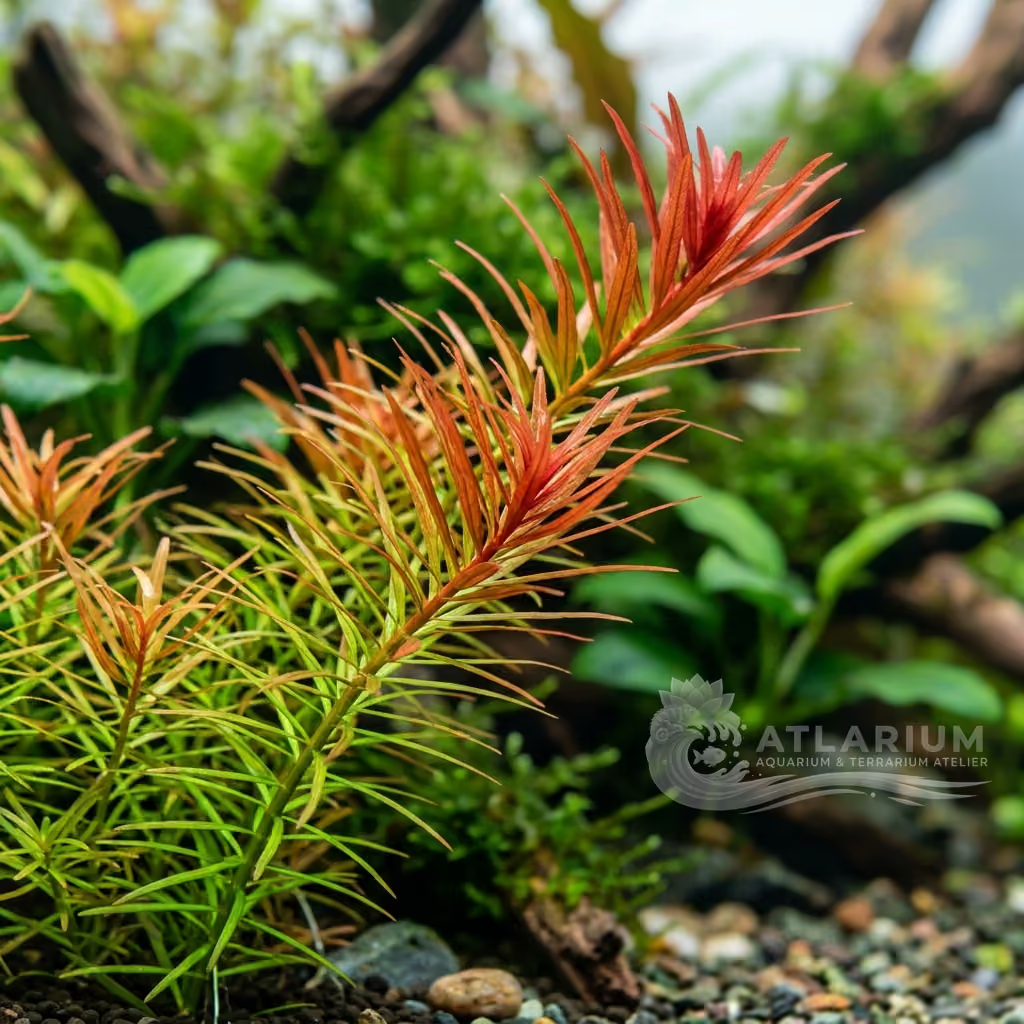
Physical Structure: It features upright or creeping branches that grow in an elongated, thread-like pattern, hence the name Stringy Moss. The leaves are microscopic, lanceolate, sparsely arranged along the main stem, and lack a prominent midrib. It does not possess true roots; it anchors itself firmly to the hardscape via dark, fibrous rhizoids that develop at the base of the stems.
Color & Texture: It has a light emerald green coloration, which can turn toward olive green in colder waters or low-light conditions. The texture is extremely soft, thin, and almost glassy. The filaments grow separate and parallel to each other, creating an airy, open pattern that differs significantly from compact mosses like Java Moss, giving a dynamic and lightweight appearance.

Care, breeding and tankmates
Lighting & CO2: Highly tolerant of lighting conditions, it grows well in very low light as well as under intense LEDs. CO2 injection is not required for survival, but a modest supply (5-10 mg/L) stimulates the production of new stems and speeds up the growth rate, which is otherwise moderate.
Nutrition & Substrate: It does not require any fertile substrate, being an epiphytic species. It draws all necessary nutrients from the
Water Chemistry: Extremely adaptable: it tolerates an exceptional pH range from 5.0 to 8.0 and very high water hardness (KH up to 21 dKH). The ideal temperature is between 4°C and 26°C; it is highly sensitive to persistent summer heat, stopping growth and turning yellow if the temperature constantly exceeds 27°C.
Space Management & Placement: Suitable for the midground or nano aquariums. It must be tied to rough rocks, branches, or roots using nylon line or plant glue. Due to its thread-like habit, it is perfect for creating natural transitions between the hardscape and surrounding stem plants.
Pruning: Maintenance is simple, consisting of trimming long stems with sharp scissors. The cut portions can be used to start new colonies by tying them elsewhere. It is important to net out floating fragments after trimming to prevent them from growing uncontrollably in other areas of the tank.
Risks & Diseases: The primary risk is high water temperatures, which trigger rotting of the moss. Additionally, organic detritus accumulating between the filaments can smother the plant; introducing freshwater shrimp (such as Amano shrimp) helps keep the moss clean by removing organic debris.

Geographic origin and distribution
Leptodictyum riparium is a cosmopolitan aquatic moss, widely distributed throughout the Northern Hemisphere, including Europe, Asia, and North America. In nature, it inhabits a broad range of damp and aquatic habitats, such as slow-moving rivers, forest streams, ponds, and ditches, often colonizing temporarily submerged zones. It commonly develops on solid substrates like limestone rocks, decaying logs, and concrete structures along riverbanks, showcasing exceptional ecological resilience.
Origin
Europe, Mediterranean, and West AsiaNorth AmericaEast Asia

Plant profile
- Placement
- Midground
- This moss is typically attached to hardscape such as driftwood or rocks. It can also be left to grow free-floating or attached to a background mesh. Placing it in areas with moderate flow helps keep it clean from debris.
- Botanical form
- Epiphyte
- The plant forms delicate, wispy strands that grow distinctively upwards. Its fine leaves give it a light, feathery appearance in the aquarium. It lacks true roots, using rhizoids only to anchor itself to surfaces.
- Growth
- Medium
- It grows at a moderate pace, forming stringy and upward-reaching shoots. Under optimal conditions with CO2 and good light, its growth accelerates noticeably. It is less prone to rapid overgrowth compared to stem plants.
- Substrate
- None
- Leptodictyum riparium is an aquatic moss that does not develop true roots and requires no soil or nutrient-rich substrate. Instead, it utilizes tiny rhizoids to firmly anchor itself to hardscape elements like rocks, driftwood, or coarse decorations. All essential nutrients and minerals are absorbed directly from the water column through its leaves. While it can be left to float or loosely settle over gravel, attaching it to solid surfaces encourages its natural, creeping growth habit.
- Column fertilization
- Recommended
- Column fertilization is the primary method of feeding this moss. It benefits from a comprehensive liquid fertilizer containing micronutrients. Heavy dosing is not strictly necessary but supports denser and healthier growth.
- Root fertilization
- None
- Substrate fertilization is ineffective because it does not develop true roots. It relies entirely on the water column for its nutritional intake. Root tabs provide no direct benefit to its growth.
- Trimming
- Occasional
- Trimming should be done by carefully cutting the shoots with curved scissors. It can be trimmed quite short to encourage denser, bushier growth. Ensure you siphon away trimmed pieces to prevent them from growing elsewhere.
- Propagation
- Cuttings
- Propagation is incredibly simple and done by division. You just need to snip off a portion and attach it to a new surface. The cut pieces will quickly develop new growth points.
- Sensitivity
- Moderate
- It is sensitive to algae growth and the accumulation of detritus within its fronds. Algaecides like liquid carbon can melt the moss if overdosed. It prefers cooler water temperatures and may suffer in very warm tanks.
- Layout role
- Nano, Epiphyte
- This moss is ideal for softening the edges of hardscape and adding an aged look. Its unique vertical growth habit adds a different texture compared to creeping mosses. It provides excellent hiding spots for shrimp and small fry.

Image gallery
Licensed images linked to the species or, when marked, to the closest representative taxon.

Related species
Recommendations grouped by close relatives, companion choices, and similar care.