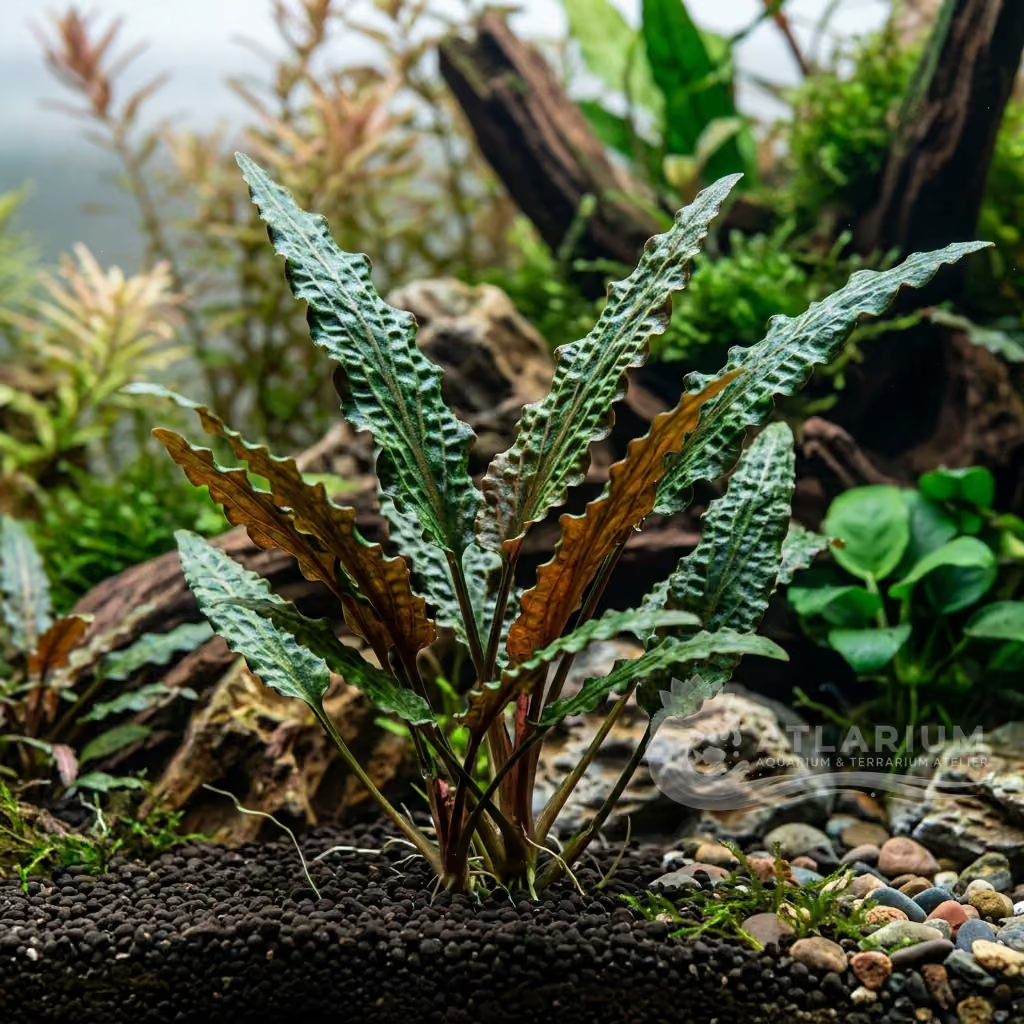
Caloglossa cf. beccarii
Caloglossa cf. beccarii
A unique dark red or purplish marine-like freshwater macroalga from Southeast Asia. It forms highly decorative, intricate cushions on hardscape, thriving in diverse water parameters without CO2.
Water Temperature
18 - 30 °C
pH Value
5 - 9
Water type
Freshwater
Light
Low to High
CO2
Low - High
Expected height
3 cm
Expected width
5 cm
KH
2 - 21 dKH

Species description
Geographical Origin and Habitat: Distributed in brackish and fresh waters of tropical and subtropical areas, particularly in Southeast Asia and Oceania. It grows anchored to rocks, mangrove roots, and riverbanks in shaded areas with constant water flow.
Taxonomy & Genetics: It is a red alga (Rhodophyta) belonging to the Delesseriaceae family. The designation 'cf.' (confer) suggests its affinity with the species beccarii, although the freshwater populations kept in aquaria show stable genetic traits not yet fully classified.
Physical Structure: Lacks true stems or leaves, having a flat, dichotomously branched (divided in two) thallus that forms dense cushions. It attaches itself tenaciously to hard surfaces using tiny rhizoids located on the underside of the thallus.
Color & Texture: Dark red, brownish-purple, or burgundy in color. The texture is rough and intricate, resembling a network of tiny creeping corals, offering a unique visual impact.

Care, breeding and tankmates
Lighting & CO2: Highly adaptable, growing under low to high lighting. Under intense light, the red coloration becomes more vivid, while in low light, it takes on brown tones. It does not require CO2, but a modest supply accelerates cushion formation.
Nutrition & Substrate: Absorbs nutrients exclusively from the
Water Chemistry: Tolerant of a wide spectrum of water hardness (KH 2-21) and pH (5.0-9.0). Thrives in temperatures between 18 and 30°C. It also adapts to brackish water, showing extraordinary resilience.
Space Management & Placement: Should be grown as an epiphyte, tied with nylon thread or attached with cyanoacrylate glue to rocks or wood in the foreground or midground of the tank. As it grows, it covers the hardscape, creating exotic-looking cushions.
Pruning: Pruned by removing parts of the cushion with tweezers or scissors. The removed fragments can be tied elsewhere to start a new clump.
Risks & Diseases: Not subject to common diseases of higher plants. The main risk is that it detaches from the hardscape and ends up in the filter, or that it gets smothered by organic debris if the water flow is poor.

Geographic origin and distribution
Distributed in brackish and fresh waters of tropical and subtropical areas, particularly in Southeast Asia and Oceania. It grows anchored to rocks, mangrove roots, and riverbanks in shaded areas with constant water flow.
Origin
South and Southeast AsiaAustralia, New Guinea, and OceaniaTropical oceans and reefs

Plant profile
- Placement
- Epiphyte
- This algae is best used as a unique accent piece attached to driftwood, stones, or filter sponge elements in the midground or foreground. Because of its dark red to purplish coloration, it provides a stunning contrast against bright green mosses and plants. It prefers moderate to low light; intense direct lighting can cause it to bleach or become overgrown with green algae.
- Botanical form
- Algae
- It has an incredibly distinct morphology, forming flattened, branching ribbons that lack true stems or leaves. The thallus (body) is usually a deep, striking burgundy or brownish-red color, with a semi-translucent, delicate texture. It closely resembles miniature terrestrial liverworts but is purely aquatic.
- Growth
- Medium
- Its growth rate is remarkably slow, even under optimal conditions with CO2 injection. It slowly creeps and expands over its chosen surface over a period of many months. This slow growth makes it incredibly low-maintenance, requiring almost no trimming unless it spreads to unwanted areas.
- Substrate
- None
- Being an algae rather than a rooted vascular plant, it completely bypasses the need for any specific substrate. It attaches itself to hard surfaces using microscopic holdfasts. Therefore, it should never be buried in soil or sand, as the covered portions will quickly rot and die.
- Column fertilization
- Recommended
- Water column fertilization should be kept to an absolute minimum to maintain a lean environment. Occasional, very light dosing of a trace element mix is sufficient to keep its color rich and dark. The primary goal of fertilization management here is to prevent the growth of competitive green or brush algae.
- Root fertilization
- None
- Root fertilization is entirely irrelevant for this species as it lacks any root structure whatsoever. It cannot utilize nutrients buried in the substrate. All focus should be placed on maintaining clean, slightly lean water column conditions.
- Trimming
- Occasional
- Trimming is straightforward; simply cut the stems or leaves to the desired length. Regular pruning encourages bushier, denser growth and prevents the plant from taking over the tank. Replant the healthy trimmings if you wish to expand its footprint.
- Propagation
- Cuttings
- Propagation is straightforward through fragmentation. You simply tear a piece of the algae mat away from the main clump and reattach it to a new piece of hardscape. You can use cotton thread or cyanoacrylate superglue to hold the new piece in place until its holdfasts naturally secure it.
- Sensitivity
- Moderate
- Generally robust but can melt if water parameters swing drastically. It prefers stable conditions and clean water with good flow. Algae can be an issue if organic waste is allowed to accumulate on its delicate leaves.
- Layout role
- Foreground, Midground, Epiphyte
- Excellent for creating natural-looking thickets or adding a touch of wildness to the aquascape. It bridges the gap between different plant groups beautifully. Its unique texture provides a great contrast to broad-leaved plants.

Related species
Recommendations grouped by close relatives, companion choices, and similar care.