Encyclopaedia

PlantFreshwaterEasy
©AI Generated·Proprietary

Java Moss

Ectropothecium barbieri

The classic and most popular aquarium moss. Virtually indestructible, it forms dense green cushions on rocks and driftwood. Excellent shelter for dwarf shrimp and newborn fry.

Taxonomy
Class:Bryopsida
Order:Hypnales
Family:Hypnaceae
Genus:Ectropothecium
Species:Ectropothecium barbieri
Formerly known as:Taxiphyllum barbieri

Share

Check out Java Moss on Atlarium

PracticeRecognition quizzesPhotos, names, origins, and puzzles to review Atlas species.Open quizzes
Water Temperature

15 - 28 °C

pH Value

5 - 8

Water type

Freshwater

Light

Bassa ad Alta

CO2

Bassa

Expected height

5 cm

Expected width

30 cm

GH

4 - 20 dGH

KH

2 - 15 dKH

Species description

Geographical Origin and Habitat: Taxiphyllum barbieri is native to Southeast Asia, particularly Vietnam. It populates humid, shaded habitats, growing submerged or emersed on riverbanks, wet rocks, fallen logs, and moist soils near forest streams.
Taxonomy & Genetics: Belonging to the Hypnaceae family, it is commonly known in the aquarium hobby as "Java Moss." Often confused in the past with Vesicularia dubyana, it is genetically distinguished by more branched growth and longer stems. It is an extremely ancient, hardy, and stable bryophyte.
Physical Structure: It features flexible, creeping, thread-like stems covered with tiny overlapping leaves. It has no true roots but develops rhizoids (microscopic thread-like structures) used exclusively to anchor itself securely to any rough surface.
Color & Texture: The coloration ranges from bright light green on new shoots to dark olive green in older inner parts. The texture is chaotic, dense, and bushy, forming intricate, soft thread-like carpets or cushions with a highly natural look.

Care, breeding and tankmates

Lighting & CO2: Lighting & CO2: Extremely tolerant. It grows successfully under very low to very intense lighting. Under intense light, growth is more compact. It does not require CO2, but benefits from low-level fertilization in high-tech setups.
Nutrition & Substrate: Must not be buried in the substrate (sand or gravel) as it will choke and die. It should be tied or glued to rocks or wood. It absorbs nutrients directly from the water column through its stems, requiring minimal liquid fertilizer.
Water Chemistry: Indestructible. Thrives in temperatures between 15 and 28°C (59-82°F), tolerating short periods at lower temperatures. It adapts to wide ranges of pH (5.0 - 8.0) and water hardness, making it ideal for beginners.
Space Management & Placement: Anchored to any hardscape element (rocks, wood, background walls). It is initially secured using cotton thread, nylon, or cyanoacrylate glue. It offers excellent shelter for fry and shrimp.
Pruning: Pruning is done by cutting excess clumps with sharp scissors. Warning: cut fragments floating in the water will anchor and grow in other areas of the tank. It propagates simply by dividing the clumps.
Risks & Diseases: The main risk is clogging by organic debris (acting as a mechanical sponge), which can cause internal rot if not shaken or siphoned periodically. It is sensitive to hair algae invasion, which is difficult to remove.

Geographic Origin and Distribution

Taxiphyllum barbieri is native to Southeast Asia, particularly Vietnam. It populates humid, shaded habitats, growing submerged or emersed on riverbanks, wet rocks, fallen logs, and moist soils near forest streams.

Origin

South and Southeast Asia

Plant profile

Placement
Epiphyte
Highly versatile and can be placed almost anywhere in the aquarium. It is most commonly tied to driftwood or rocks to create natural-looking, aged hardscape. It can also be left to float, form a dense carpet when tied to mesh, or used to build moss walls. It does not need to be anchored to substrate.
Botanical form
Moss
Features irregularly branching stems covered in tiny, overlapping green leaves. The overall structure is somewhat chaotic and tangled, forming dense, cushion-like mats. It does not have a definitive top or bottom, growing outwards in all directions. When healthy, it displays a deep, vibrant green hue.
Growth
Medium
Grows relatively quickly for a moss, especially under moderate to high lighting with added nutrients. It can rapidly form large, dense clumps that may overwhelm smaller plants if left unchecked. Its growth rate will slow down in low light or cold water, but it will rarely die. Regular pruning is essential to keep it looking tidy.
Substrate
None
Java Moss is an epiphytic plant that derives no benefit from a nutrient-rich substrate, as it completely lacks a traditional root system. It anchors itself to wood, rocks, and artificial decorations using tiny, hair-like rhizoids. Because it absorbs all its required water and nutrients straight from the surrounding water column, it can thrive in aquariums with bare bottoms or plain gravel.
Column fertilization
Optional
Draws all of its required nutrients exclusively from the water column. It is an excellent plant for absorbing excess nitrates and helping to purify the water. While it doesn't strictly need a dedicated dosing regime, it will benefit from a comprehensive liquid fertilizer. Over-fertilization combined with high light can occasionally lead to algae issues.
Root fertilization
None
Does not possess true roots; instead, it uses small, hair-like structures called rhizoids to anchor itself to surfaces. Therefore, root fertilization is completely ineffective and unnecessary. It should never be buried in the substrate, as the buried portions will simply rot away.
Trimming
Occasional
Extremely tolerant of heavy pruning and can be cut back aggressively at any time. Regular trimming prevents the lower layers from suffocating and dying off, which can cause the entire clump to detach from its surface. Trimmings should be carefully netted out, as any stray piece will easily establish a new colony. Trimming helps maintain a dense, compact shape.
Propagation
Division
Propagation is incredibly simple and straightforward through manual division. Simply tear a clump apart or cut it with scissors to create multiple new pieces. These pieces can be tied, glued, or wedged into new locations where they will quickly begin growing. It is virtually impossible to propagate this plant incorrectly.
Sensitivity
Sensitive
Incredibly robust and resistant to most common aquarium ailments. However, it is a magnet for hair algae and detritus, which can be difficult to remove without damaging the moss. Liquid carbon products, if overdosed, can cause the delicate fronds to melt. It prefers decent water flow to keep it free of debris.
Layout role
hardscape-cover
A staple in aquascaping for creating a natural, weathered look on wood and rocks. It provides unparalleled hiding spaces and foraging grounds for shrimp and small fish fry. It is often used to soften the transitions between hardscape and the substrate. Its unruly nature makes it perfect for jungle or biotope-style setups.

Image gallery

Licensed images linked to the species or, when marked, to the closest representative taxon.

Related species

Recommendations grouped by close relatives, companion choices, and similar care.

Variants and close relatives

Same atlas type, nearby scientific identity, genus, or family.

Ectropothecium zollingeri

Ectropothecium zollingeri

Ectropothecium zollingeri

View details->
Mini Taiwan Moss (Isopterygium sp.)

Mini Taiwan Moss (Isopterygium sp.)

Isopterygium sp. "Mini Taiwan Moss"
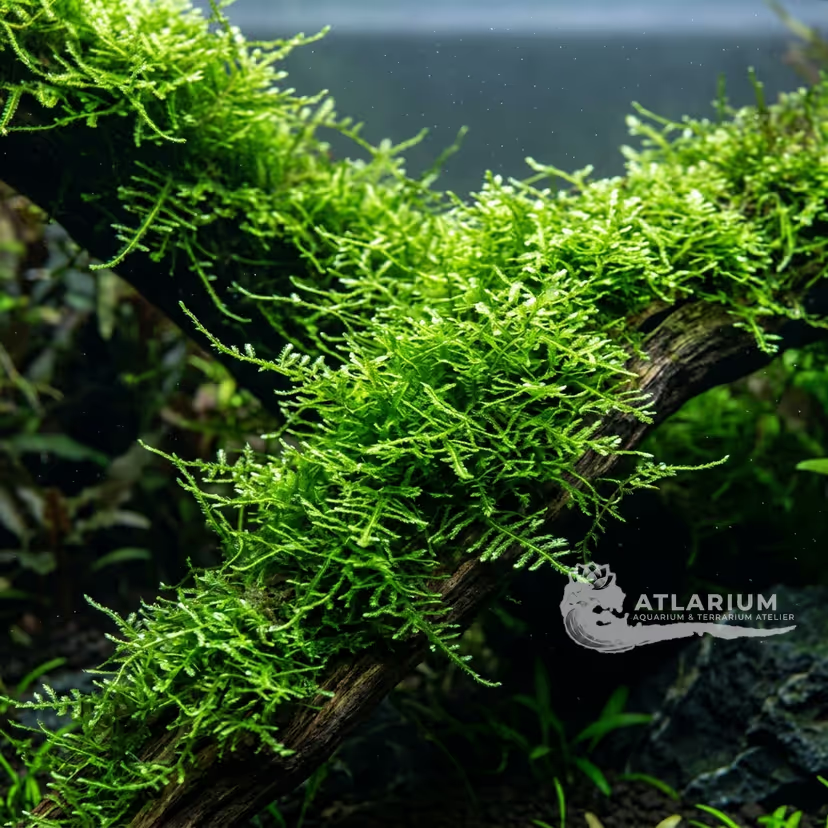
View details->
Christmas Moss

Christmas Moss

Vesicularia dubyana

View details->
Glossadelphus zollingeri

Glossadelphus zollingeri

Glossadelphus zollingeri

View details->
Vesicularia cf. montagnei "Krabi"

Vesicularia cf. montagnei "Krabi"

Vesicularia cf. montagnei "Krabi"

View details->
Taxiphyllum alternans "Taiwan Moss"

Taxiphyllum alternans "Taiwan Moss"

Taxiphyllum alternans "Taiwan Moss"

View details->
Taxiphyllum sp. "Flame Moss"

Taxiphyllum sp. "Flame Moss"

Taxiphyllum sp. "Flame Moss"

View details->
Taxiphyllum taxirameum

Taxiphyllum taxirameum

Taxiphyllum taxirameum

View details->
Taxiphyllum sp. "Spiky Moss"

Taxiphyllum sp. "Spiky Moss"
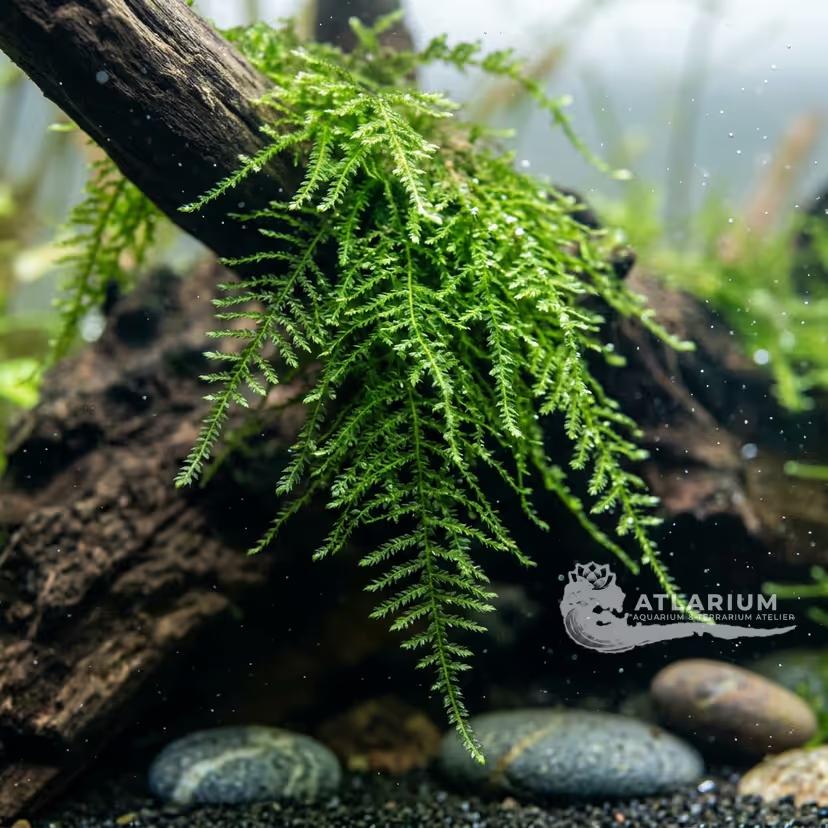
Taxiphyllum sp. "Spiky Moss"

View details->
Vesicularia ferriei "Weeping Moss"

Vesicularia ferriei "Weeping Moss"

Vesicularia ferriei "Weeping Moss"

View details->
Vesicularia montagnei "Christmas Moss"

Vesicularia montagnei "Christmas Moss"

Vesicularia montagnei "Christmas Moss"

View details->
Vesicularia reticulata "Erect Moss"

Vesicularia reticulata "Erect Moss"

Vesicularia reticulata "Erect Moss"

View details->
Vesicularia sp. "Anchor Moss"

Vesicularia sp. "Anchor Moss"

Vesicularia sp. "Anchor Moss"

View details->
Vesicularia sp. "Creeping Moss"

Vesicularia sp. "Creeping Moss"

Vesicularia sp. "Creeping Moss"

View details->
Vesicularia sp. "Mini Christmas Moss"

Vesicularia sp. "Mini Christmas Moss"

Vesicularia sp. "Mini Christmas Moss"

View details->
Vesicularia sp. "Triangelmoos" ("Triangle Moss")

Vesicularia sp. "Triangelmoos" ("Triangle Moss")

Vesicularia sp. "Triangelmoos" ("Triangle Moss")

View details->

Recommended companions

Compatible cards from coherent ecosystems with matching parameters.

Orange dwarf crayfish (CPO)
Invertebrate

Orange dwarf crayfish (CPO)

Cambarellus patzcuarensis "Orange"

View details->
Ramshorn Snail
Invertebrate

Ramshorn Snail

Planorbella duryi

View details->
Malaysian Trumpet Snail
Invertebrate

Malaysian Trumpet Snail

Melanoides tuberculata

View details->
Cherry Shrimp
Invertebrate

Cherry Shrimp

Neocaridina davidi

View details->
Asian apple snail
Invertebrate

Asian apple snail

Pila ampullacea

View details->
Hercules snail
Invertebrate

Hercules snail

Brotia herculea

View details->
Indian apple snail
Invertebrate

Indian apple snail

Pila globosa

View details->
Orange rabbit snail
Invertebrate

Orange rabbit snail

Tylomelania gemmifera
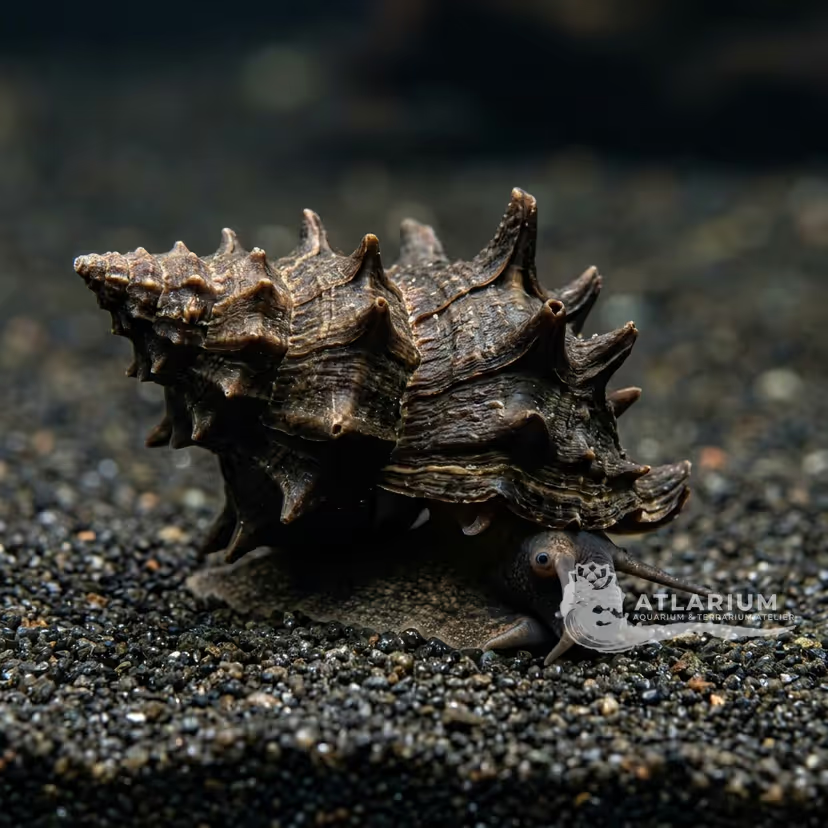
View details->
Pagoda snail
Invertebrate

Pagoda snail

Brotia pagodula

View details->
Patriarch rabbit snail
Invertebrate

Patriarch rabbit snail

Tylomelania patriarchalis
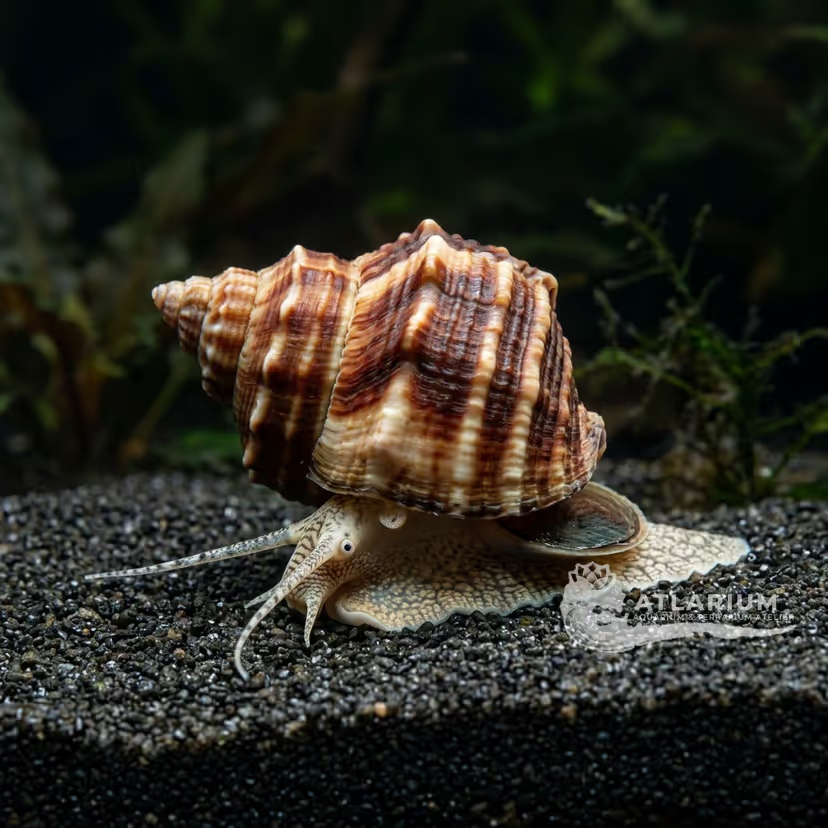
View details->
Piano snail
Invertebrate

Piano snail

Taia naticoides

View details->
Stream rock snail
Invertebrate

Stream rock snail

Paludomus loricata

View details->
Sulcospira snail
Invertebrate

Sulcospira snail

Sulcospira testudinaria

View details->
Thai trapdoor snail
Invertebrate

Thai trapdoor snail

Filopaludina martensi

View details->
Towuti rabbit snail
Invertebrate

Towuti rabbit snail

Tylomelania towutensis

View details->
Green babaulti shrimp
Invertebrate

Green babaulti shrimp

Caridina cf. babaulti "Green"

View details->

Similar care

Cards with similar requirements, difficulty, habitat, and husbandry profile.

Callicostella prabaktiana

Callicostella prabaktiana

Callicostella papillata prabaktiana

View details->
Caloglossa cf. beccarii

Caloglossa cf. beccarii

Caloglossa cf. beccarii

View details->
Anubias barteri var. coffeifolia

Anubias barteri var. coffeifolia
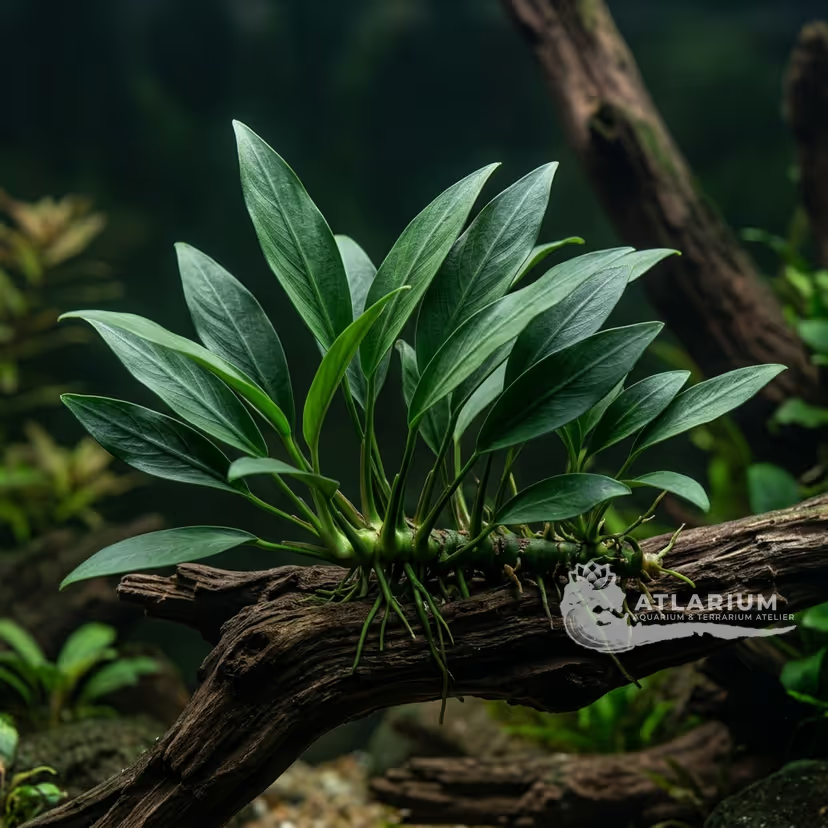
Anubias barteri var. coffeifolia

View details->
Anubias barteri var. glabra

Anubias barteri var. glabra

Anubias barteri var. glabra

View details->
Taxiphyllum sp. "Peacock Moss"

Taxiphyllum sp. "Peacock Moss"
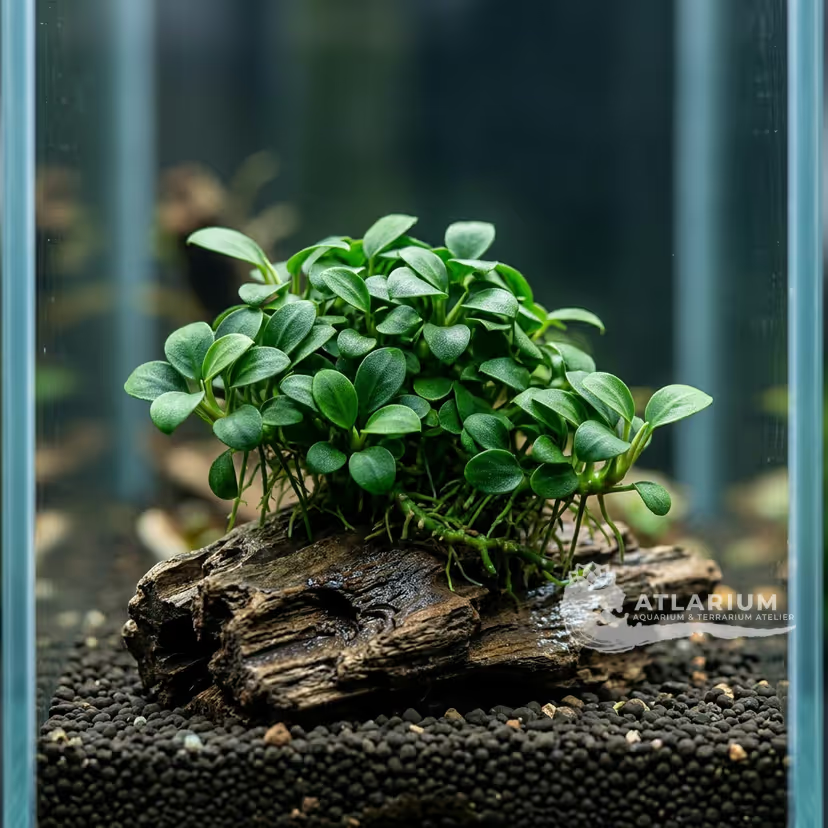
Taxiphyllum sp. "Peacock Moss"

View details->
Anubias barteri var. nana 'Petite' ('Bonsai')

Anubias barteri var. nana 'Petite' ('Bonsai')

Anubias barteri var. nana 'Petite'

View details->
Amblystegium riparium

Amblystegium riparium

Amblystegium riparium

View details->
Azolla mexicana

Azolla mexicana

Azolla mexicana

View details->
Barbula sp.

Barbula sp.

Barbula sp.

View details->
Anubias barteri var. nana 'Golden Heart'

Anubias barteri var. nana 'Golden Heart'

Anubias barteri var. nana 'Golden Heart'

View details->
Amblystegiaceae sp. "Manaus"

Amblystegiaceae sp. "Manaus"
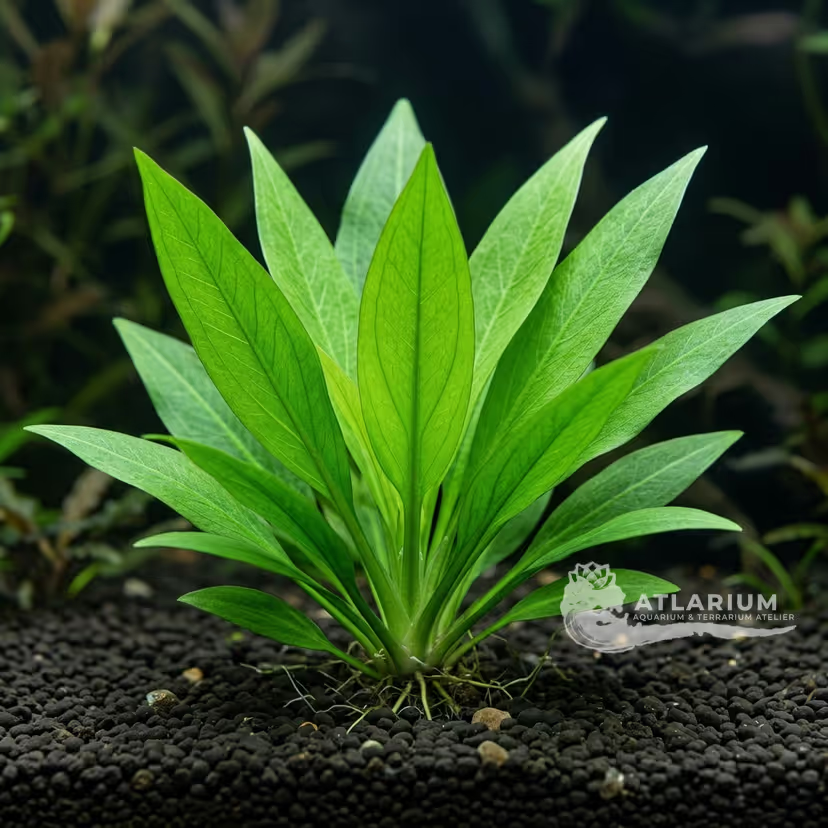
Amblystegiaceae sp. "Manaus"

View details->
Cryptocoryne beckettii "Viridifolia"

Cryptocoryne beckettii "Viridifolia"

Cryptocoryne beckettii "Viridifolia"

View details->
Anubias "nangi"

Anubias "nangi"

Anubias "nangi"

View details->
Anubias barteri var. angustifolia

Anubias barteri var. angustifolia

Anubias barteri var. angustifolia

View details->
Anubias barteri var. barteri

Anubias barteri var. barteri

Anubias barteri var. barteri

View details->
Anubias barteri var. caladiifolia

Anubias barteri var. caladiifolia

Anubias barteri var. caladiifolia

View details->
Last updated: 06/30/2026
Java Moss (Ectropothecium barbieri) Care Guide & Tank Setup | Atlarium