Mermaid Weed
Proserpinaca palustris
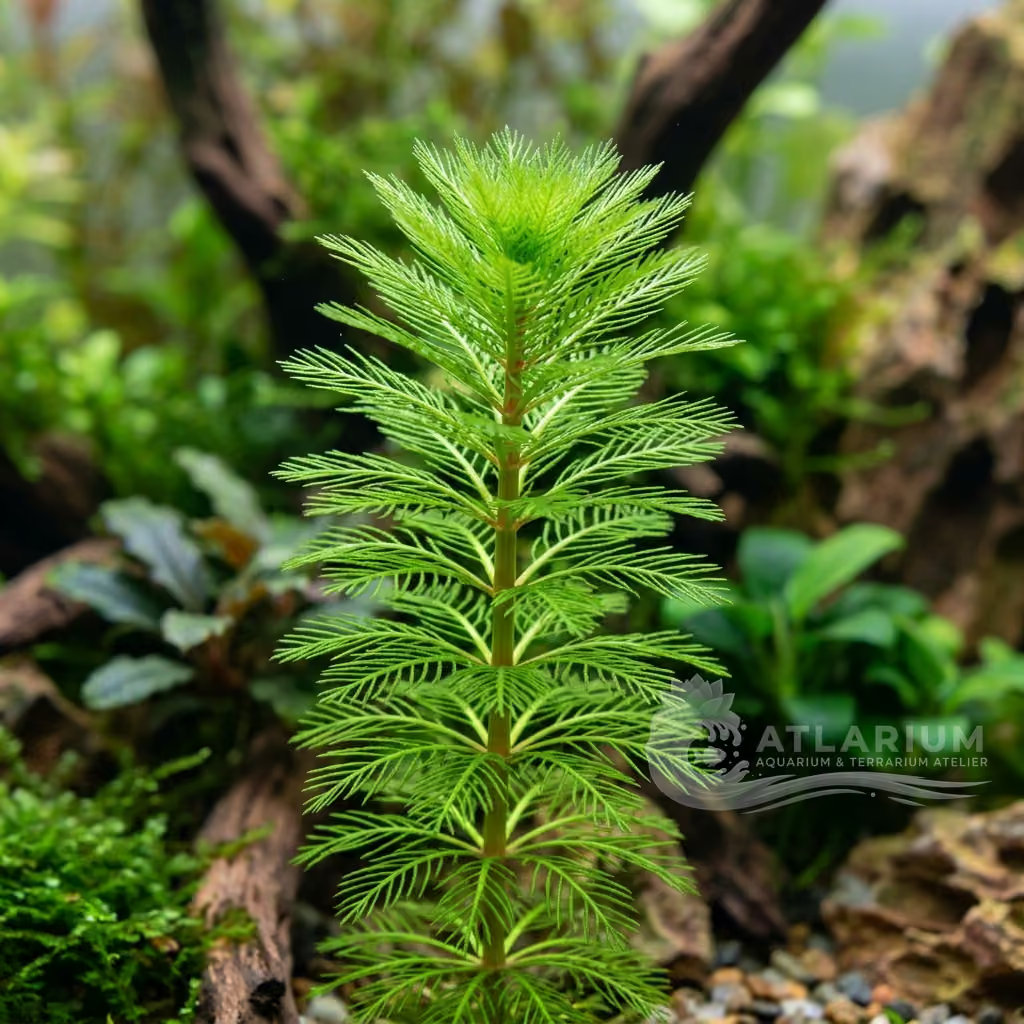
Proserpinaca palustris features deeply serrated, copper-orange leaves. Native to the Americas, it needs very high light and CO2 to maintain its spectacular sawtooth form.
Water Temperature
20 - 28 °C
pH Value
5.5 - 7.5
Water type
Freshwater
Light
High
CO2
Medium
Expected height
30 cm
Expected width
12 cm
GH
4 - 20 dGH
KH
2 - 15 dKH

Species description
Geographical Origin and Habitat: This species is native to temperate and tropical regions of North America, Central America, and parts of the Caribbean. It grows in shallow marshes, roadside ditches, quiet ponds, and along the muddy banks of slow-flowing streams, adapted to seasonal water level changes.
Taxonomy & Genetics: A member of the Haloragaceae family and the genus Proserpinaca. It is genetically notable for heterophylly, a phenomenon where the plant changes leaf shapes based on its environment: submerged leaves are deeply pinnatisect (comb-like), while emersed leaves are serrated and lanceolate.
Physical Structure: It features stiff, upright stems that grow at a moderate rate. Submerged leaves are alternate and deeply divided into needle-like segments, giving the plant a feather-like or saw-toothed structural appearance. The root system is delicate but stable when anchored.
Color & Texture: Leaf color transitions dramatically depending on environmental cues. Under medium lighting, the leaves are lime-green to yellowish. Under intense, high-output lighting paired with nutrient dosing, the leaves turn a striking shade of copper-orange to deep bronze-red.

Care, breeding and tankmates
Lighting & CO2: Requires high to very high lighting levels. CO2 injection is highly recommended to support the plant's health and to prevent the lower stems from rotting. Without strong light and CO2, the leaves will lose their intricate comb-like shape and turn green.
Nutrition & Substrate: Thrives best in a rich nutrient-active substrate. A regular dosing schedule of liquid fertilizers, including iron and micronutrients, is essential. Nitrogen and phosphate levels should be kept stable to prevent stunted tips and melting of the delicate leaf needles.
Water Chemistry: Prefers soft to medium-hard water with a pH range between 5.0 and 7.5. The ideal temperature range is 18-26°C (64-79°F). High water clarity is necessary because suspended debris can settle on the finely divided leaves, encouraging filamentous algae growth.
Space Management & Placement: Due to its moderate growth rate and unique leaf structure, it is ideal for the midground of medium to large aquariums. Avoid overcrowding; plant individual stems with a few centimeters of space between them to ensure light reaches the lower portions.
Pruning: Trim the stems using sharp aquascaping scissors. Cut the top portion of the stem and replant it to propagate. The remaining base stem will produce multiple new lateral shoots from the nodes below the cut, resulting in a bushier appearance over time.
Risks & Diseases: The primary risk is melting of the lower leaves if shaded by fast-growing plants. If iron levels are deficient, new leaves will emerge pale yellow or white. Filamentous algae can choke the fine leaves if water quality and filtration are poor.

Geographic origin and distribution
This species is native to temperate and tropical regions of North America, Central America, and parts of the Caribbean. It grows in shallow marshes, roadside ditches, quiet ponds, and along the muddy banks of slow-flowing streams, adapted to seasonal water level changes.
Origin
North AmericaCentral America and Caribbean

Plant profile
- Placement
- Midground
- This visually striking plant belongs in the midground or background of the aquascape. Planting it in dense groups creates a powerful focal point of color. Ensure it is placed in a location where it receives unobstructed, intense lighting. Trimming it into a neat, sloping bush enhances the overall depth of the aquarium.
- Botanical form
- Stem
- Botanically, Proserpinaca palustris exhibits finely toothed to deeply pinnate leaves along an upright, fleshy stem. The leaves undergo significant morphological changes depending on environmental conditions, often becoming more intricate under high light. The dramatic copper to deep red hues appear most intensely on the newest top growth. Its robust structure provides excellent contrast against plain green species.
- Growth
- Slow
- Its growth rate is relatively fast when provided with high light, CO2 injection, and rich nutrients. It will rapidly race toward the water surface, necessitating frequent trimming to maintain its shape. Without CO2 or strong light, growth slows down considerably and the stems may become leggy. Consistent pruning encourages branching and a thicker bush.
- Substrate
- High
- A nutrient-rich aqua soil is highly recommended to support the extensive root network of this stem plant. A deep, fertile substrate allows it to anchor firmly and draw up essential macronutrients. While it can survive in inert substrates, it will require aggressive root tab supplementation. Fine to medium grain sizes work best for delicate stem insertion.
- Column fertilization
- Required
- Liquid fertilization is crucial to supplement the micronutrients and potassium not fully provided by the substrate. Dosing a comprehensive fertilizer ensures the leaves remain robust and free of pinholes. Specialized iron supplements are highly beneficial to enhance its vivid red pigments. Consistent water column nutrients prevent the lower leaves from deteriorating.
- Root fertilization
- Recommended
- As a heavy root feeder, Proserpinaca palustris thrives when its roots have access to concentrated nutrients. Using a high-quality aqua soil or inserting root tabs deeply into the substrate promotes thick, healthy stems. Replenish root tabs every few months to ensure uninterrupted growth. A well-fed root system is the foundation for its striking upper foliage.
- Trimming
- Occasional
- Trim carefully to maintain its desired shape. Replant the healthy tops; the lower portions may sometimes struggle to branch or can become unsightly if heavily shaded.
- Propagation
- Cuttings
- Propagation is performed simply by taking stem cuttings. Cut the top portion of a healthy stem and gently replant it into the substrate. The newly planted top will quickly develop roots, while the original cut stem will sprout multiple new side shoots. This process is key to achieving a dense, colorful thicket.
- Sensitivity
- HIGH
- Very sensitive to poor lighting and lack of CO2, which will cause it to lose its distinctive serrated leaf shape, revert to a dull green color, and eventually slowly perish.
- Layout role
- Midground, accent
- Used as a stunning, colorful focal point or contrast plant. Its unique, comb-like leaf structure beautifully breaks up monotonous green layouts and adds warm tones.

Related species
Recommendations grouped by close relatives, companion choices, and similar care.