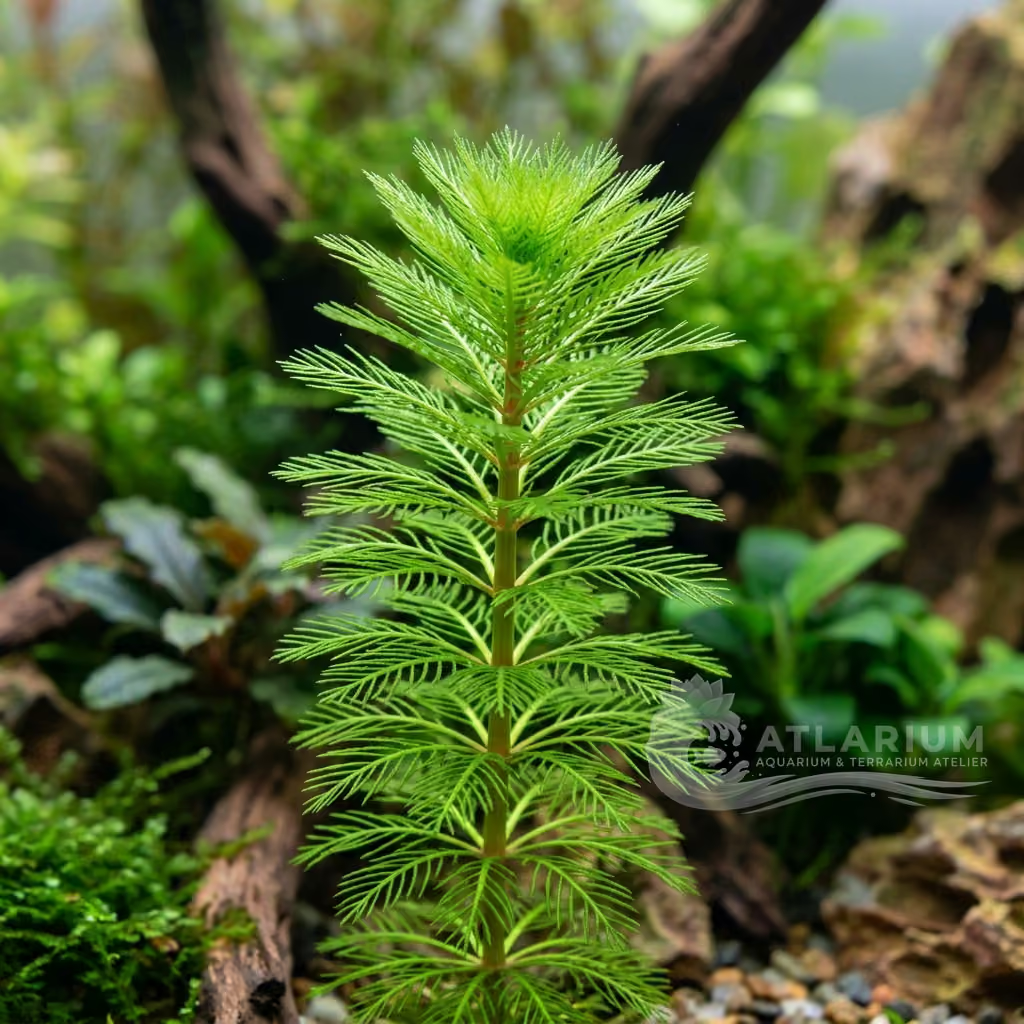
Myriophyllum scabratum
Myriophyllum scabratum
Myriophyllum scabratum is a medium-growing stem plant perfectly suited for midground placement, capable of forming lush, inviting zones with its delicate foliage. Its presence adds depth and a natural touch to the aquarium, balancing aesthetics with functionality.
Water Temperature
20 - 28 °C
pH Value
6 - 7.5
Water type
Freshwater
Light
Medium - High
CO2
Medium - High
KH
2 - 10 dKH

Species description
Geographical Origin and Habitat: Myriophyllum scabratum is an aquatic species indigenous to Australia, where it is widely distributed across various states including Queensland, New South Wales, Victoria, and South Australia. It thrives in slow-moving or stagnant aquatic environments such as swamps, ditches, lakes, and low-flow streams, often in areas subject to seasonal inundation. This natural habitat, characterized by relatively soft to medium-hard, slightly acidic waters and abundant sunlight, directly influences its aquarium cultivation requirements, suggesting a preference for stable and nutrient-rich conditions. Its adaptability to diverse water contexts underscores its robustness, while still maintaining specific needs for optimal growth and vivid
Color & Texture: ation.
Taxonomy & Genetics: Myriophyllum scabratum belongs to the family Haloragaceae, a group of predominantly aquatic and amphibious plants. Within the genus Myriophyllum, known for its approximately 69 species, it is distinguished by certain unique morphological characteristics, although its identification can sometimes be complex due to intraspecific variability and similarities with other species in the genus. The name "scabratum" refers to a slightly rough or scabrous texture, a distinctive feature that can be appreciated upon close examination of the leaves or stems. Its genetics reflect an evolution in dynamic aquatic environments, endowing it with a remarkable capacity for nutrient absorption directly from the water, making it an excellent indicator of aquatic ecosystem health.
Physical Structure: Myriophyllum scabratum presents as a stem plant with an upright, branching growth habit, characterized by an elegant, feathery structure. Its stems are robust yet flexible, capable of reaching considerable heights in deep aquariums, while in shallower settings, they tend to spread horizontally. The leaves are finely dissected, filiform, and arranged in whorls around the stem, giving the plant a dense and lush appearance. This intricate leaf architecture not only contributes to the aquarium's aesthetics but also provides an ideal habitat and a sense of security for small fish and invertebrates. The density of the foliage largely depends on light intensity and nutrient availability, with more compact and closely spaced leaves under optimal conditions.
Color & Texture: The primary coloration of Myriophyllum scabratum is a vibrant light to medium green, which can intensify or shift towards reddish or bronzed hues on the leaf tips and upper stems under more intense lighting. This chromatic variation adds depth and visual interest to the aquarium, creating a pleasing contrast with other plants. The texture of its leaves is inherently delicate and feathery, almost silky to the touch underwater, although the name "scabratum" suggests a slight roughness that might only be perceptible upon close inspection. The combination of color and texture makes Myriophyllum scabratum an excellent choice for softening transitions and adding an element of refinement to the aquatic layout.

Care, breeding and tankmates
Lighting & CO2: Myriophyllum scabratum thrives with a medium light requirement, but higher light intensity can encourage denser growth and more vibrant coloration, including reddish or bronze shades. Providing a photoperiod of 8-10 hours per day is advisable to support efficient photosynthesis. While not strictly necessary, CO2 supplementation is highly recommended to promote vigorous growth and prevent calcium carbonate deposition on leaves in harder
Water Chemistry: Adequate CO2, combined with good lighting, will allow the plant to develop its full aesthetic and health potential, resulting in lush, compact growth.
Nutrition & Substrate: This species primarily absorbs nutrients from the water column but also benefits from a nutrient-rich substrate or root tabs. It is crucial to ensure a balanced supply of macro and micronutrients, with particular attention to iron, potassium, and nitrogen, to prevent deficiencies that could manifest as yellowing or stunted growth. Comprehensive liquid fertilizers are often sufficient to meet its needs, especially if supplemented with substrate tabs beneath older plant clusters. An inert substrate is acceptable, provided that water column fertilization is consistent and adequate to support its medium growth rate.
Water Chemistry: Myriophyllum scabratum is relatively tolerant regarding water parameters, flourishing within a temperature range of 20 to 28 °C, which is ideal for most tropical fish. It requires a pH between 6.0 and 7.5 and a carbonate hardness (KH) between 2 and 12 dKH, indicating a preference for soft to moderately hard water. The stability of these parameters is often more crucial than their exact values, so drastic fluctuations should be avoided to prevent stressing the plant. Excessively hard water might impede the absorption of certain nutrients and promote the precipitation of carbonates on the leaves, affecting both health and appearance.
Space Management & Placement: Given its medium growth rate and potential for branching, Myriophyllum scabratum is ideally suited for midground placement, where it can form a dense bush or an attractive focal point. It is advisable to plant it in groups of multiple stems to achieve a fuller, more impactful effect, maintaining some distance between clusters to ensure adequate water circulation and light penetration. As a stem plant, its height can be managed through
Pruning: Regular pruning is essential to keep Myriophyllum scabratum healthy, dense, and to control its growth. When stems reach the surface or become overly long, it is appropriate to trim the upper portion, leaving at least a couple of leaf whorls on the submerged stem; this encourages the growth of new lateral shoots, making the plant more bushy. The trimmed tops can be replanted into the substrate for propagation, while the remaining lower portions often produce new growth, contributing to the density of the cluster. Careful pruning prevents excessive shading of underlying plants and promotes an even distribution of light within the thicket.
Risks & Diseases: While generally robust, Myriophyllum scabratum may show signs of stress or deficiencies if aquarium conditions are not optimal. Yellowing or melting leaves can indicate nutrient deficiencies (especially nitrogen or iron) or lighting imbalances. Slow and stunted growth suggests a lack of CO2 or general nutrients. It is also susceptible to filamentous algae invasion if the balance between light, CO2, and nutrients is incorrect, particularly when nutrient levels are high and CO2 is insufficient. Regular inspections and prompt correction of water parameters are crucial for preventing most problems and maintaining plant health.

Geographic Origin and Distribution
Myriophyllum scabratum is an aquatic species indigenous to Australia, where it is widely distributed across various states including Queensland, New South Wales, Victoria, and South Australia. It thrives in slow-moving or stagnant aquatic environments such as swamps, ditches, lakes, and low-flow streams, often in areas subject to seasonal inundation. This natural habitat, characterized by relatively soft to medium-hard, slightly acidic waters and abundant sunlight, directly influences its aquarium cultivation requirements, suggesting a preference for stable and nutrient-rich conditions. Its adaptability to diverse water contexts underscores its robustness, while still maintaining specific needs for optimal growth and vivid
Origin
Australia, New Guinea, and Oceania

Plant profile
- Placement
- Midground
- This plant thrives best when placed in the background or midground of the aquascape. Its tall, feathery stems create a beautiful, textured backdrop that contrasts well with broad-leaved foreground plants. Adequate spacing between stems is necessary to allow light to penetrate the lower leaves and prevent rotting.
- Botanical form
- Stem
- This species features delicate, finely divided whorled leaves that give it a quintessential rough-textured leaves. The stems are relatively fragile but can grow quite sturdy when provided with excellent growing conditions. Under intense lighting, the growing tips display the most vibrant green hues.
- Growth
- Medium
- Myriophyllum scabratum exhibits a remarkably fast growth rate under optimal conditions. In nutrient-rich environments with high light and CO2 injection, it can quickly reach the water surface. Regular pruning is often required to keep its rapid vertical growth in check and maintain a neat appearance.
- Substrate
- Medium
- Myriophyllum scabratum grows best when planted in a medium-demand aquatic soil that strikes a balance between root anchorage and mineral availability. It develops fine, fibrous roots that thoroughly explore the upper layers of the substrate to extract necessary macronutrients like nitrogen and phosphorus. A porous, clay-based soil spanning 2.5 inches (6 cm) in depth offers the ideal environment for these delicate roots to establish and anchor the fast-growing stems.
- Column fertilization
- Recommended
- Liquid fertilization is highly effective and often essential for Myriophyllum scabratum. Dosing a comprehensive liquid fertilizer daily ensures the plant can rapidly absorb nutrients directly from the water column. Balancing the nitrogen and trace elements is key to maintaining its vibrant green coloration and health.
- Root fertilization
- None
- While primarily feeding from the water column, a nutrient-rich substrate greatly benefits its root system. Root tabs can provide a stable base of nutrients that supports thicker stem development. A well-fertilized root zone helps anchor the tall plant firmly and sustains long-term vigorous growth.
- Trimming
- Occasional
- Frequent trimming is necessary to prevent Myriophyllum scabratum from overshadowing slower-growing species in the tank. Cutting the stems and replanting the tops is the best method to maintain a bushy, compact appearance. Removing older, bare lower stems encourages fresher, more vigorous lateral shoots to emerge.
- Propagation
- Cuttings
- Propagation of Myriophyllum scabratum is easily achieved through simple stem cuttings. By snipping healthy side shoots or topping the main stem, the cuttings can be replanted directly into the substrate. These cuttings will quickly develop new root systems and continue the rapid vertical growth cycle.
- Sensitivity
- Moderate
- This plant is sensitive to abrupt changes in water parameters, particularly extreme fluctuations in pH or temperature. It does not tolerate prolonged shading, which causes the lower leaves to quickly detach, melt, and deteriorate. Furthermore, it can be quite sensitive to certain chemical treatments and harsh algaecides.
- Layout role
- Midground
- In aquascaping, Myriophyllum scabratum serves as an excellent background filler to add volume and fine texture. Its rough-textured leaves provides a soft, flowing aesthetic that beautifully breaks up hardscape elements like rocks and driftwood. It also offers excellent natural hiding spots for fry, small aquatic creatures, and timid fish.

Image gallery
Licensed images linked to the species or, when marked, to the closest representative taxon.

Related species
Recommendations grouped by close relatives, companion choices, and similar care.