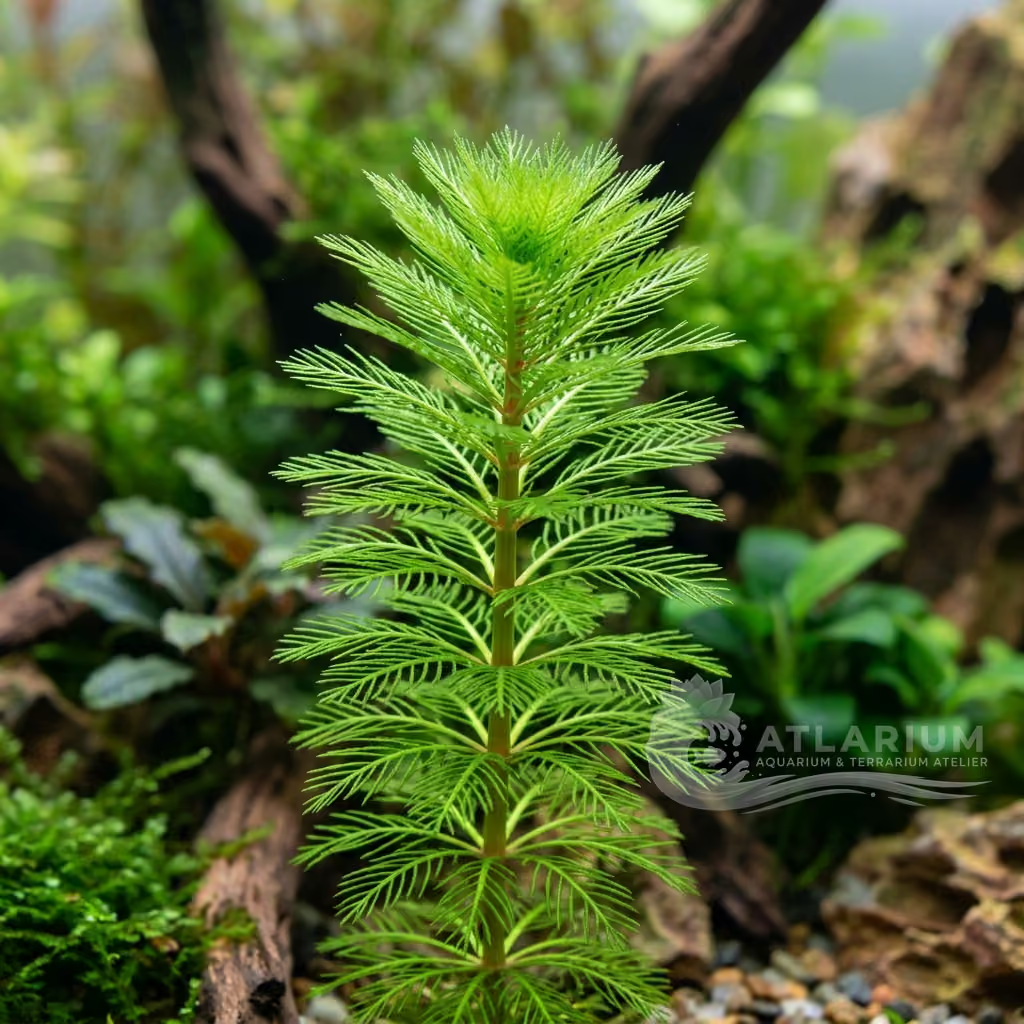
Myriophyllum elatinoides
Myriophyllum elatinoides
Myriophyllum elatinoides is a captivating stem plant ideal for the midground of an aquascape, offering a medium growth rate and an intricate, feathery appearance. It thrives in moderate conditions, creating a lush, natural backdrop or a delicate accent in freshwater aquariums.
Water Temperature
20 - 28 °C
pH Value
6 - 7.5
Water type
Freshwater
Light
Medium - High
CO2
Medium - High
KH
2 - 10 dKH

Species description
Geographical Origin and Habitat: Myriophyllum elatinoides originates from various regions of the Southern Hemisphere, including parts of South America, Australia, and New Zealand, where it naturally inhabits slow-moving or still freshwater bodies such as ponds, lakes, and ditches. This aquatic plant is often found rooted in muddy substrates, growing submerged, emergent, or even terrestrial along the water's edge, adapting remarkably to fluctuating water levels. Its wide natural distribution speaks to its adaptability to diverse environmental conditions, from cool temperate zones to subtropical climates.
Taxonomy & Genetics: As a member of the Haloragaceae family, Myriophyllum elatinoides shares a lineage with other aquatic and semi-aquatic plants, many of which are known for their finely dissected leaves. Within the genus Myriophyllum, commonly referred to as water milfoils, it distinguishes itself through specific morphological characteristics. The genetic makeup of this species contributes to its characteristic whorled leaf arrangement and its ability to propagate readily through stem fragmentation.
Physical Structure: The physical structure of Myriophyllum elatinoides is characterized by delicate, yet robust, stems that can grow quite long, reaching towards the water surface. Along these stems, finely pinnately dissected leaves emerge in whorls, typically consisting of multiple leaflets that give the plant a soft, feathery appearance. The roots are fibrous and relatively inconspicuous, primarily serving to anchor the plant in the substrate and absorb nutrients, though stem nodes can also develop adventitious roots when floating or planted. Its vertical growth habit makes it an excellent choice for adding depth and texture to an aquascape.
Color & Texture: Myriophyllum elatinoides typically displays a vibrant green coloration, ranging from a fresh lime green to a deeper emerald depending on light intensity and nutrient availability. Under optimal conditions, especially with good lighting and CO2, the tips of the stems and younger leaves may exhibit a subtle reddish or bronze hue, adding a beautiful contrast. The texture is exquisitely fine and feathery, providing a soft visual element that can soften the hard lines of rocks or driftwood and create a natural, flowing aesthetic within the aquarium.

Care, breeding and tankmates
Lighting & CO2: Myriophyllum elatinoides performs best under medium lighting conditions, where it maintains its compact growth and vibrant coloration. Insufficient light will cause it to stretch and become leggy, losing its characteristic bushy form, while excessively high light can sometimes lead to algae issues on its delicate leaves if nutrients are not balanced. The introduction of CO2 supplementation is highly beneficial, significantly enhancing its growth rate, promoting denser foliage, and encouraging more intense coloration, though it can still grow without it at a slower pace.
Nutrition & Substrate: For optimal growth, Myriophyllum elatinoides benefits from a nutrient-rich substrate, as its root system, though fine, plays a role in nutrient uptake. Root tabs placed beneath the plant can provide essential macronutrients directly to the roots, supporting strong initial establishment and continuous growth. Additionally, regular dosing of a comprehensive liquid fertilizer, rich in both macro (N, P, K) and micronutrients (especially iron), is crucial for maintaining its lush appearance and preventing deficiencies that can manifest as pale or stunted growth.
Water Chemistry: Maintaining stable water parameters is key for Myriophyllum elatinoides, which thrives within a temperature range of 20-28°C (68-82°F). The ideal pH should be slightly acidic to neutral, between 6.0 and 7.5, aligning with its natural habitat preferences. A carbonate hardness (KH) range of 2-12 dKH is suitable, providing sufficient buffering capacity without being excessively hard. Consistent water quality, achieved through regular water changes, is more important than chasing specific numbers, preventing sudden parameter swings that can stress the plant.
Space Management & Placement: Positioning Myriophyllum elatinoides in the midground of an aquascape allows its fine texture and medium height to shine, creating a lush transition between foreground and background plants. When planted in groups, it forms attractive, dense bushes that add significant depth and visual interest. Due to its medium growth rate, it requires regular monitoring to prevent it from overshadowing smaller plants or becoming too dense, ensuring adequate light penetration to lower leaves. It pairs beautifully with broader-leaved plants, offering a contrasting texture.
Pruning: Regular pruning is essential to maintain the desired shape and density of Myriophyllum elatinoides and to encourage bushier growth. When stems grow too tall or become leggy, they should be trimmed back to a suitable height, typically by cutting the stem just above a leaf node. The trimmed tops can often be replanted to propagate new plants, while the remaining lower sections will branch out, resulting in a fuller, healthier appearance. Avoid letting it grow too dense, as this can impede light penetration and lead to the shedding of lower leaves.
Risks & Diseases: While Myriophyllum elatinoides is generally hardy, it can be susceptible to certain issues if conditions are not met. Nutrient deficiencies, particularly iron, can cause yellowing or paling of leaves, while insufficient light leads to leggy growth and melting of lower foliage. Algae can become a problem on its finely dissected leaves, especially under excessive light and unbalanced nutrients, making it crucial to maintain stable parameters. Pests are uncommon but always a risk in open systems, necessitating observation during maintenance.

Geographic Origin and Distribution
Myriophyllum elatinoides originates from various regions of the Southern Hemisphere, including parts of South America, Australia, and New Zealand, where it naturally inhabits slow-moving or still freshwater bodies such as ponds, lakes, and ditches. This aquatic plant is often found rooted in muddy substrates, growing submerged, emergent, or even terrestrial along the water's edge, adapting remarkably to fluctuating water levels. Its wide natural distribution speaks to its adaptability to diverse environmental conditions, from cool temperate zones to subtropical climates.
Origin
Extra-Amazon South AmericaAustralia, New Guinea, and Oceania

Plant profile
- Placement
- Midground
- Due to its rapid vertical growth, it is best placed in the background of the aquarium. It looks most impressive when planted in large, dense groups to create a textured, forest-like effect. Regular trimming is needed to prevent it from shadowing midground plants.
- Botanical form
- Stem
- This species features a classic stem plant structure with incredibly fine, pinnate leaves arranged in whorls around the stem. The finely divided foliage gives it a soft, feathery texture. It has a strong tendency to grow straight up toward the light source.
- Growth
- Medium
- It exhibits a very fast growth rate, especially under optimal high-tech conditions. It can grow several inches per week and will quickly reach the water's surface. Frequent pruning is required to keep the plant bushy and contained.
- Substrate
- Medium
- A nutrient-rich aqua soil is the ideal substrate for this fast-growing stem plant. It develops a substantial root system that heavily draws nutrients from the soil. While it can survive in gravel, its growth will be less dense and vibrant without a fertile base.
- Column fertilization
- Recommended
- Comprehensive liquid fertilization is essential to sustain its rapid growth rate. It readily absorbs nutrients directly from the water column through its finely divided leaves. Consistent dosing helps maintain internode density and overall vibrant color.
- Root fertilization
- None
- Root tabs are highly recommended, even if liquid fertilizers are used. The plant utilizes its deep root system to access extra nutrients from the substrate, promoting thicker, sturdier stems. Substrate fertilization is especially helpful in older setups where soil nutrients have depleted.
- Trimming
- Occasional
- Trim with very sharp scissors to avoid crushing the fragile stems. The cut tops can be replanted to propagate, but be gentle as the stems can break easily. It is best to trim frequently rather than doing massive, stressful cuts at once.
- Propagation
- Cuttings
- Propagation is simple and straightforward via stem cuttings. Snipping the top portion of a healthy stem and planting it into the substrate will quickly yield a new plant. The rooted bottom half will typically produce multiple side shoots, increasing the bushiness of the stand.
- Sensitivity
- Moderate
- This is one of the more sensitive Myriophyllum species, demanding clean water and stable parameters. It is highly susceptible to algae growth on its fine leaves if the tank balance is off. Good flow is essential, but it should not be so strong that it damages the delicate structure.
- Layout role
- Midground, accent, group
- M. elatinoides provides an incredibly soft, cloud-like texture in an aquascape. It contrasts wonderfully against hardscape elements like dark wood or stones, softening harsh edges. It is often used as a delicate focal point or a subtle background filler.

Image gallery
Licensed images linked to the species or, when marked, to the closest representative taxon.

Related species
Recommendations grouped by close relatives, companion choices, and similar care.