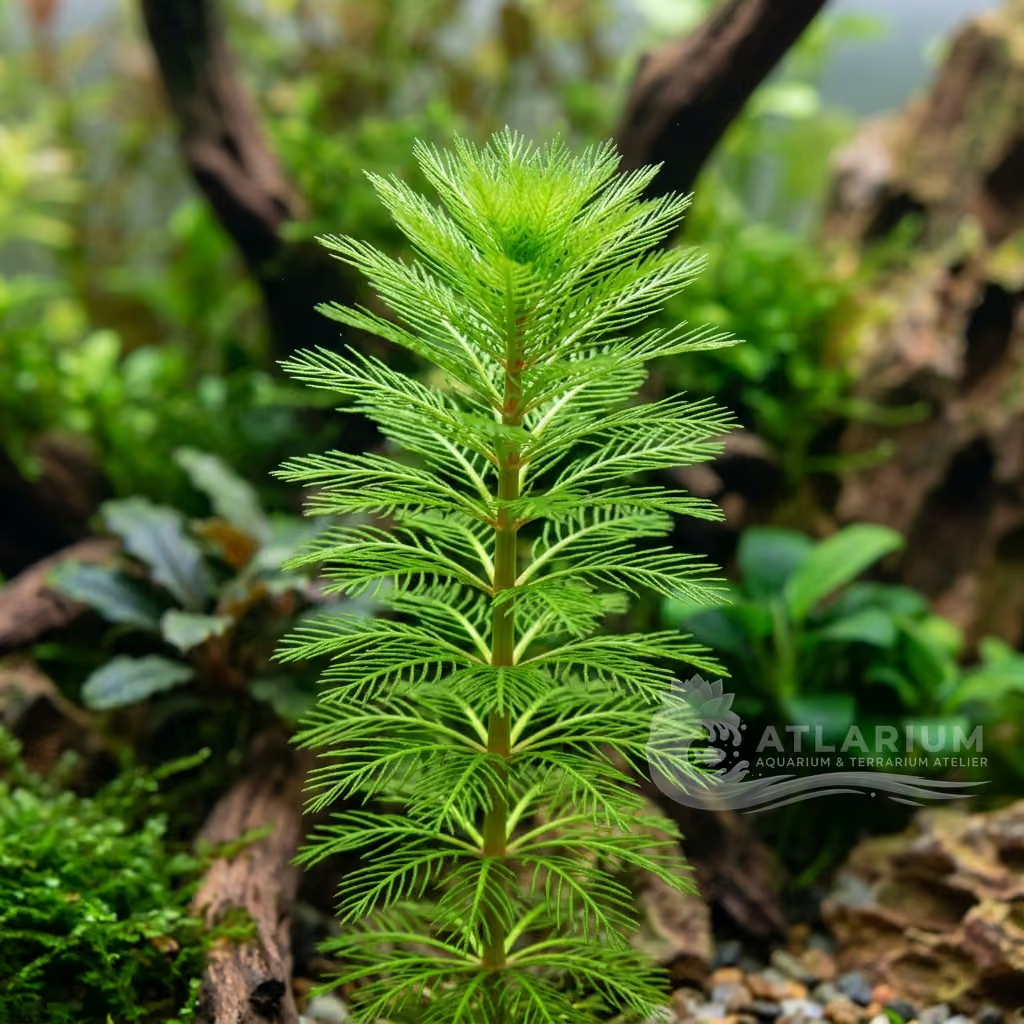
Red Water Milfoil
Myriophyllum tuberculatum
Myriophyllum tuberculatum is a highly demanding and intensely colored aquatic plant, famous for its fine, feather-like whorls that turn rusty red to bright orange under optimal conditions.
Water Temperature
22 - 28 °C
pH Value
5 - 7
Water type
Freshwater
Light
High
CO2
High
Expected height
40 cm
Expected width
8 cm
GH
3 - 10 dGH
KH
2 - 15 dKH

Species description
Geographical Origin and Habitat: Native to the tropical and subtropical regions of South and Southeast Asia, including India, Bangladesh, and Vietnam. It grows in shallow, stagnant waters, lakes, ditches, and freshwater marshes that are nutrient-rich and fully exposed to sunlight.
Taxonomy & Genetics: Belongs to the Haloragaceae family, genus *Myriophyllum*. Commonly known as red water milfoil. Genetically, the species requires highly optimized environmental conditions to maintain the stability of its brilliant red color phenotype.
Physical Structure: A branched stem plant that can grow 30-50 cm tall. Features finely divided, feather-like leaves arranged in dense whorls along the stem. Under submersed conditions, the internodal distance is very short, giving it a fluffy, highly compact look.
Color & Texture: Leaves exhibit an exceptional color palette ranging from rusty pink to coppery orange and deep brick red under optimal lighting. The texture is extremely delicate, fine, and soft to the touch.

Care, breeding and tankmates
Lighting & CO2: Demands very high lighting levels (at least 0.8-1 watt per liter or high-PAR LEDs). Constant CO2 supplementation (20-30 ppm) is mandatory to prevent the stems from melting and to facilitate healthy photosynthesis.
Nutrition & Substrate: Demands a nutrient-rich substrate loaded with iron, which is critical for its red pigmentation. Regular fertilization of both the root zone and the water column with macronutrients and chelated iron/micronutrients is essential.
Water Chemistry: Prefers soft to medium-hard water with an acidic to neutral pH (6.0-7.0), GH 3-10, and temperatures between 22°C and 28°C. Higher phosphate levels (0.5-1.5 ppm) paired with moderate nitrates help sustain growth.
Space Management & Placement: Should be placed in the background or midground of medium to large tanks, planted in dense groups of several stems. Ensure adequate spacing between individual stems during planting so that light can reach the lower sections.
Pruning: Pruned by cutting the upper portion of the stem with sharp aquascaping scissors. The cut tops can be replanted into the substrate. The remaining bottom section will branch out. Avoid overly aggressive pruning to prevent weakening.
Risks & Diseases: Highly sensitive to iron and light deficiencies, which lead to fading color, leaf loss on lower stems, and subsequent rot. Its fine leaves easily trap organic debris, promoting filamentous algae growth if filtration is inadequate.

Geographic origin and distribution
Native to the tropical and subtropical regions of South and Southeast Asia, including India, Bangladesh, and Vietnam. It grows in shallow, stagnant waters, lakes, ditches, and freshwater marshes that are nutrient-rich and fully exposed to sunlight.
Origin
South and Southeast AsiaAustralia, New Guinea, and Oceania

Plant profile
- Placement
- Background
- Given its intense red color and fine, feathery texture, this plant is best utilized as a stunning focal point in the midground or background. It contrasts beautifully against vibrant green plants, creating a strong visual impact in the aquascape. Because it grows quickly and requires high light, it should be placed where it won't be shaded by other plants and should be trimmed regularly.
- Botanical form
- Stem
- This is an aquatic stem plant known for its exceptionally fine, needle-like leaves that are arranged in whorls around a central, relatively thick stem. The entire plant, from the stem to the delicate foliage, can turn a deep, vibrant red or rusty-orange color when grown under optimal conditions. Its finely divided leaves give it a delicate, feathery appearance that is highly sought after by aquascapers.
- Growth
- Fast
- Under ideal conditions of high light, CO2, and rich nutrients, Myriophyllum tuberculatum exhibits a very fast growth rate. It can quickly reach the water surface and will need frequent trimming to maintain its shape and prevent it from shading itself or neighboring plants.
- Substrate
- Medium
- A nutrient-rich substrate, such as a high-quality aquasoil, is highly recommended to support its fast growth and high nutrient demands. The soil provides an essential reserve of nutrients that complements water column fertilization and encourages a strong root system. While it can theoretically grow in inert substrates, achieving its full potential in coloration and size is significantly more difficult without an active substrate.
- Column fertilization
- Required
- Aggressive and comprehensive water column fertilization is mandatory for this species. A complete liquid fertilizer containing macronutrients (NPK) and a rich blend of micronutrients should be dosed regularly, often daily. Iron dosing is particularly crucial and may need to be supplemented beyond standard trace mixes to maintain the plant's intense red pigmentation.
- Root fertilization
- Optional
- While water column dosing is the primary method of nutrient delivery, root fertilization provides a critical secondary source of nutrition. Inserting high-quality, iron-rich root tabs into the substrate near the base of the plant will ensure a continuous supply of essential elements. This is particularly beneficial in older aquariums where the substrate's original nutrient reserves may have depleted.
- Trimming
- Occasional
- Requires careful trimming to maintain its shape and promote bushiness. Top the plant and replant the cuttings, discarding the older, shaded lower portions if they look ratty. Frequent trimming encourages lateral shoots, making the stand denser.
- Propagation
- Cuttings
- Propagation is easily accomplished through simple stem cuttings. Trim the top portion of a healthy stem (about 4-6 inches) and carefully plant it into the substrate, ensuring the bottom leaves are removed to prevent rotting. The original stem will typically branch out, producing multiple new shoots from the cut node, leading to a denser bush.
- Sensitivity
- Moderate
- Extremely sensitive to suboptimal conditions; poor lighting or lack of CO2 will cause it to lose its red color and drop leaves. It is also delicate and can be damaged by aggressive herbivorous fish or strong water currents. Algaecides should be avoided as it melts easily.
- Layout role
- Background
- Serves as a premier accent plant to create strong visual impact and contrast in the aquascape. The fine, feathery texture combined with the bold red color makes it a favorite for Dutch-style aquariums. It breaks up monotony in layouts dominated by green, broad-leaved species.

Related species
Recommendations grouped by close relatives, companion choices, and similar care.