Hygrophila polysperma 'Sunset' ('Rosanervig')
Hygrophila polysperma
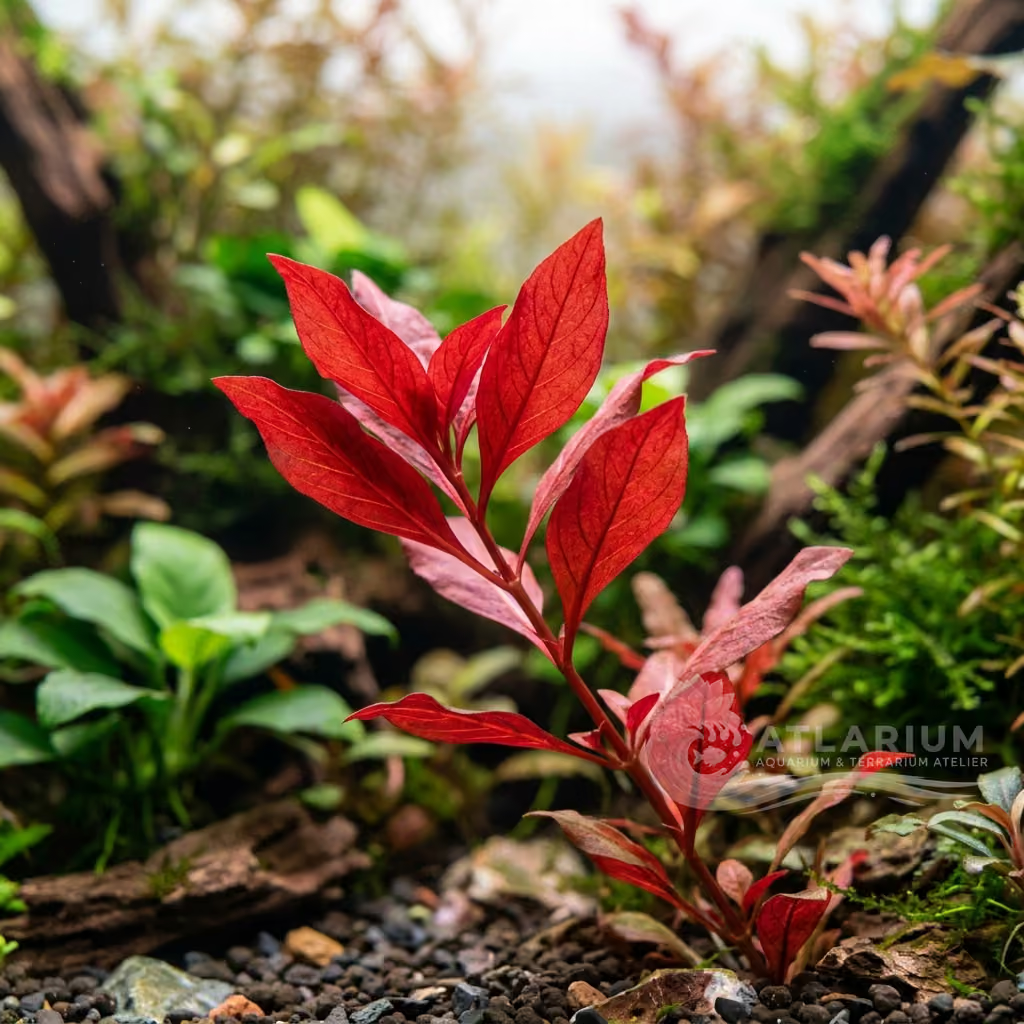
An elite commercial cultivar renowned for its stunning visual contrast: bright pink or deep rose leaves with striking white venation. It requires high light, iron, and potassium to maintain its colors.
Water Temperature
18 - 28 °C
pH Value
6 - 8
Water type
Freshwater
Light
Medium
CO2
Low
Expected height
40 cm
Expected width
15 cm
GH
4 - 20 dGH
KH
2 - 21 dKH

Species description
Geographical Origin and Habitat: This highly specific, stunningly patterned botanical cultivar does not exist in nature. Hygrophila polysperma "Sunset" (universally known in the hobby as "Rosanervig") is an elite, heavily mutated commercial variant of the globally invasive "Dwarf Hygro." Developed specifically for the aquarium trade, it behaves exactly like its wild-type cousin, acting as a wildly aggressive, deeply rooted amphibious stem plant that grows vigorously both submerged and emerged.
Taxonomy & Genetics: Scientifically classified within the Acanthaceae family, H. polysperma "Sunset" is one of the most famous and highly prized patterned cultivars in the hobby. Taxonomically, it is visually distinguished from the pure green wild-type by its striking leaf venation. Genetically, it shares the extreme vegetative propagation traits of its invasive cousins, but its DNA possesses a deliberate, stable viral infection that forces the leaf veins to remain completely white while the surrounding tissue blushes deep pink.
Physical Structure: The architectural structure of "Sunset" (Rosanervig) is gracefully fine, intensely dense, and violently branching. It is a classic, highly flexible midground/background stem plant. The foundation is a relatively thin but incredibly tough stem that deploys aggressive white roots directly from the nodes, frequently creeping horizontally before shooting vertically. The leaves are arranged oppositely. The foliage is strictly lanceolate, moderately long (4-8 cm), and naturally slightly wavy.
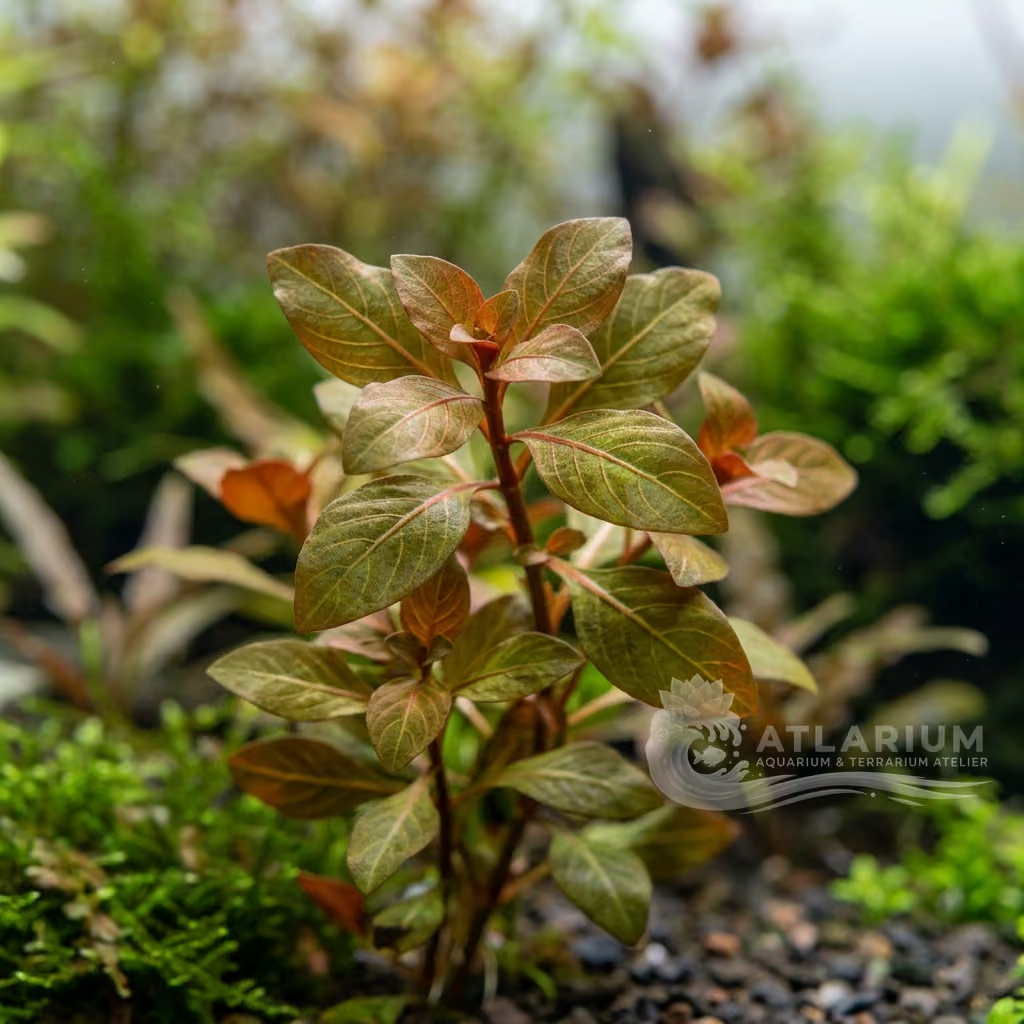
Color & Texture: The coloration is absolutely striking, violently contrasting, and visually mesmerizing. Grown submerged under intense lighting, the dense thickets of leaves display a shocking coloration: the leaf tissue blushes a brilliant, glowing pink, rich rose, or deep reddish-orange, while the intricate network of leaf veins remains a stark, pure white. This stark contrast creates the iconic "Rosanervig" (rose-veined) look. The texture is distinctly crisp, extremely flexible, and perfectly smooth.

Care, breeding and tankmates
Lighting & CO2: It is an incredibly resilient but highly demanding plant to achieve its signature coloration. While it will effortlessly survive in low-light, low-tech aquariums, its spectacular genetics will completely fail; the leaves will remain a dull, muddy green, and the white veins will disappear. To force the violent pink/rose blushing and unlock the striking white venation, blasting, high-intensity LED lighting is absolutely mandatory. Pressurized CO2 is highly recommended to drastically accelerate its dense growth.
Nutrition & Substrate: As a highly vigorous, massive spreading stem plant, "Sunset" is a terrifyingly aggressive feeder that demands massive amounts of both root and water-column nutrients. It demands a heavily nutrient-dense substrate. However, exactly like all Hygrophila, it specifically requires massive amounts of Potassium and Iron in the water column. If Iron is depleted, the pink colors will fade. If Potassium is depleted, the delicate patterned leaves will instantly develop distinctive pinholes and dissolve.
Water Chemistry: Originating from highly stabilized nursery conditions, it is practically invincible regarding standard water parameters. It thrives effortlessly in heated tropical aquariums (22-28°C) but is also exceptionally adaptable to slightly cooler tanks (down to 20°C). It comfortably tolerates both soft, acidic blackwater and rock-hard, highly alkaline tap water (pH 6.0 - 8.0). The single most critical environmental requirement is absolute chemical stability and continuous Potassium dosing. It prefers moderate water flow.
Space Management & Placement: Due to its rapid vertical growth, creeping nature, and dense branching habit, Hygrophila polysperma "Sunset" is strictly a dominant midground to background plant for aquariums of all sizes. It MUST be planted in massive, dense bunches (creating a "street" or massive bush effect). Because it grows as a towering, heavily branching aquatic shrub with striking pink and white patterned leaves, it will rapidly form a breathtaking, impenetrable focal point that wildly contrasts with pure green plants.
Pruning: Pruning is a constant, brutal, and necessary weekly procedure to control its massive spread and maintain bush density. Never pull the rooted base out. To prune, you must aggressively "top" the flexible stems using aquascaping scissors anywhere along their length. The cut edge will violently branch out with two new side shoots, rapidly transforming the single stem into a massive, dense pink bush. You can immediately replant the bright pink cut tops directly into the substrate to rapidly propagate.
Risks & Diseases: The absolute greatest threat to this plant is Potassium deficiency and severe self-shading. Because its growth rate is so violently fast, it will rapidly strip the water column of Potassium, instantly resulting in characteristic "pinhole rot" across all older leaves. The delicate patterned leaves will literally dissolve from the inside out, leaving bare, ugly stems. The second major risk is self-shading; the massive upper pink canopy will completely block light, causing the lower stem to rot.

Geographic origin and distribution
This highly specific, stunningly patterned botanical cultivar does not exist in nature. Hygrophila polysperma "Sunset" (universally known in the hobby as "Rosanervig") is an elite, heavily mutated commercial variant of the globally invasive "Dwarf Hygro." Developed specifically for the aquarium trade, it behaves exactly like its wild-type cousin, acting as a wildly aggressive, deeply rooted amphibious stem plant that grows vigorously both submerged and emerged.
Origin
Selective breeding and cultivars

Plant profile
- Placement
- Background
- Best utilized as an eye-catching midground or background accent plant. Placing it against darker green foliage makes its bright colors pop beautifully. It should be planted where it can receive unobstructed light to maintain its optimal coloration.
- Botanical form
- Stem
- Features upright stems with leaves that display a beautiful pink or orange-red coloration near the top. The most distinctive feature is the white or pale pink leaf veins, providing a striking contrast. Under lower light, the plant will appear mostly green, losing its characteristic sunset look.
- Growth
- Fast
- Grows quite rapidly, though perhaps slightly less vigorously than the standard green variety. Its fast growth means it can quickly establish itself and begin contributing to the overall layout. Regular trimming is necessary to keep it compact and prevent it from reaching the surface too quickly.
- Substrate
- Medium
- The 'Sunset' (Rosanervig) cultivar thrives best when provided with a nutrient-rich substrate, which helps support its striking leaf coloration and prominent venation. A quality aqua soil with moderate depth (4-6 cm) allows its vigorous roots to absorb essential trace elements, particularly iron. While it is adaptable and can root in inert gravel, enriched substrates significantly improve its overall vitality and visual appeal.
- Column fertilization
- Required
- Relies heavily on water column fertilization to support its fast growth and intense coloration. A comprehensive liquid fertilizer containing micro and macronutrients is highly recommended. The vibrant top growth is a direct reflection of adequate nutrient availability in the water.
- Root fertilization
- Recommended
- Benefits significantly from a nutrient-rich substrate to support its fast growth and robust root system. Root tabs can be very beneficial, especially in older or inert substrates, to ensure long-term vitality. A strong root base helps the plant absorb essential nutrients more effectively.
- Trimming
- Regular
- Responds well to frequent trimming, which helps maintain a bushier and more attractive shape. Cutting the tops encourages the growth of side shoots, increasing the density of the group. The brightly colored cuttings are perfect for replanting and expanding the display.
- Propagation
- Cuttings
- Easily propagated by snipping the upper portion of the stem and replanting it. It readily forms roots at the nodes, ensuring high success rates with cuttings. It is an excellent plant for aquarists looking to practice propagating colorful stem plants.
- Sensitivity
- Moderate
- Generally hardy and adaptable, making it a relatively easy colored plant to keep. However, its best colors are only achieved under optimal light and nutrient conditions. If conditions deteriorate, the plant will revert to a plain green appearance but will usually survive.
- Layout role
- Midground
- Serves as a brilliant focal point or color accent in the midground or background. Its unique veining and pinkish hues add warmth and visual interest to the aquascape. It is perfect for breaking up large expanses of green.

Image gallery
Licensed images linked to the species or, when marked, to the closest representative taxon.

Related species
Recommendations grouped by close relatives, companion choices, and similar care.