Hygrophila polysperma ''Ceylon''
Hygrophila polysperma
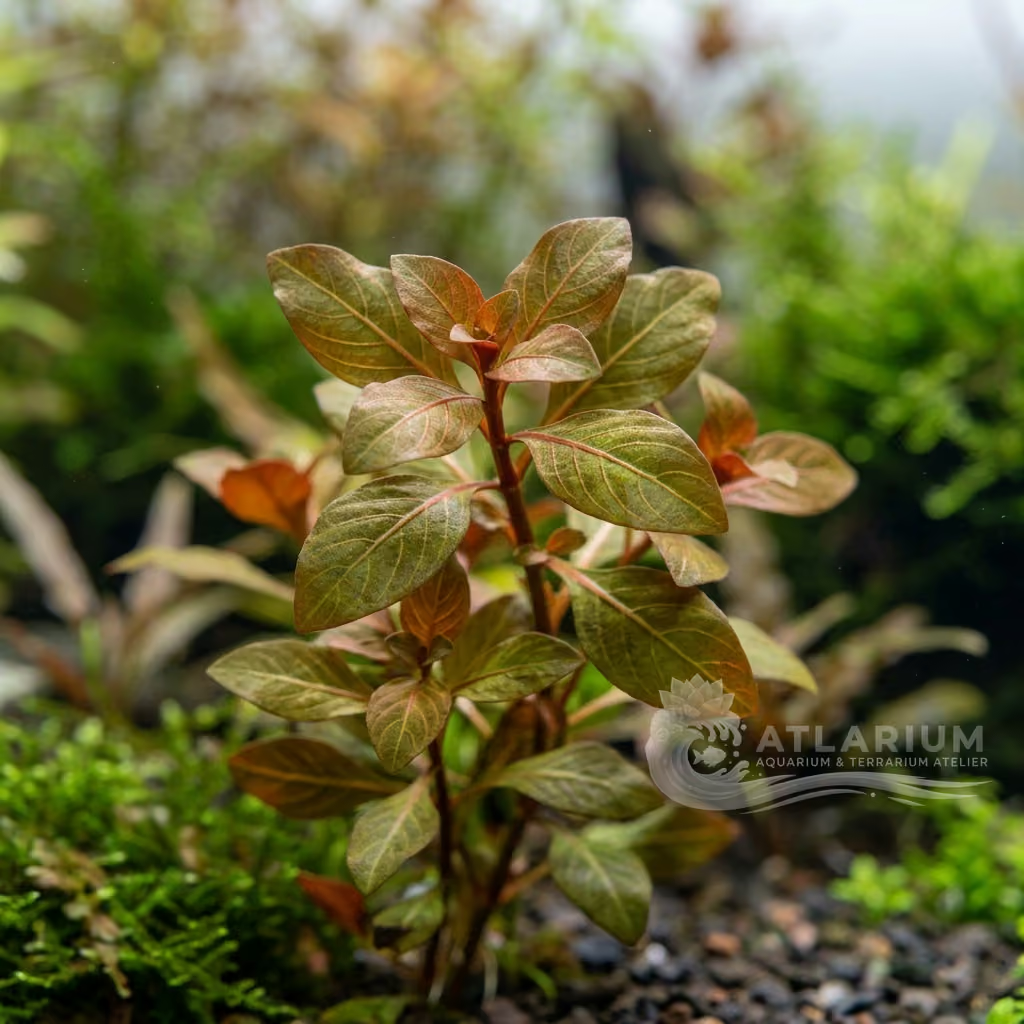
Endemic to Sri Lanka, this aggressive midground plant features narrow, wavy leaves. Under high LED light, it violently branches out and blushes a stunning rich copper or bronze on the upper canopy.
Water Temperature
18 - 28 °C
pH Value
6 - 8
Water type
Freshwater
Light
Low
CO2
Low
Expected height
40 cm
Expected width
15 cm
GH
4 - 20 dGH
KH
2 - 21 dKH

Species description
Geographical Origin and Habitat: Endemic to the tropical island of Sri Lanka (formerly Ceylon). Hygrophila polysperma "Ceylon" is a highly specialized, exquisitely beautiful geographical variant of the standard, globally invasive "Dwarf Hygro." It naturally colonizes the shallow, sun-drenched, sandy margins of slow-moving streams and marshes. It is a wildly aggressive, deeply rooted amphibious stem plant perfectly evolved to survive alternating periods of deep submersion and total terrestrial exposure by rapidly creeping and branching.
Taxonomy & Genetics: Scientifically classified within the Acanthaceae family, H. polysperma "Ceylon" is a globally recognized, highly prized geographical cultivar. Taxonomically, it is visually distinguished from standard H. polysperma by possessing distinctly narrower, much longer, and slightly more undulating leaves. Genetically, it shares the extreme vegetative propagation traits of its invasive cousins, but its DNA allows it to develop a stunning, rich copper/bronze coloration on its upper leaves under high light.
Physical Structure: The architectural structure of "Ceylon" is gracefully fine, intensely dense, and violently branching. It is a classic, highly flexible midground/background stem plant. The foundation is a relatively thin but incredibly tough stem that deploys aggressive white roots directly from the nodes, frequently creeping horizontally before shooting vertically. The leaves are arranged oppositely. The foliage is strictly narrowly lanceolate, moderately long (4-8 cm), and naturally slightly wavy along the margins.
Color & Texture: The coloration is distinctly dynamic, warmly glowing, and visually mesmerizing. Grown submerged under standard lighting, the dense thickets of narrow leaves are a solid, glowing bright apple-green. However, under blasting high-intensity LED lighting, the entire upper half of the stem violently shifts to a stunning, translucent rich copper, bronze, or pale pinkish-orange. The texture is distinctly crisp, extremely flexible, and perfectly smooth, giving the dense bush a delicate, feathery appearance.

Care, breeding and tankmates
Lighting & CO2: It is an incredibly resilient but highly responsive stem plant. While it will effortlessly survive in low-light, low-tech aquariums (remaining purely green and growing sparse), under medium to high-intensity LED lighting, its growth rate becomes terrifyingly explosive, and it unlocks its signature vibrant copper/bronze blushing on the upper canopy. If severely shaded, the lower leaves will drop. Pressurized CO2 is highly recommended to drastically accelerate its dense, bushy growth.
Nutrition & Substrate: As a highly vigorous, massive spreading stem plant, "Ceylon" is a terrifyingly aggressive feeder that demands massive amounts of both root and water-column nutrients. Its root system demands a heavily nutrient-dense substrate. However, exactly like all Hygrophila, it specifically requires massive amounts of Potassium in the water column. If Potassium is depleted, the delicate copper leaves will instantly develop distinctive pinholes, turn translucent yellow, and dissolve into mush.
Water Chemistry: Originating from tropical Sri Lanka, it is practically invincible regarding standard water parameters. It thrives effortlessly in heated tropical aquariums (22-28°C) but is also exceptionally adaptable to slightly cooler tanks (down to 20°C). It comfortably tolerates both soft, acidic blackwater and rock-hard, highly alkaline tap water (pH 6.0 - 8.0). The single most critical environmental requirement is absolute chemical stability and continuous Potassium dosing. It prefers moderate water flow to ripple its leaves.
Space Management & Placement: Due to its rapid vertical growth, creeping nature, and dense branching habit, Hygrophila polysperma "Ceylon" is strictly a dominant midground to background plant for aquariums of all sizes. It MUST be planted in massive, dense bunches (creating a "street" or massive bush effect). Because it grows as a towering, heavily branching aquatic shrub with elegant copper-tipped leaves, it will rapidly form a breathtaking, impenetrable warm-toned wall that beautifully contrasts with pure green plants.
Pruning: Pruning is a constant, brutal, and necessary weekly procedure to control its massive spread and maintain bush density. Never pull the rooted base out. To prune, you must aggressively "top" the flexible stems using aquascaping scissors anywhere along their length. The cut edge will violently branch out with two new side shoots, rapidly transforming the single stem into a massive, dense bush. You can immediately replant the copper-colored cut tops directly into the substrate to rapidly propagate the forest.
Risks & Diseases: The absolute greatest threat to this plant is Potassium deficiency and severe self-shading. Because its growth rate is so violently fast, it will rapidly strip the water column of Potassium, instantly resulting in characteristic "pinhole rot" across all older leaves. The delicate leaves will literally dissolve from the inside out, leaving bare, ugly stems. The second major risk is self-shading; the massive upper copper canopy will completely block light, causing the lower stem to rot and drop its leaves.

Geographic origin and distribution
Endemic to the tropical island of Sri Lanka (formerly Ceylon). Hygrophila polysperma "Ceylon" is a highly specialized, exquisitely beautiful geographical variant of the standard, globally invasive "Dwarf Hygro." It naturally colonizes the shallow, sun-drenched, sandy margins of slow-moving streams and marshes. It is a wildly aggressive, deeply rooted amphibious stem plant perfectly evolved to survive alternating periods of deep submersion and total terrestrial exposure by rapidly creeping and branching.
Origin
South and Southeast Asia

Plant profile
- Placement
- Background
- Highly versatile, it can be used effectively in both the midground and background depending on how it is trimmed. In smaller tanks, it works well as a background plant, while in larger setups, it can be a beautiful midground bush. Its finer texture allows it to blend seamlessly with a variety of other species.
- Botanical form
- Stem
- Features slender, elongated leaves that often exhibit a slightly reddish or bronze tint, especially under good lighting. The stems tend to grow more delicately than the standard species, giving it a somewhat weeping or relaxed appearance. Its creeping growth habit under high light can be used to create interesting textures.
- Growth
- Fast
- Exhibits a fast growth rate, rapidly establishing itself in the aquarium. Its quick growth makes it an excellent choice for quickly filling in empty spaces or helping to balance a new setup. Regular pruning is needed to maintain its shape and prevent it from becoming overly tall.
- Substrate
- Medium
- Hygrophila polysperma 'Ceylon' appreciates a substrate with moderate nutrient availability to enhance its distinct coloration and leaf shape. Although it can survive in plain gravel, incorporating a nutrient-rich aqua soil encourages healthier root development and denser growth. A substrate depth of 4 to 5 cm allows its roots to establish firmly, providing both stability and access to supplementary macronutrients.
- Column fertilization
- Required
- Very effective at absorbing nutrients directly from the water column. Regular dosing of liquid fertilizers ensures the leaves maintain their healthy color and fine structure. It will often produce water roots if column nutrients are plentiful, which can be trimmed if desired.
- Root fertilization
- Recommended
- While not heavily reliant on root feeding, a nutritious substrate helps support long-term health and stability. Providing root tabs in inert substrates can give an extra boost to its growth. It generally roots well and establishes itself quickly regardless of the substrate type.
- Trimming
- Regular
- Highly tolerant of heavy pruning, which encourages the plant to branch out and form dense bushes. Trimming the tops promotes lateral growth, making it easy to shape. Cuttings can be easily replanted to increase the density of the group.
- Propagation
- Cuttings
- Propagation is incredibly simple through stem cuttings. Replanting the tops or even side shoots quickly results in new, independent plants. It multiplies rapidly, allowing aquarists to easily create large, lush groupings.
- Sensitivity
- Moderate
- Very hardy and forgiving of a wide range of water parameters and temperatures. It is an excellent beginner plant that rarely encounters significant issues. Like other polysperma varieties, it is highly adaptable and resilient.
- Layout role
- Background
- Adds a delicate, fine-textured element to the midground or background, contrasting well with broader-leaved plants. Its tendency to creep under strong light can be utilized to create unique, sprawling bushes. It also provides excellent cover for smaller fish and shrimp.

Image gallery
Licensed images linked to the species or, when marked, to the closest representative taxon.

Related species
Recommendations grouped by close relatives, companion choices, and similar care.