Water Lettuce
Pistia stratiotes
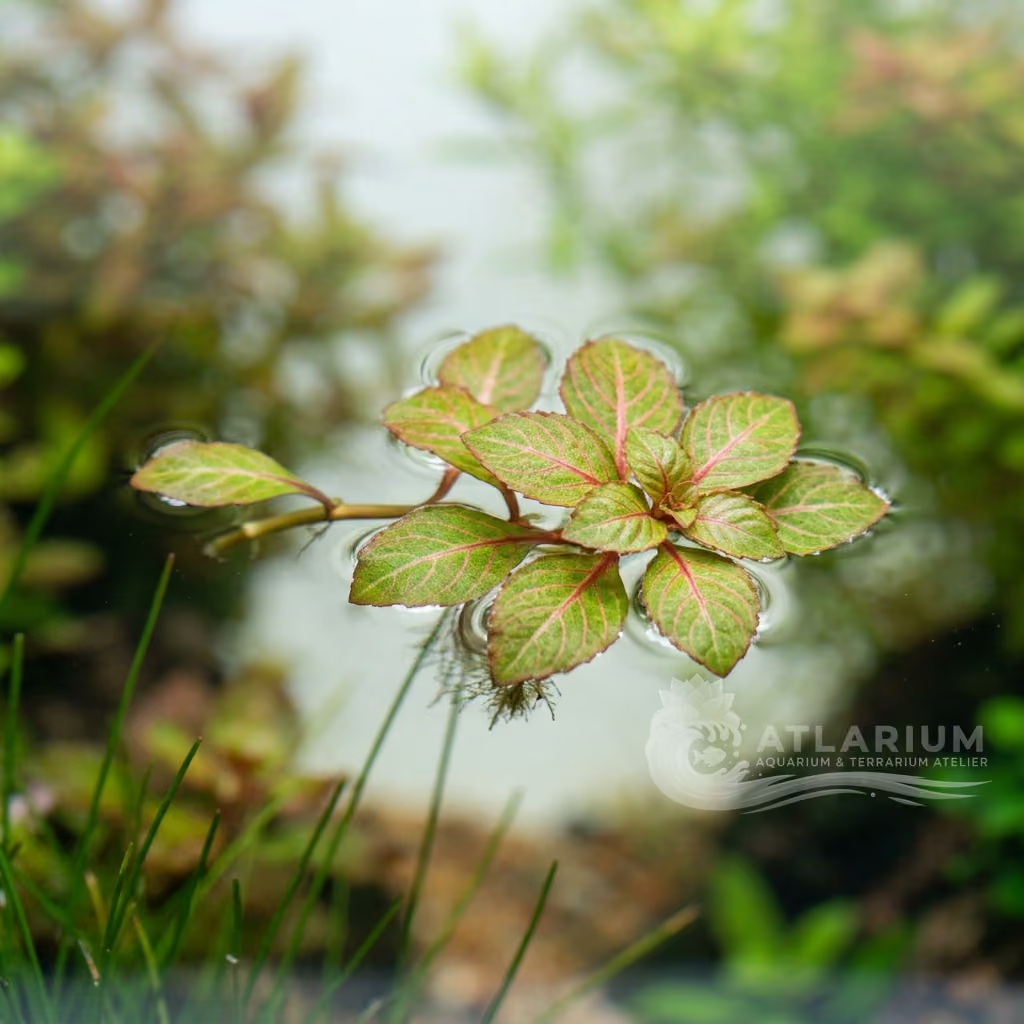
A popular rosette floating plant with velvety, ribbed leaves and a massive, feathery root system. Extremely efficient at absorbing waste nutrients and providing natural shelter.
Water Temperature
20 - 30 °C
pH Value
5.5 - 8
Water type
Freshwater
Light
Alta (altrimenti si restringe a foglioline nane)
CO2
Nessuna (usa aria atmosferica)
Expected height
10 cm
Expected width
15 cm
GH
4 - 20 dGH
KH
2 - 15 dKH

Species description
Geographical Origin and Habitat: Pistia stratiotes is a pantropical floating plant, likely native to the Nile River basin or South America, and now widely distributed across all tropical and subtropical regions. It populates calm, stagnant waters such as lakes, ponds, marshes, ditches, and slow-moving rivers, where it floats freely on the water surface.
Taxonomy & Genetics: Belonging to the Araceae family, it is the sole species in the genus Pistia, making it a monotypic genus. It is commonly known as "Water Lettuce." Genetically, it exhibits high stability and an incredible capacity for clonal reproduction via runners (stolons), allowing it to form dense surface mats rapidly.
Physical Structure: It features a compact rosette of floating leaves arranged in a cup-like, lettuce-like shape. The leaves are thick, spongy, and covered with dense, water-repellent hairs. It develops an exceptionally extensive, branched, and feathery root system suspended in water, which can reach 30-50 cm in length.
Color & Texture: The leaves display a velvety, light green or blue-green color. The leaf texture is thick, soft, and ridged with deep parallel longitudinal veins. The suspended roots are dark, ranging from greyish-brown to purplish-black, with a fluffy, feathery appearance.

Care, breeding and tankmates
Lighting & CO2: Requires very intense lighting, preferably from full-spectrum LEDs or direct sunlight. Being a floating plant, it absorbs CO2 directly from the surrounding air, making dissolved CO2 supplementation unnecessary.
Nutrition & Substrate: Requires no substrate as it floats freely. Being a voracious consumer of nitrates and phosphates, it demands constant liquid fertilization in the water column to prevent the leaves from turning yellow.
Water Chemistry: Grows in a wide temperature range, preferably between 20 and 28°C (68-82°F). It tolerates a pH range of 6.0 to 8.0 and adapts well to both soft and hard water. It prefers calm waters with minimal surface current.
Space Management & Placement: Placed on the water surface. Its extremely rapid growth rate requires constant monitoring: it can quickly cover the entire surface, blocking light for submerged plants and reducing gas exchange. It should be contained using floating rings.
Pruning: Pruning consists of the manual removal of excess plantlets and trimming the roots if they become too long and invasive. It propagates spontaneously via runners that produce new daughter rosettes.
Risks & Diseases: The main risk is the yellowing and melting of leaves due to iron and nitrogen deficiencies, or insufficient air humidity combined with closed aquarium lids, which create condensation dripping onto the leaves (causing them to rot).

Geographic origin and distribution
Pistia stratiotes is a pantropical floating plant, likely native to the Nile River basin or South America, and now widely distributed across all tropical and subtropical regions. It populates calm, stagnant waters such as lakes, ponds, marshes, ditches, and slow-moving rivers, where it floats freely on the water surface.
Origin
Cosmopolitan or introduced

Plant profile
- Placement
- Floating
- This plant must be placed exclusively floating freely on the aquarium's surface. It creates a striking canopy that provides natural shading for fish that prefer dim environments. Using a floating ring can effectively corral the plant and prevent it from being submerged by filter outputs. Careful management ensures it does not block light from lower plants.
- Botanical form
- Rosette, Floating
- Botanically, Pistia stratiotes features velvety, ribbed, cabbage-like rosettes that rest buoyantly on the water. The leaves are structurally adapted to repel water and remain dry on the top surface. Below the surface, it trails a beautiful network of fine roots. This morphology makes it a stunning addition to open-top aquariums.
- Growth
- Fast
- The growth rate is extremely fast, especially when provided with strong light and abundant nutrients. Under optimal conditions, it can double in mass within a matter of weeks. Regular and sometimes aggressive culling is required to prevent it from entirely covering the water surface. In nutrient-poor setups, its growth will significantly stall.
- Substrate
- None
- As an obligate floating aquatic plant, Pistia stratiotes has absolutely zero interaction with the substrate. Its delicate root structures hang downward directly into the water column to absorb dissolved minerals. It must never be buried or planted in gravel or soil. Provide a still or slow-moving surface environment to prevent root damage.
- Column fertilization
- Required
- Column dosing is the sole and most vital method for nourishing this plant. It rapidly consumes macronutrients like nitrogen and phosphorus directly from the water. A comprehensive liquid fertilizer is mandatory in tanks with low bioloads to sustain its growth. Daily or every-other-day dosing often yields the best results.
- Root fertilization
- None
- Root fertilization is completely irrelevant and impossible for this species. Substrate-based nutrients will not be accessible to its floating root system. Do not waste root tabs or enriched soils on floating plants. All effort must be directed toward maintaining a rich water column.
- Trimming
- Occasional
- Trimming Pistia stratiotes requires a careful approach to encourage bushy and attractive regrowth. Use sharp aquascaping scissors to make clean cuts just above a healthy set of leaves or nodes. Regular pruning prevents the lower portions from becoming shaded and bare. The cuttings can often be replanted to propagate the species further.
- Propagation
- Runners
- Propagation occurs effortlessly and automatically through the production of runners or daughter plants. As the plant matures, tiny offshoots will develop along its edges. Once these offshoots form their own roots and leaves, they detach naturally. The aquarist only needs to provide favorable conditions to witness exponential multiplication.
- Sensitivity
- HIGH
- Pistia stratiotes can be somewhat sensitive to sudden fluctuations in water parameters, particularly large pH or temperature swings. Algaecides and certain chemical treatments should be used with extreme caution. It requires a stable environment with consistent CO2 levels to prevent melting. Maintaining excellent water quality through regular changes is essential for its well-being.
- Layout role
- Floating
- In terms of aquascaping, Pistia stratiotes plays a vital role as a structural or accent element. Its floating nature and light green appearance make it perfect for creating focal points or softening hardscape lines. By grouping several stems or patches together, you can achieve a dense and visually striking effect. It seamlessly bridges the gap between different zones in the aquarium.

Related species
Recommendations grouped by close relatives, companion choices, and similar care.