Schismatoglottis roseospatha
Tweeddalea roseospatha
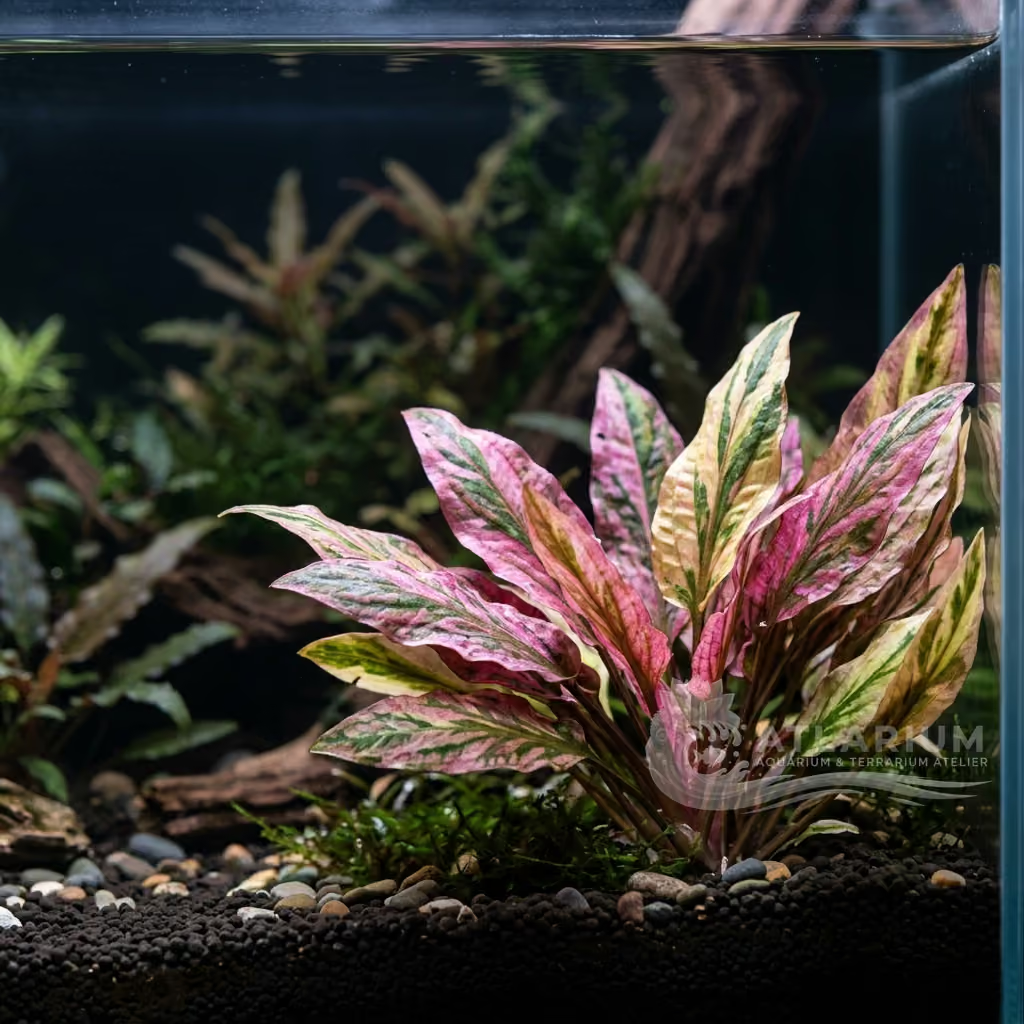
Schismatoglottis roseospatha is a very slow-growing foreground aquarium plant, admired for its remarkable adaptability to various lighting conditions and its compact growth habit. Its elegant appearance and minimal maintenance requirements make it an excellent choice for adding stable visual interest to the aquatic foreground.
Water Temperature
20 - 28 °C
pH Value
4.5 - 7
Water type
Freshwater
Light
Low to High
CO2
Medium - High
Expected height
12 cm
Expected width
10 cm
KH
0 - 14 dKH

Species description
Geographical Origin and Habitat: Schismatoglottis roseospatha belongs to the extensive Schismatoglottis genus, which is endemic to the tropical regions of Southeast Asia, particularly the islands of Borneo and Malaysia. These plants typically inhabit moist, shaded environments, thriving along stream banks, river edges, and among rocks in rainforests. Their rheophytic nature, meaning their ability to flourish in habitats subject to intermittent water flow or strong currents, makes them particularly adaptable to partial or full submersion, although they are often found emerged or semi-emerged in their natural setting.
Taxonomy & Genetics: As a member of the Araceae family, Schismatoglottis roseospatha shares botanical affinities with other popular aquarium genera like Anubias and Bucephalandra, yet it distinguishes itself with its own unique morphological characteristics. The genus Schismatoglottis is vast, encompassing hundreds of species, many of which are still undergoing study and classification. The specific epithet "roseospatha" refers to the pink or reddish
Color & Texture: ation of its spathe, the characteristic inflorescence of Araceae, though flowering is a rare occurrence in submerged aquarium environments.
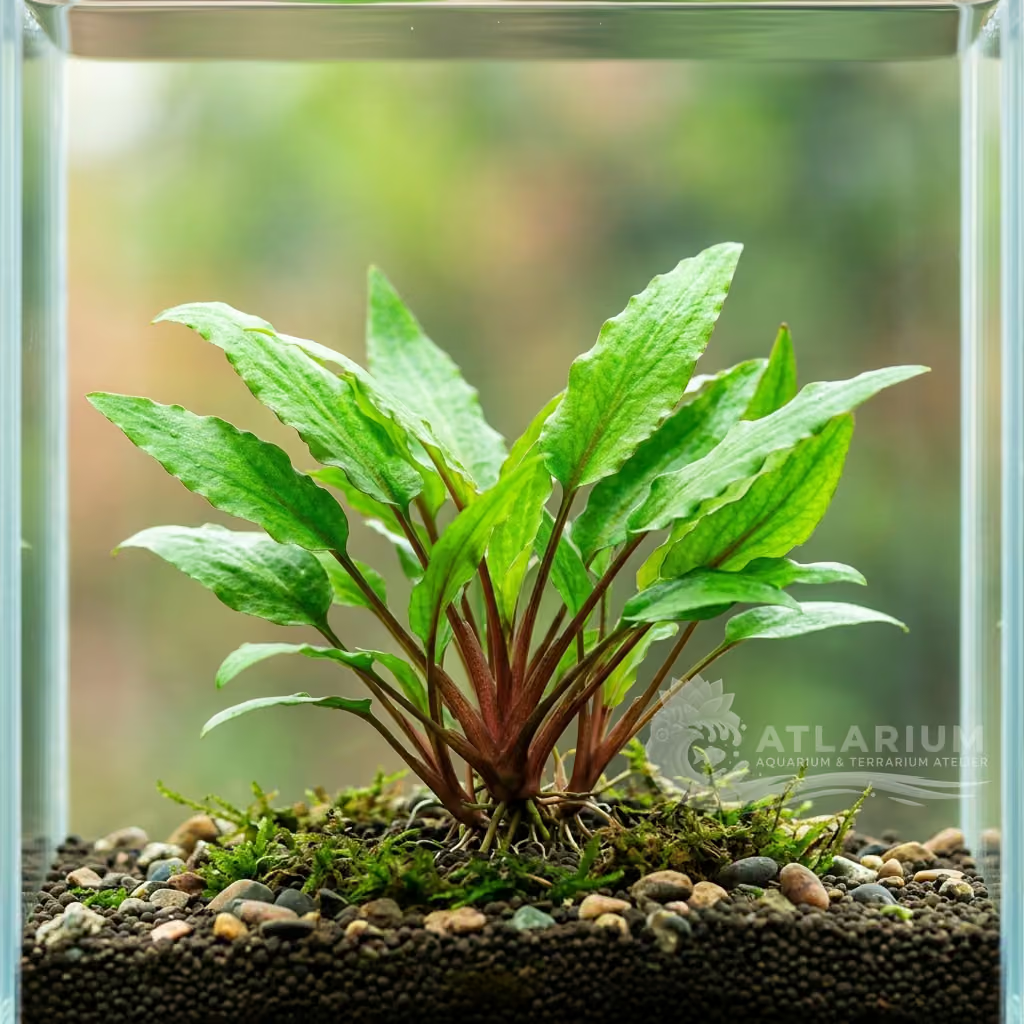
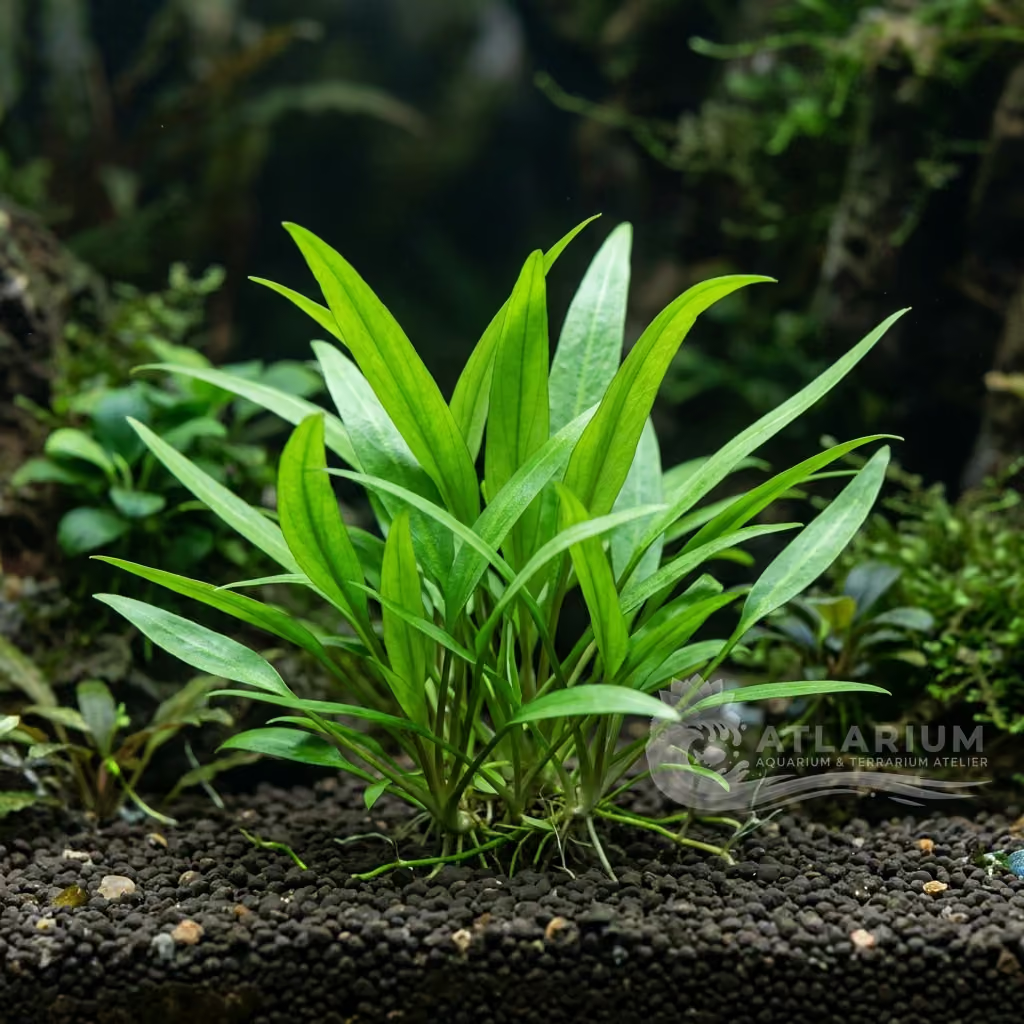
Physical Structure: This species typically features lanceolate or heart-shaped leaves, generally of a modest size, making it ideal for foreground placement or as an accent plant. The leaves emerge from a thick, robust rhizome, which serves as the plant's main structure from which both roots and leaf petioles develop. Its very slow growth rate ensures that the plant maintains a compact and tidy form for extended periods, contributing to a balanced and enduring aesthetic in the aquascape.
Color & Texture: The leaves of Schismatoglottis roseospatha are typically a rich, vibrant green, with a smooth or slightly textured surface that can reflect light captivatingly underwater. While some varieties within the Schismatoglottis genus may exhibit distinctive patterns or venation, "roseospatha" is often prized for its uniform coloration and inherent elegance. The leaf texture is durable, which helps deter algae growth and minor herbivorous fish damage, contributing to its longevity and pristine appearance in the aquarium.

Care, breeding and tankmates
Lighting & CO2: Schismatoglottis roseospatha is remarkably versatile regarding lighting, tolerating levels from low to high; however, medium light is often optimal for healthy growth and enhancing its coloration without unduly encouraging algae proliferation on its slow-growing leaves. While not strictly necessary, CO2 supplementation can significantly boost its already slow metabolism, promoting more vigorous and robust development. In the absence of CO2, the plant will still remain healthy, albeit growing more slowly, making it suitable for low-tech aquariums as well.
Nutrition & Substrate: As a rhizomatous plant, Schismatoglottis roseospatha primarily absorbs nutrients from the
Water Chemistry: This species demonstrates significant adaptability to water parameters, thriving in a temperature range of 20 to 28 C and tolerating a pH from 4.5 to 7.0, with a KH from 0.0 to 14.0. While tolerant, maintaining stable and consistent parameters is always preferable for its long-term health. It generally prefers soft, slightly acidic water, reflecting its natural habitat, but adapts well to more neutral conditions. Avoiding sudden fluctuations in these values is important to prevent plant stress.
Space Management & Placement: Schismatoglottis roseospatha is ideally suited for foreground placement due to its compact size and very slow growth, which negates the need for frequent
Pruning: Given its extremely slow growth, pruning Schismatoglottis roseospatha is a rare and targeted operation, primarily focused on removing old, damaged, or yellowing leaves. This process should be performed with sharp scissors, cutting the petiole as close as possible to the main rhizome to prevent unsightly remnants and potential rot. Selective pruning not only maintains the plant's aesthetic appeal but also redirects energy towards the development of new, healthy leaves, promoting more robust and dense growth over time.
Risks & Diseases: The primary risk for Schismatoglottis roseospatha in an aquarium is excessive algae growth on its leaves due to its very slow growth rate, especially under overly intense or imbalanced lighting conditions. Another common issue is rhizome rot, which occurs if the central part of the rhizome is completely buried in the substrate; it is crucial to keep it exposed. Nutrient deficiencies can manifest as yellowing leaves or stunted growth, indicating the need for a balanced fertilization regimen.

Geographic origin and distribution
Schismatoglottis roseospatha belongs to the extensive Schismatoglottis genus, which is endemic to the tropical regions of Southeast Asia, particularly the islands of Borneo and Malaysia. These plants typically inhabit moist, shaded environments, thriving along stream banks, river edges, and among rocks in rainforests. Their rheophytic nature, meaning their ability to flourish in habitats subject to intermittent water flow or strong currents, makes them particularly adaptable to partial or full submersion, although they are often found emerged or semi-emerged in their natural setting.
Origin
South and Southeast Asia

Plant profile
- Placement
- Foreground
- Place Schismatoglottis roseospatha in the midground or background of the aquarium. It needs enough space to avoid shading neighboring species. Proper placement ensures steady light exposure and water flow.
- Botanical form
- rhizome or creeping stem
- Schismatoglottis roseospatha features a distinct structural form with well-defined leaves. Its stem and root structures anchor firmly into the substrate. The overall appearance provides excellent visual texture underwater.
- Growth
- Very slow
- The growth rate of Schismatoglottis roseospatha is generally moderate under optimal conditions. Adding CO2 injection will significantly accelerate its development. However, it can adapt to slower growth in low-tech setups.
- Substrate
- Low
- *Schismatoglottis roseospatha* is a rheophytic aroid that primarily functions as an epiphyte, attaching its thick roots to rocks, wood, or coarse gravel. It does not require a deep or nutrient-rich substrate, as it absorbs the majority of its needed nutrients directly from the water column. If planted in the substrate, care must be taken to leave its rhizome completely exposed above the soil line to prevent rotting. Its robust root system is primarily designed for establishing a strong grip on hardscape elements in flowing water.
- Column fertilization
- Recommended
- Liquid fertilization is very beneficial for Schismatoglottis roseospatha. It absorbs dissolved minerals directly from the water column. Dosing a complete micronutrient fertilizer twice a week is recommended.
- Root fertilization
- Optional
- A nutrient-rich substrate strongly supports the root system of Schismatoglottis roseospatha. Adding root tabs near its base provides essential macronutrients. This promotes a stronger base and healthier overall growth.
- Trimming
- Occasional
- Regular trimming keeps Schismatoglottis roseospatha looking neat and prevents overgrowth. Cut the stems just above a node to encourage branching. Remove any decaying or yellowing leaves to maintain water quality.
- Propagation
- Cuttings
- Propagation of Schismatoglottis roseospatha is straightforward by taking stem cuttings. Replant the healthy cut portions directly into the substrate. They will develop new roots within a week or two.
- Sensitivity
- Moderate
- Schismatoglottis roseospatha is somewhat sensitive to sudden fluctuations in water parameters. It prefers stable temperatures and consistent CO2 levels. Algae can grow on its leaves if lighting is too intense.
- Layout role
- group, Epiphyte, Midground, Nano, Foreground
- Schismatoglottis roseospatha plays a crucial role in creating depth in an aquascape. Its unique texture contrasts beautifully with fine-leaved plants. It works well as a focal point or a transition plant.

Related species
Recommendations grouped by close relatives, companion choices, and similar care.