Cryptocoryne wendtii ''grün''
Cryptocoryne wendtii
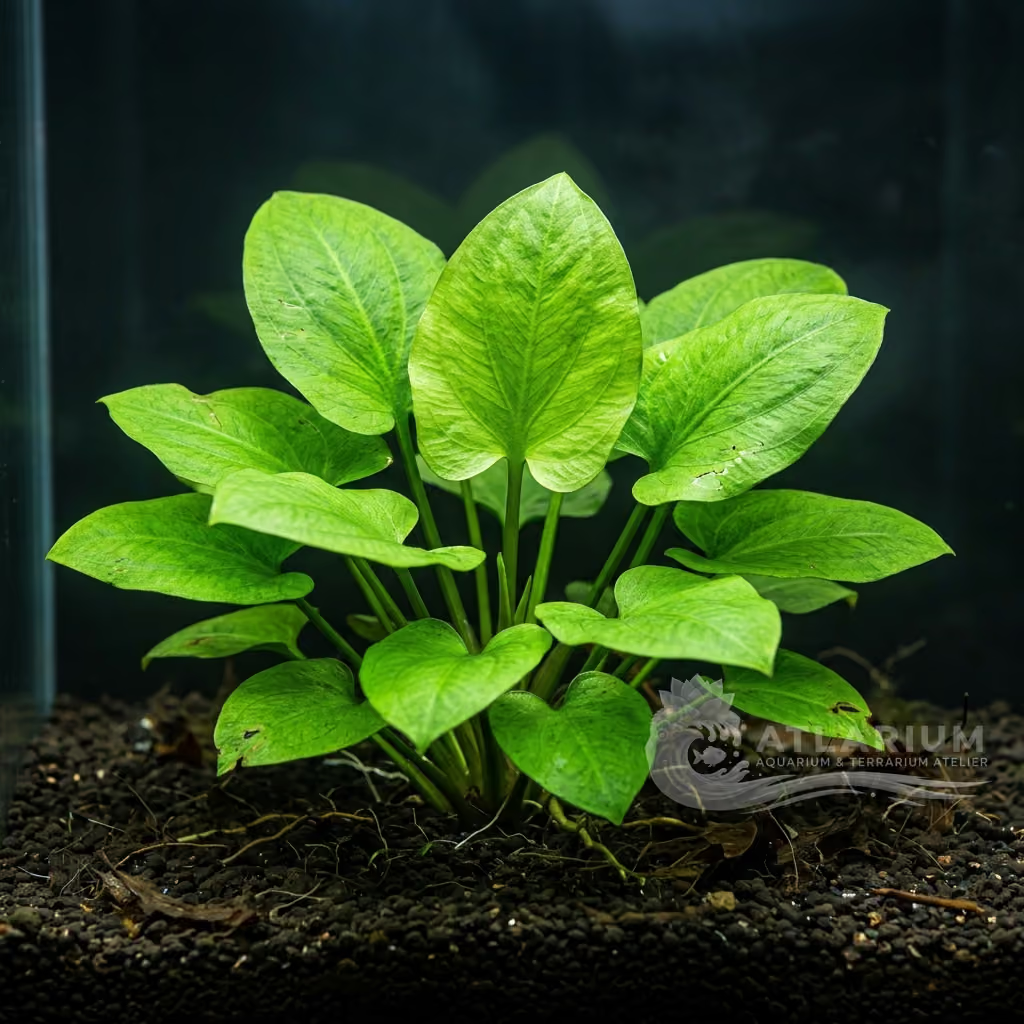
Cryptocoryne wendtii 'grün' is an incredibly versatile green cultivar. Its lush, wavy bright-green foliage rapidly forms dense, resilient clusters, making it the perfect foundation for beginners.
Water Temperature
15 - 30 °C
pH Value
5 - 8
Water type
Freshwater
Light
Low to High
CO2
Low - High
Expected height
20 cm
Expected width
15 cm
GH
4 - 20 dGH
KH
1 - 18 dKH

Species description
Geographical Origin and Habitat: Cryptocoryne wendtii ''grün'' (green) is a selected cultivar derived from the wild species Cryptocoryne wendtii, native to Sri Lanka. In its native rainforests, it grows along the banks and silty beds of warm, shaded forest streams, adapting to grow fully submerged or emersed on damp soils during the dry season. This green cultivar was selected to preserve its bright emerald green
Color & Texture: ation under home aquarium conditions.
Taxonomy & Genetics: It belongs to the Araceae family, genus Cryptocoryne. It is a horticulturally selected form of Cryptocoryne wendtii. Genetically, this plant possesses extreme phenotypic plasticity, meaning that leaf height, width, and coloration can vary significantly in response to light intensity and nutrition, while firmly maintaining its underlying green color without turning brown.
Physical Structure: It develops rosettes of lanceolate leaves supported by flexible petioles. The height usually ranges between 15 and 25 cm, spreading up to 15 cm wide. It possesses a robust root system with a vigorous rhizome that quickly develops underground runners from which new adjacent plantlets emerge.
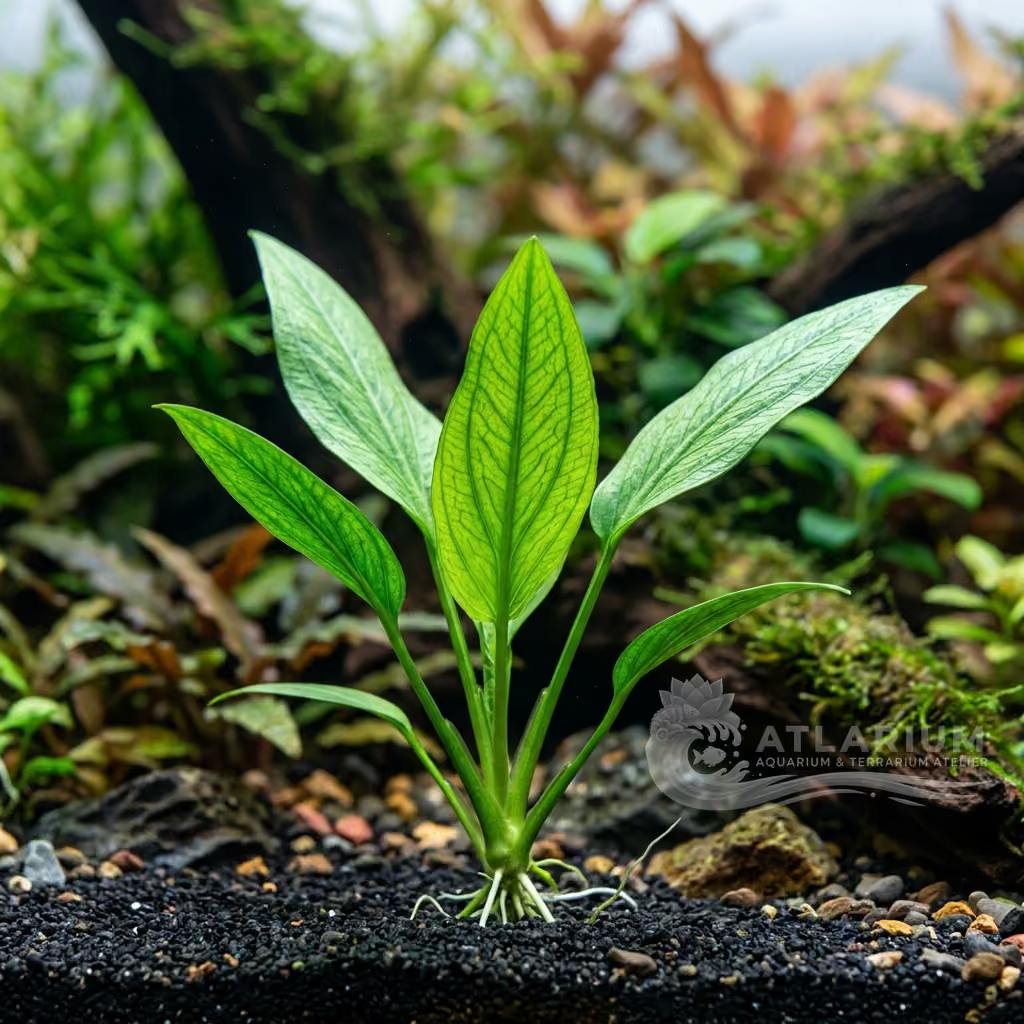
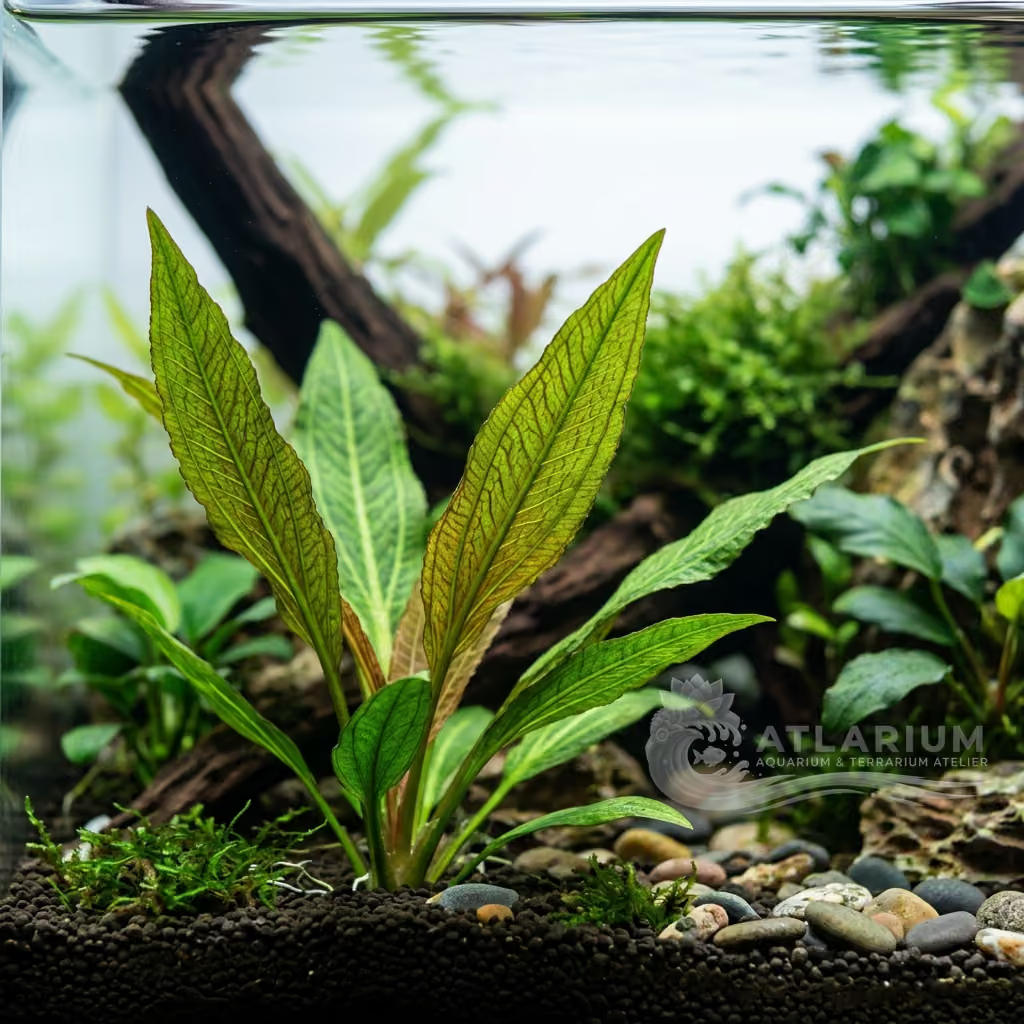
Color & Texture: The leaves have a smooth blade, slightly wavy at the margins, of a pure and uniform emerald or apple green color. The lower side maintains a lighter green hue. This fresh green shade contrasts strongly with the brown or reddish tones of other Cryptocorynes, offering high brightness to aquarium layouts.

Care, breeding and tankmates
Lighting & CO2: Highly adaptable, it grows well under low light conditions as well as under intense lighting. Moderate light stimulates compact growth and horizontally arranged leaves. CO2 injection is not necessary to thrive, although a light supply favors a significantly faster growth rate and a bushier rosette.
Nutrition & Substrate: Prefers a rich and fertilized substrate. Periodic insertion of fertilizer tablets near the roots stimulates runner production and prevents leaf yellowing. It also adapts well to inert gravel if supported by regular liquid column fertilization.
Water Chemistry: It is one of the most tolerant aquarium plants: KH between 1 and 18 dKH and pH between 5.0 and 8.0. It tolerates a wide temperature range, from 15°C to 30°C. Regular water changes are recommended to maintain clean conditions.
Space Management & Placement: Perfect for the foreground in medium-large aquariums or for the midground in smaller tanks. Plant the crowns spaced 3-4 cm apart. Over time it will form a compact and uniform bush, ideal for creating natural and welcoming transition zones for bottom-dwelling fish.
Pruning: Maintenance is minimal. Periodically remove damaged or old outer leaves by cutting them at the base of the rosette with sharp scissors. This promotes light passage to the center of the rosette, stimulating the growth of new green leaves.
Risks & Diseases: Although extremely robust, it can undergo "Cryptocoryne melt" if subjected to sudden changes in chemical-physical conditions (such as a total change of light or abrupt transplanting). Once planted, it is recommended to let it root undisturbed.

Geographic origin and distribution
Cryptocoryne wendtii ''grün'' (green) is a selected cultivar derived from the wild species Cryptocoryne wendtii, native to Sri Lanka. In its native rainforests, it grows along the banks and silty beds of warm, shaded forest streams, adapting to grow fully submerged or emersed on damp soils during the dry season. This green cultivar was selected to preserve its bright emerald green
Origin
Selective breeding and cultivarsSouth and Southeast Asia

Plant profile
- Placement
- Foreground
- This bright green variety is perfectly suited for the midground, where it can form dense, bushy thickets. In small nano aquariums, it can be used as a vibrant background plant. Grouping several individuals together creates a seamless transition from foreground carpets to background stem plants.
- Botanical form
- Rosette
- It grows in a classic rosette pattern, featuring lanceolate leaves with characteristically wavy or slightly hammered margins. The foliage is consistently bright to medium green, offering a very fresh and natural appearance. The robust leaves tend to grow slightly more upright compared to some other wendtii varieties.
- Growth
- Medium
- This variety has a moderate growth rate, slightly faster than some rarer cultivars but slower than many stem plants. With CO2 injection and medium to high lighting, it produces new leaves consistently. Its manageable growth makes it an excellent choice for long-term aquascapes requiring little maintenance.
- Substrate
- High
- As a predominantly root-feeding plant, Cryptocoryne wendtii ''grün'' requires a fertile substrate to achieve dense, vibrant green growth. An aqua soil or a well-fertilized gravel bed with a depth of 2 to 3 inches allows its robust root system to firmly secure the plant in place. Continuous access to iron and other trace elements through the substrate helps prevent yellowing and promotes broad, healthy leaves. Once established, it is best left untouched, as its roots form a dense network that resents disturbance.
- Column fertilization
- Recommended
- Column fertilization is not the primary nutrient source, but regular dosing of trace elements and potassium prevents pinholes in older leaves. It is important to balance liquid fertilizers with CO2 and lighting to avoid algae issues. Iron dosing can help intensify the pink and orange leaf coloration.
- Root fertilization
- Required
- Root feeding is crucial for this plant to reach its full potential. A high-quality soil substrate or the frequent use of nutrient-rich root capsules ensures strong root development and vibrant foliage. Robust root health also helps the plant resist melting during environmental changes.
- Trimming
- Occasional
- Trimming simply involves removing older, larger leaves from the outside of the rosette as they begin to shade other plants or show signs of decay. Always cut as close to the crown as possible with sharp scissors. Avoid cutting through the middle of the leaves.
- Propagation
- Runners
- Propagation occurs naturally through runners that emerge from the base of the mother plant. Once these daughter plants develop several leaves and a distinct root system, they can be carefully detached. Replant them in the substrate, ensuring the crown is not buried too deeply.
- Sensitivity
- Moderate
- Like most Cryptocoryne species, 'Florida Sunset' is susceptible to 'Crypt melt' when parameters change rapidly. It is especially sensitive to abrupt changes in lighting intensity or water hardness. Usually, the root system remains intact and will produce new leaves adapted to the current conditions.
- Layout role
- Midground, Foreground, group
- In the aquascape, its pure green color makes it a highly versatile transition plant in the midground. It works exceptionally well to soften the edges of rocks and driftwood without drawing too much attention with contrasting colors. Its bushy texture contrasts beautifully with fine-leaved foreground plants.

Image gallery
Licensed images linked to the species or, when marked, to the closest representative taxon.

Related species
Recommendations grouped by close relatives, companion choices, and similar care.