Helanthium bolivianum 'Vesuvius'
Helanthium bolivianum
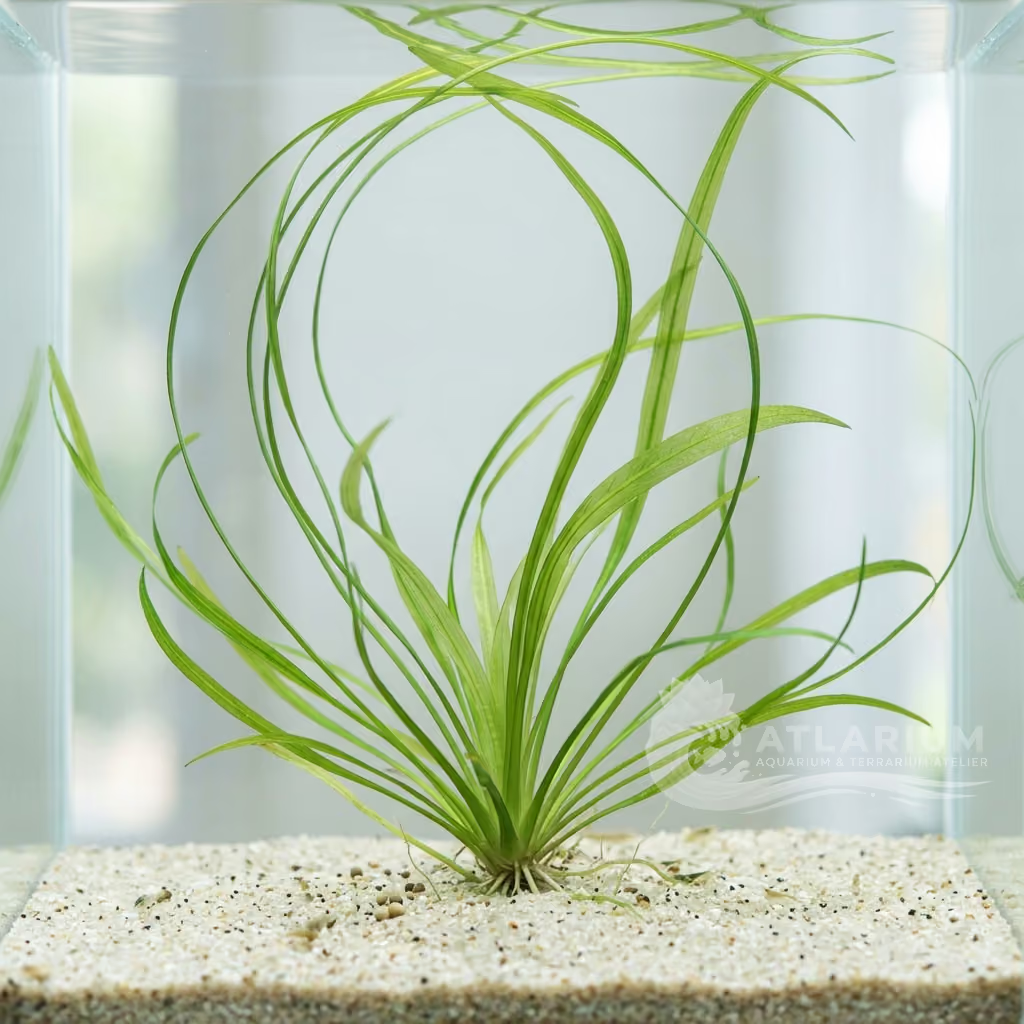
Striking mutated cultivar featuring unique spiraling, corkscrew-like leaves. Thrives under strong lighting and CO2 to maintain its tightly curled structure.
Water Temperature
20 - 28 °C
pH Value
6 - 7.5
Water type
Freshwater
Light
Medium
CO2
Low
Expected height
25 cm
Expected width
10 cm
GH
4 - 20 dGH
KH
0 - 14 dKH

Species description
Geographical Origin and Habitat: The ancestral strain of the botanical species *Helanthium bolivianum* (formerly *Echinodorus bolivianus*) is widely endemic to the riverbanks, estuaries, and flooded zones of temperate South America (Argentina, Bolivia, and southern Brazil). However, the specific and sensational mutation (cultivar) "Vesuvius" does not exist in nature: it is a genetic anomaly selectively bred and stabilized by chance in the "Oriental Aquarium" nursery (Singapore), created specifically for underwater ornamental purposes.
Taxonomy & Genetics: It belongs to the Alismataceae family, the same as the famous Amazon Swords (Echinodorus), from which the genus *Helanthium* was recently separated due to some peculiarities of the flowers. The genome of this cultivar is coded to produce an irreversible and radical spiral torsion of the leaf blade: the leaf does not grow flat but twists tightly upon itself like a clock spring or a corkscrew.
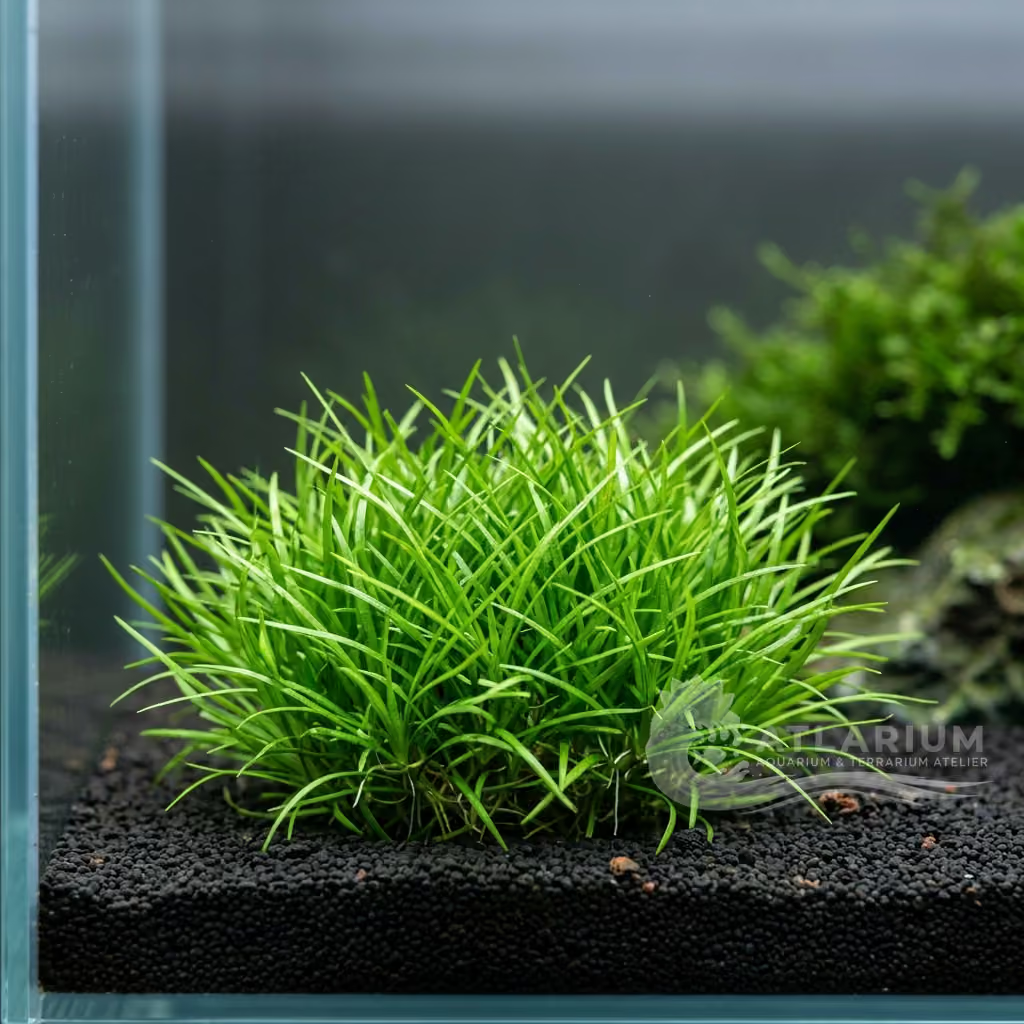
Physical Structure: It is not a caulescent plant (no vertical stem), but rather a robust, compact rosette plant. It is firmly anchored to the ground by a very dense (hypogeal) root system, composed of dozens of creeping underground adventitious cords (runners). From the central collar, countless narrow, lanceolate, pointed leaf blades (without a distinct petiole) emerge, growing soaring upwards and twisting dizzily in a fascinating and asymmetrical spiral.
Color & Texture: The entire rosette exudes a bright and solid light green. No leaf will develop red phenotypes, maintaining an excellent emerald green contrast with adjacent plants. The texture is rough and leathery: the spiral leaves are very resistant and hard (lignified), making it a plant extraordinarily resilient to mechanical abrasion or aggressive fish.

Care, breeding and tankmates
Lighting & CO2: Adaptable but fickle plant. It can live decently under medium light, although the leaf will tend to grow less spiraled (flatter) and elongate vertically towards the light bulb. Under strong lighting (PAR > 60), the leaves maintain a portentous tight curl, emphasizing the "corkscrew" look. The CO2 system, although always appreciated by the Alismataceae family to accelerate photosynthesis, is not a vital constraint for breeding this Helanthium.
Nutrition & Substrate: It is the emblem of the plant that takes nourishment from the roots (root feeder). Its dense subterranean apparatus is the engine of growth: it categorically demands fertile soil or, in its absence, fertilizer tablets (root tabs) pushed deep into the gravel directly under the crown (collar) of the plant. It absorbs very little from the water column; if new leaves appear pale and bleached, root supplementation of Iron (Fe) is necessary.
Water Chemistry: Plastic, indestructible, and accommodating. It survives both at 20°C and 28°C. It faces alkaline pHs above 8.0 or acidic South American environments at 6.0 without stress, adapting just as well to high hardness (GH > 15) as to demineralized waters. It tolerates high concentrations of detritus without suffocating, proving ideal for tanks with large Loricariids.
Space Management & Placement: Aesthetically dramatic, it immediately catches the eye. Its corkscrew curls soar from 15 to over 30 cm, making it a perfect soloist (focal point) that can be positioned in the midground to break up the banal layout of rocks, or confined to the background. The twisting leaves irregularly reflect the water waves produced by the filter, providing great dynamism.
Pruning: One of the laziest and simplest managements: there is no need to thin it out. The old basal leaves occasionally tend to die and can be cut at the base (never in the middle of the leaf). If the bottom is well fertilized, the *Helanthium* will trigger the production of heavy and fast subterranean horizontal runners: if they emerge in the foreground stealing space from the lawn, simply extract the runner, cut its umbilical cord, and plant the new curved daughter plantlets where needed.
Risks & Diseases: Difficult for cyanobacteria to attack due to the rough and twisted leaf blades. If the aquarium is chronically lacking nitrogen (under the substrate), it will go into a total block (stasis). Excellent against herbivorous fish: its thick, fleshy leaves frustrate the assaults of most leaf-eaters, making it the favorite grass for owners of Angelfish and small Cichlids.

Geographic origin and distribution
The ancestral strain of the botanical species *Helanthium bolivianum* (formerly *Echinodorus bolivianus*) is widely endemic to the riverbanks, estuaries, and flooded zones of temperate South America (Argentina, Bolivia, and southern Brazil). However, the specific and sensational mutation (cultivar) "Vesuvius" does not exist in nature: it is a genetic anomaly selectively bred and stabilized by chance in the "Oriental Aquarium" nursery (Singapore), created specifically for underwater ornamental purposes.
Origin
Selective breeding and cultivarsAmazon, Orinoco, and GuianasExtra-Amazon South America

Plant profile
- Placement
- Midground
- This plant is ideal for the midground or foreground of an aquascape, depending on the tank size. In smaller aquariums, Helanthium bolivianum 'Vesuvius' can serve as an excellent background focal point. Its grassy appearance transitions well between hardscape and taller stem plants. Careful placement ensures it doesn't overshadow delicate carpeting species.
- Botanical form
- Rosette
- This species forms dense, bushy rosettes with lanceolate or linear leaves. The foliage of Helanthium bolivianum 'Vesuvius' is typically a vibrant, light green that adds a fresh look to the aquascape. Submersed leaves are usually narrower and more delicate compared to their emersed counterparts. Its root system is extensive and highly developed.
- Growth
- Fast
- Under optimal conditions with CO2 injection and high light, the growth rate of Helanthium bolivianum 'Vesuvius' is remarkably fast. It will quickly send out numerous runners to colonize adjacent areas. In lower-tech setups, growth slows down considerably but remains steady. Regular pruning may be necessary to keep its rapid expansion in check.
- Substrate
- High
- Helanthium bolivianum 'Vesuvius' strongly prefers a nutrient-rich active substrate to support the growth of its distinctive, twisted leaves. A fine-textured aqua soil with a depth of 5 to 6 centimeters is ideal, allowing its roots to deeply penetrate and access essential elements. Heavy root feeding directly from the substrate ensures energetic runner production and prevents the unique spiral foliage from losing its form or vitality.
- Column fertilization
- Recommended
- While primarily a root feeder, Helanthium bolivianum 'Vesuvius' absorbs a fair amount of nutrients through its leaves. Dosing a comprehensive liquid fertilizer ensures no deficiencies occur, particularly in mature tanks. Potassium and trace elements in the water column support robust leaf structure. Liquid carbon can also be beneficial if pressurized CO2 is unavailable.
- Root fertilization
- None
- A nutrient-rich soil or the addition of root tabs is highly recommended for Helanthium bolivianum 'Vesuvius'. Strong root fertilization promotes the development of thick, healthy runners and vibrant foliage. Without adequate root nutrients, older leaves may yellow or develop pinholes. Replenishing root tabs every few months sustains its vigorous growth.
- Trimming
- Occasional
- Trimming Helanthium bolivianum 'Vesuvius' primarily involves cutting away old or algae-covered leaves near the base of the rosette. Unwanted runners should be snipped close to the parent plant to prevent uncontrolled spreading. It tolerates heavy pruning well and will quickly bounce back with new growth. Thinning out dense patches improves water flow and light penetration.
- Propagation
- Runners
- Propagation of Helanthium bolivianum 'Vesuvius' is straightforward and occurs naturally via lateral runners. The mother plant will continually produce chains of baby plants along the substrate. Once the daughter plants have developed their own root systems, the connecting runner can be cut. These new plantlets can then be easily replanted in other areas of the tank.
- Sensitivity
- Moderate
- This species is generally quite robust and forgiving of varying water parameters. However, Helanthium bolivianum 'Vesuvius' can be sensitive to extreme fluctuations in pH or temperature. It may experience a brief melting phase when transitioned from emersed to submersed environments. Overall, it is highly resistant to most common aquarium pests and diseases.
- Layout role
- Midground, Background, Nano
- In aquascaping, Helanthium bolivianum 'Vesuvius' plays a crucial role in softening the harsh lines of rocks and driftwood. It is an excellent transitional plant that bridges the gap between low foregrounds and tall backgrounds. Its grassy texture contrasts beautifully with broad-leaved plants or fine mosses. Grouping several plants together creates a natural, wild appearance.

Image gallery
Licensed images linked to the species or, when marked, to the closest representative taxon.

Related species
Recommendations grouped by close relatives, companion choices, and similar care.