Echinodorus grisebachii 'Tropica'
Echinodorus grisebachii 'Tropica'
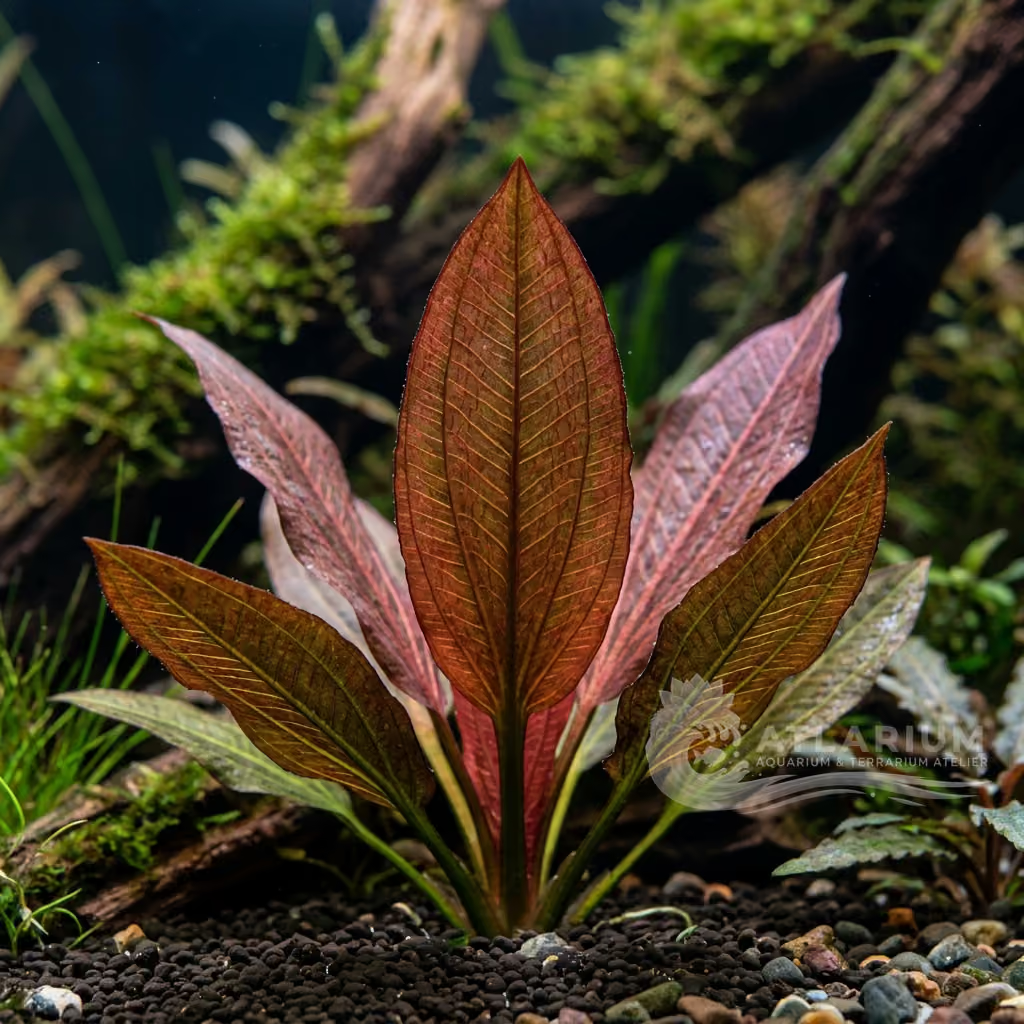
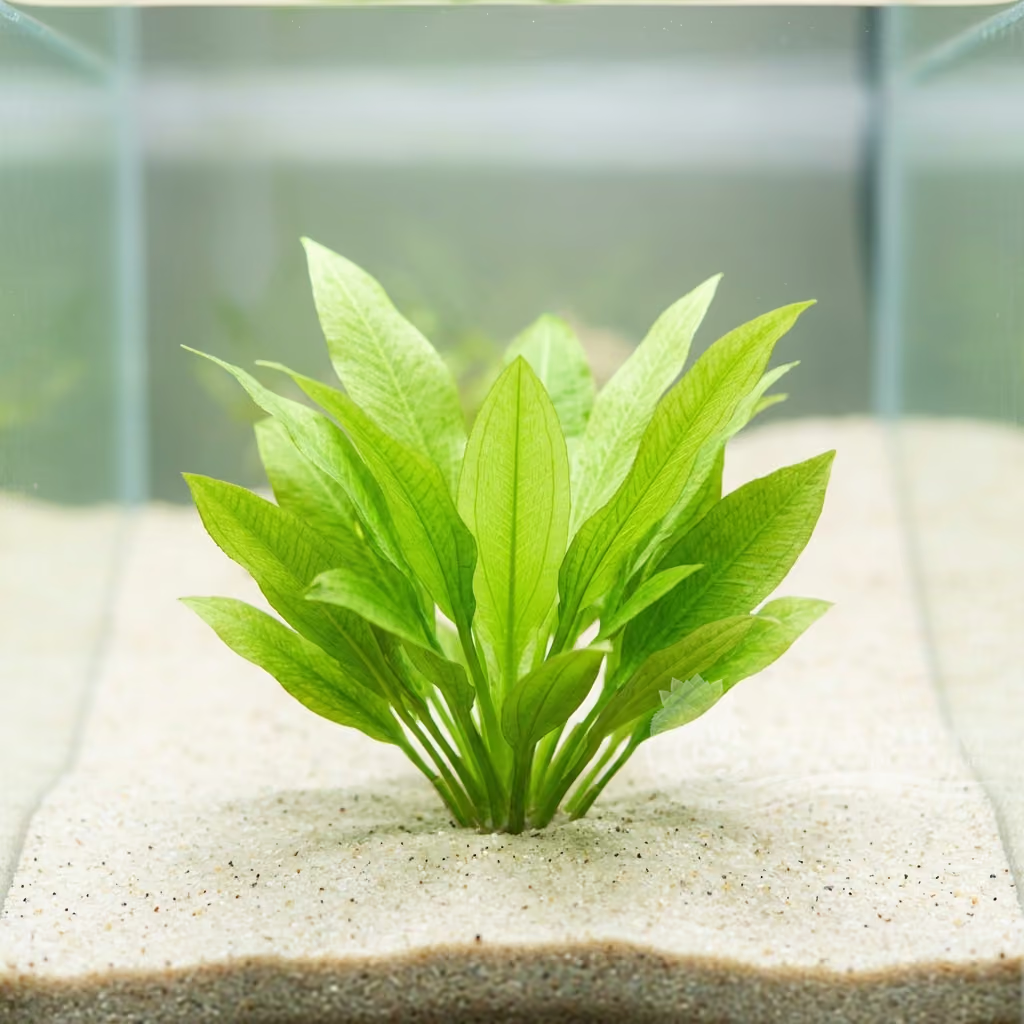
Echinodorus grisebachii 'Tropica' is an immensely popular, beautifully hammered dwarf sword that forms a perfectly tight, low-growing bright green rosette.
Water Temperature
18 - 30 °C
pH Value
6 - 7.5
Water type
Freshwater
Light
Medium to High
CO2
Low - High
Expected height
15 cm
Expected width
15 cm
KH
2 - 10 dKH

Species description
Geographical Origin and Habitat: This aquatic plant, scientifically known as Echinodorus grisebachii 'Tropica', has its geographical origins established mainly in the propagation laboratories of the Tropica nursery in Denmark, derived from controlled selections of the wild species Echinodorus grisebachii native to South America. In its native lands, it faces periods of heavy seasonal variations, adapting perfectly to both submerged growth during wet months and emersed growth in dry periods. This natural behavior makes it extremely resilient and versatile when introduced into controlled environments such as home aquariums.
Taxonomy & Genetics: From a systematic point of view, it is a patented dwarf cultivar belonging to the family Alismataceae, valued for its small size and slightly curled leaves. As a representative of this group, it shares many common biological traits but exhibits specific genetic peculiarities that influence its growth rate and fertilization needs. The genetic stability of cultivated strains is ensured in commercial nurseries through rigorous selection and vegetative propagation procedures to keep aesthetic qualities intact.
Physical Structure: Morphologically, the species features a compact and extremely low rosette (maximum height 10-15 cm) with leaves arranged in a horizontal fan shape, ideal for small setups. This type of conformation allows it to occupy three-dimensional space efficiently, while offering natural shelter for small fish and invertebrates. The root system is proportional to the aerial development and plays a key role not only for anchorage but also for nutrient uptake.
Color & Texture: The chromatic aspect is characterized by dark olive-green leaves with a wrinkled or hammered texture. Under strong light, new foliage can show warm bronze reflections. This visual combination creates an excellent aesthetic impact under aquarium lights, allowing interesting contrast plays with surrounding plants. The leaf texture is designed to withstand the mechanical stress of running water.

Care, breeding and tankmates
Lighting & CO2: For optimal growth, the plant requires medium-high lighting to prevent the rosette from stretching in search of light; CO2 supplementation ensures healthy and steady growth. Adequate lighting stimulates photosynthesis and prevents the loss of lower leaves, while carbon dioxide supports faster and more vigorous development of the leaf blade.
Nutrition & Substrate: Nutrition must be curated by providing a fine-grained fertile substrate. It benefits significantly from the regular insertion of fertilizer tabs near the roots to promote denseness. The presence of nutrients in the substrate promotes root development and prevents decay phenomena due to the lack of essential micronutrients.
Water Chemistry: Regarding water chemistry, the plant prefers optimal values with a temperature between 18°C and 30°C, a stable pH between 5.5 and 7.5, and low to moderate water hardness. It is important to keep the parameters stable and carry out regular water changes to avoid sudden osmotic shifts that could damage plant tissues.
Space Management & Placement: Layout planning should foresee the foreground or midground in small aquariums (nano tanks), or in dense groups in the front area of large tanks. Correct positioning allows the plant to receive uniform light over the entire surface and ensures good water circulation between the leaves.
Pruning: Routine maintenance requires periodic removal of the outermost and yellowed leaves, cutting them at the base to constantly stimulate the development of new central shoots. This practice prevents decaying old leaves from compromising water quality and constantly stimulates the rejuvenation of the specimen.
Risks & Diseases: Among the main risks is shading caused by taller plants which can weaken the rosette, and iron deficiency which quickly discolors young leaves. Constantly monitoring the plant allows timely intervention with adjustments to fertilization or lighting management before damage becomes irreversible.

Geographic origin and distribution
This aquatic plant, scientifically known as Echinodorus grisebachii 'Tropica', has its geographical origins established mainly in the propagation laboratories of the Tropica nursery in Denmark, derived from controlled selections of the wild species Echinodorus grisebachii native to South America. In its native lands, it faces periods of heavy seasonal variations, adapting perfectly to both submerged growth during wet months and emersed growth in dry periods. This natural behavior makes it extremely resilient and versatile when introduced into controlled environments such as home aquariums.
Origin
Selective breeding and cultivars

Plant profile
- Placement
- Foreground
- Characterized by its exceptionally compact, rosette form, 'Tropica' is perfect for foreground and midground placement. It grows low and bushy, making it an excellent focal point without obscuring the view of the background. Its neat appearance is highly valued in detailed aquascapes, particularly in smaller setups.
- Botanical form
- Rosette
- This cultivar is distinct for its very compact rosette of relatively short, ovate leaves. The leaves possess a beautifully hammered (bullate) texture and are typically a bright, fresh green. The plant's low profile and dense foliage create a highly attractive, bushy appearance that distinguishes it from other sword plants.
- Growth
- Slow
- The growth rate of 'Tropica' is characteristically slow to moderate. Even under high lighting and CO2, it maintains its compact stature and grows steadily rather than rapidly. This slow growth makes it very easy to maintain, requiring infrequent pruning and allowing it to hold its position in the aquascape for long periods.
- Substrate
- High
- A nutrient-dense substrate is highly recommended for optimal development. This plant develops a substantial root system that draws the majority of its nourishment from the substrate. Planting it in a quality aquarium soil or a gravel/sand bed enriched with root tabs will ensure strong anchoring and access to essential nutrients.
- Column fertilization
- Recommended
- While primarily a root feeder, supplemental liquid fertilization provides a valuable source of readily available micronutrients. A comprehensive column fertilizer helps maintain leaf color and overall vitality, especially in mature aquariums where substrate nutrients might be unevenly distributed or depleting.
- Root fertilization
- Recommended
- Targeted root fertilization is the most effective way to feed 'Tropica'. The regular placement of high-quality root tabs deep into the substrate near its root zone provides a constant, reliable source of nutrition. This approach is crucial for supporting its healthy root system and maintaining its dense, compact form.
- Trimming
- Occasional
- Trimming is rarely needed due to its compact habit, but any deteriorating or algae-covered outer leaves should be pinched off at the base. Removing old leaves encourages the central crown to produce fresh foliage. Avoid disturbing the root system during maintenance.
- Propagation
- Division
- Propagation is most commonly achieved via adventitious plantlets that form on runners extending from the central rosette. These small plantlets can be carefully separated and replanted once they have developed an adequate root system. Division of a large, mature rhizome is also possible but less frequent due to its slow growth.
- Sensitivity
- Moderate
- It is prone to green spot algae on its slow-growing leaves if lighting is too intense without adequate CO2. The crown must not be buried, or it will rapidly rot and die. It appreciates stable water parameters and can be sensitive to sudden shifts in water chemistry.
- Layout role
- Nano, Midground, Foreground, group
- It is a premier choice for creating visual interest in the foreground or as a transitional plant in the midground. Its hammered texture provides a striking contrast to smooth rocks and fine carpeting plants. It is ideal for nano tanks or as a detailed accent in large aquascapes.

Related species
Recommendations grouped by close relatives, companion choices, and similar care.