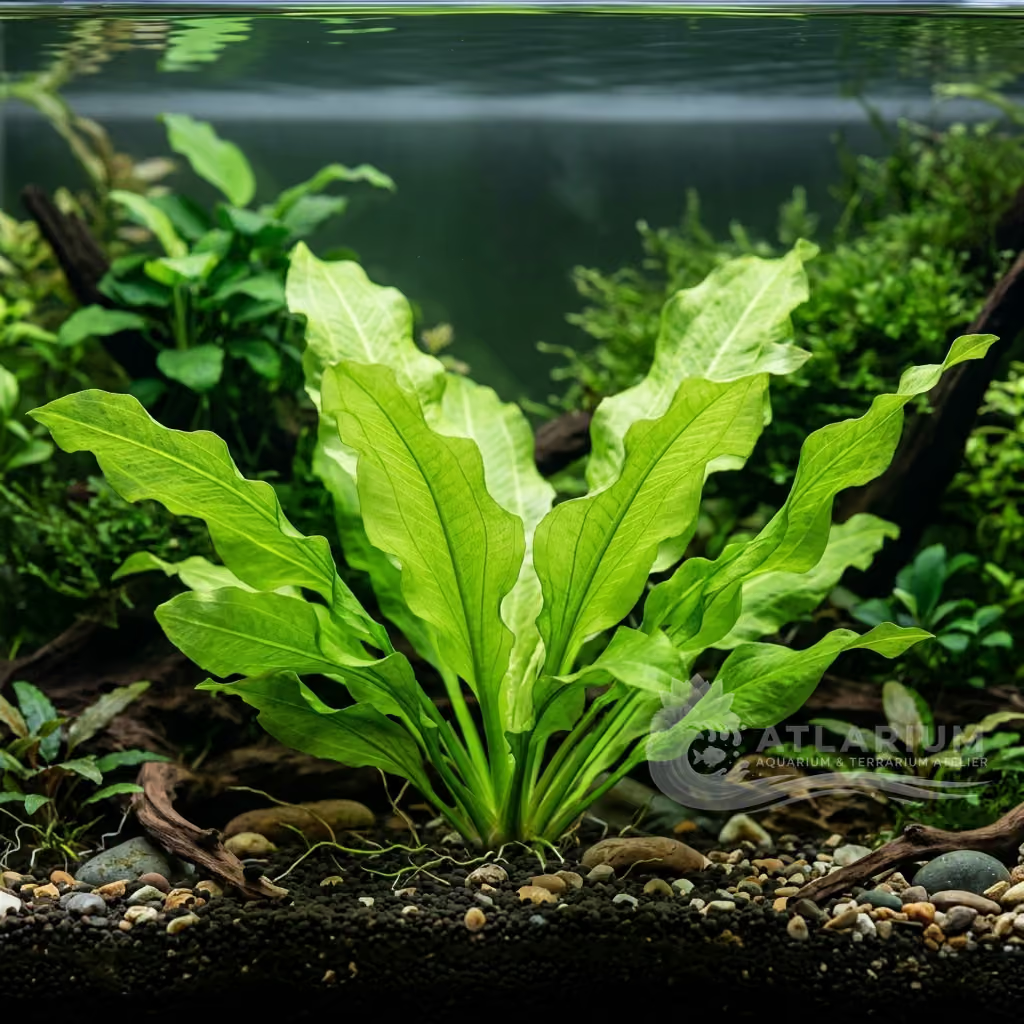
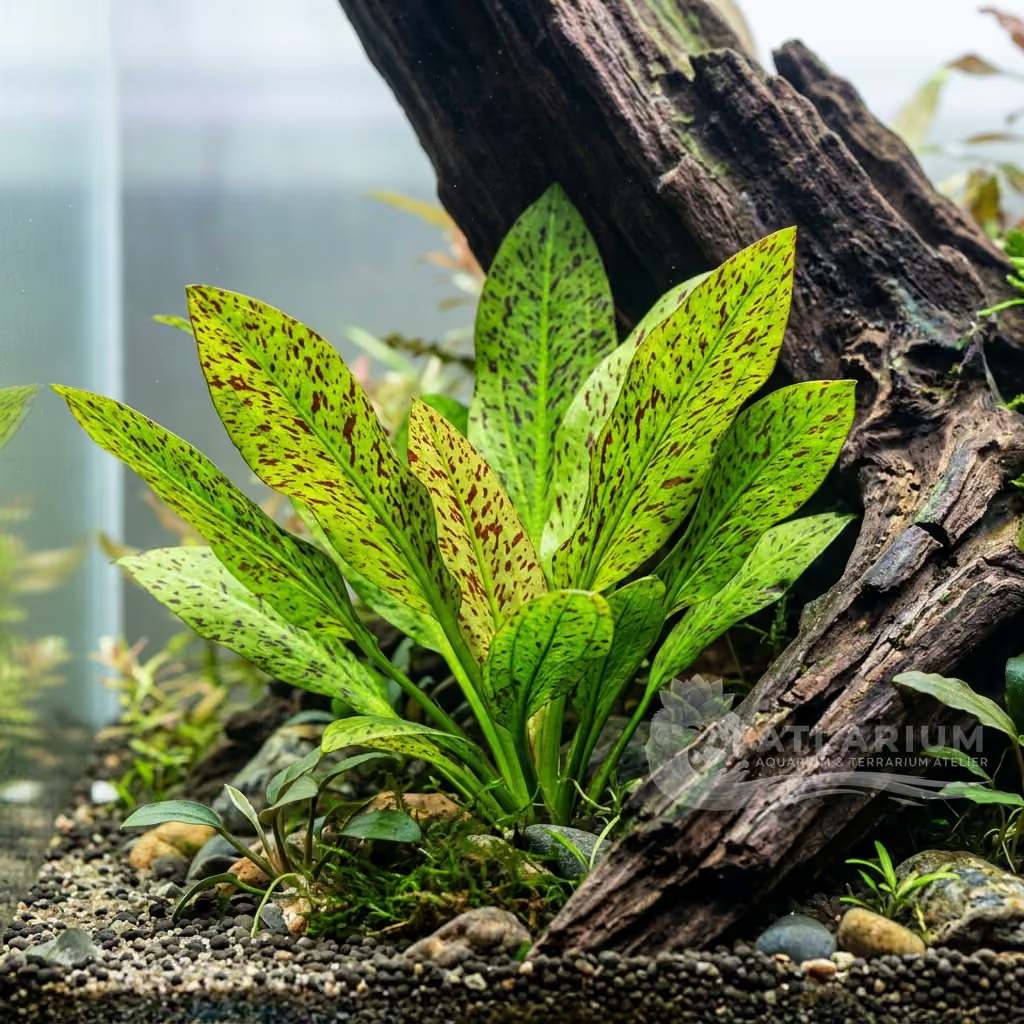
Echinodorus 'Red Devil'
Echinodorus 'Red Devil'
A striking modern horticultural hybrid with intense ruby-red coloration. To maintain its vibrant hues and compact growth, it strongly depends on high-intensity light and CO2.
Water Temperature
15 - 30 °C
pH Value
5 - 7
Water type
Freshwater
Light
Medium to High
CO2
Low - High
Expected height
15 cm
Expected width
15 cm
KH
0 - 21 dKH

Species description
Geographical Origin and Habitat: Echinodorus 'Red Devil' is a modern horticultural hybrid introduced to the aquarium trade by the German breeder Tomas Kaliebe. It is a patented variety, born from complex greenhouse crossings, and has no counterpart in natural environments. The botanical parents belong to the genus Echinodorus, native to the tropical river systems of the Americas. 'Red Devil' was selected specifically to combine a very contained size and an intense, long-lasting red pigmentation, ideal for modern aquascaping.
Taxonomy & Genetics: It belongs to the family Alismataceae and is a selected cultivated hybrid. Its stabilized genetics exhibit a strong expression of anthocyanins, the pigments responsible for red
Color & Texture: ation. Unlike many other red hybrids that grow enormously, 'Red Devil' maintains a compact size inherited from selected genetic lines. As a registered hybrid, it is propagated only vegetatively by division or tissue culture.
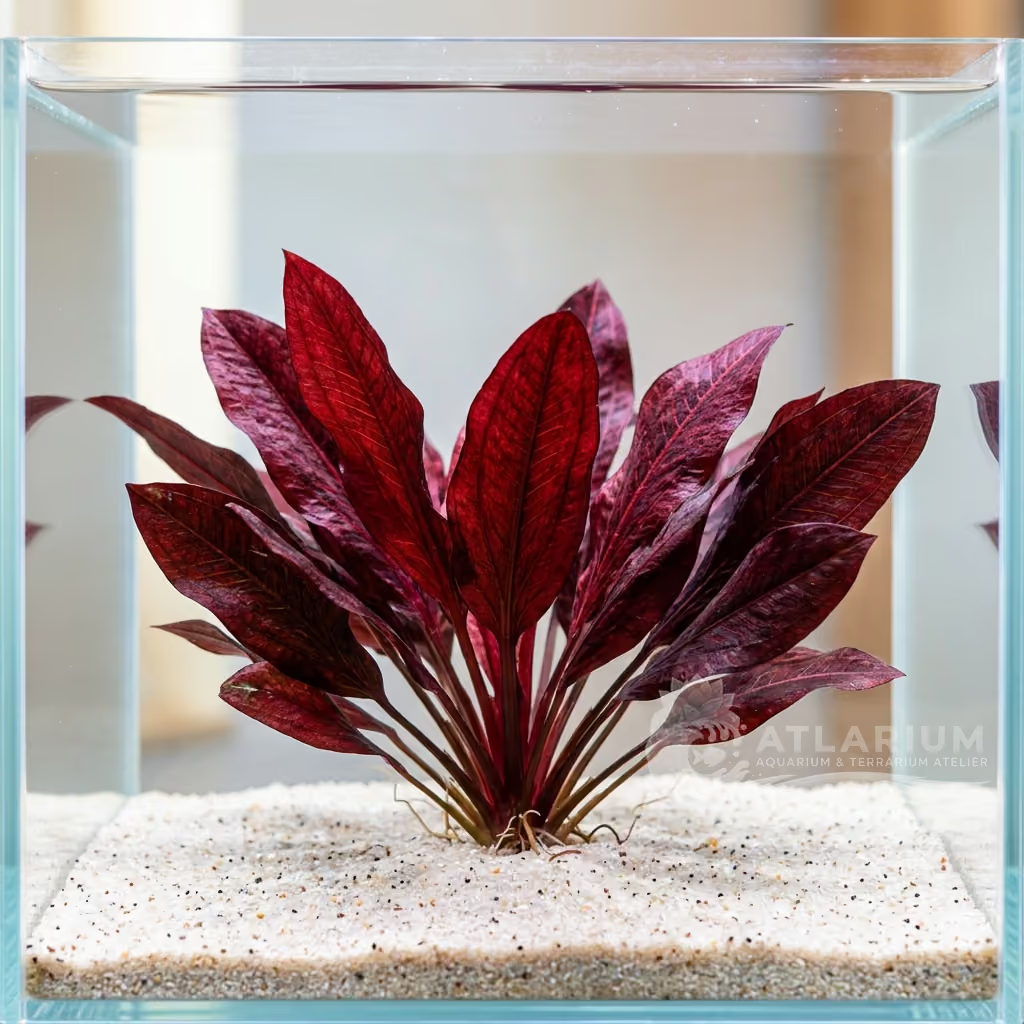
Physical Structure: It develops an erect and exceptionally compact rosette, with a submerged height that rarely exceeds 15-20 cm. The submerged leaves are narrowly lanceolate, almost linear, supported by short and robust petioles that keep the clump very dense. The root system, although in proportion to the small size of the plant, is strong and capable of colonizing the adjacent substrate to absorb nutrients.
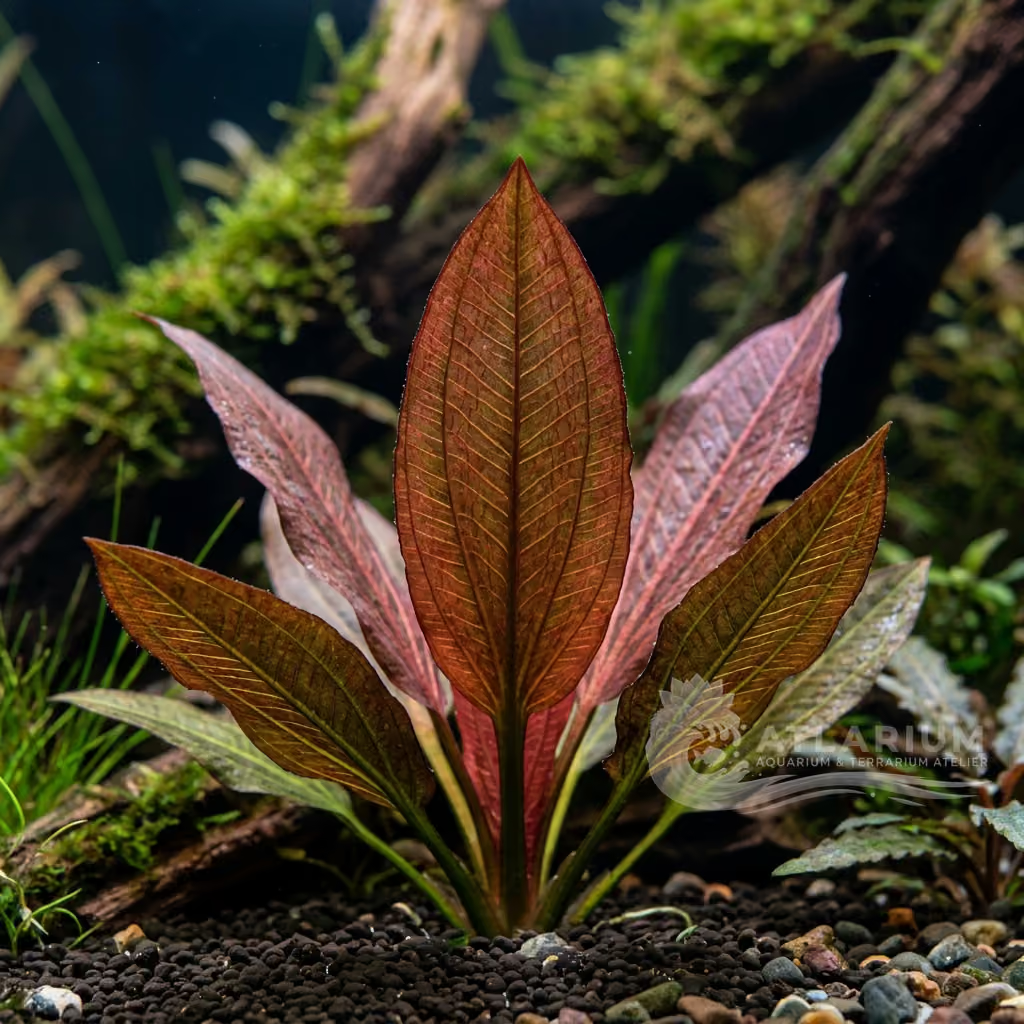
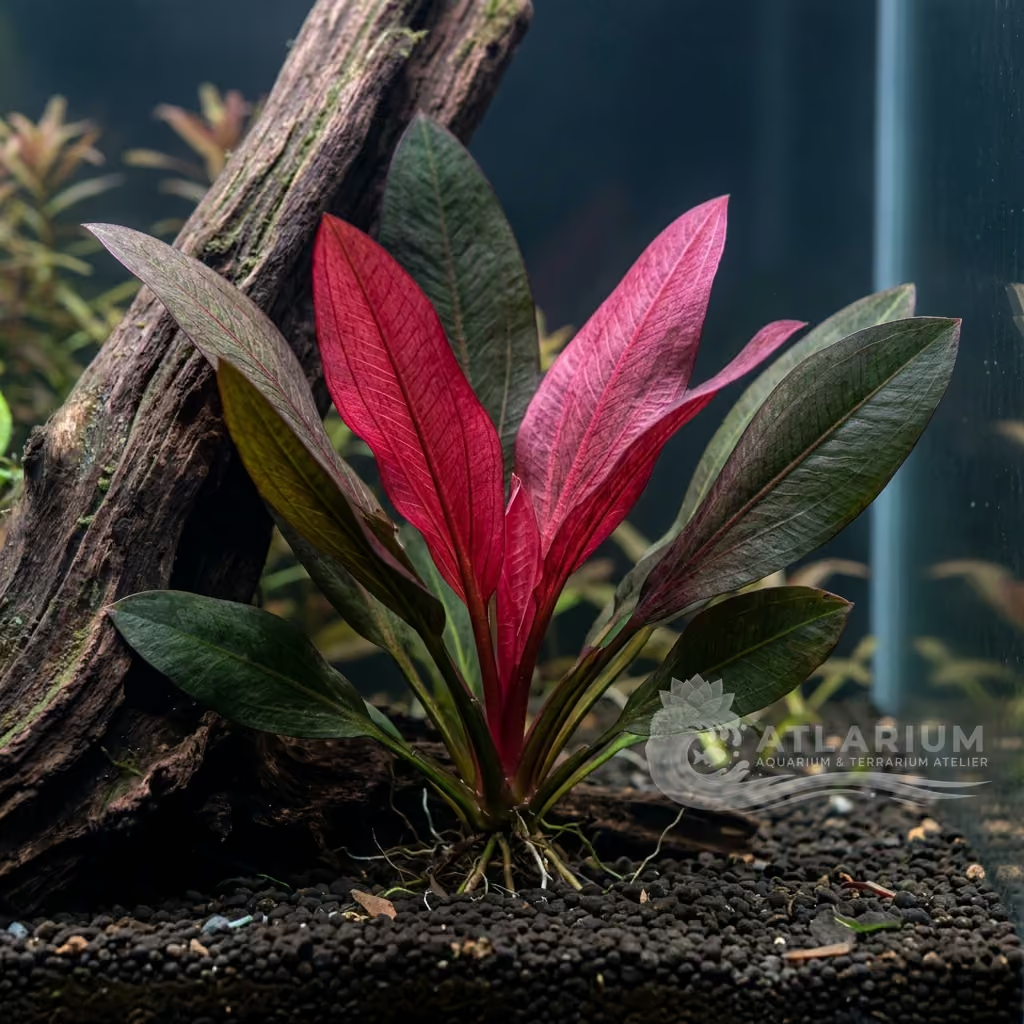
Color & Texture: New leaves emerging from the center of the rosette display a spectacular dark ruby-red or brilliant blood-red coloration. This coloration is preserved extraordinarily well even as the leaves age, taking on a reddish-brown or bronze-olive hue, maintaining a strong color contrast against other green plants. The leaf blade has a leathery texture and a matte surface, with fine but clear longitudinal veins.

Care, breeding and tankmates
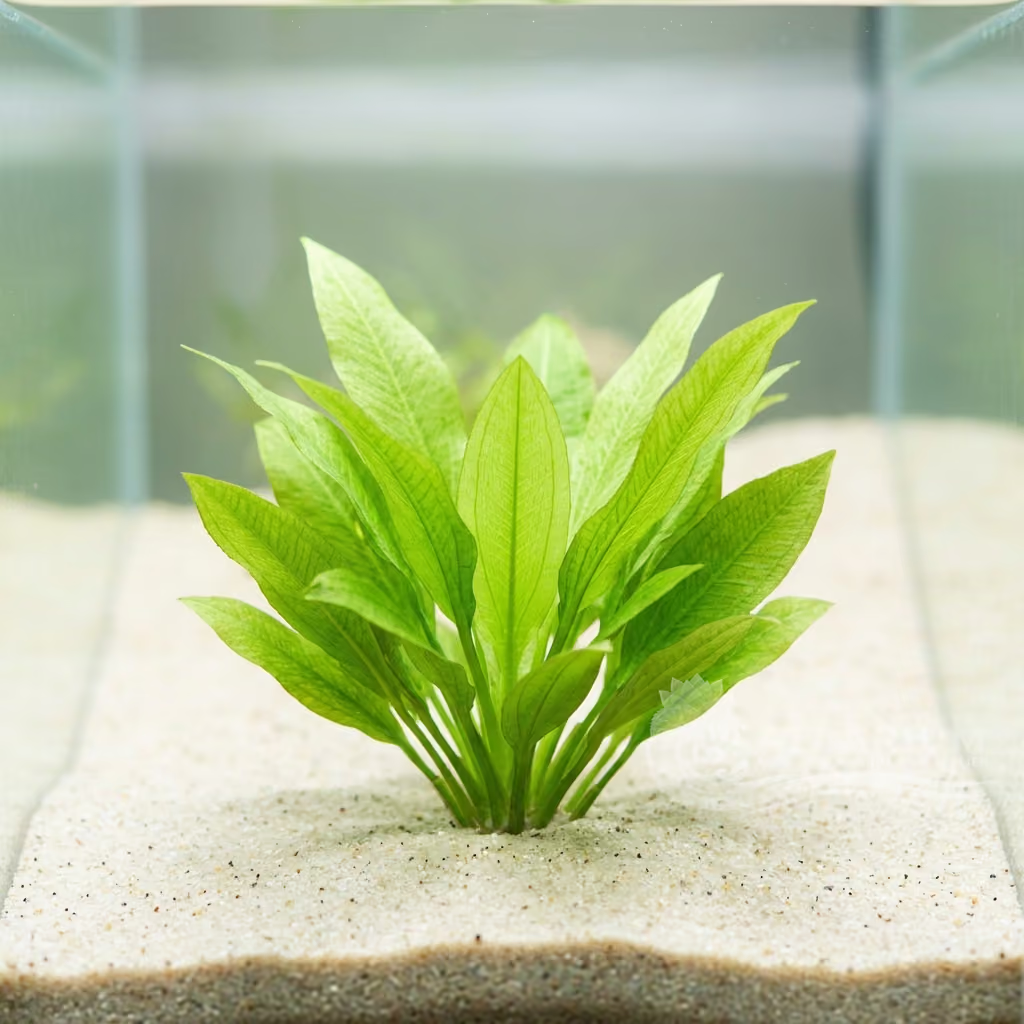
Lighting & CO2: Requires medium to high lighting. To develop and maintain the intense ruby-red color, it is essential to provide good light intensity; otherwise, the plant will tend to produce greener leaves and the petioles will stretch. CO2 injection is highly recommended to promote compact development and robust leaves, although the plant is relatively tolerant.
Nutrition & Substrate: It is a heavy feeder of iron and root nutrients. Needs a fertile substrate enriched with slow-release fertilizer tabs inserted regularly near the root system (every 2-3 months). Liquid fertilization of the
Water Chemistry: Tolerates a wide temperature range, between 15°C and 30°C. Adapts to acidic or neutral pH, between 5.0 and 7.0, and water hardness from soft to medium (KH 1-12 dKH). Benefits from regular water changes to keep the environment healthy and free of harmful accumulations.
Space Management & Placement: Its ideal placement is in the midground of the aquarium. Thanks to its compactness and extraordinary red coloration, it serves as a superb solitary focal point or in small groups. It is also perfect for medium-sized aquariums or medium-low tanks where other Amazon swords would be too large.
Pruning: Pruning consists simply of cutting the oldest or damaged outer leaves near the base of the rhizome with sharp scissors. This promotes leaf replacement with new red central leaves and improves light and water circulation within the dense clump.
Risks & Diseases: It is sensitive to iron chlorosis, which causes immediate yellowing or transparency of the new leaves in the center of the rosette. The thick, moderately growing leaves can be prone to colonization by black brush algae or green spot algae in case of nutrient imbalances or fluctuations in CO2 levels.

Geographic origin and distribution
Echinodorus 'Red Devil' is a modern horticultural hybrid introduced to the aquarium trade by the German breeder Tomas Kaliebe. It is a patented variety, born from complex greenhouse crossings, and has no counterpart in natural environments. The botanical parents belong to the genus Echinodorus, native to the tropical river systems of the Americas. 'Red Devil' was selected specifically to combine a very contained size and an intense, long-lasting red pigmentation, ideal for modern aquascaping.
Origin
Selective breeding and cultivars

Plant profile
- Placement
- Midground
- Excellent for creating a dramatic focal point in the midground or background of the aquarium. Its intense red coloration contrasts beautifully with bright green plants like Rotala or Hemianthus. Ensure it is placed in an area that receives unobstructed light.
- Botanical form
- Rosette
- A rosette plant characterized by its relatively narrow, intensely red-colored leaves. The leaves often have slightly wavy margins and a distinct venation pattern. It remains somewhat more compact compared to larger Echinodorus species.
- Growth
- Medium
- Experiences moderate growth, but this can be optimized with high lighting and CO2. Under ideal conditions, it will consistently push out brightly colored new leaves from the center. In lower tech setups, it survives but grows very slowly.
- Substrate
- High
- A specialized, nutrient-dense aquatic soil is the best environment for this demanding plant. It allows the roots to anchor firmly and access a deep reservoir of nutrients. Sand or gravel must be augmented with numerous root fertilizers.
- Column fertilization
- Recommended
- Benefits from occasional liquid fertilizer dosing to ensure all micronutrient needs are met. However, the majority of its sustenance is gathered below the substrate surface. Avoid relying solely on water column dosing.
- Root fertilization
- Required
- Root fertilization is the most critical aspect of caring for this specific cultivar. Use root tabs that are specifically formulated with high iron content to support the red pigments. Replenish root tabs every few months as the plant depletes the local substrate.
- Trimming
- Occasional
- Trimming is usually minimal. Only remove older, outer leaves that have lost their vibrant color or have become damaged. Cut the petiole as close to the crown as possible. Avoid over-trimming, as the plant relies on its older leaves for energy while producing its thick, nutrient-dense new foliage. Keep the area around the base clean.
- Propagation
- Division
- Primarily propagates via the production of side shoots or plantlets on flower stems. These offshoots can be severed and replanted once they are large enough to handle. Division of a very mature, thick rhizome is another, albeit riskier, method.
- Sensitivity
- Moderate
- It is highly sensitive to low light. If shaded, the plant will not only lose its red color entirely, reverting to green, but it may also lose its characteristic leaf twist. It is also very sensitive to iron depletion. However, it is quite tolerant of varying water parameters as long as its core light and nutrient requirements are met.
- Layout role
- Midground, accent, group
- It is an exceptional focal point plant. Its twisted, ruby-red leaves create a dramatic, fiery contrast against bright green background plants or carpeting species. Its relatively compact yet striking form allows it to act as an anchor in the midground, drawing the eye instantly. It is perfect for adding a touch of exotic color to a classic Nature Aquarium.

Related species
Recommendations grouped by close relatives, companion choices, and similar care.