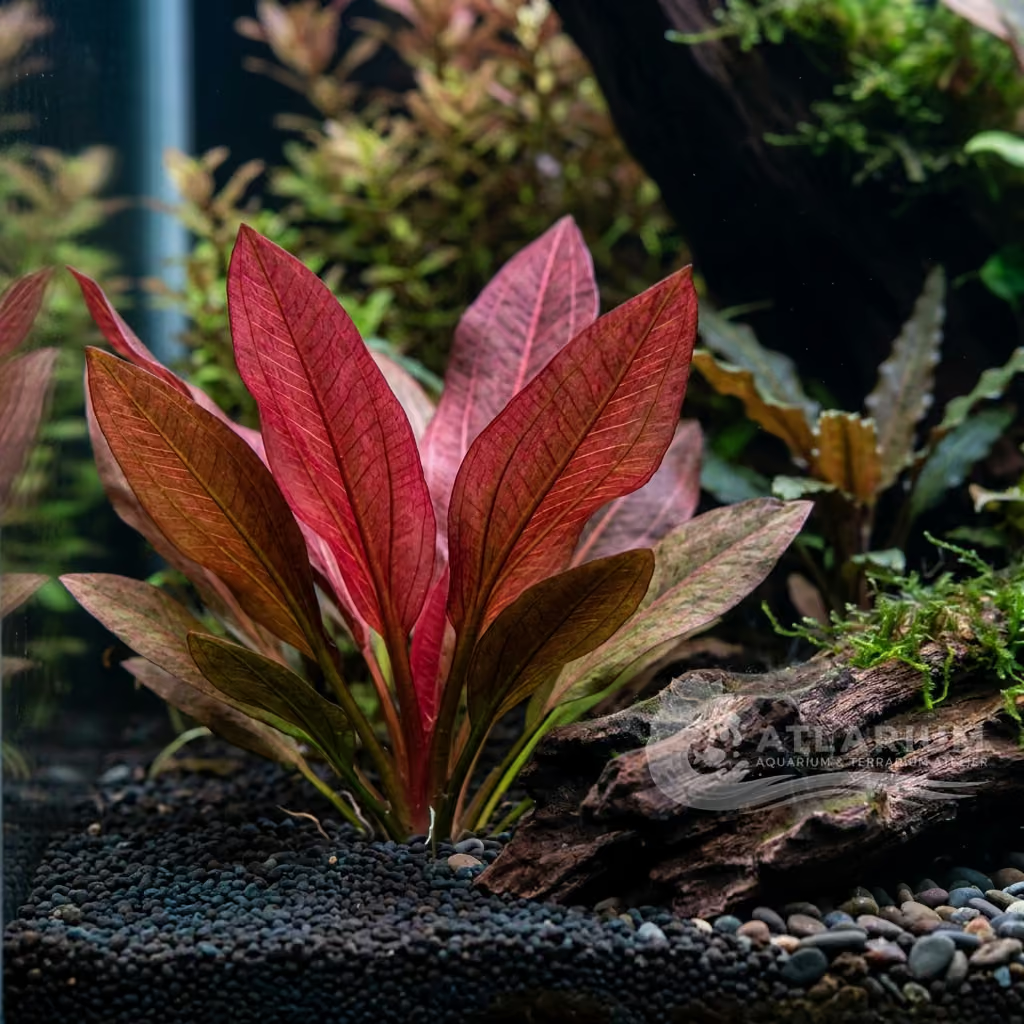
Echinodorus 'Vesuvius'
Echinodorus 'Vesuvius'
A unique patented cultivar featuring densely curled, twisted leaves reminiscent of smoke. It requires moderate to intense lighting to maintain its highly decorative shape.
Water Temperature
20 - 26 °C
pH Value
5 - 7.5
Water type
Freshwater
Light
Medium - High
CO2
Low
Expected height
23 cm
Expected width
10 cm
GH
0 - 20 dGH
KH
0 - 14 dKH

Species description
Geographical Origin and Habitat: Echinodorus 'Vesuvius' is a patented and registered cultivar, selected in the laboratories of the Asian company Oriental Aquaria in Singapore. It is a spontaneous mutation (sport) isolated from Echinodorus angustifolius. It does not exist in the wild as a spontaneous species. The ancestral species is native to South America, in tropical marshy environments. This cultivar was selected and stabilized for the bizarre and decorative spiral conformation of its submerged leaves, which resemble a column of smoke erupted by a volcano.
Taxonomy & Genetics: It belongs to the family Alismataceae and is a registered cultivated variety. Taxonomy-wise, the parent plant belongs to the Helanthium bolivianum group (often still referred to as Echinodorus angustifolius). The genetic mutation causing the corkscrew curling of the leaf blades is stable, provided the plant is propagated vegetatively. Reproduction from seed or uncontrolled meristematic propagation can lead to regression towards the original smooth-leaved form.
Physical Structure: It forms an erect and extremely dense rosette of curled leaves. In the aquarium it reaches a height of about 15-30 cm, with a very contained width thanks to the vertical development of the leaves. It develops secondary rosettes via very short underground or surface runners, tending to form small dense and tidy groups. The root system is compact and fibrous, providing good anchorage.
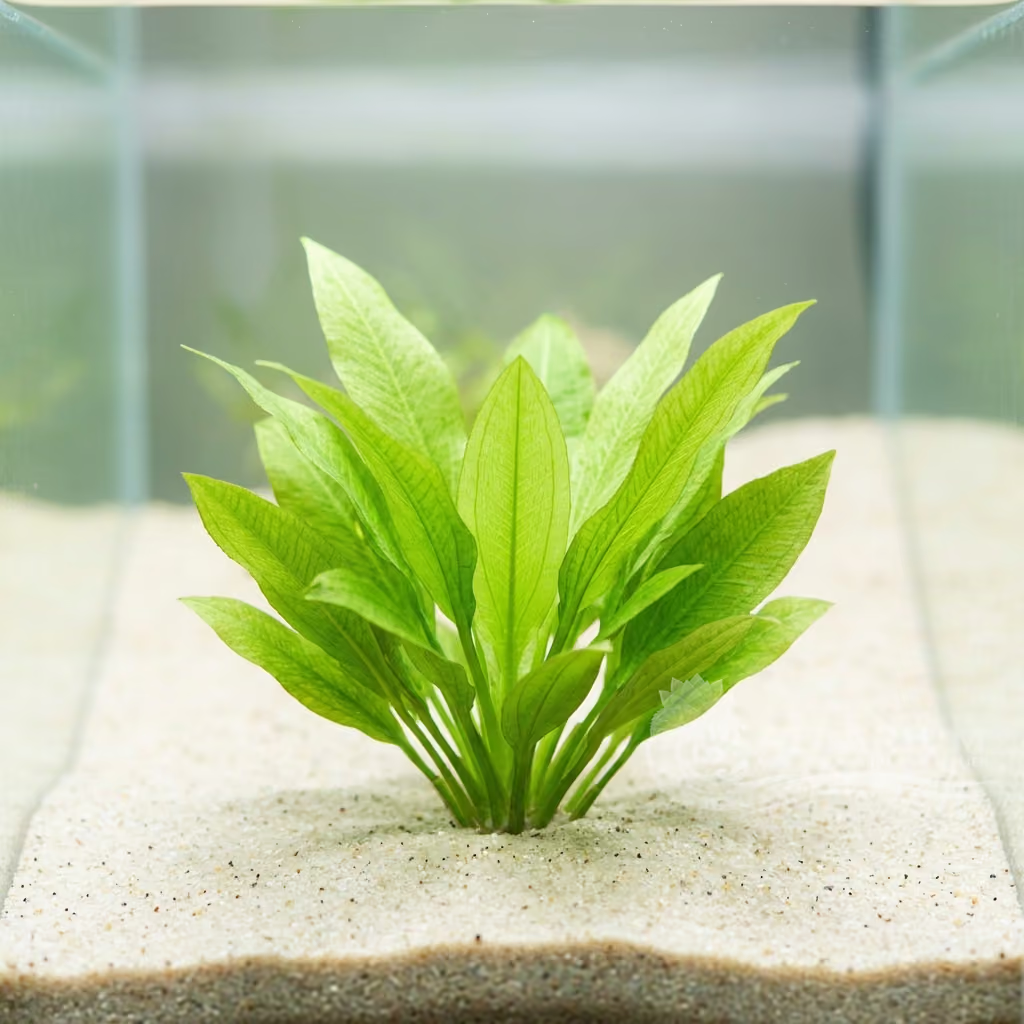
Color & Texture: Submerged leaves display a bright, very fresh, and uniform green shade. The main feature is the very tight spiral curling along the longitudinal axis of the leaf, which gives the plant a unique three-dimensional appearance and exceptional visual movement. The leaves are extremely thin and ribbon-like, with smooth margins and a slightly translucent surface that reflects the aquarium light.

Care, breeding and tankmates
Lighting & CO2: Requires moderate to intense lighting. Under strong light, the leaves remain short, densely curled, and grow closer together, while with low light the curling tends to become looser and the leaves to stretch excessively. CO2 injection is not mandatory but promotes much denser growth and faster propagation.
Nutrition & Substrate: Prefers a fine and well-nourished substrate. Despite its small size, it benefits greatly from the presence of fertilizer tabs containing iron and trace elements inserted into the substrate near the roots.
Water Chemistry: Adapts to a wide range of parameters. The optimal temperature is between 15°C and 30°C. Prefers a pH between 6.0 and 7.8 and water hardness from soft to moderately hard (KH 3-12 dKH). Benefits from regular water changes to remove dissolved organic compounds.
Space Management & Placement: Its ideal placement is in the midground or foreground of medium-large aquariums. Thanks to its vertical spiral structure, it creates a fantastic point of structural contrast next to fine-leaved or red plants. It should be spaced from fast crawling plants that could choke it.
Pruning: Pruning consists of removing older leaves or those that lose their typical curling by cutting them at the base of the rosette. In addition, it is necessary to cut lateral runners if the plant expands outside the designated area. New rosettes born from runners can be separated and replanted elsewhere.
Risks & Diseases: It can suffer from iron deficiency, highlighted by pale and fragile new leaves. Additionally, due to the unique curled shape of the leaves, it can trap suspended debris or promote the growth of filamentous algae between the spirals if water circulation is not optimal or if there are nutritional imbalances in the tank.

Geographic origin and distribution
Echinodorus 'Vesuvius' is a patented and registered cultivar, selected in the laboratories of the Asian company Oriental Aquaria in Singapore. It is a spontaneous mutation (sport) isolated from Echinodorus angustifolius. It does not exist in the wild as a spontaneous species. The ancestral species is native to South America, in tropical marshy environments. This cultivar was selected and stabilized for the bizarre and decorative spiral conformation of its submerged leaves, which resemble a column of smoke erupted by a volcano.
Origin
Selective breeding and cultivarsExtra-Amazon South America

Plant profile
- Placement
- Midground
- With its unique twisted leaves, it serves as an excellent midground accent or background plant in smaller aquariums. Grouping several individual plants together creates a dramatic, spiraling forest effect. It should be planted where it won't be overshadowed, as it needs good light to maintain its compact coils.
- Botanical form
- Rosette
- It is a highly distinctive mutant of Helanthium tenellum (or closely related species), recognized by its narrow, intensely spiraled or corkscrewed leaves. The bright green, twisted foliage grows upright from a central rosette, resembling spiraling smoke from a volcano. It remains relatively slender and upright.
- Growth
- Medium
- It grows at a moderate pace, though CO2 injection and strong lighting can significantly accelerate its development. Once established, it can spread quite rapidly via runners, similar to Vallisneria. Regular pruning of runners is necessary to keep it contained in its designated area.
- Substrate
- Medium
- It prefers a nutrient-rich substrate such as aquasoil or a well-fertilized sand bed. Its delicate roots need to spread easily, so overly coarse or compacted gravel should be avoided. The use of root tabs will help encourage faster growth and more robust runner production.
- Column fertilization
- Recommended
- Liquid dosing of micro and macronutrients is highly beneficial, as the plant readily absorbs nutrients through its long, spiraled leaves. A complete water column fertilizer ensures that the twisted foliage remains vibrant green and structurally sound. It is an excellent complement to targeted root feeding.
- Root fertilization
- None
- Root feeding is important to support its rapid spreading via runners. Adding root tabs directly under the main cluster will yield thicker, healthier leaves and promote a denser clump. Well-fed roots are key to sustaining its energetic growth habits in high-tech setups.
- Trimming
- Occasional
- Trimming mostly consists of managing its aggressive runner production to keep the plant contained to its designated area. Stray runners should be snipped and removed regularly. Older, deteriorating leaves can be cut close to the base of the rosette to maintain a pristine appearance.
- Propagation
- Runners
- Propagation is very easy and occurs naturally through prolific runner production. Creeping stems shoot out from the base and develop new, small rosettes at intervals. To multiply the plant, simply cut the runner and replant the rooted daughter plant in a new location.
- Sensitivity
- Moderate
- It is quite sensitive to low light conditions, which will cause it to lose its defining corkscrew shape entirely. It requires a relatively clean environment, as thread algae can easily become entangled in its spiraling leaves. It is generally hardy regarding water temperature and hardness.
- Layout role
- Midground, Foreground, Nano
- It provides an irreplaceable, whimsical texture with its twisting, vertical leaves. It serves as a fantastic accent plant, breaking up the horizontal lines of carpeting plants or the broad shapes of other midground species. The spiraling verticality makes it a favorite in nature aquariums.

Related species
Recommendations grouped by close relatives, companion choices, and similar care.