Echinodorus inpai
Aquarius inpai
Echinodorus inpai is a distinctly elegant and uncommonly seen sword plant featuring delicate, narrow lanceolate green leaves perfect for a subtle midground accent.
Water Temperature
22 - 28 °C
pH Value
6 - 7.5
Water type
Freshwater
Light
Medium - High
CO2
Medium - High
Expected height
35 cm
KH
2 - 12 dKH

Species description
Geographical Origin and Habitat: This species is native to Brazil, particularly the humid areas and river basins of the Mato Grosso region. It grows in shallow, warm waters along the margins of rivers and ponds, often under the shade of surrounding riparian vegetation, which allows it to tolerate conditions of non-extreme light intensity.
Taxonomy & Genetics: It belongs to the family Alismataceae. Echinodorus inpai is a pure botanical species, less common in the trade compared to the numerous
Color & Texture: ed hybrids, but highly appreciated by enthusiasts for the stability of its shape and its natural elegance. Its genetics have not undergone commercial manipulation.
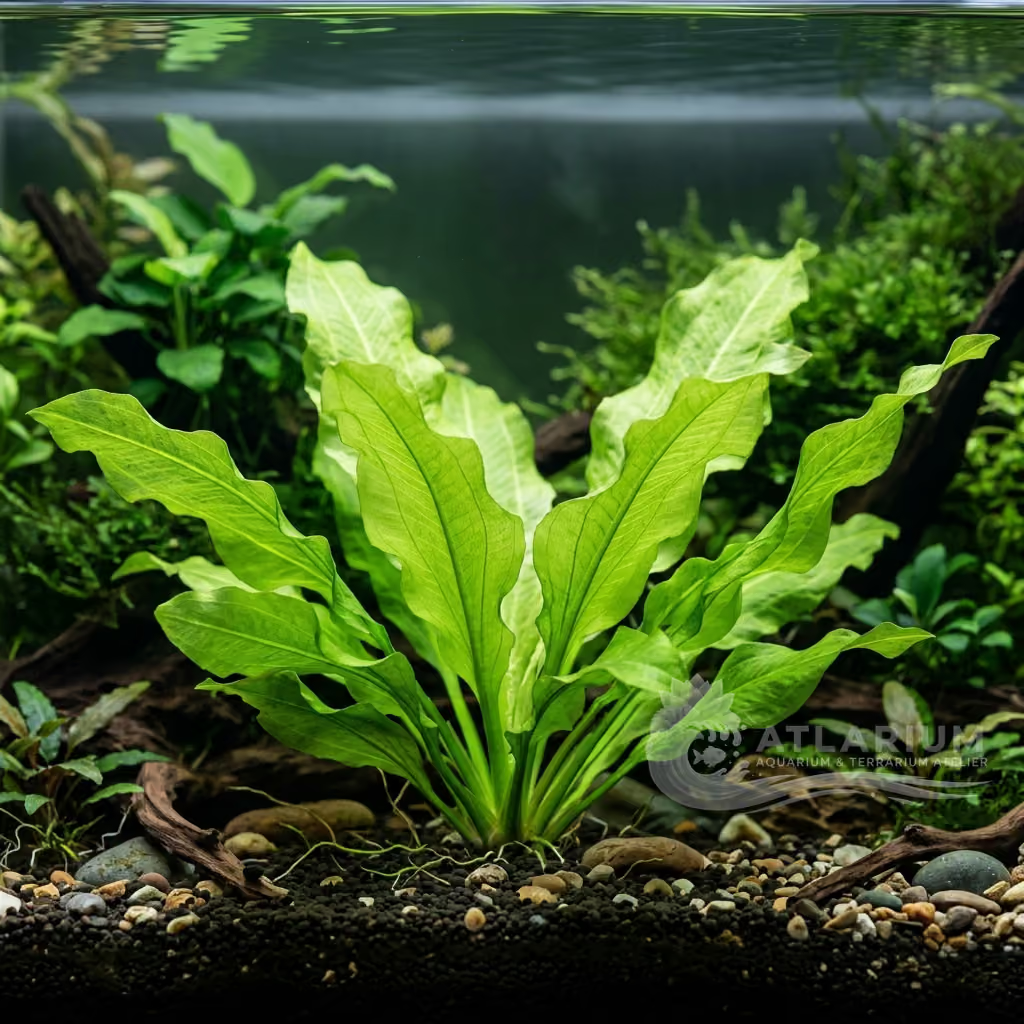
Physical Structure: Develops a medium-sized upright rosette, with a height between 20 and 35 cm. The leaves are lanceolate, relatively narrow compared to other Echinodorus, and are supported by flexible petioles. The root system is compact but well developed.
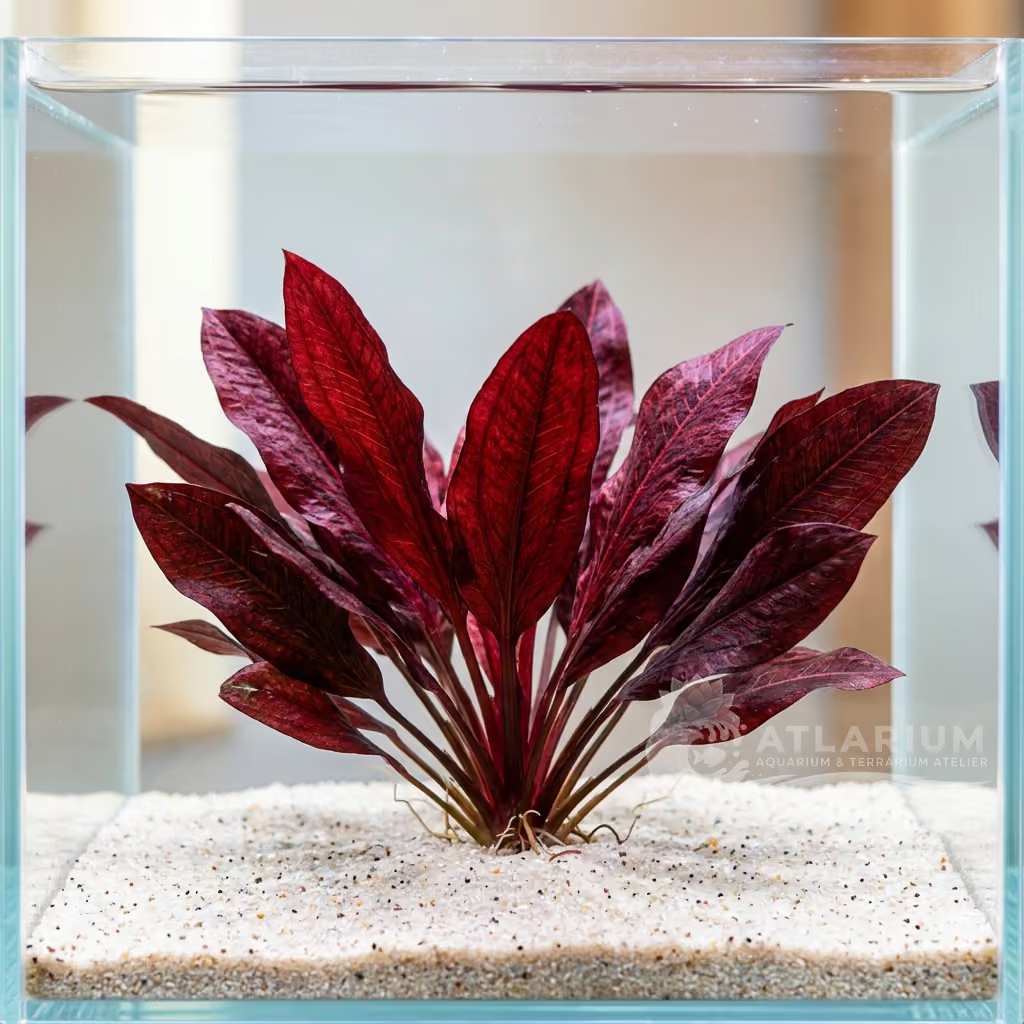
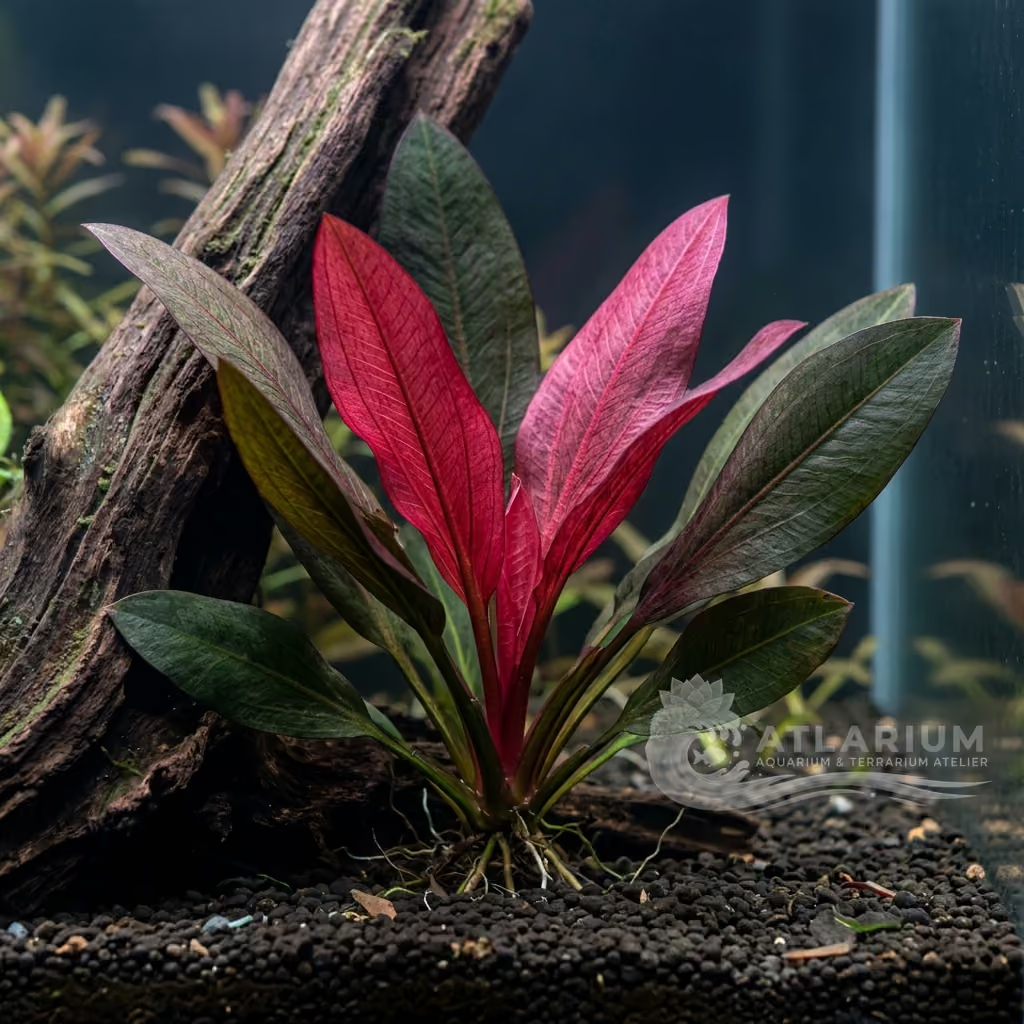
Color & Texture: The leaves show a very uniform medium green or bright green coloration, free of variegation. The leaf surface is smooth and slightly wavy along the edges, with a soft but resistant texture. The longitudinal veins run parallel, creating a discrete pattern.

Care, breeding and tankmates
Lighting & CO2: Requires medium lighting. It adapts better to moderate light conditions than other members of the genus that require intense light. CO2 injection is recommended to stimulate more luxuriant growth, but it is not a limiting factor for survival.
Nutrition & Substrate: Needs a fertile substrate rich in iron. It develops roots that draw nutrition mainly from the substrate, so the periodic insertion of fertilizer tabs is recommended.
Water Chemistry: Prefers temperatures between 18°C and 28°C. The ideal pH is acidic to neutral (6.0 - 7.5), and it tolerates water with soft to moderate hardness (KH 2-12 dKH). Requires stable water chemistry to avoid stress to the leaves.
Space Management & Placement: Its ideal placement is in the midground of the aquarium. Thanks to its upright habit and relatively narrow leaves, it does not occupy much lateral space, allowing placement in medium-sized aquariums without the risk of excessively shading neighboring plants.
Pruning: Pruning consists of the periodic removal of older or yellowed leaves at the base of the rosette. The cut must be made with sharp scissors near the base of the collar to avoid leaving decomposing petioles.
Risks & Diseases: It is sensitive to iron deficiency, which manifests as chlorosis (yellowing of new leaves). In addition, due to its initial transplanting, it may undergo a phase of vegetative stagnation or loss of some leaves before emitting the new root system.

Geographic origin and distribution
This species is native to Brazil, particularly the humid areas and river basins of the Mato Grosso region. It grows in shallow, warm waters along the margins of rivers and ponds, often under the shade of surrounding riparian vegetation, which allows it to tolerate conditions of non-extreme light intensity.
Origin
Extra-Amazon South AmericaAmazon, Orinoco, and Guianas

Plant profile
- Placement
- Midground
- This large species is ideally suited for the background of spacious aquariums. It should be given ample room as its broad leaves can easily overshadow smaller neighboring plants. Proper spacing allows for adequate water flow around the base. It is best used as a solitary specimen in smaller setups.
- Botanical form
- Rosette
- It features a robust rosette structure with large, broad, and somewhat rounded leaves. The foliage is typically a vibrant, light to medium green. Its sturdy petioles hold the leaves upright, creating an imposing presence. The leaf surface has distinct, prominent veins running longitudinally.
- Growth
- Medium
- Under favorable conditions, its growth rate is relatively fast. The addition of CO2 and moderate to high lighting will encourage rapid development. It produces large leaves continually when its root zone is rich in nutrients. In lower light setups, its growth will be significantly slower and smaller.
- Substrate
- High
- Echinodorus inpai thrives best in a deep, nutrient-dense substrate that provides ample space for its vigorous root system to develop. A minimum depth of 6-8 cm of aqua soil or a clay-based substrate is ideal for ensuring strong anchorage and efficient nutrient uptake. As a heavy root feeder, this plant relies on a continuous supply of macro and micronutrients directly from the substrate to fuel its robust vegetative growth. Providing root fertilizer tabs periodically will prevent deficiencies and encourage lush, healthy foliage.
- Column fertilization
- Recommended
- While it draws most nutrients through its roots, column fertilization supports optimal health. A regular dose of comprehensive liquid fertilizer prevents trace element deficiencies. Liquid potassium is especially beneficial if older leaves begin to develop tiny holes. Ensuring nutrients are present in the water helps sustain its massive leaf mass.
- Root fertilization
- Recommended
- A rich, soil-based substrate or the regular addition of root tabs is critical. Place fertilizer tablets deeply under the root mass every 2-3 months. Without adequate root fertilization, the plant will stunt and shed older leaves. Its extensive root network efficiently scavenges nutrients from the surrounding substrate.
- Trimming
- Occasional
- Prune by removing the oldest, outermost leaves at their base to maintain a neat appearance. This prevents the plant from taking up too much space and blocking light from the midground. Remove any damaged or decaying leaves promptly to maintain water quality. Avoid trimming all leaves at once, as this can severely stress the plant.
- Propagation
- Cuttings
- Like many Echinodorus, it propagates by producing adventitious plants along a floral stalk. These plantlets can be snipped off once they establish their own roots and a few leaves. It may also slowly divide at the rhizome, which can be carefully split. Plant the young plantlets directly into a nutrient-rich substrate.
- Sensitivity
- Moderate
- It is generally hardy but can suffer from leaf melt if subjected to sudden environmental shifts. It does not respond well to extremely soft, nutrient-poor water. Shading from overhanging plants can weaken its growth and cause leggy stems. Algae can sometimes accumulate on its slow-growing older leaves.
- Layout role
- Midground
- It functions brilliantly as a background focal point or a corner anchor in large layouts. Its broad green leaves provide excellent visual contrast against finer-leaved plants. It is highly valued in South American biotope aquariums for its natural appearance. The large leaves also offer spawning sites for fish like Discus and Angelfish.

Related species
Recommendations grouped by close relatives, companion choices, and similar care.