Echinodorus andrieuxii
Aquarius subalatus
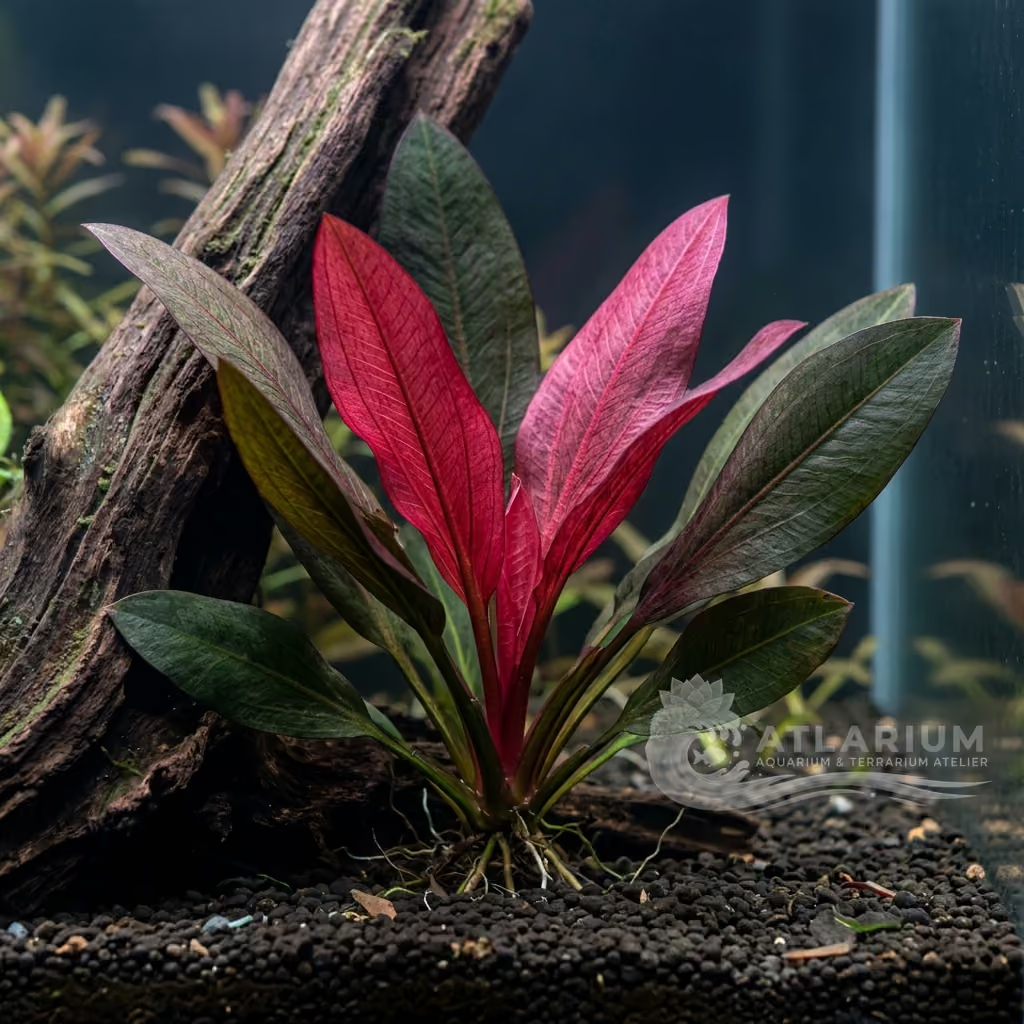
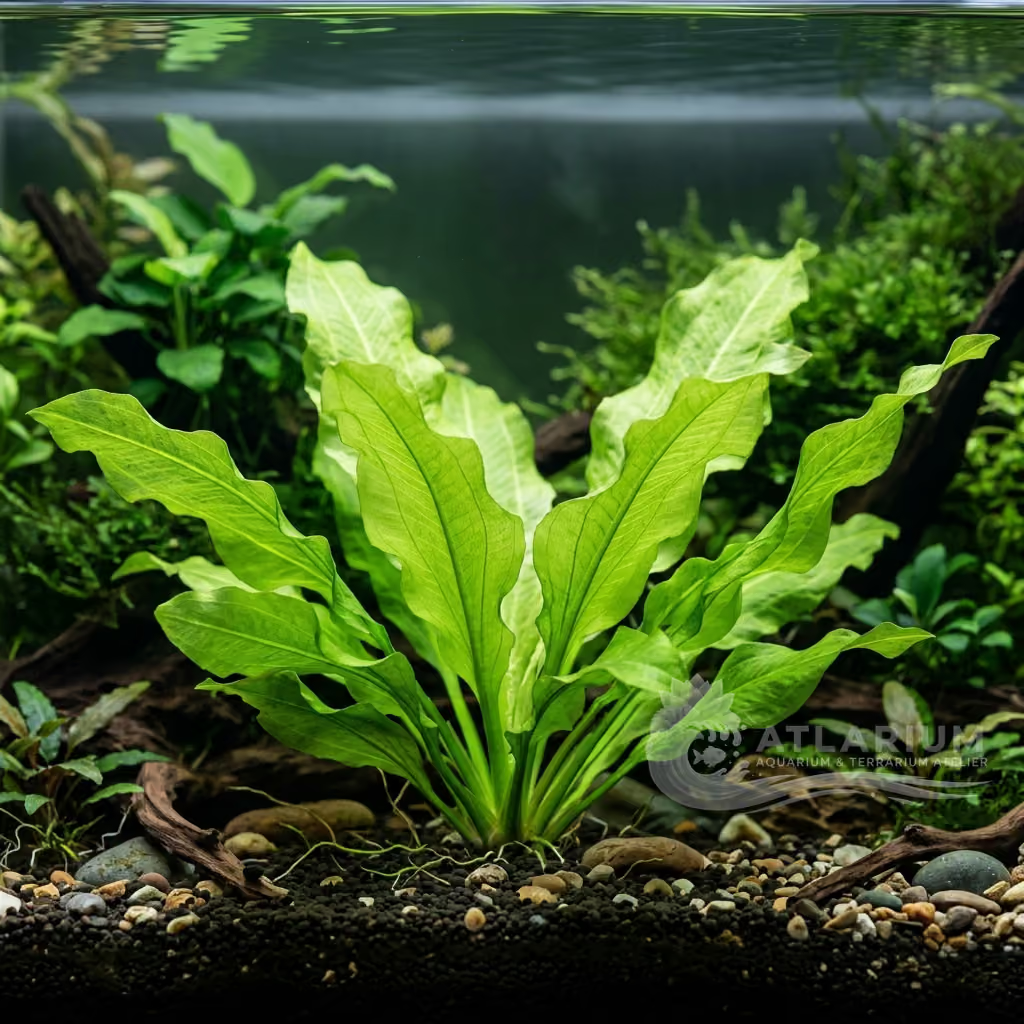
Echinodorus andrieuxii is a robust, statuesque rosette plant from the Americas. Its large, leathery, prominently veined green leaves provide a powerful, structural focal point in the background.
Water Temperature
22 - 28 °C
pH Value
6 - 7.5
Water type
Freshwater
Light
Low
CO2
Medium - High
Expected height
35 cm
Expected width
20 cm
KH
2 - 10 dKH

Species description
Geographical Origin and Habitat: Echinodorus andrieuxii is native to the tropical and subtropical regions of the Americas, ranging from Mexico down to northern South America. It mainly populates seasonal wetlands, margins of shallow water bodies, and ditches that experience strong water level fluctuations. In the wild, it grows mostly in emersed form during the dry season, developing robust leaves and prominent flowers, only to remain fully submerged when the monsoon rains arrive.
Taxonomy & Genetics: It belongs to the Alismataceae family, genus Echinodorus. At the genetic level, it exhibits close morphological correlations with Echinodorus subalatus, of which it has sometimes been considered a variety or synonym. The plant shows excellent genetic stability and a marked tolerance to environmental variations, evolutionary traits developed to cope with the strong seasonality of its biotopes of origin.
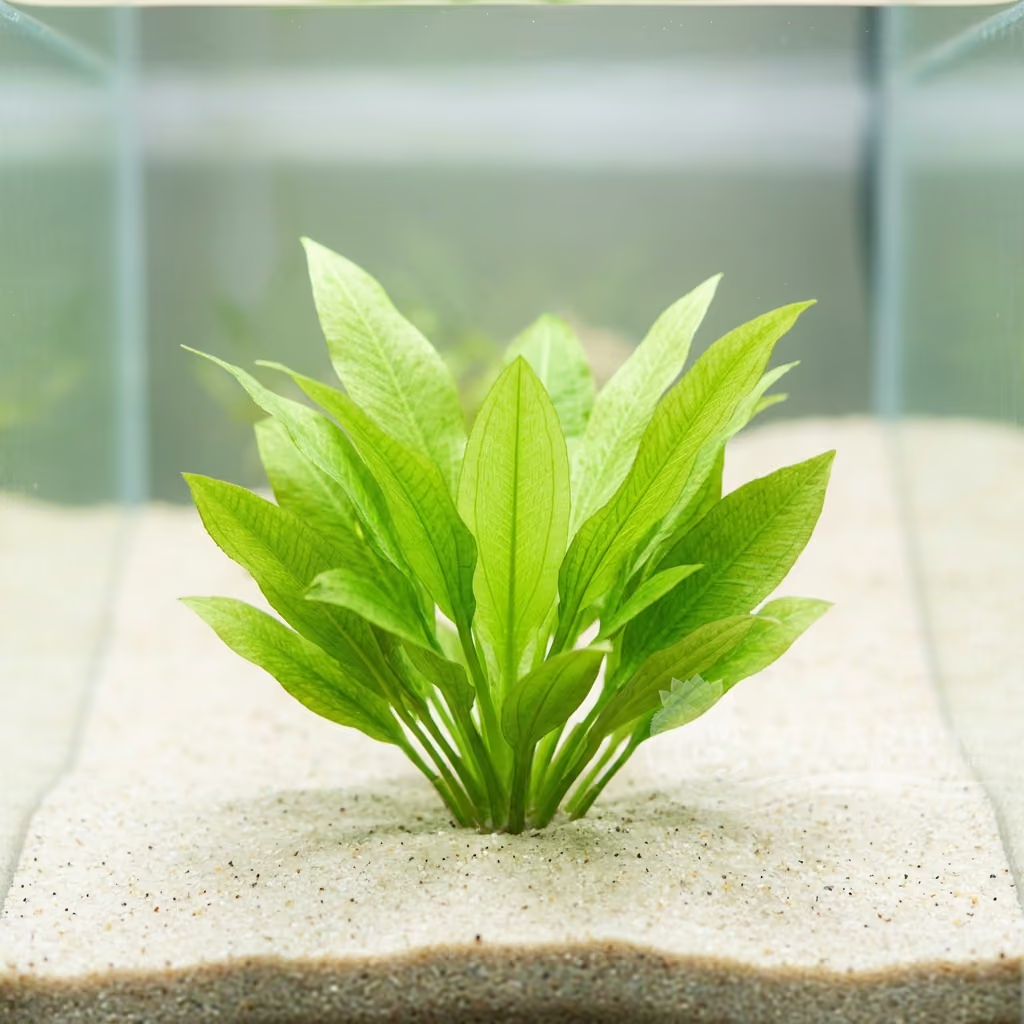
Physical Structure: It presents as a compact and erect rosette, lacking an aerial stem. The submerged leaves are narrowly lanceolate, supported by rigid and fibrous petioles originating from a knotty, woody rhizome. The root system is extremely branched and strong, capable of penetrating compact and sandy soils to firmly anchor the plant and absorb mineral nutrients.
Color & Texture: The leaves display a uniform olive-green to dark green coloration, with translucent hues. To the touch, the leaf blade is leathery, thick, and elastic. The upper side is crossed by parallel longitudinal veins (usually 3 to 5) that are slightly lighter, providing structural stability and a solid texture to the rosette.

Care, breeding and tankmates
Lighting & CO2: Grows well under low to moderate lighting. Medium-high light intensity encourages more compact growth and prevents the leaf petioles from stretching disproportionately. CO2 injection is not essential, but a controlled supply (10-15 mg/L) improves growth rate and leaf vitality.
Nutrition & Substrate: Requires a rich and deep substrate. Since it absorbs the vast majority of its nutrients through the roots, the use of a fertile substrate or the addition of fertilizer tabs containing iron and trace elements near the base is recommended. Responds well to moderate liquid fertilization.
Water Chemistry: Very adaptable and tolerant, it thrives in water with pH between 6.0 and 8.0 and adapts to soft to hard water. The optimal temperature is between 18°C and 28°C. Regular water changes help prevent the accumulation of toxic substances and keep the environment stable.
Space Management & Placement: Thanks to its medium height, it is ideal for the midground or background of medium-sized aquariums. It should be planted leaving enough space around the rosette to allow the leaves to fan out without being shaded by taller surrounding plants.
Pruning: Pruning consists of removing older or deteriorated leaves, cutting them close to the rhizome base with sturdy scissors. This stimulates the plant to produce new healthy leaves from the center and keeps the aquarium clean.
Risks & Diseases: It is a hardy plant that rarely falls ill. However, nutrient deficiencies (especially iron) can cause chlorosis, visible through leaf yellowing or loss of blade thickness. It can be subject to black beard algae on the leaf edges if water flow is poor.

Geographic origin and distribution
Echinodorus andrieuxii is native to the tropical and subtropical regions of the Americas, ranging from Mexico down to northern South America. It mainly populates seasonal wetlands, margins of shallow water bodies, and ditches that experience strong water level fluctuations. In the wild, it grows mostly in emersed form during the dry season, developing robust leaves and prominent flowers, only to remain fully submerged when the monsoon rains arrive.
Origin
Central America and CaribbeanAmazon, Orinoco, and Guianas

Plant profile
- Placement
- Midground
- Echinodorus andrieuxii is best utilized as a striking midground or background plant, depending on the size of the aquarium. Ensure adequate space is left around the base to prevent overcrowding and allow for proper water circulation. When planted in groups, leave enough distance between individual crowns to accommodate future growth. Its bold texture contrasts beautifully with fine-leaved stem plants and low-growing carpeting species.
- Botanical form
- Rosette
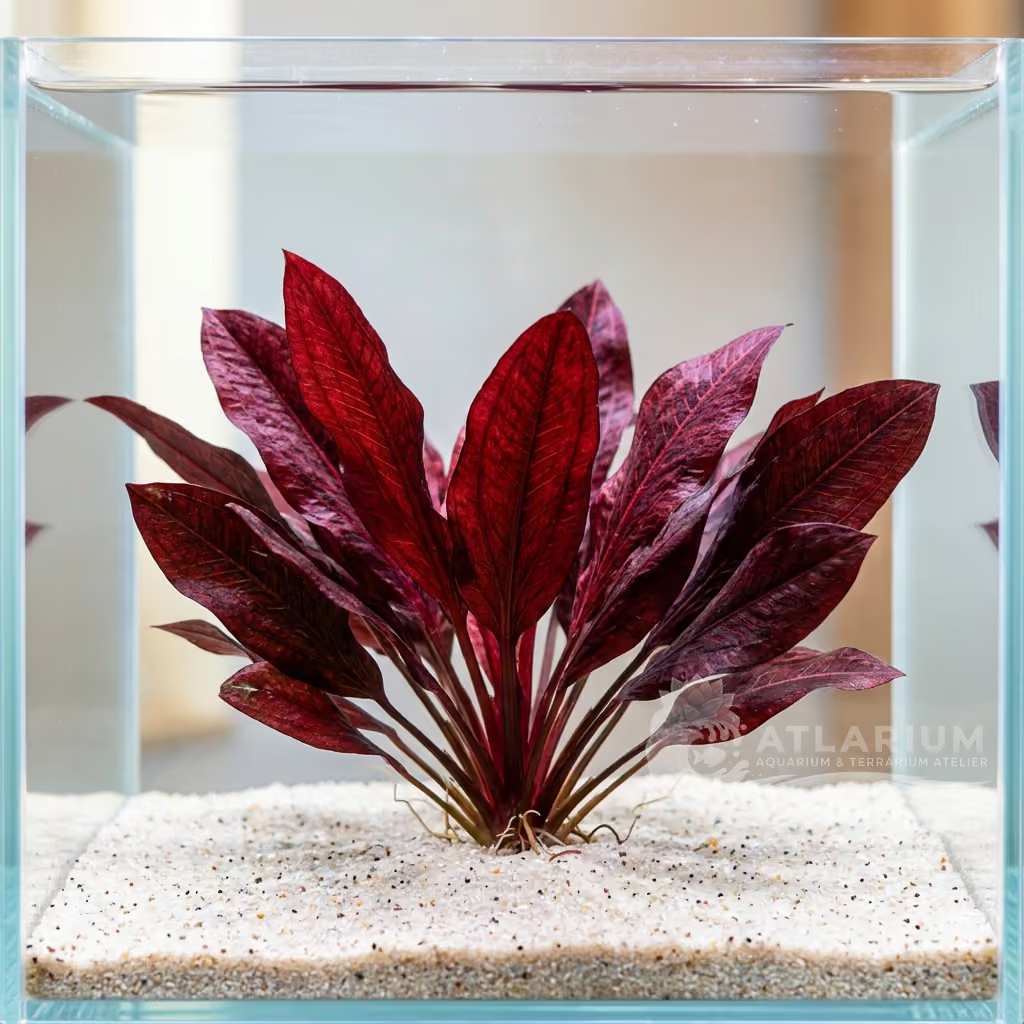
- Botanically, Echinodorus andrieuxii typically exhibits a classic rosette form with leaves radiating from a central crown. Submersed forms often differ significantly from their emersed growth, becoming more delicate and displaying varied colors. Depending on the exact lighting, the leaf margins may display slight undulations or varying degrees of coloration. The leaves are generally broad and gracefully shaped, held aloft on sturdy and resilient petioles.
- Growth
- Medium
- The growth rate of Echinodorus andrieuxii is generally moderate, but it can be accelerated under optimal conditions. Regularly trimming older, damaged, or algae-covered leaves encourages the plant to direct energy into fresh growth. Once fully established, it can send out runners or reliably produce several new leaves every week. Under lower light, the growth will be noticeably slower and the plant will remain more compact.
- Substrate
- High
- A nutrient-rich substrate is highly recommended for Echinodorus andrieuxii as it is a heavy root-feeder. If planted in inert gravel or sand, root tabs must be inserted deep near the base to supply essential minerals. A deep substrate bed of at least 2-3 inches allows for proper and extensive root development. Using a commercial aquasoil or a well-prepared dirted tank approach provides an excellent foundation.
- Column fertilization
- Optional
- While primarily a root feeder, Echinodorus andrieuxii benefits significantly from supplemental water column fertilization. Consistent water column dosing helps to quickly correct any minor nutrient deficiencies before they cause damage. Iron and trace elements are particularly easily absorbed directly through the expansive leaf surfaces. It is important to avoid over-dosing nitrogen in the water column to prevent excessive algae growth on the leaves.
- Root fertilization
- Required
- Root tabs are absolutely essential if Echinodorus andrieuxii is kept in an inert or depleted substrate. Capsules or tablets should be placed deeply around the root zone every few months to replenish exhausted nutrients. Robust root feeding invariably leads to significantly larger, more vibrant leaves and a thicker, healthier crown. Even when grown in premium aquasoils, supplemental root fertilization may become necessary as the tank matures.
- Trimming
- Occasional
- Trimming is straightforward and involves removing older, damaged, or algae-covered leaves from the outside of the rosette. Always cut the petiole cleanly near the base of the plant to prevent rotting. Pruning helps redirect the plant's energy to producing healthy new growth in the center. It also keeps the plant's size appropriate for your aquascape.
- Propagation
- Division
- Propagation of Echinodorus andrieuxii is most commonly achieved through adventitious plantlets that form on flowering stalks. If grown emersed, the plant may also produce viable seeds that can be germinated in moist soil. Alternatively, healthy and mature crowns can sometimes be carefully divided using a sharp blade. Once these daughter plantlets develop their own distinct roots and a few leaves, they can be carefully detached.
- Sensitivity
- Moderate
- Echinodorus andrieuxii is a hardy plant but can be sensitive to severe iron deficiency, showing pale new growth. It tolerates a wide range of water parameters but prefers stability. It is relatively resistant to algae unless growth stalls due to lack of nutrients. Avoid moving it frequently, as it needs time to establish its roots.
- Layout role
- Midground, Background
- It serves well as a structural background plant or a focal point in the midground. Its solid green color provides a resting place for the eye and contrasts well with red or fine-leaved plants. It offers good cover for fish and adds a natural, wild look to the layout. A very versatile sword plant for various aquascaping styles.

Related species
Recommendations grouped by close relatives, companion choices, and similar care.