Echinodorus aschersonianus
Aquarius uruguayensis
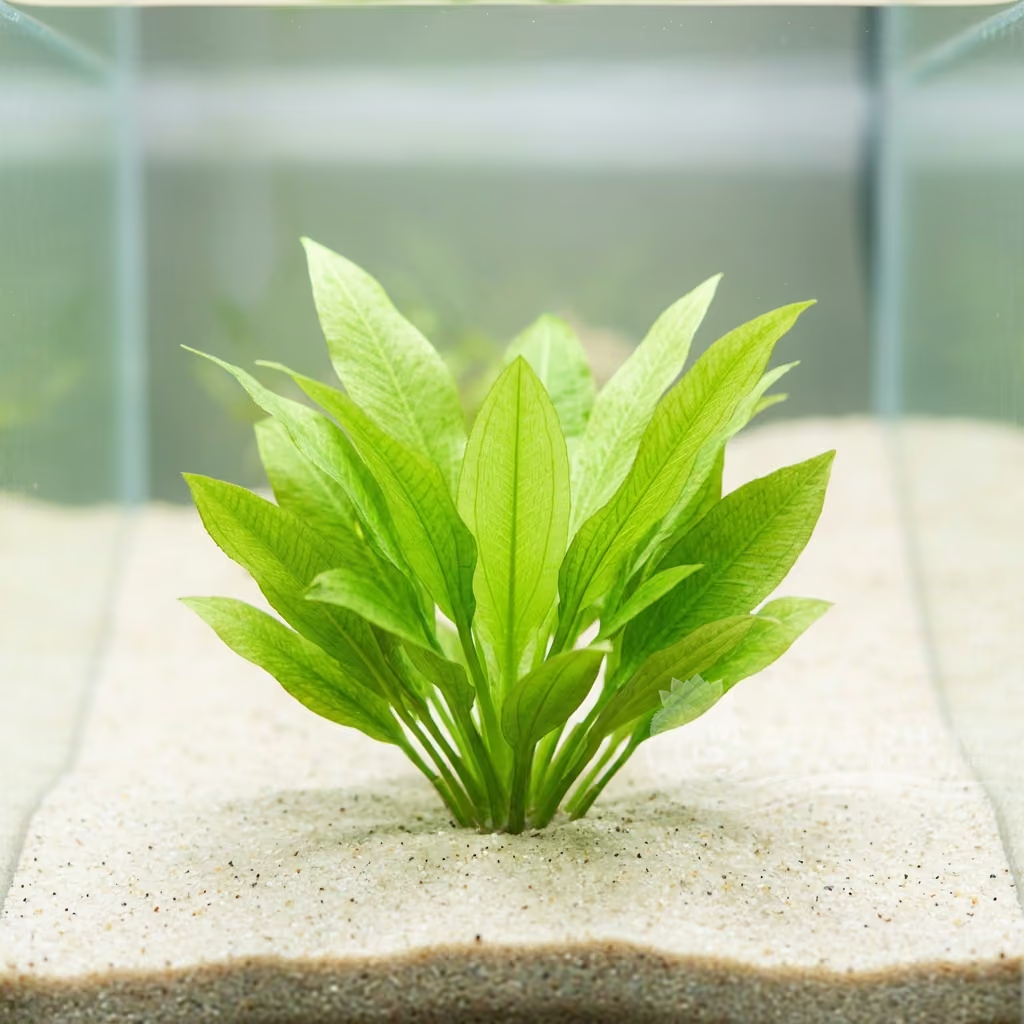
Echinodorus aschersonianus is a resilient rosette plant with olive green oval leaves, perfect for creating a lush, low-growing midground focal point in medium setups.
Water Temperature
22 - 28 °C
pH Value
6 - 7.5
Water type
Freshwater
Light
Medium - High
CO2
Medium - High
Expected height
23 cm
KH
2 - 10 dKH

Species description
Geographical Origin and Habitat: This species comes from central and southern South America, distributed in countries such as Brazil, Paraguay, Uruguay, and Argentina. It populates shallow, partially shaded freshwater environments, such as the banks of small streams and temporary marshes. It is well adapted to tolerate partial dry periods during the dry seasons of the southern Pampas.
Taxonomy & Genetics: Originally described as a pure species, Echinodorus aschersonianus belongs to the family Alismataceae. In the botanical community, it is considered a stable plant and less prone to extreme morphological variations compared to other hybrids in the genus. Its rustic genetics allow it to tolerate seasonal temperature shifts.
Physical Structure: Develops a very dense and compact leaf rosette, which rarely exceeds 20-25 cm in height. The leaves are arranged on short and robust petioles, with egg-shaped (ovate) or slightly lanceolate blades. The low growth habit makes it one of the most suitable Echinodorus species for moderately tall aquariums.
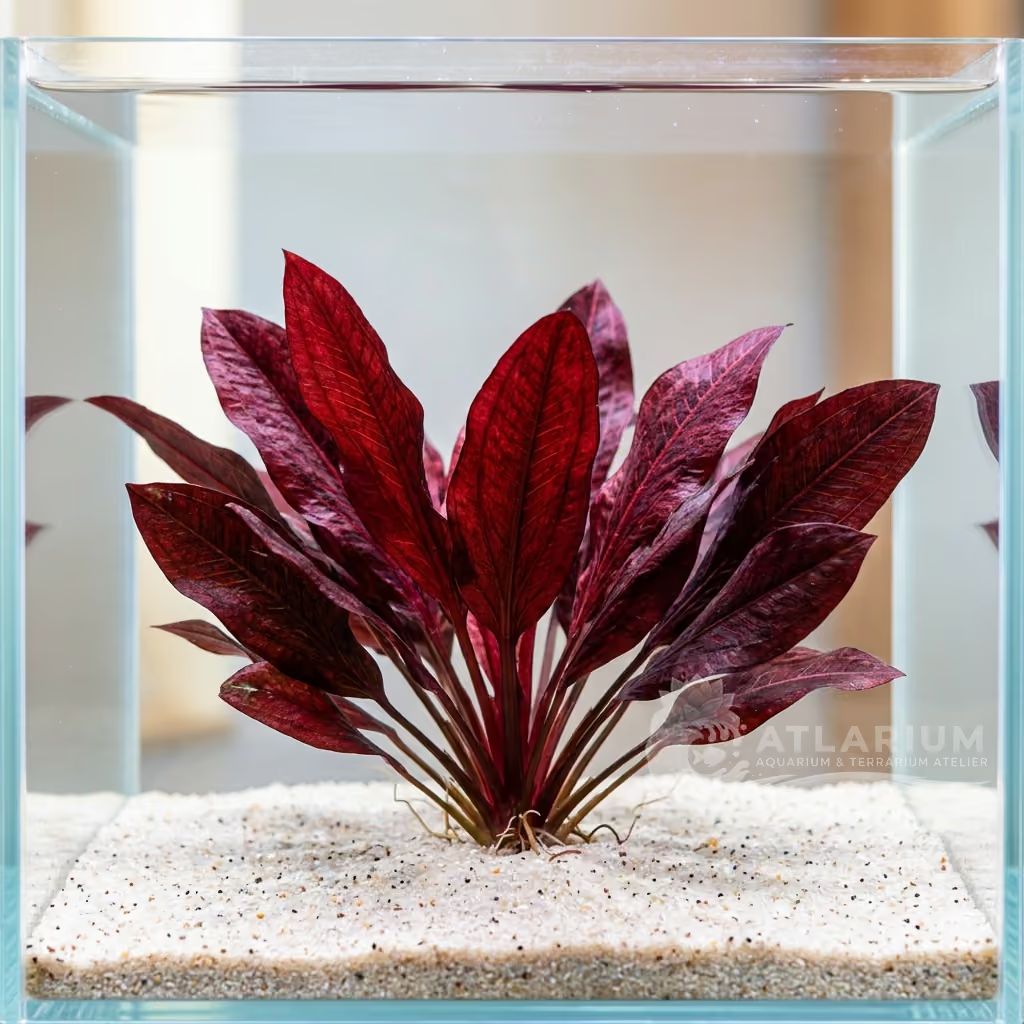
Color & Texture: Features olive green or medium green leaves. The new central leaves can take on reddish or golden-brown shades if grown under good lighting. The texture is smooth and moderately robust, with prominent palmate veins running longitudinally.

Care, breeding and tankmates
Lighting & CO2: Tolerates low to moderate lighting levels but expresses its best coloration and compact growth under medium light. The addition of CO2 is not strictly necessary for survival, but it promotes a bushier habit and reduces adaptation times after transplanting.
Nutrition & Substrate: Like most plants in the genus Echinodorus, it prefers a rich and clayey substrate. It develops a dense root system that requires slow-release nutrients in the substrate. Periodic integration of microelements and iron tabs is recommended to keep the plant vigorous.
Water Chemistry: Adapts to a pH between 6.0 and 7.5. The ideal carbonate hardness is between 2 and 15 dKH. Tolerant of low temperatures, it lives optimally in a temperature range between 18°C and 28°C.
Space Management & Placement: It is ideal for placement in the midground of the aquarium. Thanks to its small size, it can also be used in small aquariums or paludariums as a green focal point, leaving some free space around the rosette to enhance its round shape.
Pruning: Pruning consists exclusively of the manual removal of older or yellowed leaves at the base of the rosette. This operation stimulates the emergence of new central leaves and improves water circulation between the petioles.
Risks & Diseases: It can manifest iron chlorosis (light or yellowed new leaves with green veins) in case of iron deficiency in the substrate. Older leaves, due to the slow growth of the plant, can accumulate green spot algae if phosphates are unbalanced.

Geographic origin and distribution
This species comes from central and southern South America, distributed in countries such as Brazil, Paraguay, Uruguay, and Argentina. It populates shallow, partially shaded freshwater environments, such as the banks of small streams and temporary marshes. It is well adapted to tolerate partial dry periods during the dry seasons of the southern Pampas.
Origin
Amazon, Orinoco, and GuianasExtra-Amazon South America

Plant profile
- Placement
- Midground
- Echinodorus aschersonianus is best utilized as a striking midground or background plant, depending on the size of the aquarium. Its bold texture contrasts beautifully with fine-leaved stem plants and low-growing carpeting species. Ensure adequate space is left around the base to prevent overcrowding and allow for proper water circulation. Solitary placement makes it an excellent focal point or centerpiece in a planted layout.
- Botanical form
- Rosette
- Botanically, Echinodorus aschersonianus typically exhibits a classic rosette form with leaves radiating from a central crown. The leaves are generally broad and gracefully shaped, held aloft on sturdy and resilient petioles. Depending on the exact lighting, the leaf margins may display slight undulations or varying degrees of coloration. Submersed forms often differ significantly from their emersed growth, becoming more delicate and displaying varied colors.
- Growth
- Medium
- The growth rate of Echinodorus aschersonianus is generally moderate, but it can be accelerated under optimal conditions. Regularly trimming older, damaged, or algae-covered leaves encourages the plant to direct energy into fresh growth. Its growth may temporarily stall after transplanting while it focuses energy on establishing a new root system. High intensity lighting and the addition of CO2 injection will significantly boost the production of new leaves.
- Substrate
- High
- A nutrient-rich substrate is highly recommended for Echinodorus aschersonianus as it is a heavy root-feeder. Compacted substrates should be avoided as they can stifle root growth and lead to anaerobic conditions. Using a commercial aquasoil or a well-prepared dirted tank approach provides an excellent foundation. A deep substrate bed of at least 2-3 inches allows for proper and extensive root development.
- Column fertilization
- Recommended
- While primarily a root feeder, Echinodorus aschersonianus benefits significantly from supplemental water column fertilization. Consistent water column dosing helps to quickly correct any minor nutrient deficiencies before they cause damage. Iron and trace elements are particularly easily absorbed directly through the expansive leaf surfaces. It is important to avoid over-dosing nitrogen in the water column to prevent excessive algae growth on the leaves.
- Root fertilization
- Recommended
- Root tabs are absolutely essential if Echinodorus aschersonianus is kept in an inert or depleted substrate. Capsules or tablets should be placed deeply around the root zone every few months to replenish exhausted nutrients. Even when grown in premium aquasoils, supplemental root fertilization may become necessary as the tank matures. The expansive root system is incredibly efficient at seeking out and absorbing localized pockets of nutrients.
- Trimming
- Occasional
- Trimming Echinodorus aschersonianus is straightforward and involves pruning only the outermost, oldest leaves. Use sharp aquascaping scissors to cut the petiole as close to the crown as possible without damaging the center. Avoid snipping leaves in half, as the remaining portion will simply rot. Consistent pruning maintains a clean appearance and encourages the continuous emergence of new central shoots.
- Propagation
- Division
- Propagation of Echinodorus aschersonianus is most commonly achieved through adventitious plantlets that form on flowering stalks. If grown emersed, the plant may also produce viable seeds that can be germinated in moist soil. Alternatively, healthy and mature crowns can sometimes be carefully divided using a sharp blade. Crown division requires careful handling to avoid excessive damage to the delicate central meristem.
- Sensitivity
- Moderate
- Overall, Echinodorus aschersonianus is quite hardy, but it can be sensitive to sudden, drastic shifts in water parameters. It may experience a period of melting when transitioning from emersed to submersed growth. During this acclimation phase, it is vital to keep water conditions stable and avoid uprooting the plant. It is also susceptible to spot algae if lighting is too intense without adequate CO2.
- Layout role
- Midground
- In an aquascape, Echinodorus aschersonianus serves as a magnificent structural anchor or centerpiece. Its substantial leaf mass provides a bold texture that breaks up monotonous areas of fine foliage. It is highly valued in various layout styles for its dominant presence. When positioned correctly, it naturally draws the viewer's eye and adds a sense of maturity to the tank.

Related species
Recommendations grouped by close relatives, companion choices, and similar care.