Helanthium sp. "Angustifolius, kleine Form"
Helanthium sp. "Angustifolius, kleine Form"
Compact Amazonian rosette plant with narrow leaves that thickens dramatically under intense light. Perfect for dense, low-growing foreground lawns.
Water Temperature
10 - 30 °C
pH Value
5 - 7.5
Water type
Freshwater
Light
Da media ad alta
CO2
Medium
Expected height
30 cm
Expected width
30 cm
GH
4 - 20 dGH
KH
0 - 14 dKH

Species description
Geographical Origin and Habitat: Another complex gem of the Alismataceae family, *Helanthium* sp. "Angustifolius, kleine Form" (translated from German: small, narrow-leaved form) is an ecotype or probable hybrid originating in South America (Amazon basin), historically known and marketed under the misleading name *Echinodorus angustifolius*. It is found along the immense sandy beds and flooded beaches of dry or flooding rivers, creating vast semi-submerged grassy tangles similar to terrestrial tallgrass prairies.
Taxonomy & Genetics: It belongs to the Alismataceae family, genus *Helanthium* (spun off from the genus *Echinodorus*). The epithet "Angustifolius" remarks on the essential phenotype: unusually narrow leaves. Compared to the authentic true *Echinodorus angustifolius* (today known as the narrow-leaved *E. uruguayensis*) or the deadly standard form (which reaches almost 50 cm, suffocating small tanks), this "kleine Form" boasts a locked genetic makeup that vertically compresses its maximum development to only 10-15 cm.
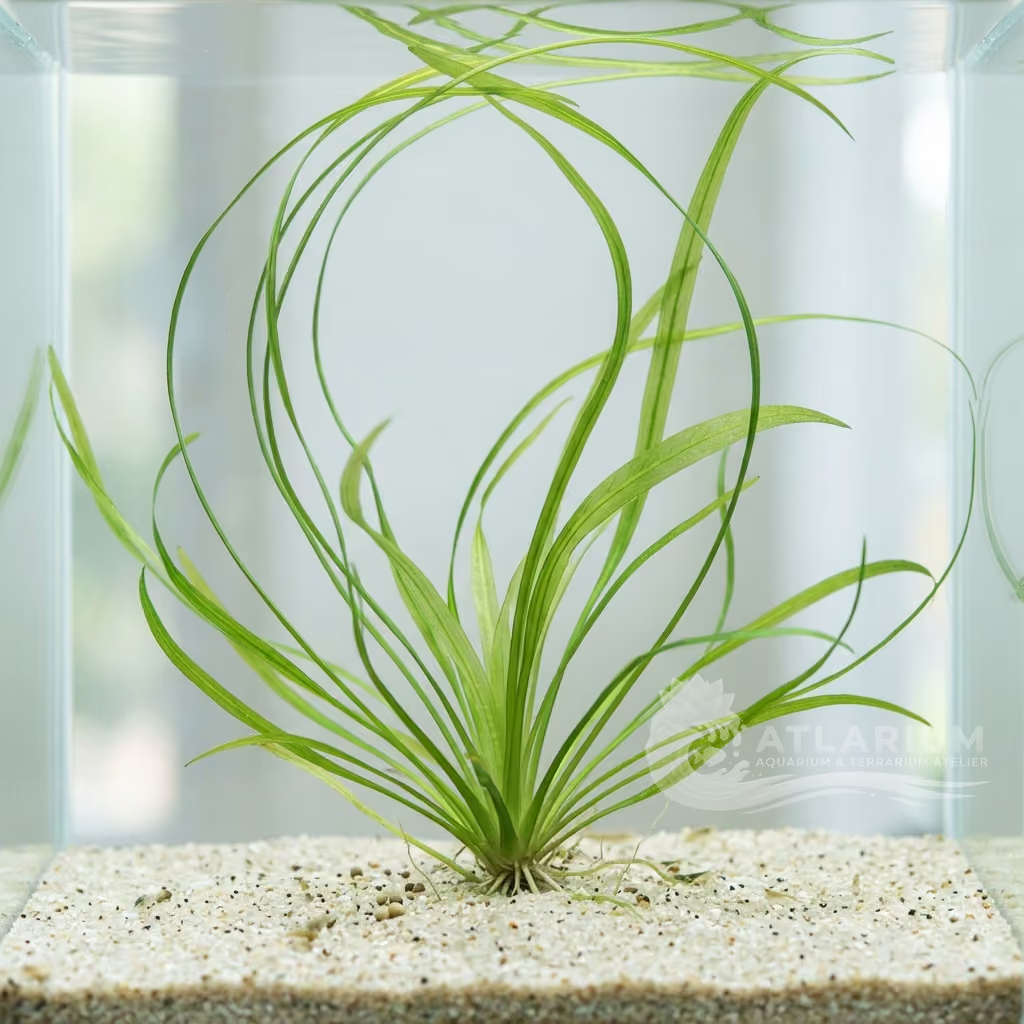
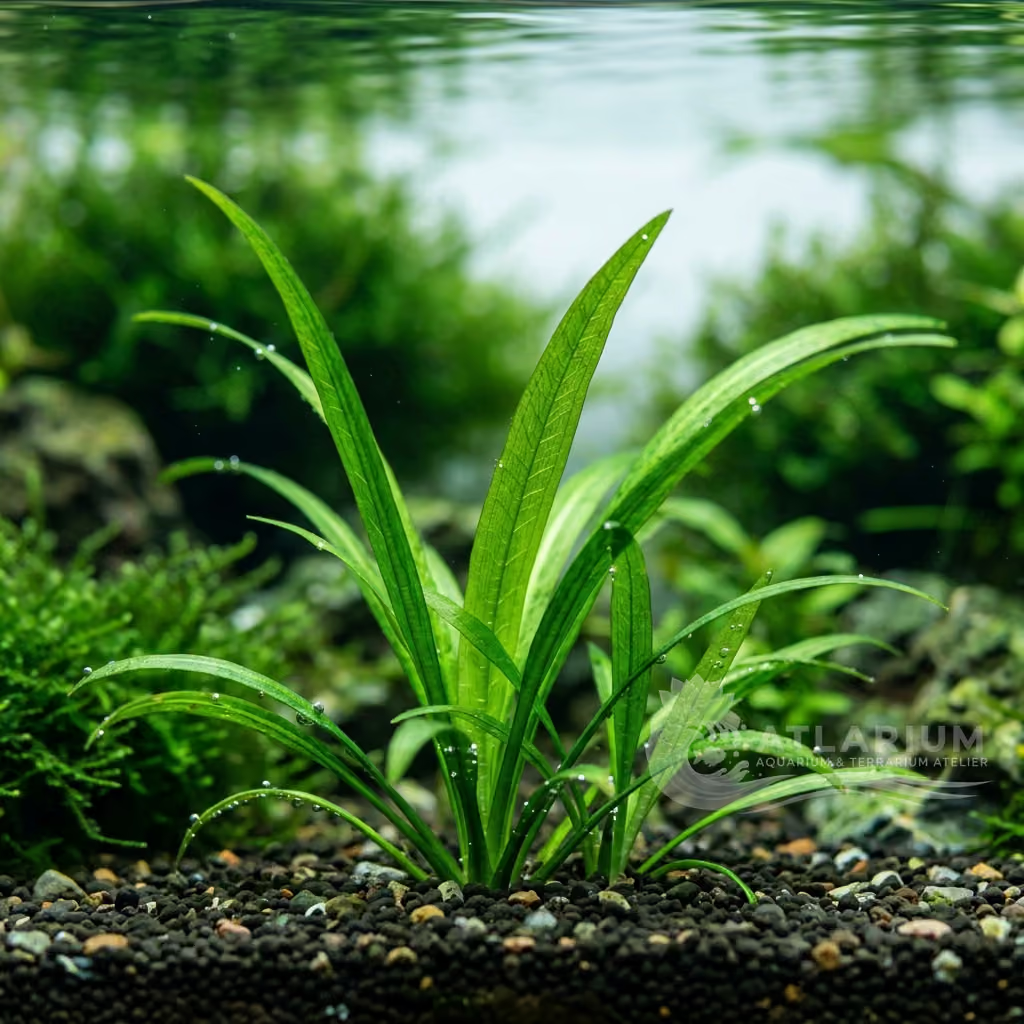
Physical Structure: It possesses a rigorous compact rosette structure anchored to the ground, entirely devoid of a central stem. The hypogeal roots are very dense, fleshy, leathery, and whitish, developing horizontally under the sand for tens of centimeters (runners). From the subterranean heart, the plant vertically erects numerous sword-like and pointed leaf blades, narrow (only 3-5 millimeters wide), weakly arched and lacking a petiole. It looks enormously like giant *Vallisneria nana* but with bonsai proportions.
Color & Texture: It wears an elegant and formal bright emerald green dress, homogeneous from the base up to the sharp top, remaining chromatically stable regardless of the iron dosages administered. The leaf blade is leathery, taut, flat, and very rigid compared to the delicate prairies of *Eleocharis*. The central vein gives the narrow leaf the resistance of a miniature sword blade.

Care, breeding and tankmates
Lighting & CO2: The less light it receives, the higher it will push upwards, losing its highly precious "kleine" (small) label and becoming disproportionate. Under very strong light radiation, it compresses, flattening towards the ground, fearfully thickening the rosette (exceeding 30 leaves). It does not die from a lack of dissolved gaseous CO2, but its spread from a single plant to a "lawn" depends strictly on how much photosynthetic carbon is available.
Nutrition & Substrate: It is the perfect archetype to understand the functioning of epigeal-hypogeal plants: its rigid leaves are not tasked with absorbing anything from the water column. If rooted in sand or washed inert gravel (unfertilized), it will stop and fade towards yellowish until decomposing. It obligatorily requires enriched allophane soils, Aquasoil, or compressed tablets (NPK tabs) buried directly in its vicinity to let the strong white rhizomes run.
Water Chemistry: Like most ex-Echinodorus, it is armored and unshakable. Wide thermal range: it prefers the torrid 28°C temperatures typical of Discus or Altum tanks, but quietly thrives even at 20°C in a mixed livebearer aquarium. It tolerates very hard and alkaline waters (GH>15, pH 8), showing maximum vividness in soft and acidic South American waters (pH 6.5).
Space Management & Placement: The "Kleine form" is an exquisite choice for the foreground of medium-to-large sized tanks or as a transitional bush (midground) in nano-cubes, where normal Vallisnerias or Helanthiums would explode out of the glass. Placed in front of a rock (Iwagumi layout), it will provide formidable contrast, emitting radiating subterranean offshoots that will pop out like sharp, rigid prairies a few weeks later.
Pruning: Maintenance never involves direct cutting (topping) of the blades: the leaves would irreversibly ruin and become infected. The plant is managed by physically removing the deteriorated outer blades at the base, or by cleanly cutting the stoloniferous connection between the mother and daughter with a scalpel to block the creeping path of the root chain under the sand.
Risks & Diseases: Very difficult to kill chemically. It resists the sturdiest cleaner fish like *Ancistrus*, whose bites slide off its thick, narrow, sword-like blades. The only mortal risk it runs (and on which many fail) is planting it incorrectly: its white basal collar must remain absolutely exposed above the sand; if totally covered by anoxic gravel, the bulb of the rosette will inexorably rot.

Geographic origin and distribution
Another complex gem of the Alismataceae family, *Helanthium* sp. "Angustifolius, kleine Form" (translated from German: small, narrow-leaved form) is an ecotype or probable hybrid originating in South America (Amazon basin), historically known and marketed under the misleading name *Echinodorus angustifolius*. It is found along the immense sandy beds and flooded beaches of dry or flooding rivers, creating vast semi-submerged grassy tangles similar to terrestrial tallgrass prairies.
Origin
Amazon, Orinoco, and GuianasExtra-Amazon South America

Plant profile
- Placement
- Midground
- This plant is ideal for the midground or foreground of an aquascape, depending on the tank size. In smaller aquariums, Helanthium sp. "Angustifolius, kleine Form" can serve as an excellent background focal point. Its grassy appearance transitions well between hardscape and taller stem plants. Careful placement ensures it doesn't overshadow delicate carpeting species.
- Botanical form
- Rosette
- This species forms dense, bushy rosettes with lanceolate or linear leaves. The foliage of Helanthium sp. "Angustifolius, kleine Form" is typically a vibrant, light green that adds a fresh look to the aquascape. Submersed leaves are usually narrower and more delicate compared to their emersed counterparts. Its root system is extensive and highly developed.
- Growth
- Fast
- Under optimal conditions with CO2 injection and high light, the growth rate of Helanthium sp. "Angustifolius, kleine Form" is remarkably fast. It will quickly send out numerous runners to colonize adjacent areas. In lower-tech setups, growth slows down considerably but remains steady. Regular pruning may be necessary to keep its rapid expansion in check.
- Substrate
- High
- This narrow-leaved variety, Helanthium sp. "Angustifolius, kleine Form", heavily relies on a nutrient-dense substrate to sustain its delicate yet extensive root network. It flourishes in fine-grained aqua soil laid at least 4 centimeters thick, which facilitates easy runner penetration and secure anchoring. Providing a high-quality, mineral-rich base layer is crucial for achieving dense foreground cover and vivid green growth.
- Column fertilization
- Recommended
- While primarily a root feeder, Helanthium sp. "Angustifolius, kleine Form" absorbs a fair amount of nutrients through its leaves. Dosing a comprehensive liquid fertilizer ensures no deficiencies occur, particularly in mature tanks. Potassium and trace elements in the water column support robust leaf structure. Liquid carbon can also be beneficial if pressurized CO2 is unavailable.
- Root fertilization
- None
- A nutrient-rich soil or the addition of root tabs is highly recommended for Helanthium sp. "Angustifolius, kleine Form". Strong root fertilization promotes the development of thick, healthy runners and vibrant foliage. Without adequate root nutrients, older leaves may yellow or develop pinholes. Replenishing root tabs every few months sustains its vigorous growth.
- Trimming
- Occasional
- Trimming Helanthium sp. "Angustifolius, kleine Form" primarily involves cutting away old or algae-covered leaves near the base of the rosette. Unwanted runners should be snipped close to the parent plant to prevent uncontrolled spreading. It tolerates heavy pruning well and will quickly bounce back with new growth. Thinning out dense patches improves water flow and light penetration.
- Propagation
- Runners
- Propagation of Helanthium sp. "Angustifolius, kleine Form" is straightforward and occurs naturally via lateral runners. The mother plant will continually produce chains of baby plants along the substrate. Once the daughter plants have developed their own root systems, the connecting runner can be cut. These new plantlets can then be easily replanted in other areas of the tank.
- Sensitivity
- Moderate
- This species is generally quite robust and forgiving of varying water parameters. However, Helanthium sp. "Angustifolius, kleine Form" can be sensitive to extreme fluctuations in pH or temperature. It may experience a brief melting phase when transitioned from emersed to submersed environments. Overall, it is highly resistant to most common aquarium pests and diseases.
- Layout role
- Midground, Foreground, Nano
- In aquascaping, Helanthium sp. "Angustifolius, kleine Form" plays a crucial role in softening the harsh lines of rocks and driftwood. It is an excellent transitional plant that bridges the gap between low foregrounds and tall backgrounds. Its grassy texture contrasts beautifully with broad-leaved plants or fine mosses. Grouping several plants together creates a natural, wild appearance.

Image gallery
Licensed images linked to the species or, when marked, to the closest representative taxon.

Related species
Recommendations grouped by close relatives, companion choices, and similar care.