Sagittaria subulata
Sagittaria subulata
Sagittaria subulata is a robust and fast-growing aquatic plant, perfect for the midground or for creating a lush green carpet in smaller aquariums. Its remarkable adaptability to various conditions makes it an excellent choice for aquascapers of all experience levels.
Water Temperature
4 - 30 °C
pH Value
5 - 9
Water type
Freshwater
Light
Low to High
CO2
High
KH
2 - 30 dKH

Species description
Geographical Origin and Habitat: This species is native to the Americas, with a distribution ranging from eastern North America all the way to South America, where it colonizes a wide variety of aquatic habitats. It is commonly found in marshes, ponds, slow-moving rivers, and lakes, often rooting in muddy or sandy substrates in shallow waters. Its widespread presence testifies to a remarkable ability to adapt to different environmental conditions.
Taxonomy & Genetics: Sagittaria subulata belongs to the Alismataceae family, a group of aquatic monocots often characterized by basal leaves and emergent inflorescences. Its classification is sometimes debated due to intraspecific morphological variability, which has historically led to its confusion with other species within the genus Sagittaria. Genetically, it is a diploid plant that reproduces effectively through both sexual and vegetative means.
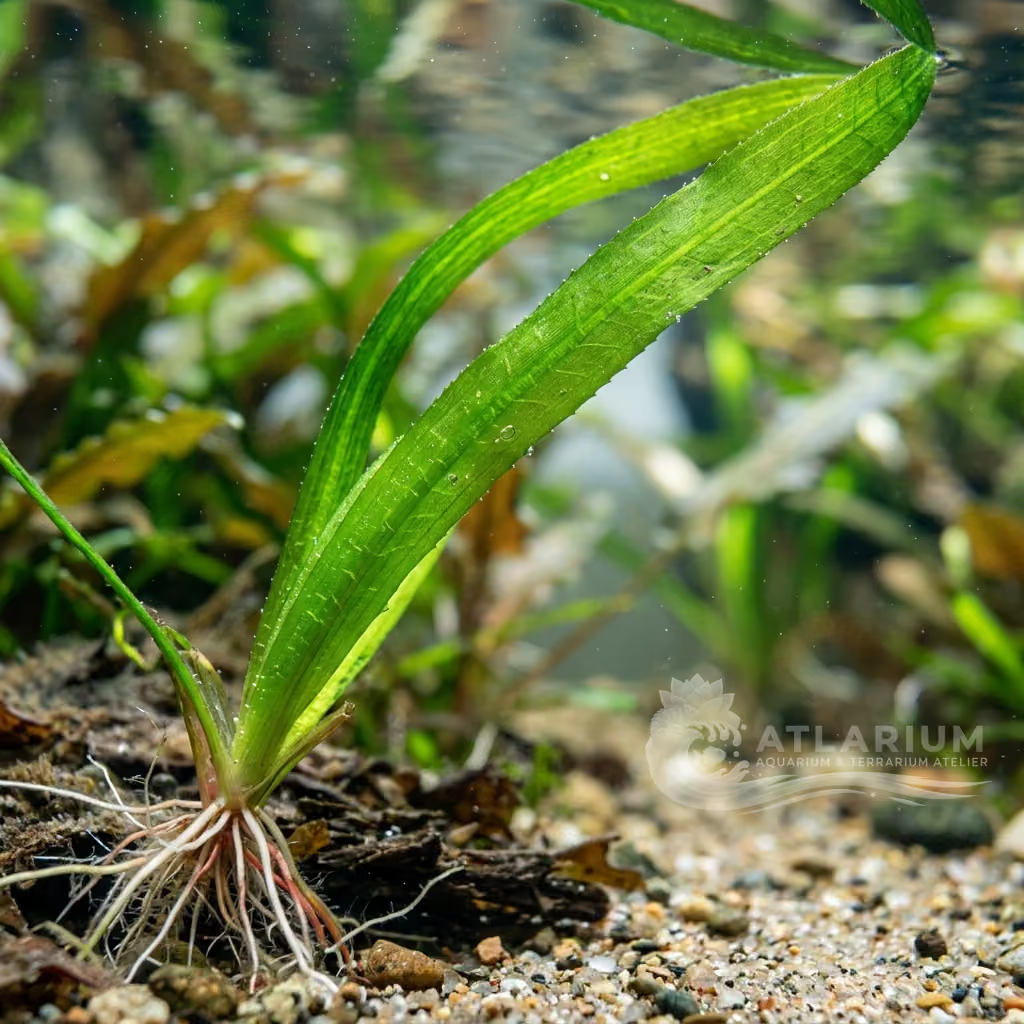
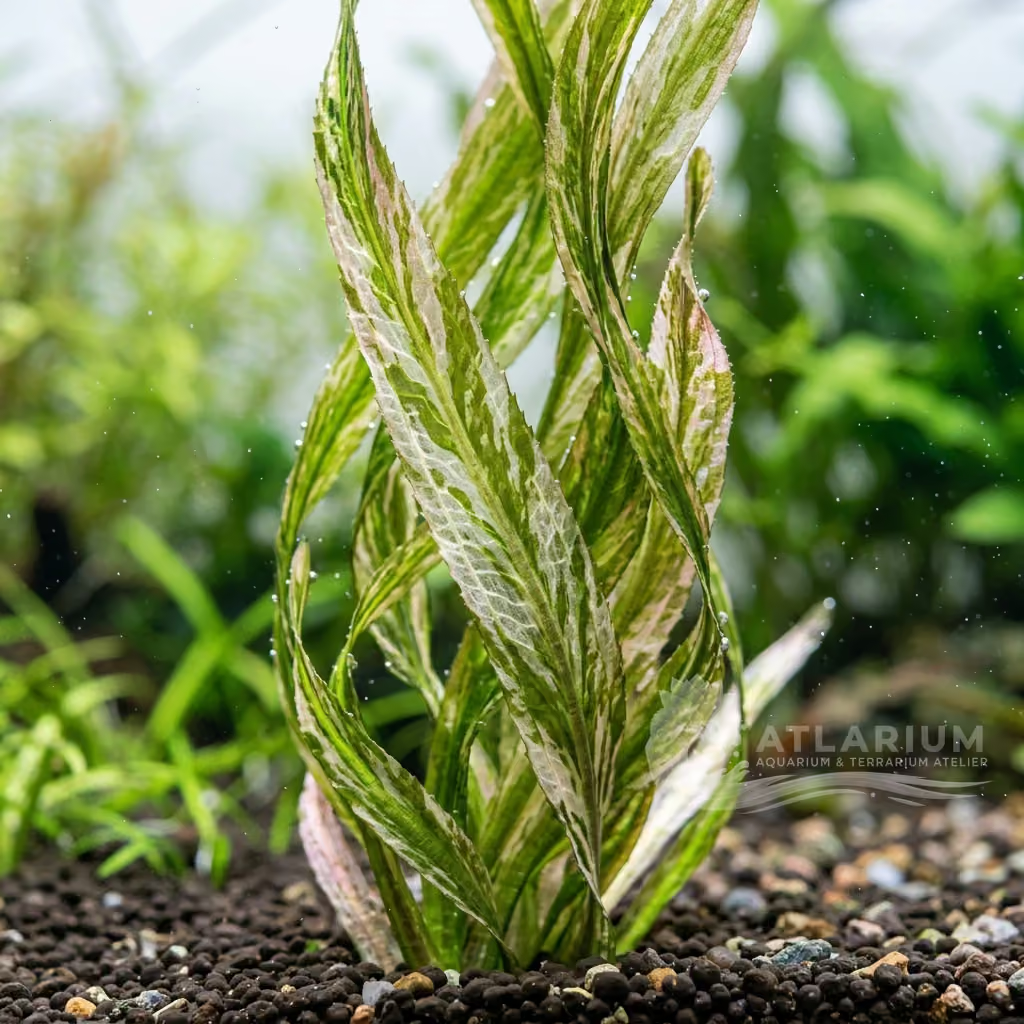
Physical Structure: Sagittaria subulata develops a physical structure characterized by linear, ribbon-shaped leaves that emerge from a basal rhizome submerged in the substrate. Depending on light and space conditions, the leaves can vary significantly in length, remaining short and bushy under intense light or elongating towards the surface in less favorable light. The plant produces thin stolons that branch out from the rhizome, generating new daughter plants and enabling rapid colonization of the tank bottom.
Color & Texture: The leaves of Sagittaria subulata display a bright or medium green color, which can intensify or subtly shift towards a reddish hue under very strong lighting and good nutrient availability. Their surface is smooth and slightly glossy, lending a fresh and vibrant appearance to the aquarium. The leaf texture is firm yet flexible, holding up well against mechanical stress and the activity of fish.

Care, breeding and tankmates
Lighting & CO2: Sagittaria subulata is incredibly versatile regarding lighting, thriving from low to very intense conditions, although its morphology is influenced by it. Under low light, leaves tend to elongate considerably, while under high light, they remain shorter and form a dense carpet. CO2 injection is not strictly necessary but promotes more robust, compact, and vigorous growth, also accelerating propagation via stolons.
Nutrition & Substrate: A nutrient-rich substrate is highly recommended for Sagittaria subulata, as its roots are efficient at absorbing nutrients directly from the bottom. Using enriched substrates or adding fertilizer tabs near the roots will promote optimal growth and intense coloration.
Water Chemistry: This species tolerates a wide spectrum of water chemistry values, making it one of the most adaptable plants for the aquarium. It prefers slightly acidic to neutral waters but also thrives in alkaline conditions, with an ideal pH range between 5.0 and 9.0. Carbonate hardness (KH) can range from 2.0 to 30.0, and water temperature is optimal between 4.0 and 30.0 °C, highlighting its robustness and capacity to adapt to almost any aquascaping setup.
Space Management & Placement: Ideal for the midground, Sagittaria subulata can also be effectively used as a foreground cover in smaller aquariums, forming a dense and attractive lawn. Its rapid propagation via stolons requires careful spatial planning to prevent it from outcompeting neighboring plants or encroaching into unwanted areas. By allowing sufficient space for its expansion, a very natural and dynamic visual effect can be achieved.
Pruning: Pruning Sagittaria subulata is essential to maintain the desired shape and prevent excessive growth that could shade neighboring plants or impede water circulation. Longer or damaged leaves can be removed at their base with sharp scissors, promoting the growth of new, shorter, and more vigorous leaves. Regular removal of excess stolons helps control its spread and keeps the carpet dense and tidy.
Risks & Diseases: Sagittaria subulata is generally a robust plant and not prone to specific diseases in a well-maintained aquarium environment. However, nutritional deficiencies, particularly of iron or other micronutrients, can manifest as leaf yellowing (chlorosis) or stunted growth. Excessive filamentous algae growth can smother the leaves, especially under conditions of poor water circulation and nutrient imbalances.

Geographic origin and distribution
This species is native to the Americas, with a distribution ranging from eastern North America all the way to South America, where it colonizes a wide variety of aquatic habitats. It is commonly found in marshes, ponds, slow-moving rivers, and lakes, often rooting in muddy or sandy substrates in shallow waters. Its widespread presence testifies to a remarkable ability to adapt to different environmental conditions.
Origin
North AmericaExtra-Amazon South America

Plant profile
- Placement
- Midground
- Traditionally used as a foreground carpeting plant, it can create a thick, grass-like lawn across the front of the aquarium. However, in lower light conditions or if crowded, it can grow surprisingly tall, up to 30 cm or more. Under these circumstances, it may need to be moved to the midground or background.
- Botanical form
- Rosette
- This species features narrow, ribbon-like leaves that grow in a basal rosette. While typically short and grassy, its leaf length is highly variable and depends heavily on lighting intensity and crowding. It occasionally produces small, delicate white flowers on long stalks that reach the water surface.
- Growth
- Fast
- The growth rate is generally fast, especially when provided with a nutrient-rich substrate and moderate lighting. It spreads vigorously via runners and can quickly overtake a tank if left unchecked. In low-tech setups, it is one of the easiest carpeting plants to grow, though it will spread more slowly.
- Substrate
- High
- It is highly adaptable and will root strongly in almost any substrate, including plain gravel, sand, or commercial aqua soils. For the fastest growth and thickest carpeting, an enriched substrate or dirted tank is ideal. Its extensive root system does an excellent job of stabilizing the substrate and preventing anaerobic pockets.
- Column fertilization
- Recommended
- Liquid fertilizers are largely optional for this species if a rich substrate is present. However, dosing a complete liquid fertilizer occasionally can provide a helpful boost of potassium and trace elements. This is mainly beneficial in setups where the substrate is completely inert and lacks natural nutrient buildup.
- Root fertilization
- None
- Root feeding is the absolute best way to encourage robust growth and rapid spreading. Placing root tabs evenly spaced throughout the planned carpet area will result in a dense, lush lawn. Because it feeds so heavily from the roots, strong substrate nutrition is the key to preventing it from growing excessively tall seeking light.
- Trimming
- Occasional
- Maintenance mainly involves controlling its spread by snipping unwanted runners. Remove older, decaying leaves by pinching them off near the crown. Do not trim the leaves horizontally, as this will cause them to die back.
- Propagation
- Runners
- Propagation is straightforward and happens automatically via an extensive network of runners. Daughter plants emerge from the substrate at short intervals along the runners. To control its spread or propagate it intentionally, simply pinch or cut the runner and relocate the new plant.
- Sensitivity
- Moderate
- Very hardy and tolerant of a wide variety of water parameters, including harder water. It is a robust plant that rarely suffers from melting. An excellent, forgiving choice for beginners establishing their first planted tank.
- Layout role
- Midground, Background
- Classic foreground plant for creating a wild, natural-looking grassy meadow. Its slightly messy, uneven growth pattern is perfect for nature aquariums. Also useful for softening the transitions between hardscape elements and the substrate.

Image gallery
Licensed images linked to the species or, when marked, to the closest representative taxon.

Related species
Recommendations grouped by close relatives, companion choices, and similar care.