Echinodorus 'Red Diamond'
Echinodorus 'Red Diamond'
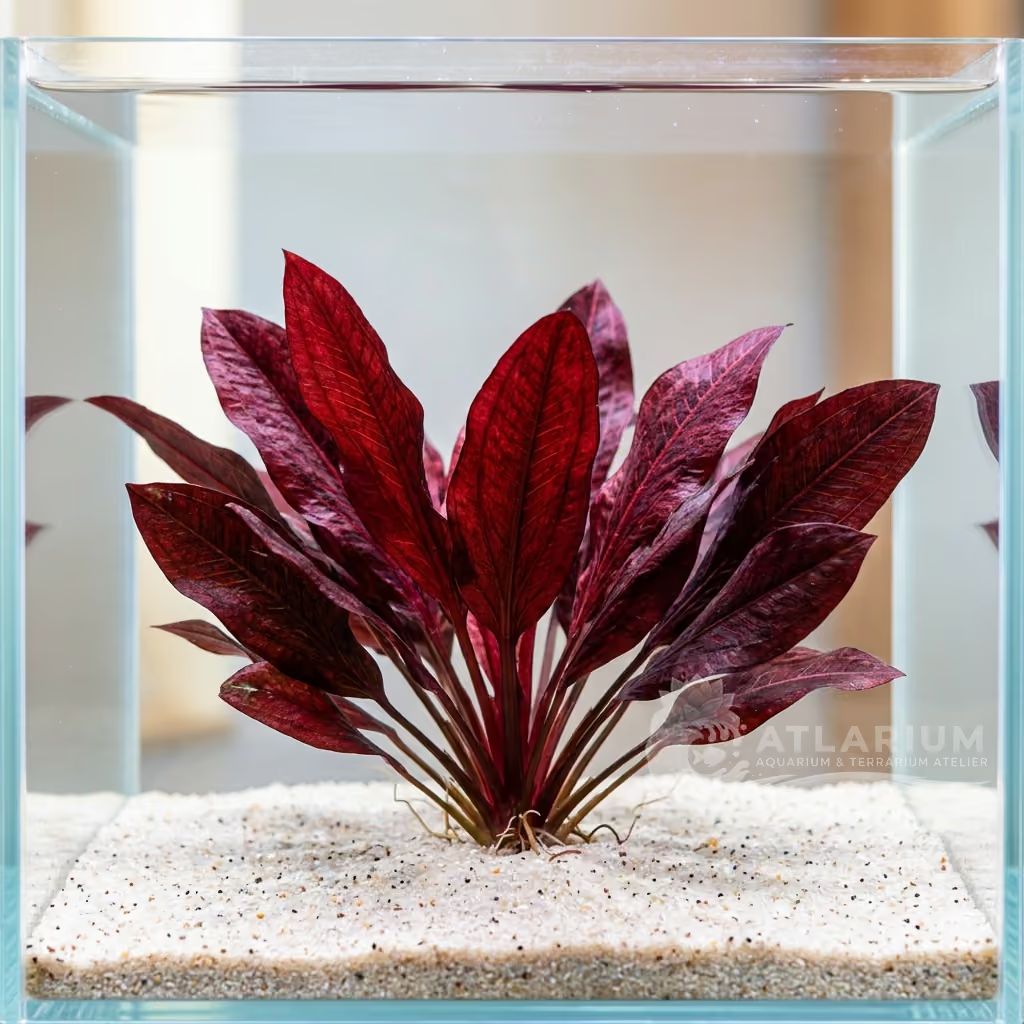
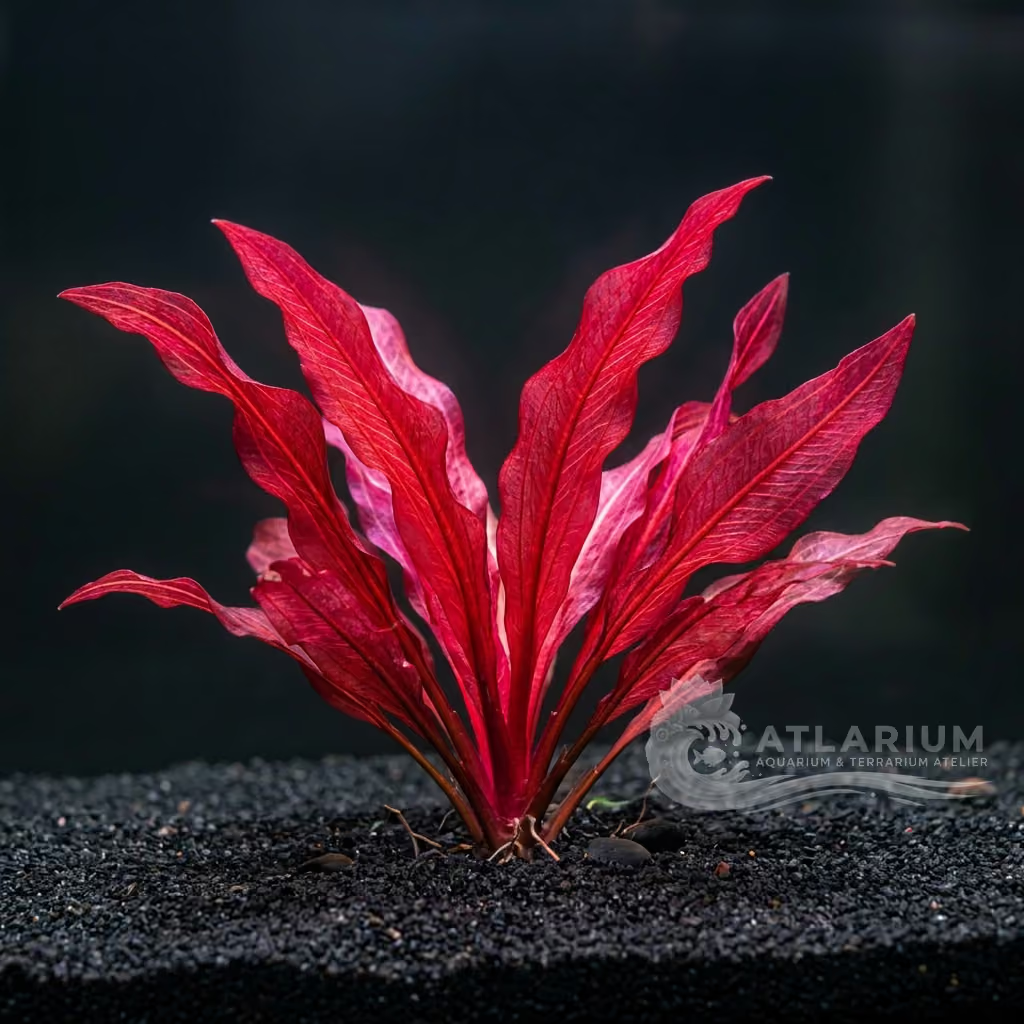
Echinodorus 'Red Diamond' is a stunning compact hybrid featuring dark ruby-red lanceolate leaves and a medium growth rate, ideal as a midground or background focal point.
Water Temperature
15 - 30 °C
pH Value
5 - 7
Water type
Freshwater
Light
Medium to High
CO2
Low - High
Expected height
25 cm
Expected width
20 cm
KH
0 - 21 dKH

Species description
Geographical Origin and Habitat: Echinodorus 'Red Diamond' is a hybrid cultivar created in Europe through horticultural selection programs in greenhouses. It is not found in the wild. The genus Echinodorus is native to the tropical and subtropical territories of the Americas, populated by waterways and marshes. This variety was developed to combine the elongated leaf shape typical of Echinodorus uruguayensis with a particularly intense ruby-red
Color & Texture: ation and a compact size suitable for medium-sized aquariums.
Taxonomy & Genetics: It belongs to the family Alismataceae and is a selected cultivated hybrid. Its complex genetics contain characters of pure species known for chromatic intensity, such as Echinodorus uruguayensis and other red hybrids. The 'Red Diamond' variety was selected to maintain the brilliant red coloration on the new leaves and ruby shades on the adult leaves, distinguishing itself by its compactness and stability of characters. It propagates vegetatively to keep the clone pure.
Physical Structure: It forms an erect and exceptionally dense rosette, which reaches a height between 15 and 25 cm in the aquarium, exceptionally 30 cm. Submerged leaves are lanceolate or elliptical, supported by short and robust petioles that keep the rosette dense and symmetrical. It develops a short, woody rhizome and a vigorous root system that anchors firmly in the aquarium substrate.
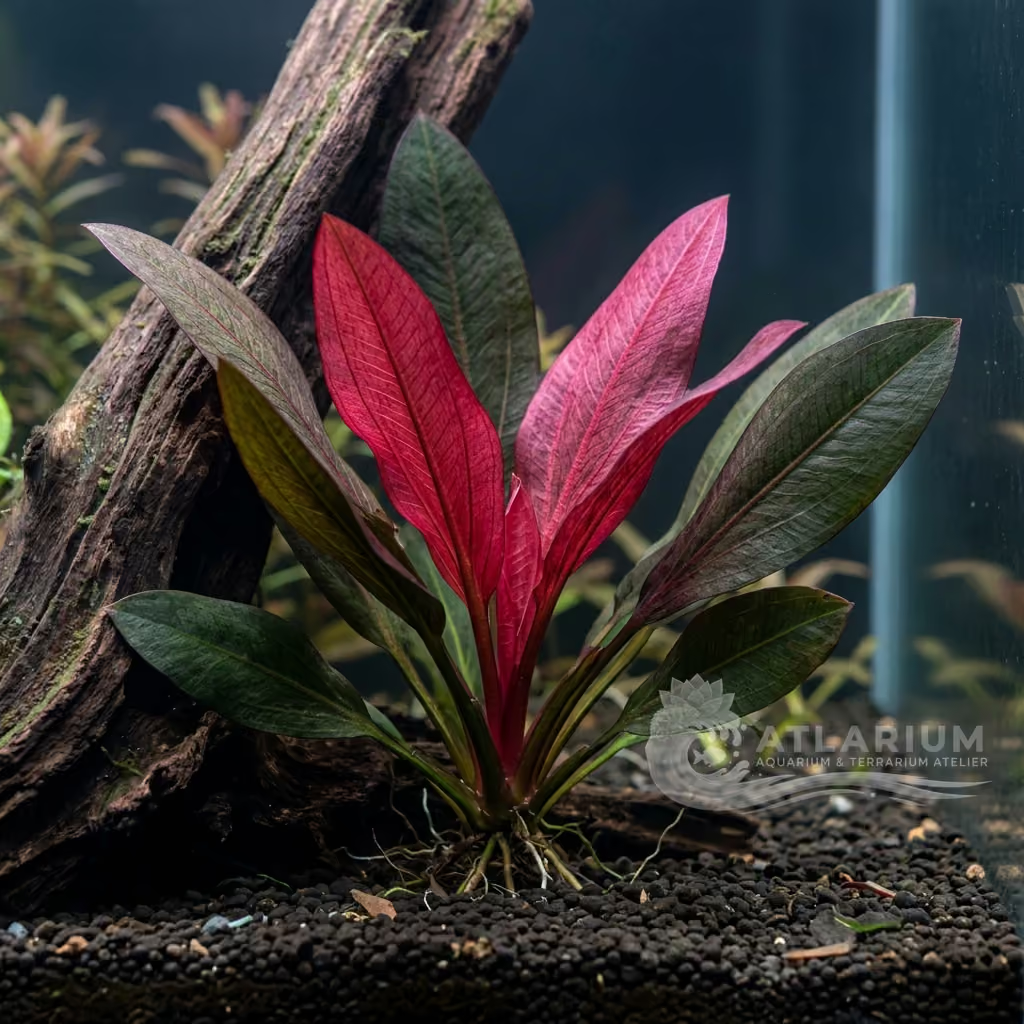
Color & Texture: New leaves emerge from the center with an extremely intense, glossy, and spot-free dark ruby-red coloration. Over time, mature leaves take on greenish-brown or dark olive-green shades, while retaining the main red or orange veins that create an exceptional visual effect. The leaf blades have smooth margins and a leathery, robust texture.

Care, breeding and tankmates
Lighting & CO2: Requires medium to high lighting. To maximize the development of the ruby-red pigmentation and prevent the plant from growing with overly long petioles, it is essential to provide intense light. CO2 injection is recommended to promote robust growth and to keep the leaves thick and compact, accelerating the development of the clump.
Nutrition & Substrate: It is a heavy feeder of root nutrients. Requires a fertile substrate enriched with slow-release fertilizer tabs rich in iron and trace elements inserted regularly near the roots (every 3-4 months). A nutrient deficiency quickly causes new leaves to emerge pale, small, and fragile.
Water Chemistry: Adapts to a wide range of values, with ideal temperatures between 15°C and 30°C. The preferred pH is acidic or neutral (5.0 - 7.0), with water hardness from soft to medium (KH 1-12 dKH). Benefits from good filtration and regular partial water changes to keep the environment free of excess organic substances.
Space Management & Placement: Its ideal placement is in the midground of the aquarium, or in the background of small to medium tanks. Thanks to its compact size and extraordinary red coloration, it serves as a beautiful solitary focal point (solitary plant). It should be positioned leaving enough space around it so that it can showcase its symmetrical rosette without being shaded.
Pruning: Pruning consists of the periodic removal of older or damaged leaves at the base of the rosette. Cut leaves close to the rhizome using sharp scissors. This stimulates leaf replacement with new red central leaves and prevents the decay of the rosette's appearance. Remove any flower stalks if you want to concentrate energy on the leaves.
Risks & Diseases: It is sensitive to chlorosis due to lack of iron. The thick, moderately growing leaves can be prone to colonization by black brush algae or green spot algae if there are nutrient imbalances or fluctuations in CO2 levels in the aquarium. Additionally, young leaves are tender and can be damaged by herbivorous fish.

Geographic origin and distribution
Echinodorus 'Red Diamond' is a hybrid cultivar created in Europe through horticultural selection programs in greenhouses. It is not found in the wild. The genus Echinodorus is native to the tropical and subtropical territories of the Americas, populated by waterways and marshes. This variety was developed to combine the elongated leaf shape typical of Echinodorus uruguayensis with a particularly intense ruby-red
Origin
Selective breeding and cultivars

Plant profile
- Placement
- Midground
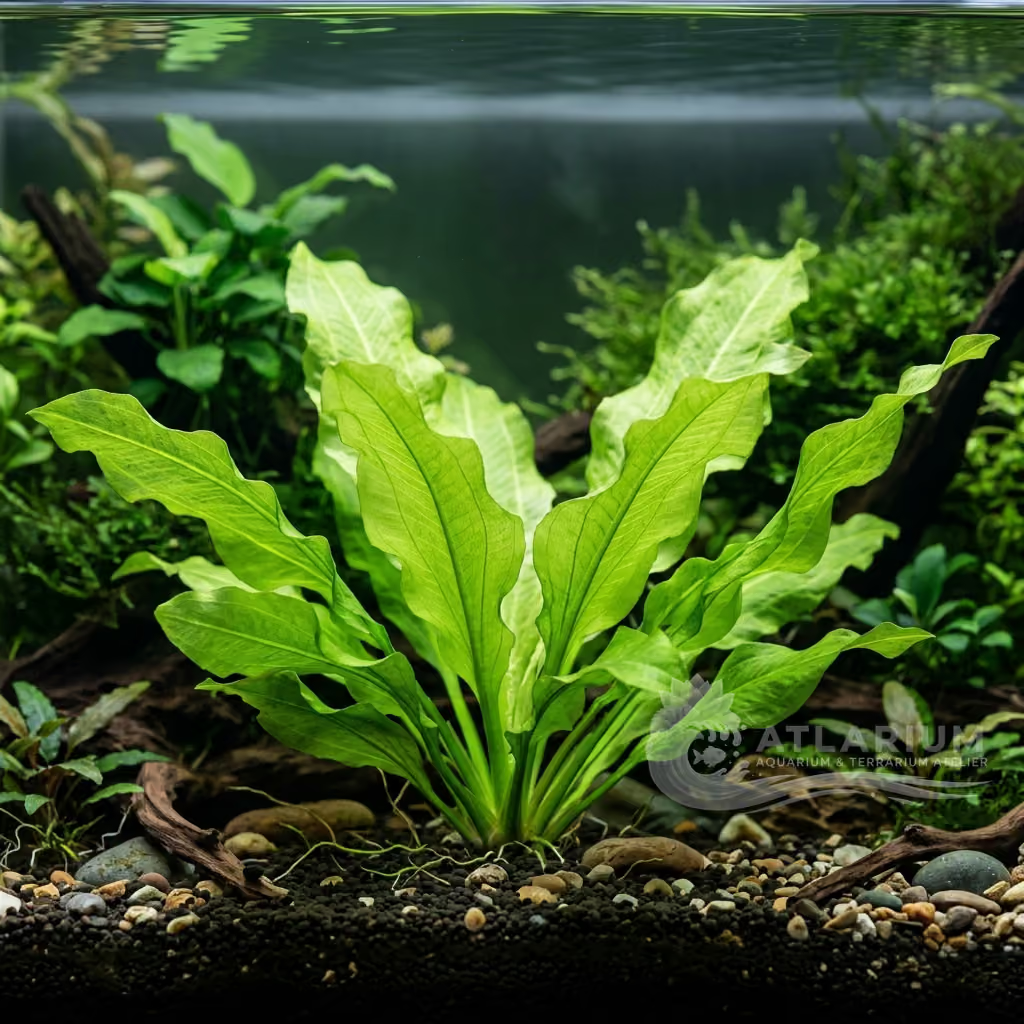
- A versatile plant that fits well in the midground of larger tanks or the background of smaller ones. Its striking ruby-red to deep purple new leaves make it an excellent specimen plant. It looks best when surrounded by contrasting light green foliage.
- Botanical form
- Rosette
- Grows as a compact rosette, making it smaller than many other sword plants. The leaves are elliptical to sword-shaped and feature prominent, lighter-colored veins. It develops a strong, deep root system typical of the genus.
- Growth
- Medium
- Generally moderate in its growth speed, though this depends heavily on environmental factors. High light, CO2, and abundant nutrients will encourage faster, more robust growth. It is a relatively undemanding plant once it has settled in.
- Substrate
- High
- Thrives in a fine, nutrient-rich substrate that promotes healthy root development. Aqua soil is ideal, but a well-fertilized sand bed can also work effectively. The substrate must be deep enough to support the plant's extensive root system.
- Column fertilization
- Recommended
- Liquid fertilizers can provide supplementary micronutrients and potassium. However, the plant is primarily adapted to extract nutrients from the soil. Column dosing should be used in conjunction with a solid root-feeding strategy.
- Root fertilization
- Required
- Root feeding is paramount; the plant will struggle if the substrate is completely inert and unfertilized. Regularly placing root tabs deep near the roots ensures continuous access to essential minerals. This is especially important for maintaining the deep red leaf colors.
- Trimming
- Occasional
- Trimming requirements are low. Maintenance involves occasionally removing older, outer leaves that have lost their luster, accumulated algae, or become damaged. Use sharp scissors to snip the petiole close to the base of the rosette. Removing older leaves encourages the plant to channel its energy into producing fresh, vibrantly red new growth, keeping the plant looking immaculate.
- Propagation
- Division
- Typically propagates by sending up an inflorescence that develops small plantlets at the nodes. These can be removed and replanted once they have formed a few leaves and a small root system. This is an easy and reliable method to multiply the plant.
- Sensitivity
- Moderate
- This cultivar is particularly sensitive to insufficient lighting; without strong light, it will lose its striking red color and revert to a dull olive green, and its compact form may become leggy. It is also sensitive to sudden drops in root nutrients. However, it is quite adaptable to various water hardness levels and temperatures once it has securely established its root system.
- Layout role
- Midground, Background, accent
- Echinodorus 'Red Diamond' excels as a premier focal point plant in the midground. Its vibrant ruby-red coloration and unique diamond-shaped leaves provide a stunning contrast against finely textured, bright green plants or dark hardscape elements. It brings a touch of dramatic color and bold structure to the aquascape, serving as a visual anchor that immediately commands attention.

Related species
Recommendations grouped by close relatives, companion choices, and similar care.