Helanthium tenellum
Helanthium tenellum
Classic carpeting plant that adapts to varying water levels. Forms a dense, low lawn when provided with high light, CO2, and nutrient-rich soil.
Water Temperature
10 - 35 °C
pH Value
5 - 7.5
Water type
Freshwater
Light
Medium - High
CO2
Low
Expected height
10 cm
Expected width
8 cm
GH
0 - 20 dGH
KH
0 - 14 dKH

Species description
Geographical Origin and Habitat: This aquatic plant, scientifically known as Helanthium tenellum, has its geographical origins established mainly in the sandy and muddy shores of rivers and lakes in North and South America, growing in shallow waters or temporarily submerged under strong sunlight. In its native lands, it faces periods of heavy seasonal variations, adapting perfectly to both submerged growth during wet months and emersed growth in dry periods. This natural behavior makes it extremely resilient and versatile when introduced into controlled environments such as home aquariums.
Taxonomy & Genetics: From a systematic point of view, it is a species described in the family Alismataceae, formerly known as Echinodorus tenellus and later placed in the genus Helanthium due to its propagation via runners. As a representative of this group, it shares many common biological traits but exhibits specific genetic peculiarities that influence its growth rate and fertilization needs. The genetic stability of cultivated strains is ensured in commercial nurseries through rigorous selection and vegetative propagation procedures to keep aesthetic qualities intact.
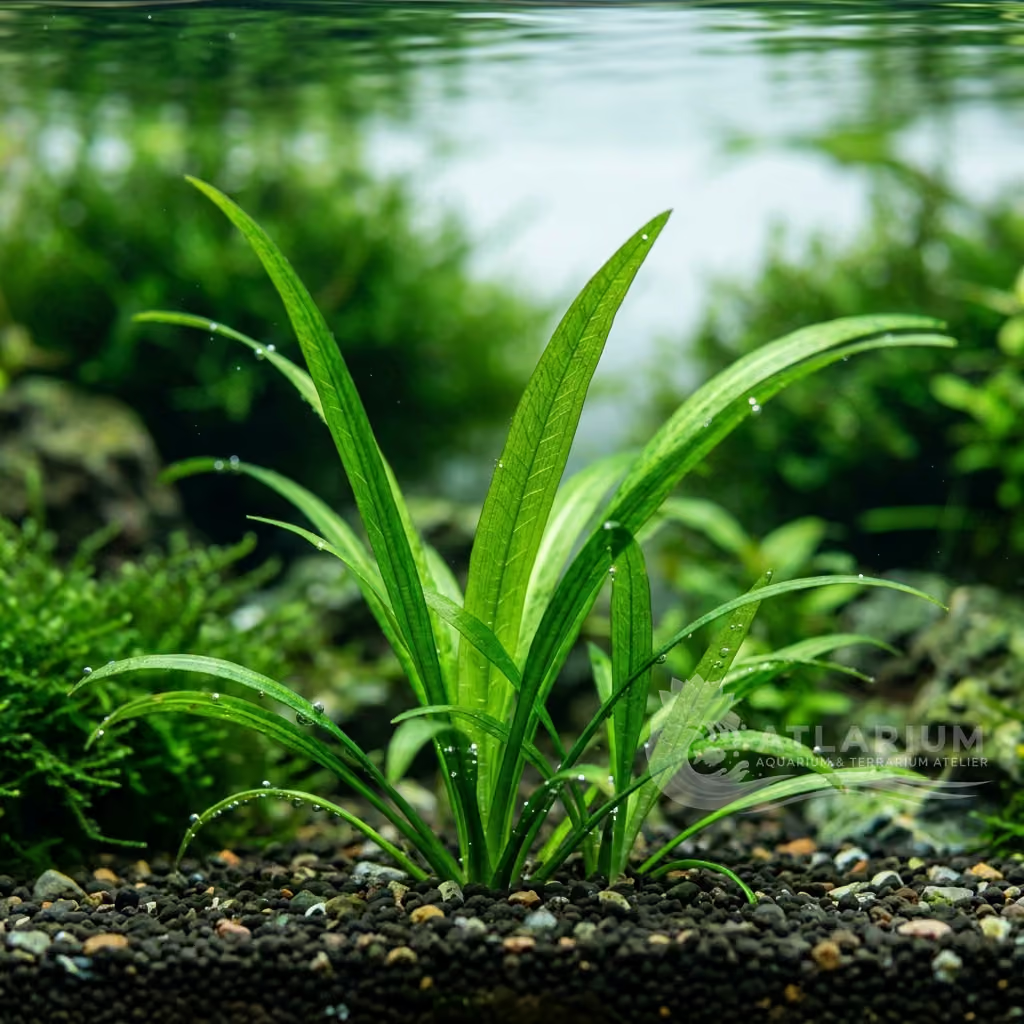
Physical Structure: Morphologically, the species features a small rosette plant that does not exceed 5-10 cm in height. It develops thin, needle-like leaves, expanding rapidly via horizontal runners. This type of conformation allows it to occupy three-dimensional space efficiently, while offering natural shelter for small fish and invertebrates. The root system is proportional to the aerial development and plays a key role not only for anchorage but also for nutrient uptake.
Color & Texture: The chromatic aspect is characterized by bright green under standard conditions, but acquires spectacular red-bronze or coppery shades under intense light and with low nitrate levels. This visual combination creates an excellent aesthetic impact under aquarium lights, allowing interesting contrast plays with surrounding plants. The leaf texture is designed to withstand the mechanical stress of running water.

Care, breeding and tankmates
Lighting & CO2: For optimal growth, the plant requires intense lighting to promote the formation of a dense, low lawn; CO2 injection is highly recommended to speed up development. Adequate lighting stimulates photosynthesis and prevents the loss of lower leaves, while carbon dioxide supports faster and more vigorous development of the leaf blade.
Nutrition & Substrate: Nutrition must be curated by providing a fertile substrate based on fine sand or clay. It responds positively to regular fertilization based on iron and potassium. The presence of nutrients in the substrate promotes root development and prevents decay phenomena due to the lack of essential micronutrients.
Water Chemistry: Regarding water chemistry, the plant prefers a wide temperature range of 10°C to 35°C, pH between 5.0 and 7.5, and low-medium carbonate hardness (KH from 0 to 14 dKH). It is important to keep the parameters stable and carry out regular water changes to avoid sudden osmotic shifts that could damage plant tissues.
Space Management & Placement: Layout planning should foresee the foreground as a carpet plant, leaving sufficient space for the runners to colonize the front area creating a dense lawn. Correct positioning allows the plant to receive uniform light over the entire surface and ensures good water circulation between the leaves.
Pruning: Routine maintenance requires trimming individual runners that grow outside the desired area or manually thinning out clumps that are too dense to prevent detritus accumulation. This practice prevents decaying old leaves from compromising water quality and constantly stimulates the rejuvenation of the specimen.
Risks & Diseases: Among the main risks is infestation by filamentous algae among the thin leaves if water flow is poor, and leaf fading in the absence of iron. Constantly monitoring the plant allows timely intervention with adjustments to fertilization or lighting management before damage becomes irreversible.

Geographic origin and distribution
This aquatic plant, scientifically known as Helanthium tenellum, has its geographical origins established mainly in the sandy and muddy shores of rivers and lakes in North and South America, growing in shallow waters or temporarily submerged under strong sunlight. In its native lands, it faces periods of heavy seasonal variations, adapting perfectly to both submerged growth during wet months and emersed growth in dry periods. This natural behavior makes it extremely resilient and versatile when introduced into controlled environments such as home aquariums.
Origin
North AmericaExtra-Amazon South America

Plant profile
- Placement
- Foreground
- As a classic foreground plant, Helanthium tenellum is perfect for creating a lush, grassy meadow at the front of the aquarium. It should be planted in areas with unobstructed light to encourage horizontal growth. In nano tanks, it can even serve as a midground accent behind smaller carpeting species. Avoid placing it in the shadow of large hardscape elements.
- Botanical form
- Rosette
- This plant features very narrow, needle-like leaves that form a delicate rosette. Submersed forms of Helanthium tenellum typically stay very short, resembling fine lawn grass. Under intense lighting, the tips of the leaves may develop a subtle reddish or brownish tint. Its root system is fine but anchors the plant securely in the soil.
- Growth
- Fast
- When provided with high light and CO2, Helanthium tenellum spreads relatively quickly via runners. Within a few weeks, scattered plantlets can merge to form a continuous carpet. In setups without injected CO2, the growth is moderate and the plant may grow slightly taller. Regular maintenance helps keep the growth compact and fast-spreading.
- Substrate
- Medium
- Helanthium tenellum performs well in a moderately fertile substrate, though an active aqua soil significantly boosts its growth speed and color vibrancy. The plant establishes a delicate root network that easily traverses fine-to-medium sand or soil, requiring a layer of 3 to 5 centimeters to spread optimally. Occasional supplementation with root tabs can further enhance its creeping behavior, leading to a lush, grassy lawn effect.
- Column fertilization
- Recommended
- Liquid fertilization is beneficial for Helanthium tenellum, as it supplements the nutrients drawn from the substrate. Providing ample potassium, nitrate, and phosphate in the water column supports rapid runner development. Trace elements, especially iron, are crucial for maintaining its bright green coloration. It readily absorbs nutrients through its fine leaves.
- Root fertilization
- Recommended
- A quality aquasoil is the best substrate choice for Helanthium tenellum. The soft, nutrient-rich granules allow its delicate roots to penetrate easily and access vital nutrients. If using inert sand or gravel, root tabs are an absolute necessity for success. Strong root nutrition is the key to achieving a thick, uniform carpet.
- Trimming
- Occasional
- Trimming a carpet of Helanthium tenellum is best done with curved aquascaping scissors. Cut horizontally across the top to maintain a low profile and encourage lateral spreading. Regular haircuts prevent the bottom layers from being shaded out and rotting. Debris from trimming should be carefully netted out to maintain water quality.
- Propagation
- Runners
- Propagation is entirely runner-based for Helanthium tenellum. As it grows, it continuously sends out slender stolons with new plantlets at the nodes. To propagate manually, simply cut a runner section containing a few healthy plantlets and replant. This is an efficient way to help fill in bare patches in the foreground.
- Sensitivity
- Moderate
- While somewhat adaptable, Helanthium tenellum is sensitive to being overshadowed or choked out by aggressive algae. It requires a stable, mature environment to thrive without melting. Sudden changes in water chemistry can cause it to drop its delicate leaves. It is relatively pest-resistant as long as it remains healthy and actively growing.
- Layout role
- Nano, Foreground, group
- The primary role of Helanthium tenellum is to provide a soft, grassy base layer that scales well with the aquascape. It is exceptional for iwagumi layouts where a simple, elegant carpet is desired. Its fine texture contrasts nicely with coarser carpeting plants like Glossostigma or Eleocharis. It adds a profound sense of scale to small and medium-sized tanks.

Image gallery
Licensed images linked to the species or, when marked, to the closest representative taxon.

Related species
Recommendations grouped by close relatives, companion choices, and similar care.