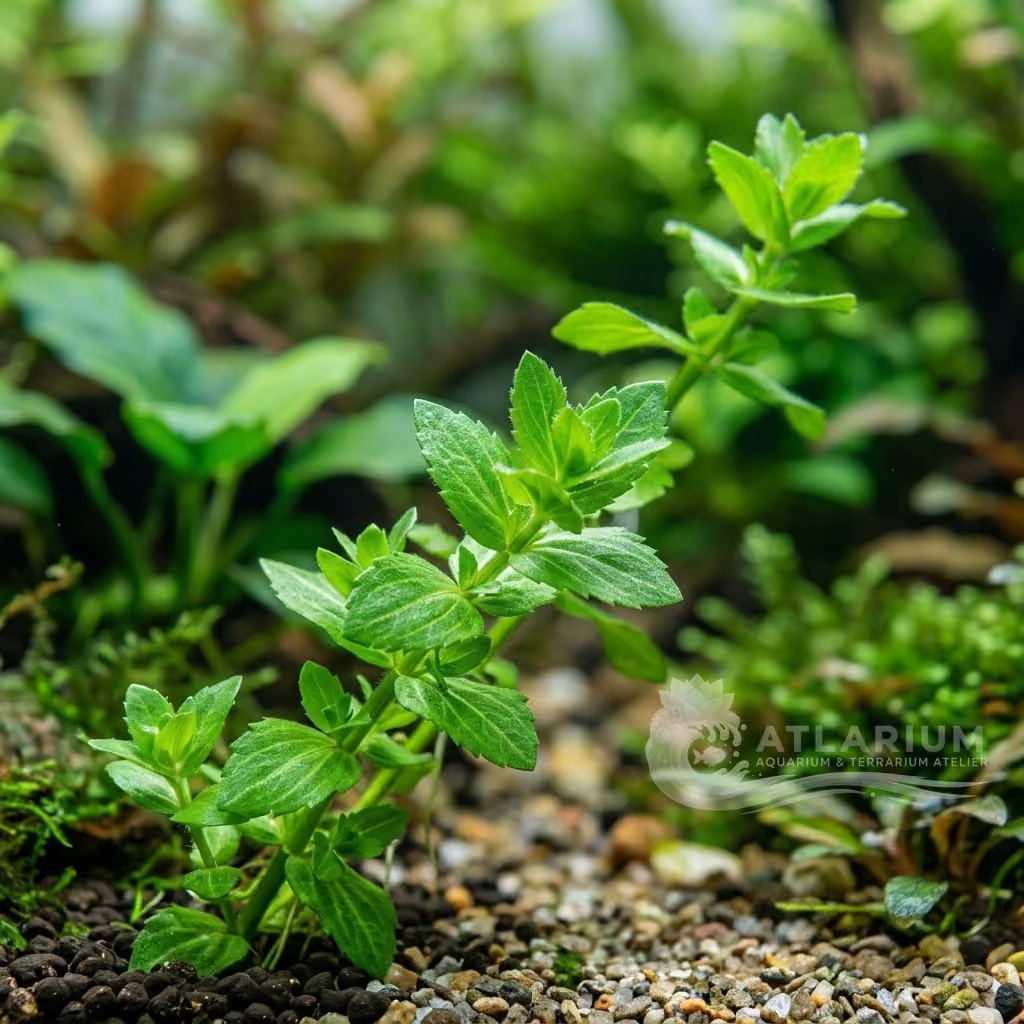
Alternanthera reineckii 'Grün' ('Green')
Alternanthera reineckii 'Grün' ('Green')
Bright green stem plant from South America. Demands moderate to high light and nutrient-rich aquasoil to prevent internode stretching and ensure health.
Water Temperature
4 - 30 °C
pH Value
5 - 7
Water type
Freshwater
Light
Medium - High
CO2
Low - High
Expected height
40 cm
Expected width
20 cm
KH
0 - 14 dKH

Species description
Geographical Origin and Habitat: Alternanthera reineckii 'Grün' is native to the tropical and subtropical regions of South America, particularly within the Amazon basin, extending through Brazil, Paraguay, and Argentina. In the wild, this species typically colonizes muddy riverbanks, marshlands, and temporarily flooded soils, growing in both emersed and submerged states. Its natural habitat is characterized by soft, warm, and nutrient-rich waters where direct or partial sunlight stimulates vigorous growth and branching.
Taxonomy & Genetics: Taxonomically, it belongs to the Amaranthaceae family and the genus Alternanthera. The cultivar 'Grün' (or 'Green') is a variant specifically selected for its predominantly green foliage, which stands out from the more common red and purple cultivars such as 'Rosaefolia' or 'Mini'. Genetically, it retains the robustness of the wild type but exhibits reduced anthocyanin pigment synthesis under normal light levels, making it an excellent choice for aquascaping layouts focused on green gradients.
Physical Structure: It presents as a classic erect stem plant with opposite and decussate leaves. The stems are relatively thick and fleshy, capable of keeping the plant upright even in moderate currents. The leaves are lanceolate-ovate with slightly wavy margins and can reach lengths of 5-10 cm. The root system is fibrous and highly developed, anchoring firmly into the substrate to absorb nutrients.
Color & Texture: Unlike the red varieties, the upper side of the leaf is a bright green, ranging from apple green to olive green. However, the underside often retains subtle shades of pale pink, yellow-green, or purple, especially under high light. The leaf texture is soft yet elastic, featuring a prominent central vein that adds depth and definition to the leaf surface.

Care, breeding and tankmates
Lighting & CO2: It requires moderate to high lighting to thrive and prevent the internodes from stretching too far. While CO2 injection is not strictly mandatory, it is highly recommended to encourage compact and robust growth, with ideal concentrations between 15 and 25 mg/L. Under weak light, the plant tends to shed its lower leaves and decline.
Nutrition & Substrate: A nutrient-rich substrate, such as a premium aquasoil, is crucial to support the plant's extensive root system. It responds exceptionally well to
Water Chemistry: It prefers soft to moderately hard water, with a KH range of 0 to 14 dKH and a slightly acidic to neutral pH (5.0-7.0). It is highly adaptable regarding temperature, tolerating a wide range from 4°C to 30°C, though the optimal range for aquarium keeping is between 22°C and 26°C.
Space Management & Placement: Given its potential height of 40 cm, it is ideal for the midground or background of the aquarium. It should be planted in small groups of individual stems spaced about 2-3 cm apart to ensure adequate light penetration to the lower leaves. Avoid placing it in deep shade under hardscape or larger plants.
Pruning: Pruning is performed by cutting the main stem just above a leaf node. The topped portion can be replanted into the substrate to propagate, while the remaining bottom portion will quickly produce new lateral shoots, resulting in a bushier and more compact appearance.
Risks & Diseases: It is susceptible to green spot or thread algae if nutrients are imbalanced or if water flow is inadequate. The tender leaves can also be targeted by herbivorous fish or hungry shrimp; potassium deficiency is a common risk, showing as small pinholes in older leaves.

Geographic origin and distribution
Alternanthera reineckii 'Grün' is native to the tropical and subtropical regions of South America, particularly within the Amazon basin, extending through Brazil, Paraguay, and Argentina. In the wild, this species typically colonizes muddy riverbanks, marshlands, and temporarily flooded soils, growing in both emersed and submerged states. Its natural habitat is characterized by soft, warm, and nutrient-rich waters where direct or partial sunlight stimulates vigorous growth and branching.
Origin
Amazon, Orinoco, and GuianasExtra-Amazon South AmericaSelective breeding and cultivars

Plant profile
- Placement
- Midground
- The green variant of the classic Alternanthera. Carefully considering its final size and growth trajectory is important when choosing a location. It typically looks best in the midground zone of the aquascape. Ensure it is not overshadowed by faster-growing background species or large hardscape pieces. Its texture and color provide excellent contrast when positioned against different leaf shapes.
- Botanical form
- Stem
- This plant is characterized by its specific morphological adaptations. The green variant of the classic Alternanthera. The leaves possess a distinct texture and structure that adds a unique visual element to the aquascape. When grown under optimal conditions, it exhibits its true botanical form vividly. Its unique structure makes it a valuable addition to diverse aquatic layouts.
- Growth
- Medium
- Under optimal conditions with high light and CO2, the growth rate is considered moderate. The green variant of the classic Alternanthera. In lower tech setups, it will grow significantly slower and may adapt its morphology. Regular pruning may be necessary to maintain a compact growth form over time. Its growth speed is directly correlated with the availability of light, CO2, and dissolved nutrients.
- Substrate
- High
- The green variant of the classic Alternanthera. This species thrives best when planted in an active, nutrient-dense substrate. Inert gravels will require constant supplementation with root capsules to provide adequate nutrition. The substrate should be deep enough to accommodate its root structure securely. A well-aerated substrate prevents anaerobic pockets and ensures optimal root health and expansion.
- Column fertilization
- Recommended
- Liquid fertilization is crucial for this plant, as it draws a significant portion of its nutrients directly from the water column. The green variant of the classic Alternanthera. A comprehensive fertilizer containing nitrogen, phosphorus, potassium, and trace elements should be dosed regularly. Iron supplementation is especially important to maintain its coloration and prevent chlorosis. Dosing should be adjusted based on the plant mass and growth rate observed in the aquarium.
- Root fertilization
- None
- The green variant of the classic Alternanthera. Heavy root feeding is incredibly beneficial for maximizing the potential of this species. Even in mature tanks, replenishing the substrate with targeted root capsules promotes strong basal growth. A robust root network directly correlates with larger, healthier foliage. Ensure root tabs are buried deeply to prevent nutrient leaching into the water column.
- Trimming
- Occasional
- Regular trimming is required to maintain the desired shape and health of Alternanthera reineckii 'Grün'. Using sharp aquascaping scissors ensures clean cuts that heal quickly without inviting rot. Pruning also encourages denser regrowth and prevents lower portions from being overly shaded. Remove any decaying trimmed leaves promptly to maintain optimal water quality.
- Propagation
- Cuttings
- The green variant of the classic Alternanthera. Multiplying this species can be done easily through standard propagation techniques for its type. Carefully dividing or cutting the plant allows aquarists to quickly expand their collection. The resulting segments should be planted or attached securely to encourage rapid establishment. Patience is required, but the success rate is typically very high under good conditions.
- Sensitivity
- Moderate
- Alternanthera reineckii 'Grün' can be somewhat sensitive to sudden fluctuations in water parameters. It may exhibit signs of stress or melt if exposed to abrupt changes in temperature or pH. Algae treatments containing copper or glutaraldehyde should be used with extreme caution around this plant. Maintaining a stable, clean environment is the best defense against health issues.
- Layout role
- Midground, Background
- In the aquascape, Alternanthera reineckii 'Grün' serves an important role by adding specific structural elements. It can be used to create focal points or to soften the transition between hardscape and open spaces. The plant's unique texture contrasts beautifully with both fine-leaved and broad-leaved neighbors. Thoughtful integration of this species greatly elevates the natural feel of the display.

Related species
Recommendations grouped by close relatives, companion choices, and similar care.