Bacopa australis
Bacopa australis
Bacopa australis: a lively stem plant of the Plantaginaceae family native to South America, ideal for creating dense bushes in the foreground or midground.
Water Temperature
4 - 35 °C
pH Value
5 - 8
Water type
Freshwater
Light
Medium - High
CO2
Low - High
Expected height
40 cm
Expected width
4 cm
KH
0 - 21 dKH

Species description
Geographical Origin and Habitat: Bacopa australis is native to the southern regions of South America, particularly southern Brazil and Argentina. It populates clear freshwater streams, slow-flowing calcareous rivers, and marginal wetlands. In these environments, it grows both submerged and emersed along the banks, forming dense grassy mats. Unlike other Bacopa, it prefers streams with cool temperatures but tolerates summer heat peaks, adapting to highly variable climatic conditions.
Taxonomy & Genetics: It belongs to the Plantaginaceae family and the genus Bacopa. Despite the name 'australis', which in Latin means 'southern' (referring to its geographical origin in southern Brazil), it is not related to Australia. Genetics and evolution have given it close internodes and extraordinary stem flexibility, making it very different from Bacopa caroliniana. Under intense light, its genetics activate the production of carotenoids, altering chlorophyll synthesis.
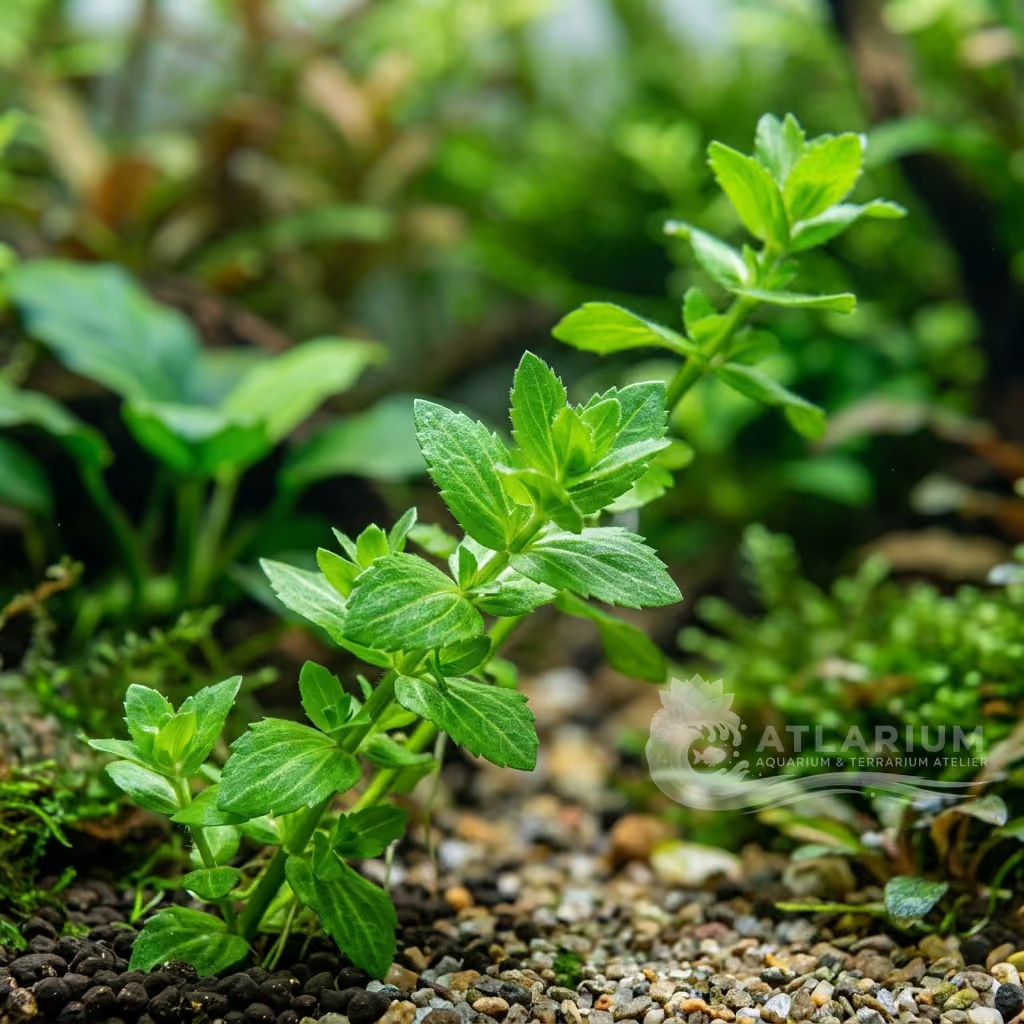
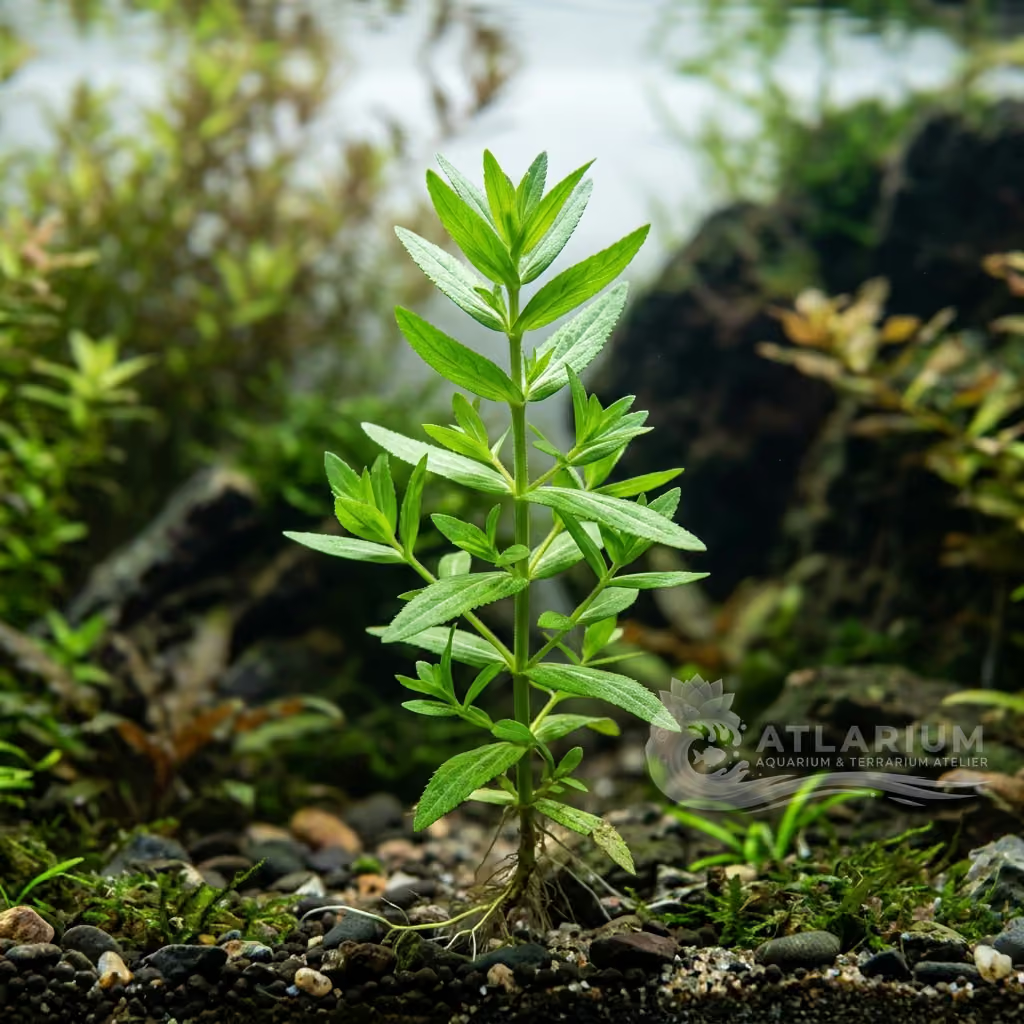
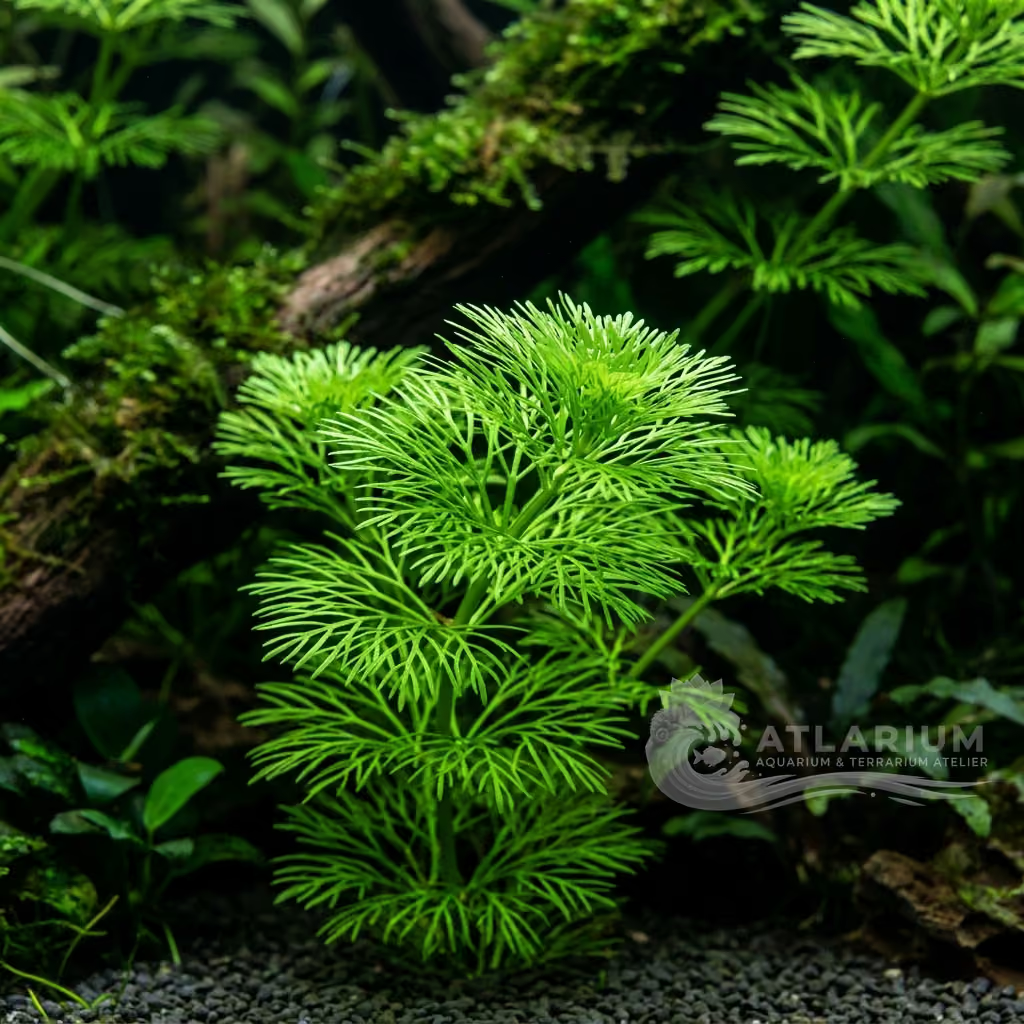
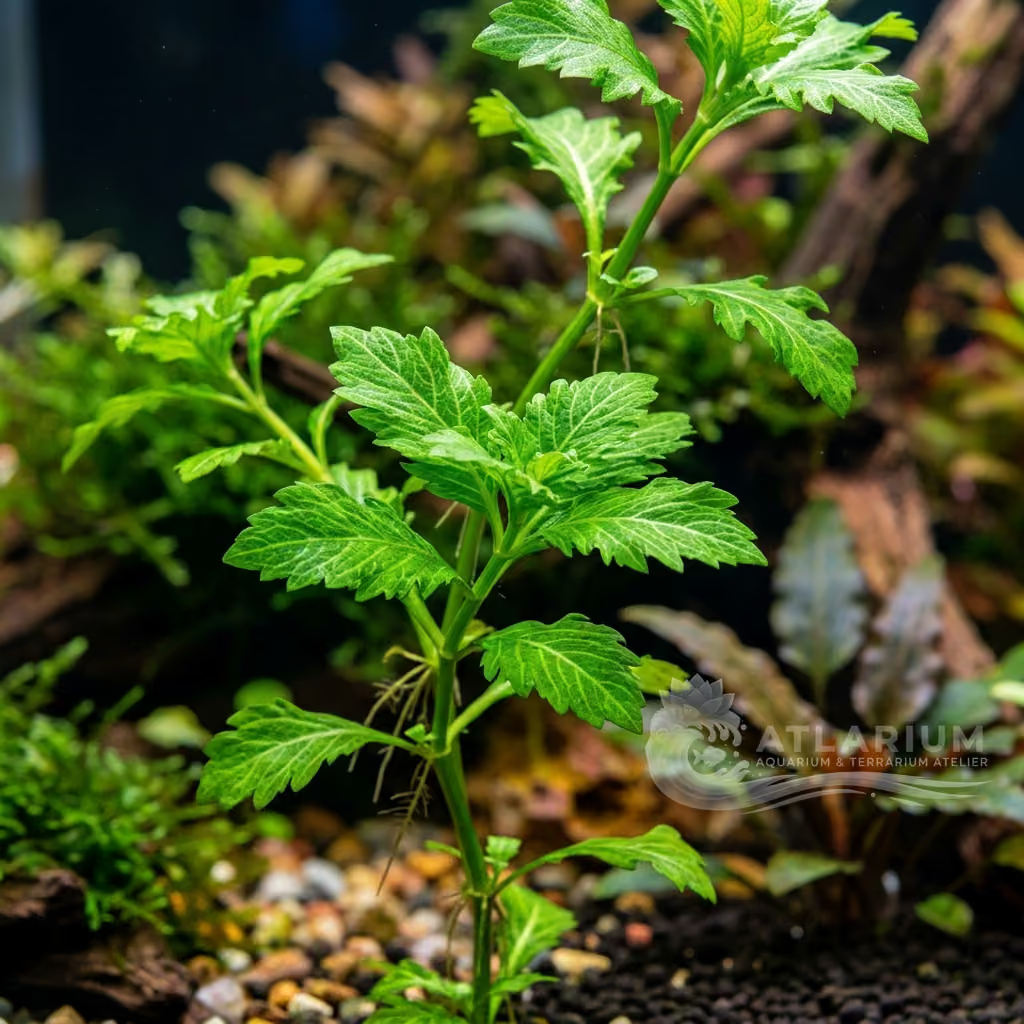
Physical Structure: It features highly flexible, branched creeping or erect stems that tend to curve and form compact bushes. The leaves are small, sessile (lacking a petiole), opposite, and round or ovoid in shape. The root system is fibrous and efficient at anchoring to sandy or gravelly soils. In emersed form, it produces small blue or purple flowers in the leaf axils.
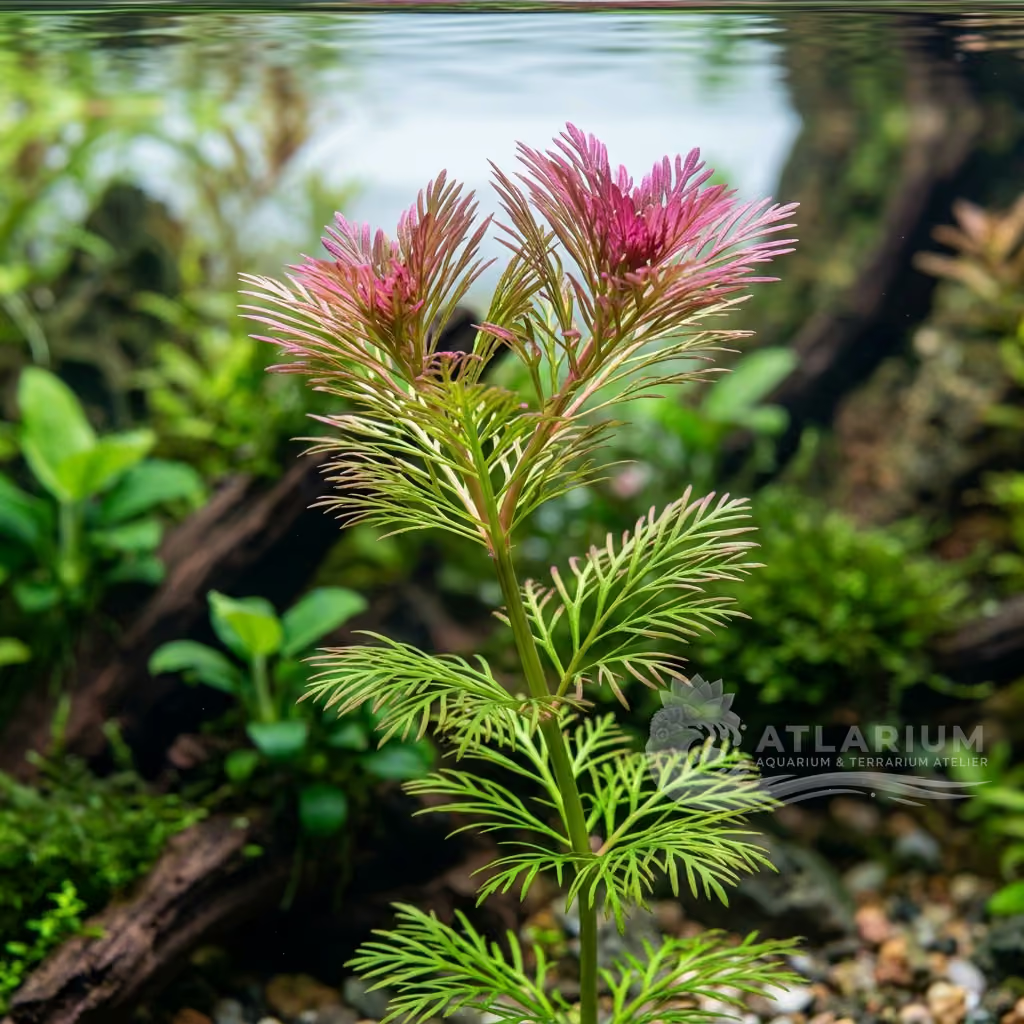
Color & Texture: Submerged leaves have a light lime green or apple green coloration, very bright and fresh. Under intense lighting and in the presence of iron, the tips of the apical shoots assume a suggestive pink, bronze, or coppery hue. The texture is soft, delicate, and fleshy, with veins almost invisible to the naked eye, giving the leaves a smooth, velvety appearance.

Care, breeding and tankmates
Lighting & CO2: Requires moderate to intense lighting. If light is scarce, the stems tend to stretch excessively, losing their lower leaves. CO2 injection is recommended to stimulate rapid, compact growth, promoting the formation of dense creeping carpets in the foreground.
Nutrition & Substrate: While it absorbs nutrients through its leaves, it benefits significantly from a rich, fertilized substrate. Periodic dosing of iron and potassium is important to prevent leaf yellowing and promote pinkish hues on the tips of the apical shoots.
Water Chemistry: It is an exceptionally tolerant plant: it withstands temperatures from 4°C to 35°C (optimal 18-26°C), pH from 5.0 to 8.0, and KH hardness from 0 to 21 dKH. This extraordinary plasticity makes it ideal for temperate, tropical, and even outdoor ponds during the mild season.
Space Management & Placement: Extremely versatile. It can be positioned in the foreground, where with constant
Pruning: Growth is very rapid. It requires frequent pruning to maintain the desired shape. Pruning is carried out by cutting the stems at the desired height; the cut stems will rapidly develop new lateral shoots. The pruned parts can be replanted in the substrate to propagate the plant.
Risks & Diseases: The main risk is mutual shading of the stems if the bush becomes too dense, causing the lower leaves to rot. It is important to thin the group regularly. The tender leaves may be eaten by herbivorous fish or large snails.

Geographic origin and distribution
Bacopa australis is native to the southern regions of South America, particularly southern Brazil and Argentina. It populates clear freshwater streams, slow-flowing calcareous rivers, and marginal wetlands. In these environments, it grows both submerged and emersed along the banks, forming dense grassy mats. Unlike other Bacopa, it prefers streams with cool temperatures but tolerates summer heat peaks, adapting to highly variable climatic conditions.
Origin
Amazon, Orinoco, and GuianasExtra-Amazon South America

Plant profile
- Placement
- Foreground
- This versatile plant is primarily used in the midground, where its dense, bushy growth provides an excellent transition between carpeting plants and taller background species. In smaller aquariums, it can even serve as a lovely background plant. Its tendency to creep along the substrate allows it to soften hardscape edges effectively.
- Botanical form
- Stem
- Bacopa australis features pairs of small, bright green, almost perfectly round leaves arranged oppositely along a somewhat fragile stem. Unlike many other stem plants, it has a strong tendency to grow horizontally or creep along the substrate before turning upwards. This creeping habit makes it unique and highly sought after for creating dense bushes.
- Growth
- Fast
- It exhibits a moderately fast growth rate, especially when provided with strong lighting and CO2 injection. Even in low-tech setups, it will grow steadily, though the internodes may become slightly elongated. Its fast growth means it quickly recovers from aggressive pruning.
- Substrate
- High
- This versatile stem plant strongly benefits from a fine, nutrient-rich substrate to comfortably anchor its delicate stems. It roots quickly at the nodes when planted deeply, drawing significant nutrients from the soil to support its lush, creeping growth. While it can grow in inert sand, an active aqua soil or root tabs will significantly enhance density and leaf coloration.
- Column fertilization
- Recommended
- Liquid fertilization is beneficial to ensure the water column contains sufficient nutrients to support its vigorous growth. A regular dosing schedule of a complete fertilizer will encourage lush, dense foliage. It absorbs nutrients efficiently through its leaves as well as its roots.
- Root fertilization
- None
- A nutrient-rich substrate strongly encourages the robust growth of Bacopa australis. The use of an aquasoil or root tabs will provide a steady source of nutrition, allowing the plant to develop a strong root system and thick stems. It can be grown in inert gravel, but growth will be less compact.
- Trimming
- Occasional
- Frequent pruning is necessary to maintain its bushy shape and prevent it from shading itself. Simply cut the stems at the desired height; the plant will quickly produce new side shoots from the cut nodes. The trimmed tops can easily be replanted to create an even denser grouping.
- Propagation
- Cuttings
- Propagation is straightforward and typical of stem plants: simply cut a healthy stem and replant the cutting into the substrate. The cutting will root within a few days and begin growing. Because of its creeping habit, it may also send out horizontal runners that root themselves, which can be detached and moved.
- Sensitivity
- Moderate
- This plant is incredibly hardy and adaptable, tolerating a wide range of water parameters, from soft to moderately hard water. It is not particularly sensitive, making it an excellent choice for beginners. However, it can become leggy and sparse at the bottom if the upper foliage blocks out too much light.
- Layout role
- Midground, group, Foreground, Background
- Bacopa australis is a superb plant for creating dense, bright green bushes in the midground of an aquascape. Its creeping nature allows it to gracefully spill over rocks or driftwood, creating a very natural, wild look. The contrast of its rounded leaves against more angular or finely leaved plants is visually appealing.

Related species
Recommendations grouped by close relatives, companion choices, and similar care.