Madagascar Bacopa
Bacopa madagascariensis
A highly adaptable marsh plant endemic to Madagascar, featuring fleshy green leaves and straightforward care requirements. Perfect for midground placement.
Water Temperature
18 - 26 °C
pH Value
6 - 7.5
Water type
Freshwater
Light
Medium
CO2
Low
Expected height
30 cm
Expected width
10 cm
GH
4 - 15 dGH
KH
3 - 10 dKH

Species description
Geographical Origin and Habitat: Bacopa madagascariensis is a marsh plant endemic to the island of Madagascar. It is primarily found along wet coastlines, margins of ponds, shallow freshwater lagoons, swamps, and slow-moving streams in lowland areas. As an amphibious species, it naturally alternates between fully submersed growth during rainy seasons and emersed growth on muddy shores during dry periods.
Taxonomy & Genetics: Belonging to the family Plantaginaceae (formerly grouped under Scrophulariaceae), genus Bacopa, it is genetically related to other popular aquarium species such as Bacopa monnieri and Bacopa caroliniana. It shares their hardy nature and typical dicotyledonous structure with erect stem growth.
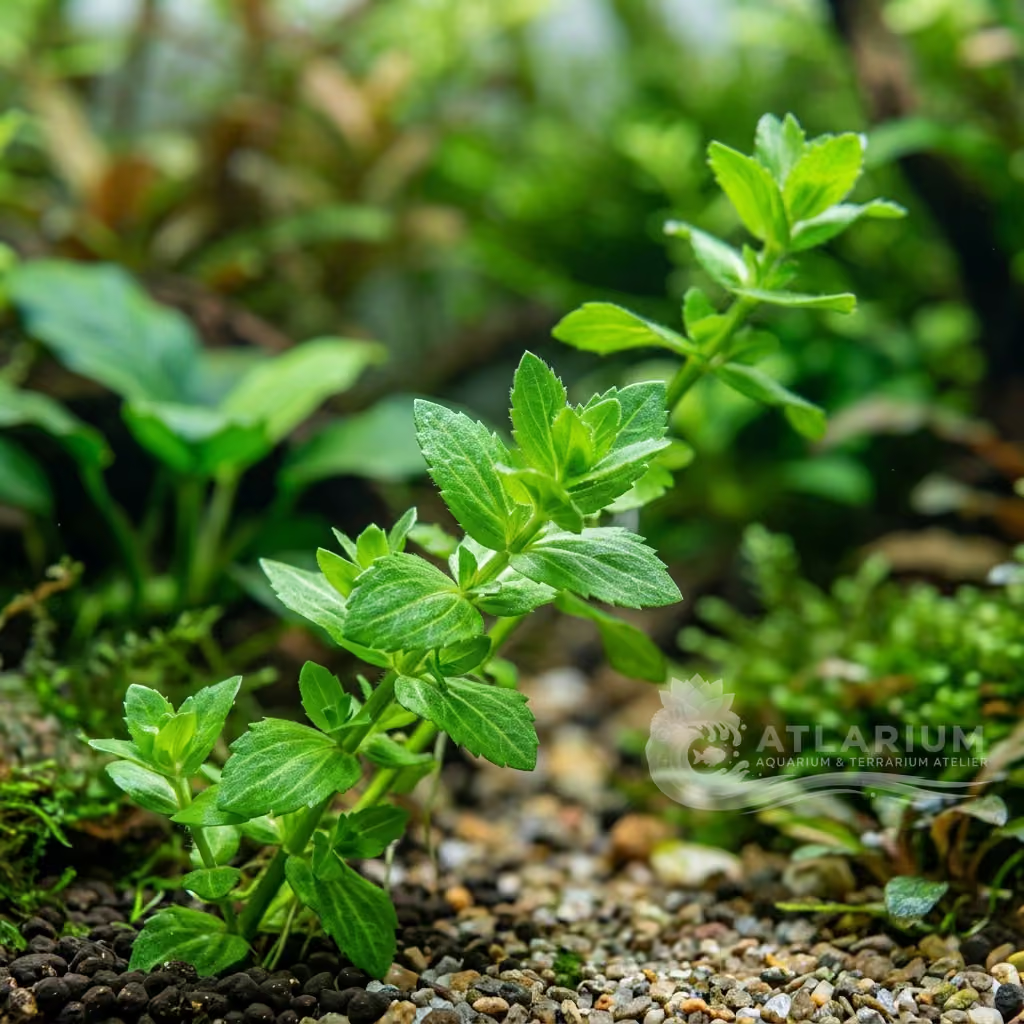
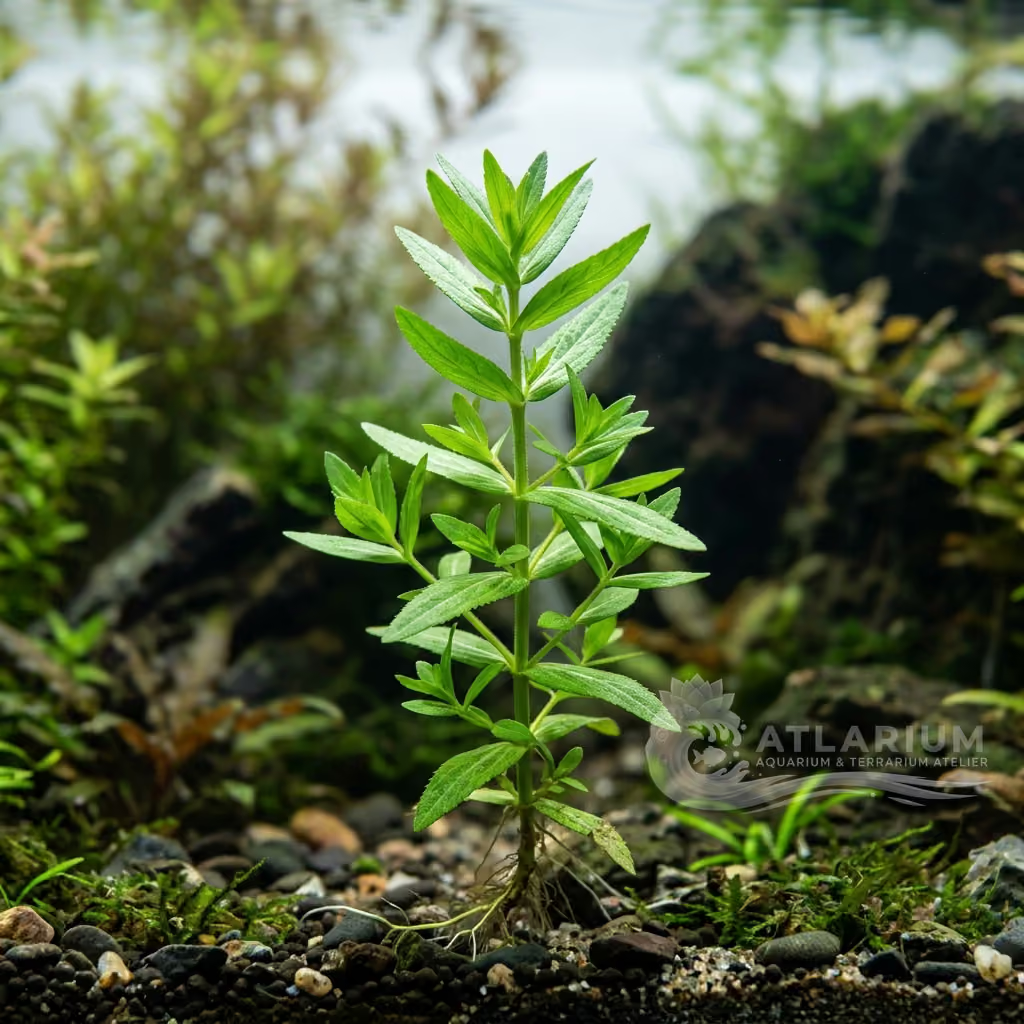
Physical Structure: The plant features thick, fleshy, yet flexible light green stems. Its leaves are opposite, sessile, and oval to obovate in shape, possessing a slightly leathery texture that makes them resistant to herbivorous fish. When submersed, it grows vertically, developing fine adventitious roots from the stem nodes to absorb nutrients and anchor itself.
Color & Texture: The leaf blade displays a uniform, bright green coloration that can take on warmer, slightly golden tones under high lighting. The leaf texture is smooth and thick, with fine veins visible under backlighting. When growing emersed, it is capable of producing small, pale yellow or white flowers in the leaf axils.

Care, breeding and tankmates
Lighting & CO2: It requires moderate to high lighting. While it can survive in medium light, stronger light levels promote more compact growth, shorter internodes, and a bushier appearance. CO2 supplementation is not strictly mandatory for this hardy plant, but it is highly recommended to accelerate growth rates and achieve larger, healthier leaf growth.
Nutrition & Substrate: It benefits from a nutrient-rich substrate, but is also highly capable of absorbing nutrients directly from the water column via its adventitious roots. Regular dosing of a balanced liquid fertilizer containing potassium and iron is recommended. Nutrient deficiencies will manifest as stunted growth and yellowing of the lower leaves.
Water Chemistry: Highly adaptable to water parameters, it prefers soft to moderately hard water (GH 4-15 dGH, KH 3-10 dKH) with a pH range between 6.0 and 7.5. The ideal cultivation temperature is between 20°C and 26°C, though it can tolerate cooler temperatures. Regular water changes are beneficial to maintain low organic waste levels.
Space Management & Placement: It is best suited for the background or midground of the aquarium, depending on the tank's size. Stems should be planted individually in the substrate, spaced about 2-3 centimeters apart, to ensure sufficient light reaches the base of each stem and prevents the lower leaves from shedding.
Pruning: Pruning is straightforward; simply cut the stems to the desired height using sharp scissors. The cut tops can be replanted directly into the substrate to propagate new plants, while the remaining bottom sections will quickly produce new lateral shoots from the nodes below the cut, thickening the cluster.
Risks & Diseases: This is a resilient species, but it can suffer from melting if subjected to sudden temperature drops or extreme parameter changes. Stems may rot at the base if planted too densely or in compacted substrates with poor water circulation. Leaves may attract algae if fertilizer levels are unbalanced.

Geographic origin and distribution
Bacopa madagascariensis is a marsh plant endemic to the island of Madagascar. It is primarily found along wet coastlines, margins of ponds, shallow freshwater lagoons, swamps, and slow-moving streams in lowland areas. As an amphibious species, it naturally alternates between fully submersed growth during rainy seasons and emersed growth on muddy shores during dry periods.
Origin
Africa and Madagascar

Plant profile
- Placement
- Midground
- It is an ideal candidate for the midground or background of the aquarium, planted in dense groups. Its straight, upright growth habits make it perfect for creating strong vertical accents. Ensure it receives unobstructed light for optimal development.
- Botanical form
- Stem
- This Bacopa has thick, fleshy stems and ovate to lanceolate green leaves growing in opposite pairs. The foliage is slightly more delicate and closely spaced than B. caroliniana. It retains a very orderly, geometric appearance as it grows straight up.
- Growth
- Medium
- It exhibits a moderate growth rate when provided with good lighting and CO2. This manageable pace prevents it from taking over the tank too quickly. Under lower light, growth slows down considerably and the stems may become leggy.
- Substrate
- Medium
- Madagascar Water Hyssop (Bacopa madagascariensis) prefers a moderately enriched substrate, optimally a fine-grained aqua soil or fertilized sand, to support its delicate structure. Its root network spreads gently through the upper layers of the substrate, drawing up necessary minerals while keeping the relatively fragile stems anchored. A planting depth of about 3 to 5 centimeters is generally adequate to prevent the cuttings from uprooting while they establish themselves. While it can absorb nutrients from the water column, a nutrient-bearing substrate significantly improves its growth rate and leaf density.
- Column fertilization
- Optional
- Liquid fertilization is beneficial for providing essential trace elements directly to the leaves. Weekly dosing ensures the plant maintains its bright green coloration without deficiency signs. Consistent potassium levels help prevent pinholes in older leaves.
- Root fertilization
- Optional
- A nutrient-rich substrate strongly supports its growth by providing a stable base for its root system. Root tabs inserted near the stems will boost the plant's overall health and vigor. It develops a healthy root network that anchors the thick stems securely.
- Trimming
- Occasional
- To trim, simply cut the stem with sharp scissors and replant the tops if desired. Leaving the rooted bottom section allows it to branch out from the nodes. Over time, trimming promotes a much bushier, denser group of plants.
- Propagation
- Cuttings
- Propagation is straightforward using stem cuttings. Snip the top section of a stem and push it gently into the substrate. The cutting will quickly root and continue its upward growth.
- Sensitivity
- Sensitive
- It is quite sensitive to poor lighting, which often results in the loss of lower leaves. Sudden changes in water chemistry can cause melting or stunted growth. Provide a stable environment with consistent maintenance to keep it healthy.
- Layout role
- Midground
- Its bright green, geometric structure provides excellent contrast against both red plants and fine-leaved species. It is highly valued for creating organized, vertical lines in Dutch-style aquascapes. It works beautifully as a transition plant in larger layouts.

Related species
Recommendations grouped by close relatives, companion choices, and similar care.