Bacopa caroliniana
Bacopa caroliniana
Endemic to the southeastern United States, this robust amphibious stem plant boasts thick vertical growth and releases a distinct citrus scent when crushed.
Water Temperature
4 - 29 °C
pH Value
5 - 7.5
Water type
Freshwater
Light
Da media ad alta
CO2
Medium
Expected height
60 cm
Expected width
6 cm
GH
4 - 20 dGH
KH
2 - 18 dKH

Species description
Geographical Origin and Habitat: Endemic primarily to the southeastern United States, with dense populations thriving in the humid marshlands, shallow ponds, and slow-moving rivers of Florida and the Carolinas. Bacopa caroliniana is a highly adaptable, amphibious marsh plant. In the wild, it grows extensively along the muddy banks of waterways, frequently transitioning between fully terrestrial (emersed) growth during dry seasons and fully aquatic (submersed) growth during seasonal flooding. It is incredibly hardy, evolved to withstand the brutal, stagnant heat of southern swamps and periods of complete submersion.
Taxonomy & Genetics: First classified by the American botanist Thomas Walter in 1788, Bacopa caroliniana belongs to the Plantaginaceae family. In the commercial aquarium trade, it is frequently sold under its outdated synonym "Bacopa amplexicaulis" or the common name "Lemon Bacopa." It is genetically famous among botanists and hobbyists for the highly unique essential oils stored in its cellular structure, which completely distinguish it from its cousin, Bacopa monnieri.
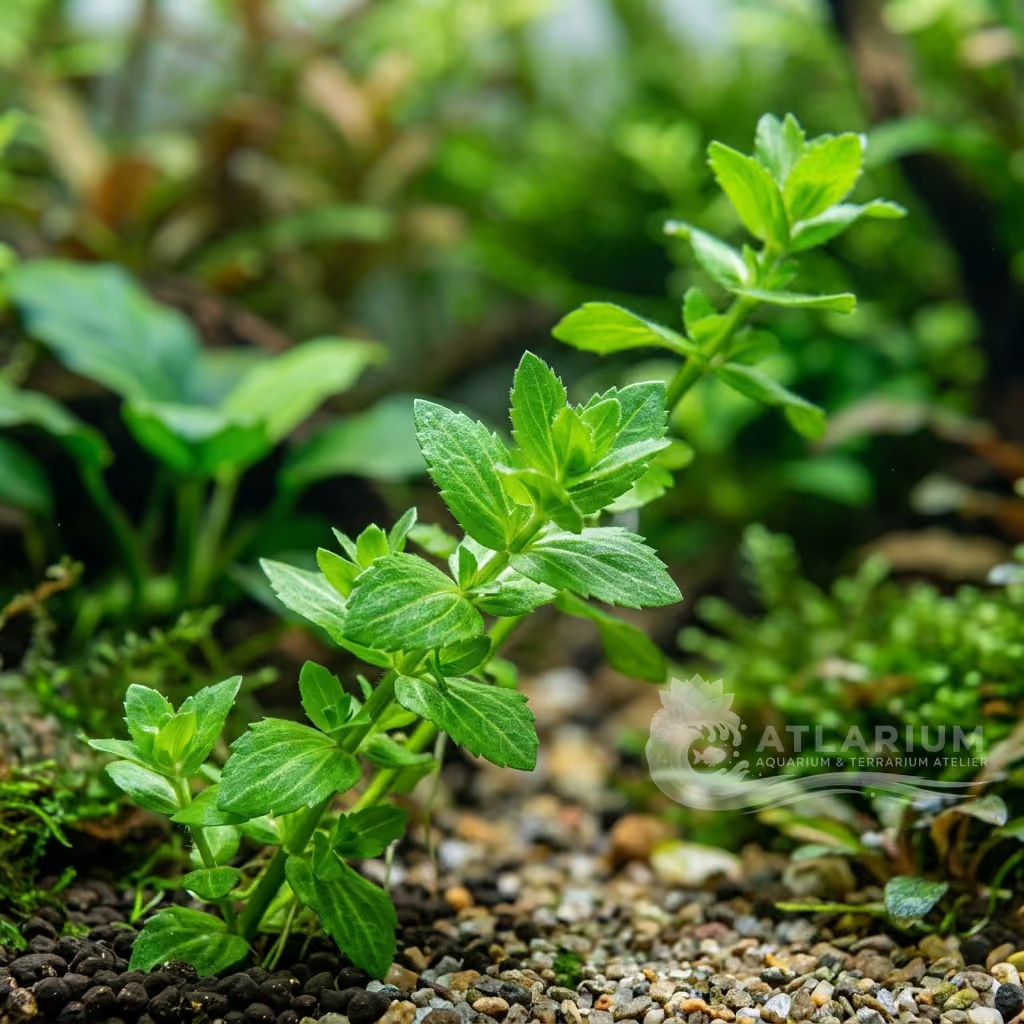
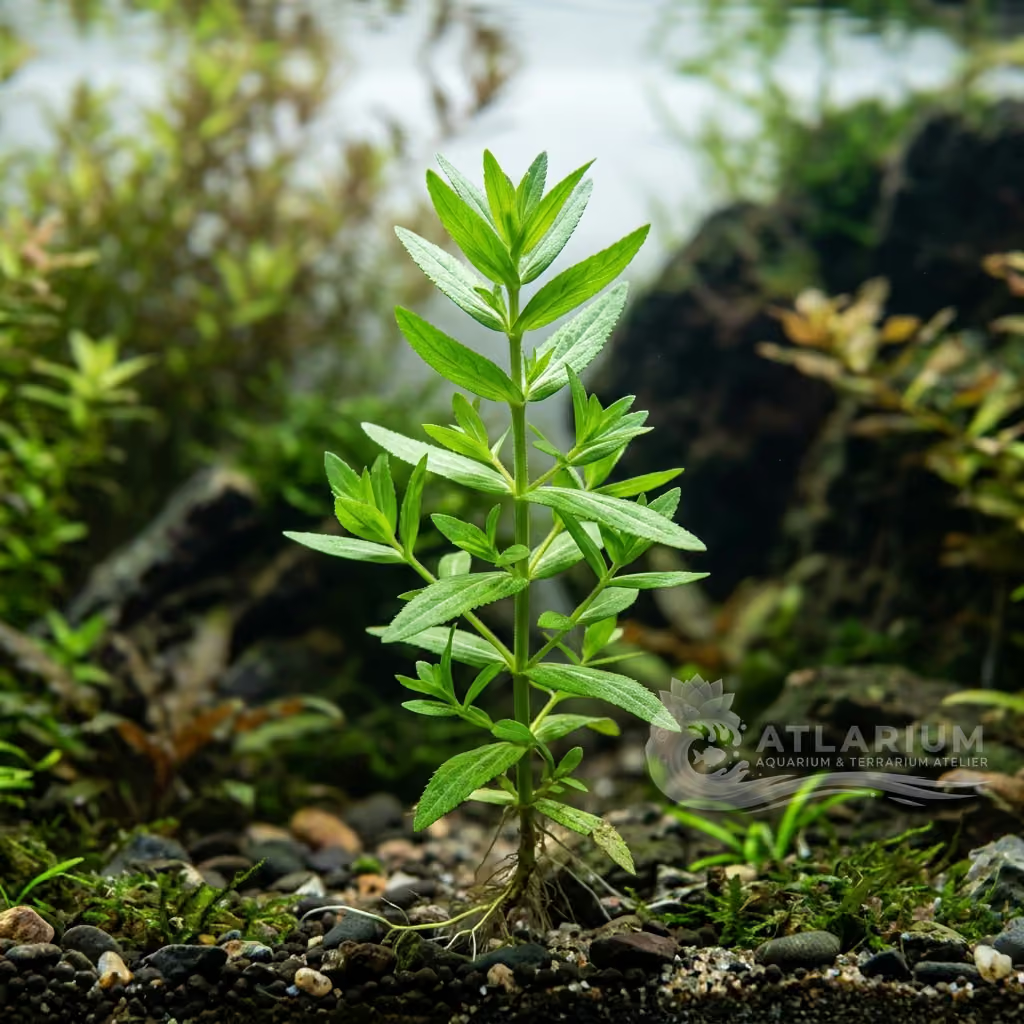
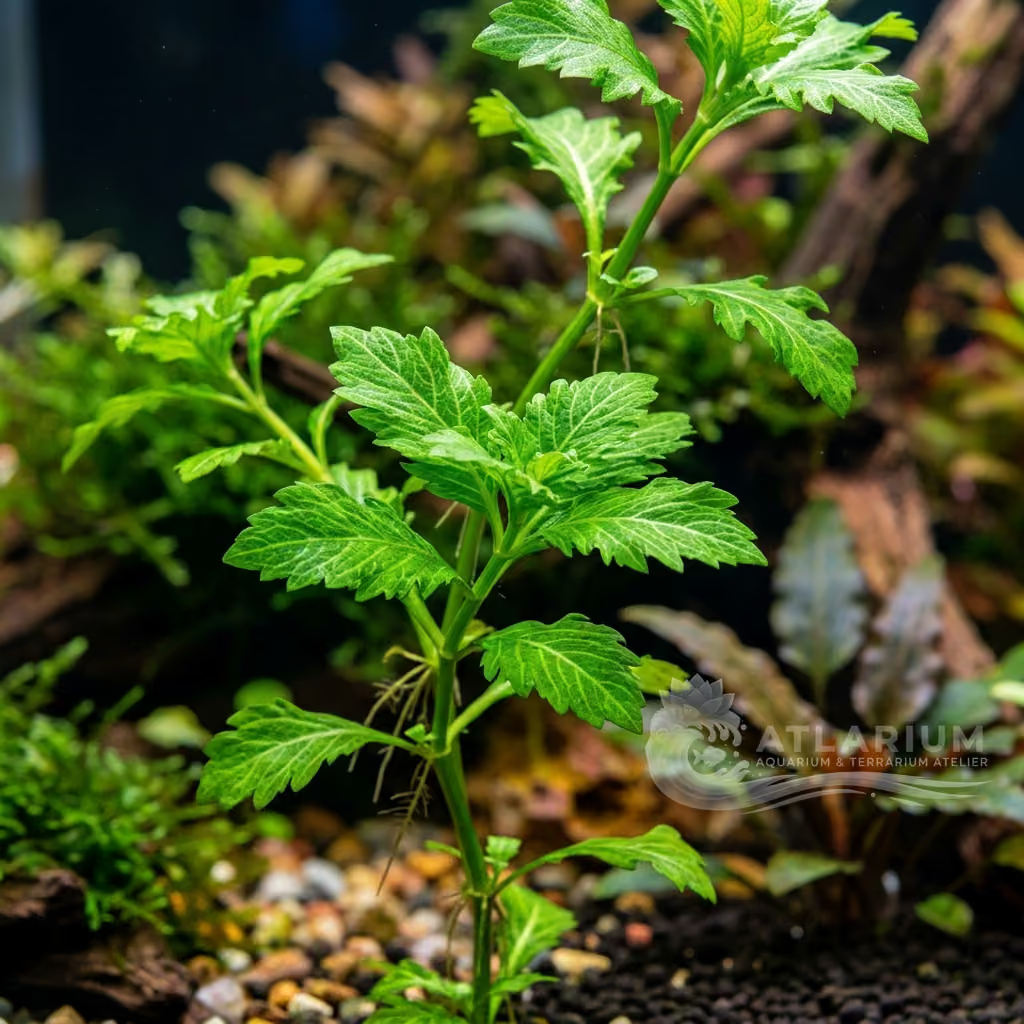
Physical Structure: The architecture is characterized by incredibly thick, succulent, and perfectly vertical stems. It grows as a classic stem plant, shooting straight up toward the light source. The leaves are ovate (egg-shaped), fleshy, and emerge in perfectly opposite pairs along the thick stem, creating an orderly, highly geometric, ladder-like appearance. The stems are remarkably rigid for an aquatic plant, allowing it to easily break the water surface and grow emersed without collapsing under its own weight.
Color & Texture: Under moderate lighting, the thick leaves are a vibrant, solid lime-green. However, when exposed to intense lighting and low nitrates, the upper crown of the plant undergoes a stunning transformation, blushing a beautiful, glowing copper or brownish-red. The most defining characteristic, however, is invisible: the texture is highly fleshy, and if a leaf is crushed or a stem is snapped, the plant releases a powerful, unmistakable scent of crushed lemons or minty citrus due to its essential oils.

Care, breeding and tankmates
Lighting & CO2: It is an incredibly forgiving plant that easily survives in low-light, low-tech aquariums. However, under low light, the lower stem will drop its leaves, and the plant will remain strictly green. To unlock its stunning copper-red crown and maintain dense foliage all the way to the substrate, high-intensity LED lighting is required. While CO2 injection is absolutely not necessary for its survival, injecting pressurized CO2 will significantly thicken the stems and vastly accelerate its moderate growth rate.
Nutrition & Substrate: Unlike demanding heavy root feeders, Bacopa caroliniana is highly versatile. It absorbs nutrients efficiently through both its roots and its leaves. While it will thrive spectacularly in a premium, nutrient-dense aquasoil, it can easily survive planted in plain, inert gravel or sand, provided the water column is regularly dosed with a comprehensive liquid fertilizer. It does not possess a massive, aggressive root system, relying more on the water column for heavy macronutrient uptake.
Water Chemistry: It is a nearly indestructible, bulletproof stem plant perfect for absolute beginners. It thrives in standard tropical temperatures (20-28°C) but is highly tolerant of much colder water, easily surviving in unheated aquariums. It completely ignores chaotic pH fluctuations and extreme water hardness, thriving in both soft, acidic blackwater and hard, alkaline tap water. Its extreme tolerance makes it an excellent choice for newly cycling, unstable aquariums.
Space Management & Placement: Because of its thick, perfectly vertical stems and moderate growth rate, it is an ideal background plant. It should be planted in dense groupings (5-10 stems per bunch) in the rear corners of the aquascape. Due to its rigid, ladder-like structure, it provides an excellent vertical contrast against wild, chaotic bushy plants or sprawling hardscape. As it easily breaches the water surface, it is a fantastic choice for open-top tanks or paludariums.
Pruning: Pruning is a straightforward, highly rewarding process. Use sharp scissors to cut the main stem exactly halfway down, just above a set of leaves. The bottom half left in the substrate will rapidly sprout two new side shoots, creating a denser, bushier stand. You must then take the top cutting and replant it directly into the substrate alongside the mother plant to propagate it. If the bottom stems become bare and ugly, simply uproot and discard the bottoms, and replant the fresh tops.
Risks & Diseases: It is virtually immune to disease and melting. The primary risk is "leggy" growth and lower-leaf shedding. If planted too densely or kept in low light, the thick top leaves will shade the bottom of the stem, causing the plant to drop its lower leaves and look like a bare stick. To prevent this, plant individual stems about 2 cm apart to allow light to penetrate completely down to the substrate. It is highly resistant to algae due to its essential oils.

Geographic origin and distribution
Endemic primarily to the southeastern United States, with dense populations thriving in the humid marshlands, shallow ponds, and slow-moving rivers of Florida and the Carolinas. Bacopa caroliniana is a highly adaptable, amphibious marsh plant. In the wild, it grows extensively along the muddy banks of waterways, frequently transitioning between fully terrestrial (emersed) growth during dry seasons and fully aquatic (submersed) growth during seasonal flooding. It is incredibly hardy, evolved to withstand the brutal, stagnant heat of southern swamps and periods of complete submersion.
Origin
North America

Plant profile
- Placement
- Background
- It is typically placed in the midground or background of the aquarium. Planting in groups creates dense, terraced bushes. It provides a striking contrast to finely leaved plants.
- Botanical form
- Stem
- It is an aquatic stem plant with opposite, fleshy, ovate leaves. The thick stems typically grow straight upward. When crushed, emersed leaves emit a distinct lemony scent.
- Growth
- Medium
- This plant has a moderate to slow growth rate compared to other stem plants. Its steady growth makes it easy to maintain without constant trimming. It rarely becomes invasive or unmanageable.
- Substrate
- Low
- Bacopa caroliniana is highly adaptable and thrives in simple, inert substrates like sand or fine gravel, as its substrate demands are relatively low. Its root system anchors firmly into the substrate layer, effectively stabilizing the stem while extracting basic macronutrients from the surrounding water column and substrate floor. A standard substrate depth of 3 to 5 centimeters is sufficient to secure the cuttings and promote healthy, upright vertical growth. While aqua soils can slightly accelerate its development, they are not strictly necessary for this resilient species.
- Column fertilization
- Recommended
- It primarily absorbs nutrients through its leaves, making liquid column fertilization effective. Regular dosing of potassium, iron, and trace elements is recommended. Consistent nutrient availability prevents stunting and promotes robust leaves.
- Root fertilization
- None
- It develops a healthy root system despite drawing nutrients from the water column. A nutrient-rich substrate or root tabs can enhance its overall vitality. Strong roots anchor the thick stems securely.
- Trimming
- Occasional
- Trimming is straightforward by cutting the stem at the desired height. New side shoots develop from leaf nodes just below the cut. Leaving bottom portions intact forms a dense thicket over time.
- Propagation
- Cuttings
- Propagation is very easy and is done by taking stem cuttings. Top cuttings and side shoots can be replanted directly into the substrate. They quickly develop new roots and grow independently.
- Sensitivity
- Moderate
- It is remarkably hardy and tolerant of various water parameters. It is not particularly sensitive to common aquarium medications. However, very low light can cause lower leaves to deteriorate.
- Layout role
- Midground, Background
- It serves as an excellent structural component in the layout. Its unique leaf texture provides great contrast against red or finely leaved plants. It is highly valued in classic Dutch aquascaping.

Image gallery
Licensed images linked to the species or, when marked, to the closest representative taxon.

Related species
Recommendations grouped by close relatives, companion choices, and similar care.