Crinum natans
Crinum natans
An imposing aquatic bulb plant from West African rivers featuring massive, broad, rippled green leaves. It is remarkably resilient, tolerating deep shade while slowly deploying its thick, anchoring roots.
Water Temperature
22 - 28 °C
pH Value
6 - 8
Water type
Freshwater
Light
Medium
CO2
Low
Expected height
60 cm
Expected width
20 cm
GH
4 - 20 dGH
KH
2 - 20 dKH

Species description
Geographical Origin and Habitat: Endemic exclusively to the fast-flowing, massive tropical river systems and deeply shaded rainforest streams of West Africa (particularly widespread in Guinea, Liberia, and Cameroon). Crinum natans is an incredibly robust, broad-leaved aquatic bulb plant. It evolved to violently anchor its massive, fleshy root system deep into heavy river mud and thick gravel, directly in the path of pounding, torrential water flow. It is an extreme amphibious survivor, adapted to pristine, highly oxygenated water that frequently floods and recedes in brutal seasonal cycles.
Taxonomy & Genetics: Scientifically classified within the Amaryllidaceae family (alongside terrestrial lilies and daffodils), C. natans is the absolute titan of the Crinum genus. Taxonomically, it is entirely distinct from the narrow, tentacle-like C. calamistratum. Its genetics dictate the production of massive, incredibly broad, ribbon-like leaves that erupt directly from an exceptionally large, true aquatic bulb. Because of its dominant size and unkillable nature, it is highly prized as a centerpiece for massive, public-scale aquariums or monster fish setups.
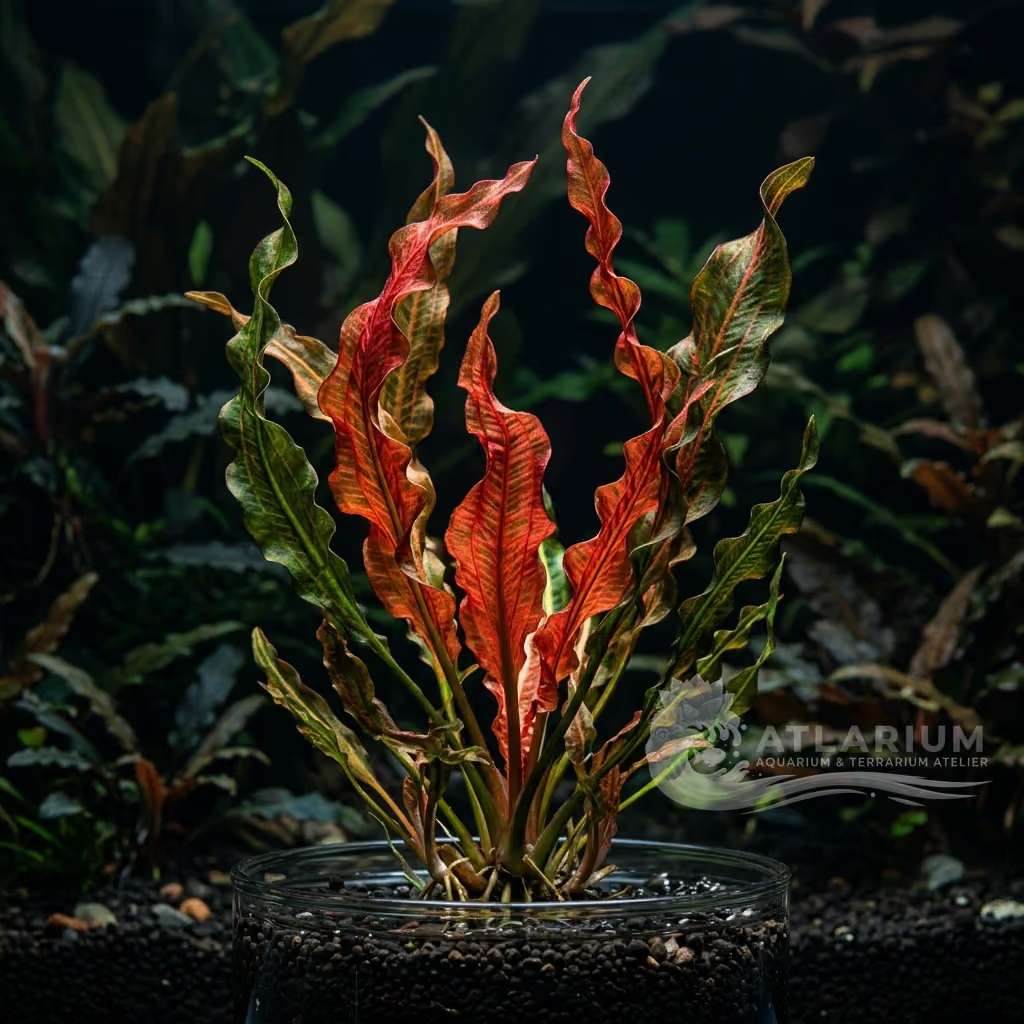
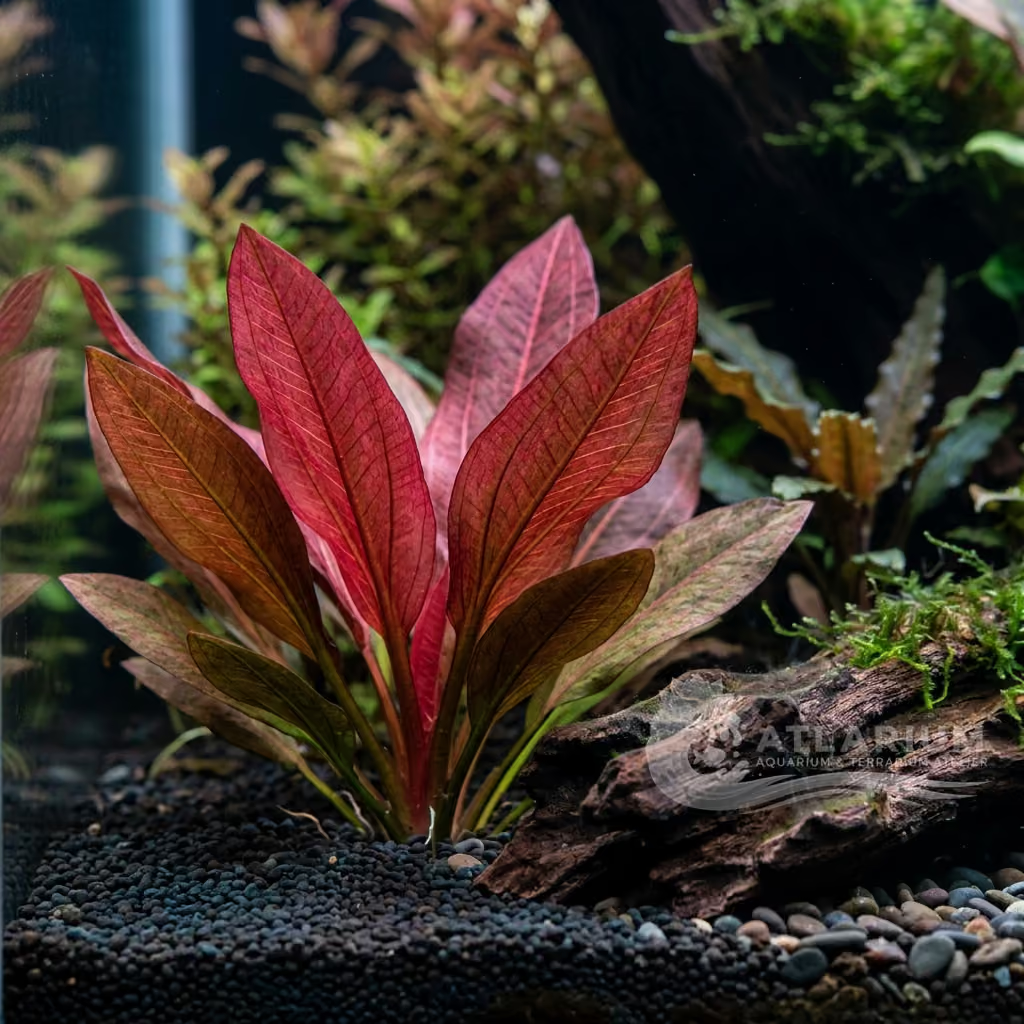
Physical Structure: The structural architecture of this legendary plant is dominant, heavy, and breathtakingly massive. The foundation is a huge, hard, woody bulb that deploys thick, iron-grip roots deep into the substrate. It produces no stems. Instead, the leaves erupt directly from the bulb's crown. The leaves are incredibly long (capable of reaching 150 cm / 60 inches), exceptionally broad (up to 5 cm wide), and famously feature beautifully rippled, heavily undulated, ruffled margins. It resembles a massive cluster of thick green ribbons gracefully flowing in the river current.
Color & Texture: The coloration is a brilliant, profoundly rich, solid dark emerald to deep forest-green. It completely lacks the biological mechanism to produce red or purple pigments. The texture is notoriously rigid, intensely leathery, and incredibly tough, feeling almost like thick, rippled rubber. Because the leaves are so massive, rigid, and thick, they are virtually completely immune to damage from aggressive, destructive, herbivorous fish (such as massive Cichlids, Silver Dollars, or Plecos).

Care, breeding and tankmates
Lighting & CO2: It is an extremely forgiving, incredibly resilient bulb plant. It will comfortably survive and slowly produce its massive rippled leaves in deeply shaded, low-tech aquariums. However, to force the massive bulb to rapidly deploy its 150-cm-long broad leaves, medium to high-intensity LED lighting is recommended. While injected CO2 is not strictly required, pressurized CO2 drastically accelerates the plant's slow metabolism, powering the immense energy required to grow such massive, fleshy foliage and preventing algal colonization.
Nutrition & Substrate: As a colossal true bulb plant, C. natans is an extremely aggressive root feeder. It MUST be planted in a very deep (minimum 10 cm / 4 inches), nutrient-dense substrate enriched with heavy root tabs. CRITICAL: When planting, only the bottom half of the bulb and its roots should be buried. The upper half of the bulb (the crown) MUST remain completely exposed above the substrate; if the entire fleshy bulb is suffocated in gravel or soil, it will instantly rot and kill the massive plant.
Water Chemistry: Originating from the torrential rivers of West Africa, it demands excellent water quality and highly oxygenated conditions. It thrives in heated tropical aquariums (22-28°C) and is highly adaptable, tolerating both soft, acidic blackwater and hard, alkaline tap water. However, the absolute most critical environmental requirement is massive, relentless water flow. The plant must be placed directly in the path of a powerful filter output or wavemaker, allowing its heavy, rippled, broad leaves to stream violently across the tank surface.
Space Management & Placement: Due to its colossal 150-cm leaf length, massive broad leaves, and dominant nature, C. natans is strictly an architectural centerpiece for very large aquariums (minimum 300 liters). It should be planted as a standalone specimen plant in the background or midground. Its long, rippled ribbons will gracefully drape across the water's surface, completely blocking light to the areas below. It must never be crowded, as its massive root system will violently choke out and destroy any smaller competitors.
Pruning: Pruning is a delicate, rare procedure due to its slow growth rate. Because the broad leaves emerge directly from the bulb, you cannot cut a leaf in half; a severed leaf will never regrow its tip, and the thick cut edge will quickly rot. To prune, you must reach down to the base of the bulb and carefully peel or cleanly slice away the entire outermost, oldest leaf directly at the crown. Never prune more than 2 massive leaves at a time to prevent sending the bulb into shock.
Risks & Diseases: The absolute greatest threat to this indestructible titan is improper planting. If the massive bulb crown is completely buried in the substrate, the entire plant will rot into a foul, toxic mush within weeks. The second major risk is Black Beard Algae (BBA). Because the broad, rippled leaves live for years and grow slowly, they act as massive landing pads for devastating algae if water flow is inadequate or organic waste builds up in the aquarium.

Geographic origin and distribution
Endemic exclusively to the fast-flowing, massive tropical river systems and deeply shaded rainforest streams of West Africa (particularly widespread in Guinea, Liberia, and Cameroon). Crinum natans is an incredibly robust, broad-leaved aquatic bulb plant. It evolved to violently anchor its massive, fleshy root system deep into heavy river mud and thick gravel, directly in the path of pounding, torrential water flow. It is an extreme amphibious survivor, adapted to pristine, highly oxygenated water that frequently floods and recedes in brutal seasonal cycles.
Origin
Africa and Madagascar

Plant profile
- Placement
- Background
- Due to its massive potential size, Crinum natans is best suited as a solitary centerpiece in large aquariums. Its long, broad, rippling leaves will eventually reach the surface and trail elegantly in the water current. It should be positioned in the background or side of the tank where its leaves have ample room to flow. Ensure it is not overshadowed by faster-growing plants, though it can tolerate moderate shade.
- Botanical form
- Rosette
- This species is distinguished by its large, fleshy bulb and very broad, strap-like leaves with highly attractive rippled or wavy margins. The foliage is a robust dark green and possesses a tough, leathery texture that deters plant-eating fish. The leaves can grow over a meter long in ideal conditions, creating a stunning visual impact. Emersed flowers, when they occur, are spectacular, fragrant, and lily-like.
- Growth
- Slow
- The growth rate is generally slow but steady, a characteristic typical of most aquatic bulb species. It takes considerable time to adjust to a new tank, often shedding some outer leaves before putting out new growth. Once firmly established in a rich substrate, it will continuously produce large, majestic leaves. Its slow growth means it requires virtually no pruning or maintenance.
- Substrate
- High
- A very deep and highly fertile substrate is mandatory to accommodate the extensive root system of this large bulb plant. The bulb must be planted with its upper portion exposed to the water column to prevent decay and fungal infections. Aquasoil mixed with laterite or coarse sand infused with root tabs provides an excellent foundation. Shallow or completely inert substrates will severely stunt its growth and health.
- Column fertilization
- Recommended
- Water column fertilization plays a secondary role to root feeding for Crinum natans. Occasional additions of a complete liquid fertilizer will help ensure that the leaves remain dark green and free of pinholes. It is important not to overdose the water column, as the slow-growing leaves are susceptible to algae colonization. A balanced, low-dose liquid regimen is best for this species.
- Root fertilization
- None
- This plant is a voracious root feeder and depends almost entirely on the substrate for its primary nutrition. Burying high-quality, iron-rich root tabs around the base of the bulb is crucial for long-term success. These root tabs should be replaced every 3 to 4 months to maintain a constant supply of heavy nutrients. A well-fed root system translates directly into broader, more beautifully rippled foliage.
- Trimming
- Occasional
- Trimming should be done with care, as cutting the leaves halfway often results in the remaining portion decaying. Instead of cutting leaves in half, remove older or damaged leaves by cutting them as close to the bulb as possible. This encourages the plant to direct its energy into producing fresh, healthy foliage.
- Propagation
- Seeds, Division
- Propagation happens naturally through the slow division of the main bulb or the production of smaller daughter bulbs at the base. These offsets should remain undisturbed until they form their own robust root systems and a healthy number of leaves. When they are about a third the size of the mother bulb, they can be gently detached and replanted. It is a slow process that rewards the patient aquarist.
- Sensitivity
- Moderate
- The bulb of Crinum natans is highly sensitive to being fully buried; at least one-third to half of the bulb must remain above the substrate to prevent rotting. It is also somewhat sensitive to sudden changes in water parameters, which can trigger temporary melting. Handle the root system gently during transplantation to avoid transplant shock.
- Layout role
- Midground, Background
- It serves as a dramatic structural focal point or a flowing background element in large aquascapes. The rippled leaves provide excellent shelter for fish and add a sense of dynamic movement to the tank. It pairs beautifully with hardscape materials, softening the appearance of large rocks and driftwood.

Image gallery
Licensed images linked to the species or, when marked, to the closest representative taxon.

Related species
Recommendations grouped by close relatives, companion choices, and similar care.