Echinodorus maculatus
Echinodorus maculatus
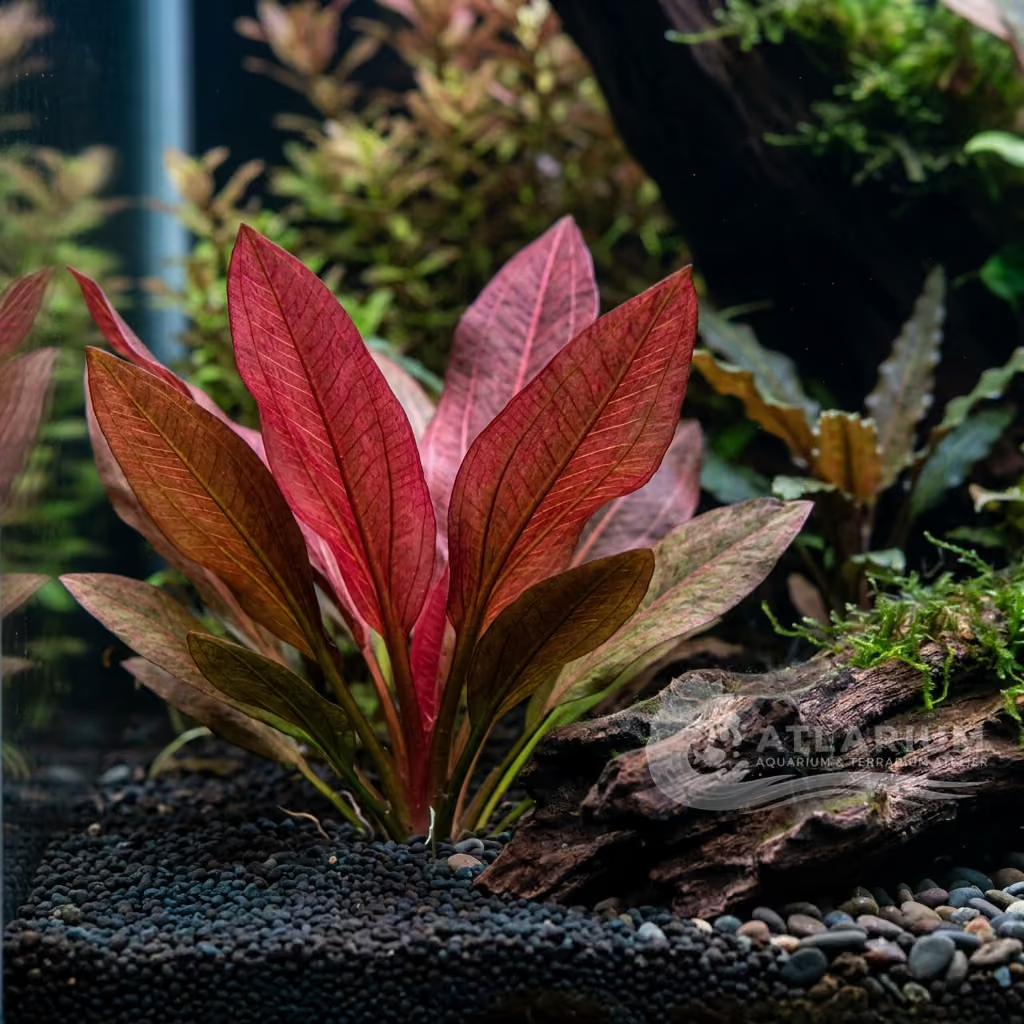
Echinodorus × maculatus is a massive, incredibly vigorous naturally occurring hybrid distinguished by very broad leaves heavily sprinkled with beautiful dark red spotting.
Water Temperature
20 - 28 °C
pH Value
6 - 8
Water type
Freshwater
Light
Medium
CO2
Low
Expected height
50 cm
Expected width
25 cm
GH
4 - 20 dGH
KH
0 - 21 dKH

Species description
Geographical Origin and Habitat: Endemic to the incredibly vast Amazon River basin across South America. Echinodorus × maculatus is a colossal, naturally occurring hybrid aquatic swamp plant. It completely dominates temporary Amazonian ponds, heavily flooded marshlands, and slow-moving river margins. It is a wildly fast-growing, virtually indestructible wild survivor perfectly evolved to exploit both the deeply submerged wet season and the terrestrial dry season. It is famously recognized in the global hobby as the foundation for the "Ozelot" line of hybrids.
Taxonomy & Genetics: Scientifically classified within the Alismataceae family, E. × maculatus is a massive, naturally occurring wild hybrid, likely originating from a cross between E. schlueteri and E. osiris or similar large variants. Taxonomically, its specific name ("maculatus") translates to "spotted," directly describing its defining visual trait. Genetically, it is completely hard-wired for extreme structural gigantism and rapid vegetative propagation. It possesses the unique biological mechanism to produce scattered dark-red anthocyanin spots across a green canvas.
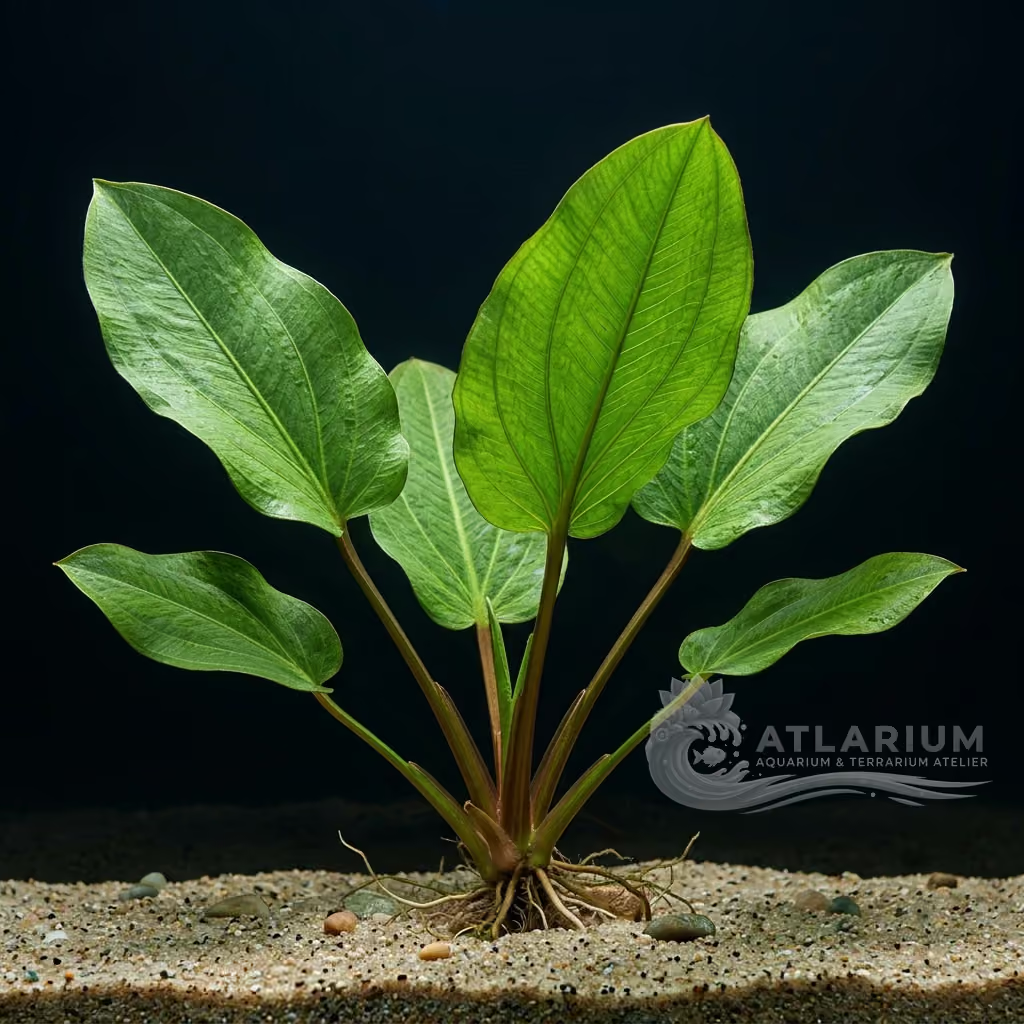
Physical Structure: The architectural structure of the wild E. × maculatus is overwhelmingly dominant, violently fast-growing, and towering. It is a gigantic rosette plant completely lacking vertical stems. The foundation is a massive, incredibly thick, tuberous subterranean rhizome that deploys an aggressive, deep-reaching root system capable of shattering pots. The leaves emerge directly from the crown on exceptionally thick, long petioles. The foliage is the defining structural feature: strictly broadly ovate to elliptic, and monstrously large (reaching 40-50 cm).
Color & Texture: The coloration is distinctly natural, solid, and incredibly robust. Grown submerged under standard lighting, the massive, broad leaves are a solid, glowing bright apple-green. The defining feature is the presence of subtle to prominent dark-red, burgundy, or brownish spots (maculations) scattered chaotically across the green canvas. Unlike heavily bred cultivars like the Python or Green Flame, these wild spots are softer and less dense. The texture is intensely rigid, extremely leathery, and deeply "bullate" (hammered/dimpled).

Care, breeding and tankmates
Lighting & CO2: It is an incredibly resilient but highly demanding titan. To sustain its terrifyingly rapid, towering growth rate and force the dark spots to appear, medium to high-intensity LED lighting is mandatory. If severely shaded, the massive green leaves will turn pale yellow, rot, and the plant will completely lose its spots. Because it is biologically programmed to rapidly breach the surface, pressurized CO2 drastically accelerates its vertical race. Once it breaches the surface, the massive emerged leaves will completely shadow the entire aquarium.
Nutrition & Substrate: As a colossal, wild-type Amazon Sword hybrid, E. × maculatus is a terrifyingly aggressive, obligate root feeder. Its massive root system strictly demands a very deep (minimum 10 cm / 4 inches), heavily nutrient-dense substrate. It absolutely demands premium aquasoil heavily enriched with iron and macro-nutrient root tabs directly beneath the massive tuber to fuel the production of its massive leaves and dark spots. It will rapidly strip a standard gravel bed of all nutrients. If starved of root nutrients, it will quickly turn white and dissolve.
Water Chemistry: Originating from the vast Amazon basin, it is practically invincible regarding standard water parameters. It thrives effortlessly in heated tropical aquariums (22-28°C) but is also exceptionally adaptable, tolerating both soft, highly acidic blackwater and rock-hard, highly alkaline tap water (pH 6.0 - 8.5). The single most critical environmental requirement is intense, continuous root nutrient supplementation. It drastically prefers moderate water flow to keep its massive, dimpled leaves perfectly clean.
Space Management & Placement: Due to its absolute monstrous size (capable of reaching 50+ cm in height and extreme width) and wildly dominant nature, this plant is strictly reserved as an extreme background centerpiece for very large, tall aquariums (minimum 300 liters). It MUST be planted singularly. If you allow it to mature, it will violently breach the surface, producing massive, rigid, broad emerged leaves that will aggressively block out all light to the tank below while sending out massive, towering flower stalks and incredibly thick propagation runners.
Pruning: Pruning is a constant, brutal, and necessary procedure if you wish to keep the plant fully submerged. Because the plant naturally wants to breach the surface, you must constantly, aggressively prune off the taller, mature leaves before they reach the air. To prune, you must reach down to the absolute base of the massive rosette and cleanly slice the incredibly thick petiole directly at the crown. It throws out massive, thick runners covered in baby plants that must be aggressively severed to control its massive spread.
Risks & Diseases: The absolute greatest threat to this titan is nutrient starvation and self-shading. Because its growth rate is so violently fast, it will rapidly strip the substrate of all available nutrients. The moment it runs out of food, the massive green leaves will immediately turn translucent and melt into a massive amount of slimy organic waste. The second major risk is self-shading; once the massive, broad emerged leaves breach the surface, they completely block the light, causing all submerged leaves to rot and die off.

Geographic origin and distribution
Endemic to the incredibly vast Amazon River basin across South America. Echinodorus × maculatus is a colossal, naturally occurring hybrid aquatic swamp plant. It completely dominates temporary Amazonian ponds, heavily flooded marshlands, and slow-moving river margins. It is a wildly fast-growing, virtually indestructible wild survivor perfectly evolved to exploit both the deeply submerged wet season and the terrestrial dry season. It is famously recognized in the global hobby as the foundation for the "Ozelot" line of hybrids.
Origin
Amazon, Orinoco, and Guianas

Plant profile
- Placement
- Background
- It is best positioned in the midground or background of the aquarium, depending on the tank's dimensions. It needs adequate space to fully spread its spotted rosette without shading out smaller plants. Place it where it receives strong, direct lighting to ensure the leaf spots remain vivid. It serves well as an eye-catching solitary plant.
- Botanical form
- Rosette
- This species is distinguished by its classic sword shape and unique leaf patterning. The ovate to lanceolate leaves are green, overlaid with distinct dark red, maroon, or brownish spots. These spots are particularly prominent on newer leaves and may fade slightly as the leaf ages. The rosette maintains a lush, full appearance when healthy.
- Growth
- Fast
- The plant exhibits a moderate growth rate that responds well to optimization. The addition of CO2 and high-intensity lighting will encourage faster leaf production and tighter rosette formation. Without sufficient light and nutrients, its growth slows and the spots may fade. Consistent care ensures it produces a steady stream of new foliage.
- Substrate
- High
- Echinodorus × maculatus strongly benefits from a deep, nutrient-laden substrate to maintain its vigorous growth and distinctive spotted leaf patterns. A 5-8 cm layer of aqua soil ensures its massive root system has sufficient space to anchor and absorb vital minerals. This demanding plant draws heavy amounts of iron and macronutrients directly through its roots, rather than from the water. Regular supplementation with root fertilizer capsules is highly recommended to keep the plant vibrant and well-nourished.
- Column fertilization
- Recommended
- While it draws heavily from its roots, supplemental liquid fertilization is very beneficial. Dosing a comprehensive liquid fertilizer ensures that the water column provides necessary micronutrients. Regular additions of iron directly enhance the coloration of the spots. Potassium supplements help maintain the structural integrity of the large leaf surfaces.
- Root fertilization
- Required
- A nutrient-rich substrate or the persistent use of root tabs is non-negotiable for optimal health. Bury fertilizer capsules deep within the root zone every few months. This vigorous root feeder will exhaust inert gravel quickly if not supplemented. Strong root nutrition is the foundation of its spotted leaf displays.
- Trimming
- Regular
- Maintenance involves removing older, fading, or algae-covered leaves by cutting them close to the crown. This redirects the plant's energy into producing new, highly spotted leaves. Avoid cutting the central, newest leaves, as this will stunt the plant. Regular pruning also ensures light reaches the rest of the aquarium.
- Propagation
- Runners, Division
- Propagation occurs via adventitious plantlets that emerge on the inflorescence stalks. Once these young rosettes have grown a few inches and developed roots, they can be separated. Cut the stalk and plant the young clones directly into a rich substrate. It is an easy plant to multiply once it reaches maturity.
- Sensitivity
- Moderate
- It is sensitive to poor substrate conditions and will stunt if roots are starved. Sudden shifts in water parameters may cause the plant to temporarily drop leaves. It relies heavily on good lighting; shaded conditions will result in plain green leaves with no spots. Ensure good water circulation to prevent debris settling on its broad leaves.
- Layout role
- Background, accent
- It is highly prized as a focal point or specimen plant due to its unique spotted texture. It breaks up solid green backgrounds and adds visual interest to the midground. It is commonly used in Dutch and nature-style layouts to draw the eye. The large leaves also provide excellent resting spots for broad-bodied fish.

Image gallery
Licensed images linked to the species or, when marked, to the closest representative taxon.

Related species
Recommendations grouped by close relatives, companion choices, and similar care.