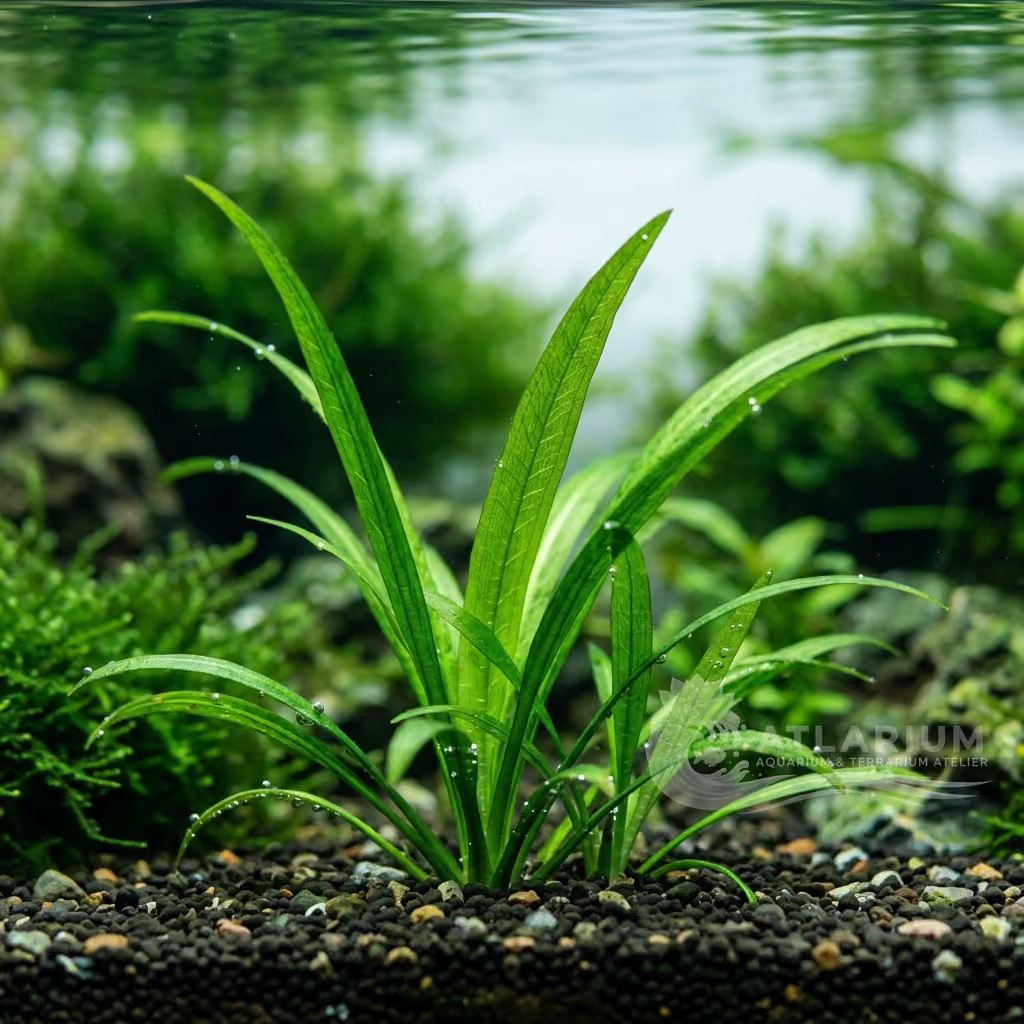
Echinodorus sp. "muricatus"
Echinodorus sp. "muricatus"
An enormous wild-type species from South American marshlands with rapid vertical growth. Demands high lighting and heavily enriched substrate to sustain its massive structure.
Water Temperature
15 - 30 °C
pH Value
5 - 8
Water type
Freshwater
Light
Da media ad alta
CO2
Medium
Expected height
50 cm
Expected width
40 cm
GH
4 - 20 dGH
KH
0 - 21 dKH

Species description
Geographical Origin and Habitat: Endemic to the deeply flooded river margins, temporary ponds, and vast marshlands of tropical South America. Echinodorus sp. "muricatus" (often conflated with E. macrophyllus or E. radicans in older literature) is a colossal, true wild-type aquatic swamp plant. It completely dominates its local ecosystem, acting as a wildly fast-growing, virtually indestructible survivor perfectly evolved to exploit both the deeply submerged wet season and the terrestrial dry season by violently breaching the water surface.
Taxonomy & Genetics: Scientifically classified within the Alismataceae family, the exact taxonomic standing of "muricatus" is heavily debated, often considered a geographical variant or close relative of E. macrophyllus. Genetically, it is completely hard-wired for extreme vertical gigantism, explosive vegetative propagation, and rapid terrestrial adaptation. Its DNA actively forces the plant to abandon submersed growth the moment it senses the surface. It completely lacks the biological mechanism to produce any red or bronze anthocyanin pigments.
Physical Structure: The architectural structure of E. "muricatus" is overwhelmingly dominant, violently fast-growing, and strictly towering. It is a gigantic rosette plant completely lacking vertical stems. The foundation is a massive, incredibly thick, tuberous subterranean rhizome that deploys an aggressive, deep-reaching root system capable of shattering pots. The leaves emerge directly from the crown on exceptionally thick, rigid petioles. The foliage is monstrous, strictly broadly ovate to completely heart-shaped (cordate), and deeply ribbed.
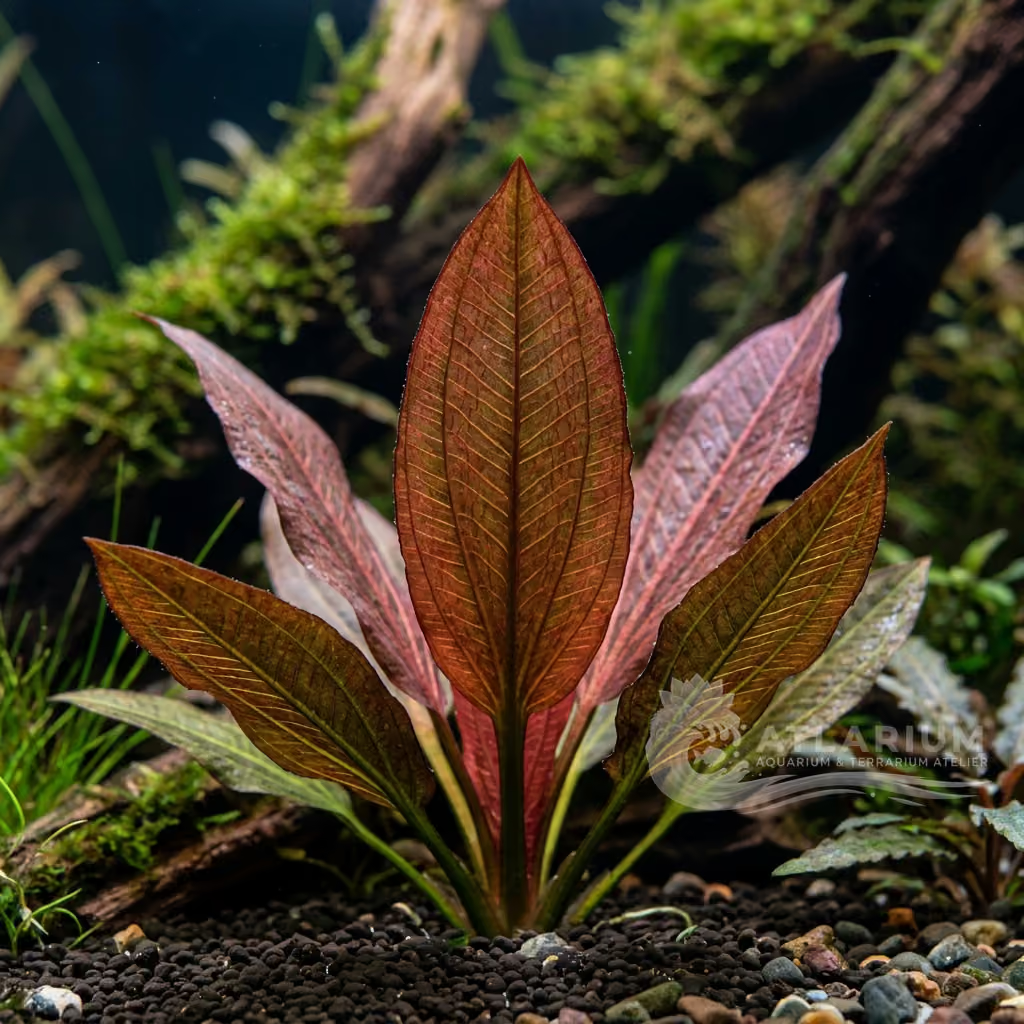
Color & Texture: The coloration is distinctly pure, solid, and completely uniform. Grown submerged or emerged, the massive, heart-shaped leaves are an unwavering, solid, glowing bright apple-green. Because it completely lacks red pigments, it remains an intensely bright pure green even under blasting high-intensity light. The texture of the submersed leaves is rigid and slightly wavy. However, once the leaves breach the surface (emerged), they become violently stiff, incredibly leathery, deeply ribbed, and perfectly smooth.

Care, breeding and tankmates
Lighting & CO2: It is an incredibly demanding, energy-hungry titan. To sustain its terrifyingly rapid, towering vertical growth rate and support its massive, heavy leaves, blasting, high-intensity LED lighting is absolutely mandatory. If severely shaded, the massive green leaves will turn pale yellow, rot, and the plant will melt. Because it is biologically programmed to aggressively breach the surface, pressurized CO2 drastically accelerates its vertical race. Once it breaches the surface, the massive emerged leaves will completely shadow the entire aquarium.
Nutrition & Substrate: As a colossal, wild-type Amazon Sword, E. "muricatus" is a terrifyingly aggressive, obligate root feeder. Its massive root system strictly demands a very deep (minimum 10 cm / 4 inches), heavily nutrient-dense substrate. It absolutely demands premium aquasoil heavily enriched with iron and macro-nutrient root tabs directly beneath the massive tuber. It will rapidly strip a standard gravel bed of all nutrients within weeks. If starved of root nutrients, the towering green leaves will quickly turn white, rot, and dissolve into mush.
Water Chemistry: Originating from a vast geographical range across South America, it is practically invincible regarding standard water parameters. It thrives effortlessly in heated tropical aquariums (22-28°C) but is also exceptionally adaptable, tolerating both soft, highly acidic blackwater and rock-hard, highly alkaline tap water (pH 6.0 - 8.5). The single most critical environmental requirement is intense, continuous root nutrient supplementation. It prefers slow to moderate water flow to avoid snapping its massive petioles.
Space Management & Placement: Due to its absolute monstrous size (capable of reaching 60-100+ cm in height and extreme width) and wildly dominant nature, this plant is strictly reserved as an extreme background centerpiece for massive, open-top aquariums, paludariums, or indoor ponds (minimum 400 liters). It MUST be planted singularly. It is specifically utilized by aquascapers who explicitly want a plant to violently breach the surface. It will produce massive, rigid emerged leaves that will aggressively block out all light to the tank below.
Pruning: Pruning is a constant, brutal, and necessary procedure if you wish to keep the plant fully submerged, though it will constantly fight you. Because the plant naturally wants to breach the surface, you must aggressively prune off the taller leaves before they reach the air. To prune, you must reach down to the absolute base of the massive rosette and cleanly slice the incredibly thick petiole directly at the crown. If you do not ruthlessly prune the taller leaves, the plant will permanently switch to its massive emerged form.
Risks & Diseases: The absolute greatest threat to this titan is nutrient starvation and self-shading. Because its growth rate is so violently fast, it will rapidly strip the substrate of all available nutrients. The moment it runs out of food, the massive green leaves will immediately turn translucent and melt into a massive amount of slimy organic waste. The second major risk is self-shading; once the massive, leathery emerged leaves breach the surface, they completely block the light, causing all submerged leaves to rot and die off.

Geographic origin and distribution
Endemic to the deeply flooded river margins, temporary ponds, and vast marshlands of tropical South America. Echinodorus sp. "muricatus" (often conflated with E. macrophyllus or E. radicans in older literature) is a colossal, true wild-type aquatic swamp plant. It completely dominates its local ecosystem, acting as a wildly fast-growing, virtually indestructible survivor perfectly evolved to exploit both the deeply submerged wet season and the terrestrial dry season by violently breaching the water surface.
Origin
Extra-Amazon South America

Plant profile
- Placement
- Background
- This impressive sword plant is best placed in the background of medium to large aquariums. Its robust, wide leaves create striking lines that contrast well with other plants. Ensure adequate space around it, as it can grow quite large and shade out smaller species.
- Botanical form
- Rosette
- This species is characterized by its classic rosette growth habit, producing robust, wide leaves from a central crown. The foliage features a distinctive vibrant green hue, distinguishing it within the aquarium. Its appearance makes it a uniquely elegant specimen within the Echinodorus genus.
- Growth
- Fast
- It generally exhibits a moderate growth rate, especially with strong lighting and a nutrient-dense substrate. Adding CO2 injection can accelerate its development, allowing new leaves to emerge faster. In lower-tech setups, growth will be slower but still steady and manageable.
- Substrate
- High
- Echinodorus sp. "muricatus" requires a thick, highly nutritious substrate layer to support its extensive and rapid root expansion. An ideal bed consists of 6 to 8 centimeters of aqua soil mixed with laterite to provide long-lasting mineral reserves. Its root system actively absorbs large quantities of trace elements, making substrate depletion a common issue in older aquariums. To sustain its broad leaves, the substrate must be periodically enriched with targeted root fertilizer capsules.
- Column fertilization
- Recommended
- While primarily a root feeder, it benefits from supplemental water column fertilization for micronutrients. Dosing a comprehensive liquid fertilizer helps maintain the vibrant health of the leaves. Balance column nutrients to prevent algae growth on its large leaf surfaces.
- Root fertilization
- Required
- A nutrient-rich substrate or regular addition of root tabs is essential for this heavy root feeder. Placing fertilizer capsules directly beneath its root network ensures optimal macronutrient uptake. A well-fertilized root zone translates directly to larger, healthier leaves.
- Trimming
- Occasional
- Maintenance involves pruning older or damaged outer leaves by cutting them close to the base. Do not simply snip leaves in half, as the remaining stem will rot and harm the plant. Thinning out the foliage occasionally helps prevent the plant from becoming too dense.
- Propagation
- Rhizome division
- Propagation is achieved through adventitious plantlets that form along its flower stalks. Once these daughter plants develop roots and a few leaves, they can be snipped off. The new plantlets can then be replanted directly into the substrate to grow independently.
- Sensitivity
- Moderate
- Echinodorus sp. 'muricatus' is generally hardy but can be sensitive to sudden, drastic fluctuations in water parameters. It may experience melting when transitioning between emersed and submersed forms. The delicate new leaves are occasionally targeted by herbivorous snails or plecos.
- Layout role
- Background
- It serves as an excellent focal point or structural plant due to its shape and vibrant green color. The orientation of its leaves draws the eye, adding depth to the aquascape. It pairs beautifully with contrasting stem plants or carpeting species.

Image gallery
Licensed images linked to the species or, when marked, to the closest representative taxon.

Related species
Recommendations grouped by close relatives, companion choices, and similar care.