Helanthium bolivianum "latifolius"
Helanthium bolivianum
Robust carpeting plant from South America featuring broad, bright green leaves. Demands intense lighting and nutrient-dense soil to form a thick midground lawn.
Water Temperature
20 - 28 °C
pH Value
6 - 7.5
Water type
Freshwater
Light
Medium
CO2
Low
Expected height
15 cm
Expected width
10 cm
GH
4 - 20 dGH
KH
0 - 14 dKH

Species description
Geographical Origin and Habitat: Endemic to the tropical and subtropical floodplains, river margins, and marshlands of Central and South America. Helanthium bolivianum "latifolius" (formerly Echinodorus latifolius) is a highly adaptable, robust variant of the standard Pygmy Chain Sword. It naturally colonizes the shallow, sandy, sun-drenched margins of rivers. It is a wildly aggressive, deeply rooted carpet-forming plant perfectly evolved to survive deep submersion by growing distinctly broader, thicker leaves than its cousins.
Taxonomy & Genetics: Scientifically reclassified into the Helanthium genus, this is a globally recognized, highly prized cultivar/variant of H. bolivianum. Taxonomically, its specific name ("latifolius") literally translates to "broad leaf," which completely defines its physical departure from the standard narrow-leaved chain swords. Genetically, it is completely hard-wired for massive horizontal propagation via aggressive runners, but its DNA actively forces a much wider leaf blade and a slightly taller stature.
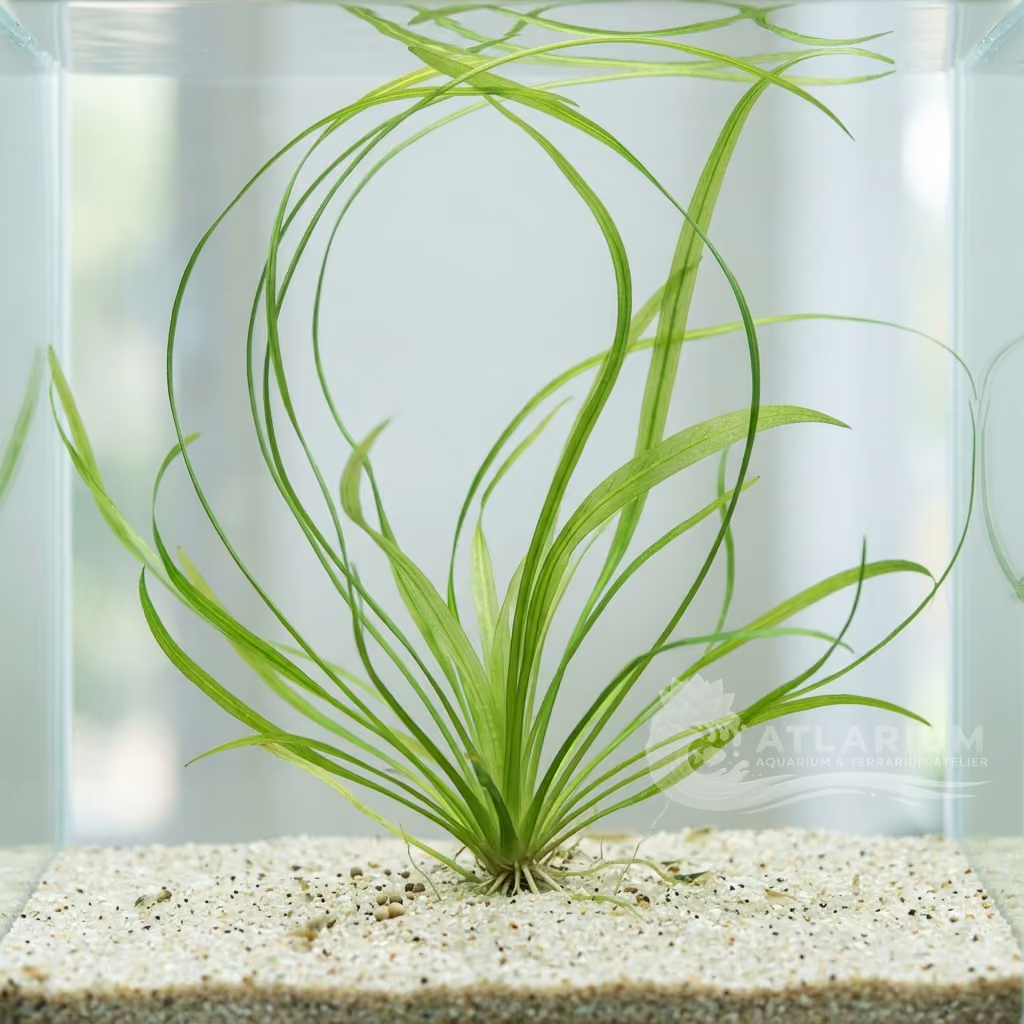
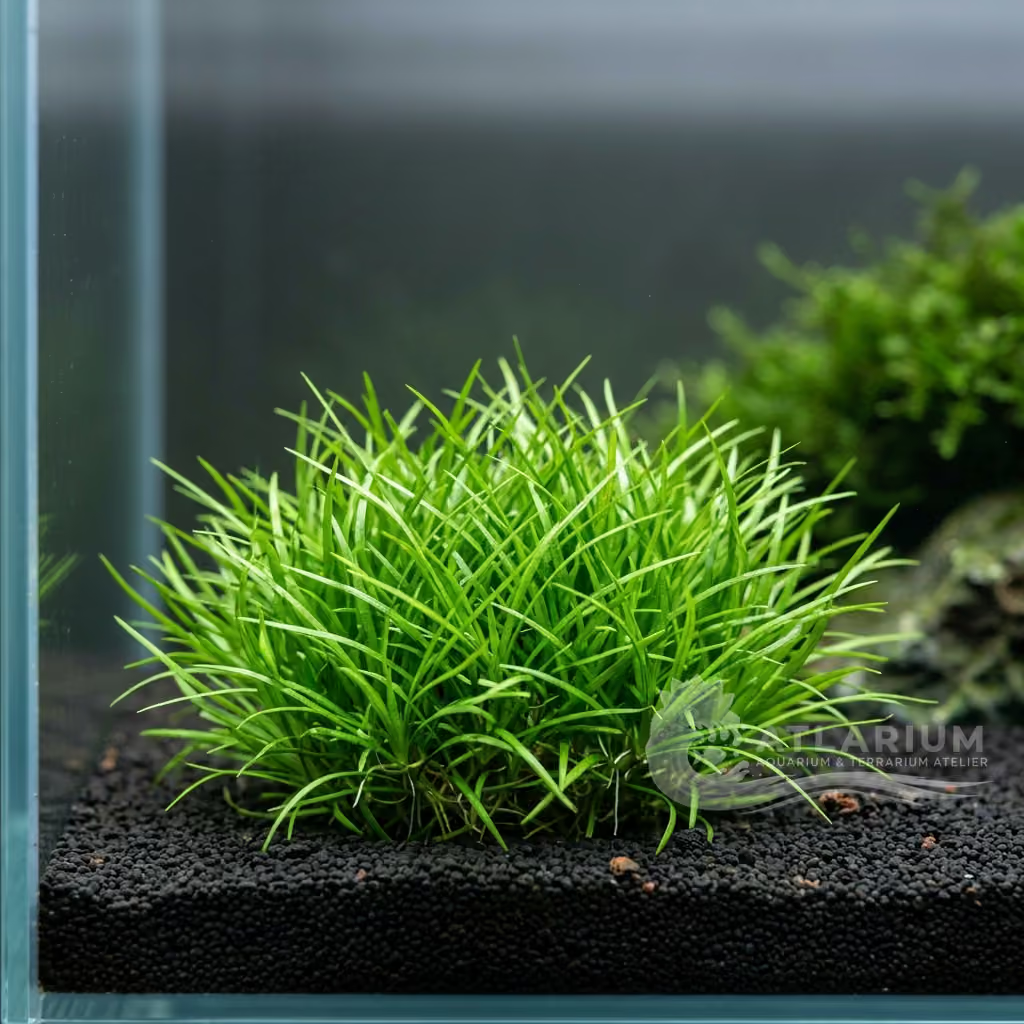
Physical Structure: The architectural structure of "latifolius" is intensely dense, highly structural, and violently spreading. It is a classic foreground/midground carpet plant completely lacking vertical stems. The foundation is a highly aggressive, deeply burrowing, white runner system (stolon) that spreads horizontally. The leaves erupt from stout rosettes along the runners. The foliage is the defining feature: strictly broadly lanceolate to ovate, noticeably thicker, and naturally arches outward (10-15 cm tall).
Color & Texture: The coloration is distinctly pure, intensely solid, and visually calming. Grown submerged under intense lighting, the dense thicket of broad grassy leaves is a solid, glowing bright apple-green to a translucent grassy-green. Because it completely lacks any genetic mechanism for red anthocyanin pigments, it remains an intensely bright pure green under any light intensity. The texture is distinctly crisp, noticeably stiffer and more leathery than the delicate "angustifolius" variant.

Care, breeding and tankmates
Lighting & CO2: It is a highly resilient but demanding foreground plant. While it will technically survive in medium-light aquariums, its spectacular carpeting behavior will fail; it will refuse to send out runners, grow sparsely, and stretch tall. To force the violent horizontal spread and the tight, dense, broad-leaf growth necessary to create a thick green lawn, blasting, high-intensity LED lighting is absolutely mandatory. Pressurized CO2 is highly recommended and drastically accelerates the carpet density.
Nutrition & Substrate: As an incredibly aggressive carpeting plant, "latifolius" is an obligate root feeder. Its runner system strictly demands a fine-grained, heavily nutrient-dense substrate. It absolutely demands premium aquasoil heavily enriched with iron and macro-nutrients. It will fail to spread optimally in coarse gravel, as its delicate runners cannot penetrate it. If starved of root nutrients, the broad grassy leaves will quickly turn yellow, become brittle, and dissolve into mush.
Water Chemistry: Originating from a vast range across the Americas, it is practically invincible regarding standard water parameters. It thrives effortlessly in heated tropical aquariums (22-28°C) but is equally comfortable in unheated cold-water tanks. It is exceptionally adaptable, comfortably tolerating soft, acidic water as well as harder, moderately alkaline tap water (pH 6.0 - 7.5). The single most critical environmental requirement is absolute substrate stability and continuous nutrient flow.
Space Management & Placement: Due to its slightly taller, broad-leaved foliage and extreme horizontal spreading nature, Helanthium bolivianum "latifolius" is strictly a dominant midground carpeting plant for large aquariums, or a tall background plant for nano tanks. It MUST be planted initially in tiny, distinct tufts evenly spaced across the bare aquasoil. Because it grows via aggressive subterranean runners, it will rapidly bridge the gaps, forming an impenetrable, thick green lawn that provides unparalleled depth.
Pruning: Pruning is a simple, massive, and highly necessary procedure to maintain the carpet. Never attempt to uproot the plant once established. To prune, you must use curved aquascaping scissors to literally "mow the lawn." You aggressively cut the arching leaves down to 3-5 cm above the substrate. This brutal haircut forces the plant to abandon vertical growth and immediately invest massive energy into horizontal runners, thickening the carpet. Sever stray runners that attempt to invade other zones.
Risks & Diseases: The absolute greatest threat to a "latifolius" carpet is Hair Algae, Cyanobacteria, and coarse substrate. Because the dense, broad leaves trap detritus, they act as massive landing pads for devastating Hair Algae if water flow is poor or nutrients spike. Once algae aggressively intertwines with the dense grass, it is nearly impossible to separate mechanically. The second risk is planting in coarse gravel; the delicate runners will be crushed, the plant will exhaust its energy, and die.

Geographic origin and distribution
Endemic to the tropical and subtropical floodplains, river margins, and marshlands of Central and South America. Helanthium bolivianum "latifolius" (formerly Echinodorus latifolius) is a highly adaptable, robust variant of the standard Pygmy Chain Sword. It naturally colonizes the shallow, sandy, sun-drenched margins of rivers. It is a wildly aggressive, deeply rooted carpet-forming plant perfectly evolved to survive deep submersion by growing distinctly broader, thicker leaves than its cousins.
Origin
Central America and CaribbeanAmazon, Orinoco, and GuianasExtra-Amazon South America

Plant profile
- Placement
- Foreground
- This plant is ideal for the midground or foreground of an aquascape, depending on the tank size. In smaller aquariums, Helanthium bolivianum "latifolius" can serve as an excellent background focal point. Its grassy appearance transitions well between hardscape and taller stem plants. Careful placement ensures it doesn't overshadow delicate carpeting species.
- Botanical form
- Rosette
- This species forms dense, bushy rosettes with lanceolate or linear leaves. The foliage of Helanthium bolivianum "latifolius" is typically a vibrant, light green that adds a fresh look to the aquascape. Submersed leaves are usually narrower and more delicate compared to their emersed counterparts. Its root system is extensive and highly developed.
- Growth
- Fast
- Under optimal conditions with CO2 injection and high light, the growth rate of Helanthium bolivianum "latifolius" is remarkably fast. It will quickly send out numerous runners to colonize adjacent areas. In lower-tech setups, growth slows down considerably but remains steady. Regular pruning may be necessary to keep its rapid expansion in check.
- Substrate
- High
- Helanthium bolivianum "latifolius" demands a nutrient-rich aquarium soil to support its extensive root system and encourage vigorous runner formation. A fine-grained substrate of at least 4 to 5 centimeters in depth allows the roots to anchor securely and absorb essential macro- and micronutrients. Providing a fertile base ensures robust foliage development and a lush, carpet-like appearance in the foreground or midground.
- Column fertilization
- Recommended
- While primarily a root feeder, Helanthium bolivianum "latifolius" absorbs a fair amount of nutrients through its leaves. Dosing a comprehensive liquid fertilizer ensures no deficiencies occur, particularly in mature tanks. Potassium and trace elements in the water column support robust leaf structure. Liquid carbon can also be beneficial if pressurized CO2 is unavailable.
- Root fertilization
- None
- A nutrient-rich soil or the addition of root tabs is highly recommended for Helanthium bolivianum "latifolius". Strong root fertilization promotes the development of thick, healthy runners and vibrant foliage. Without adequate root nutrients, older leaves may yellow or develop pinholes. Replenishing root tabs every few months sustains its vigorous growth.
- Trimming
- Occasional
- Trimming Helanthium bolivianum "latifolius" primarily involves cutting away old or algae-covered leaves near the base of the rosette. Unwanted runners should be snipped close to the parent plant to prevent uncontrolled spreading. It tolerates heavy pruning well and will quickly bounce back with new growth. Thinning out dense patches improves water flow and light penetration.
- Propagation
- Runners
- Propagation of Helanthium bolivianum "latifolius" is straightforward and occurs naturally via lateral runners. The mother plant will continually produce chains of baby plants along the substrate. Once the daughter plants have developed their own root systems, the connecting runner can be cut. These new plantlets can then be easily replanted in other areas of the tank.
- Sensitivity
- Moderate
- This species is generally quite robust and forgiving of varying water parameters. However, Helanthium bolivianum "latifolius" can be sensitive to extreme fluctuations in pH or temperature. It may experience a brief melting phase when transitioned from emersed to submersed environments. Overall, it is highly resistant to most common aquarium pests and diseases.
- Layout role
- Midground, Foreground, Nano
- In aquascaping, Helanthium bolivianum "latifolius" plays a crucial role in softening the harsh lines of rocks and driftwood. It is an excellent transitional plant that bridges the gap between low foregrounds and tall backgrounds. Its grassy texture contrasts beautifully with broad-leaved plants or fine mosses. Grouping several plants together creates a natural, wild appearance.

Image gallery
Licensed images linked to the species or, when marked, to the closest representative taxon.

Related species
Recommendations grouped by close relatives, companion choices, and similar care.