Helanthium bolivianum "Angustifolius"
Helanthium bolivianum
Elegant variant of Pygmy Chain Sword with exceptionally long, narrow ribbon-like leaves. Requires intense light, CO2, and a deep nutrient-rich substrate.
Water Temperature
20 - 28 °C
pH Value
6 - 7.5
Water type
Freshwater
Light
Medium
CO2
Low
Expected height
40 cm
Expected width
15 cm
GH
4 - 20 dGH
KH
0 - 14 dKH

Species description
Geographical Origin and Habitat: Endemic to the deeply flooded river basins and marshlands of tropical South America, Helanthium bolivianum "Angustifolius" (formerly Echinodorus angustifolius) is a highly specialized, extremely elegant variant of the standard Pygmy Chain Sword. It naturally colonizes slightly deeper, nutrient-rich river margins. It is a wildly aggressive, deeply rooted spreading rosette plant perfectly evolved to survive deep submersion by growing exceptionally long, narrow leaves that bend with the water current.
Taxonomy & Genetics: Scientifically reclassified into the Helanthium genus, this is a globally recognized, highly prized cultivar/variant of H. bolivianum. Taxonomically, its specific name ("Angustifolius") literally translates to "narrow leaf," completely defining its appearance. Genetically, it is hard-wired for massive horizontal propagation via runners, exactly like its cousins. However, its DNA possesses a severe mutation that forces extreme vertical elongation of its leaves while completely suppressing leaf width.
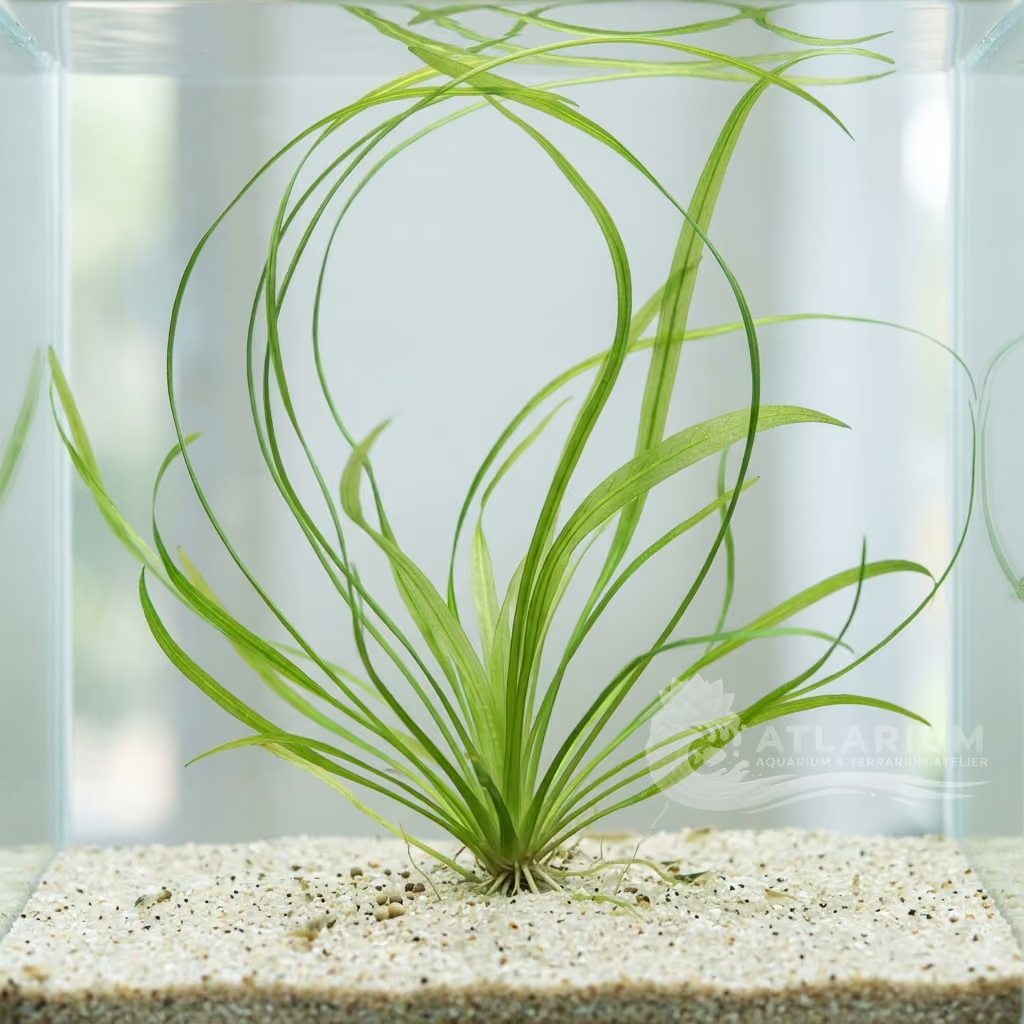
Physical Structure: The architectural structure of "Angustifolius" is breathtakingly elegant, intensely flowing, and violently spreading. It is a tall background carpet plant completely lacking vertical stems. The foundation is a highly aggressive, deeply burrowing, white runner system that spreads rapidly. The leaves erupt from rosettes along the runners. The foliage is the defining structural feature: strictly linear, exceptionally narrow (only a few millimeters wide), and highly elongated (reaching up to 40-50 cm long).
Color & Texture: The coloration is distinctly pure, intensely solid, and brilliantly uniform. Grown submerged under standard lighting, the massive thickets of flowing, ribbon-like leaves are a solid, glowing bright apple-green to a highly translucent emerald-green. Because it completely lacks red pigments, it remains an intensely bright pure green even under blasting high-intensity light. The texture is distinctly crisp, extremely flexible, and perfectly smooth, behaving exactly like long underwater ribbons.

Care, breeding and tankmates
Lighting & CO2: It is a moderately resilient but highly demanding plant to achieve its iconic, massive flowing appearance. While it will technically survive in medium-light aquariums, its growth will stall, and the leaves will grow weak and sparse. To force the violent horizontal spread and the extremely rapid vertical elongation of its ribbon-like leaves, blasting, high-intensity LED lighting is absolutely mandatory. Pressurized CO2 drastically accelerates its growth, creating an impenetrable flowing green wall.
Nutrition & Substrate: As an incredibly aggressive, massive spreading plant, "Angustifolius" is a terrifyingly aggressive, obligate root feeder. Its massive runner system strictly demands a very deep (minimum 7 cm / 3 inches), heavily nutrient-dense substrate. It absolutely demands premium aquasoil heavily enriched with iron and macro-nutrient root tabs. It will rapidly strip a standard gravel bed of all nutrients within weeks. If starved of root nutrients, the long translucent green leaves will turn white and dissolve into mush.
Water Chemistry: Originating from tropical South America, it is practically invincible regarding standard water parameters. It thrives effortlessly in heated tropical aquariums (22-28°C) but is also exceptionally adaptable to unheated tanks (down to 20°C). It comfortably tolerates both soft, acidic blackwater and rock-hard, highly alkaline tap water (pH 6.0 - 8.0). Crucially, as a plant that produces 50cm long, highly flexible leaves, it absolutely demands strong, heavy water flow to ripple and bend its foliage.
Space Management & Placement: Due to its absolute monstrous length (capable of reaching 50 cm) and wildly dominant horizontal spreading nature, "Angustifolius" is strictly a background plant for large aquariums (minimum 200 liters), or a "tall carpet" for massive setups. It MUST be planted in the back. Because it grows via aggressive subterranean runners, it will rapidly form a breathtaking, impenetrable green wall of long, grass-like ribbons that bend beautifully across the water surface, violently drawing the eye.
Pruning: Pruning is a constant, brutal, and necessary procedure if you wish to control its massive spread. Never attempt to trim the incredibly long, thin leaves in half; the cut edge will instantly turn black, rot, and destroy the elegant aesthetic. To prune, you must reach down to the absolute base of the rosette and cleanly slice the leaf right at the crown. It throws out massive, aggressive runners covered in baby plants that must be ruthlessly severed to prevent it from invading the foreground.
Risks & Diseases: The absolute greatest threat to this plant is Hair Algae and nutrient starvation. Because the massive, long, narrow leaves bend across the surface and intertwine, they act as massive landing pads for devastating Hair Algae if water flow is poor. Once algae aggressively intertwines with the long grass, it is impossible to separate mechanically. The second major risk is starvation; because its growth rate is so violently fast, it will rapidly strip the substrate of all available nutrients.

Geographic origin and distribution
Endemic to the deeply flooded river basins and marshlands of tropical South America, Helanthium bolivianum "Angustifolius" (formerly Echinodorus angustifolius) is a highly specialized, extremely elegant variant of the standard Pygmy Chain Sword. It naturally colonizes slightly deeper, nutrient-rich river margins. It is a wildly aggressive, deeply rooted spreading rosette plant perfectly evolved to survive deep submersion by growing exceptionally long, narrow leaves that bend with the water current.
Origin
Amazon, Orinoco, and GuianasExtra-Amazon South America

Plant profile
- Placement
- Background
- Given its potential height (often reaching the water surface), it is best placed in the background or along the sides of the aquarium. Its long, flowing leaves look spectacular when bending in the water current.
- Botanical form
- Rosette
- A tall rosette plant characterized by extremely narrow, long, grass-like leaves. It looks like a giant form of Vallisneria but is actually a closely related runner-forming sword plant. The leaves are light green and very flexible.
- Growth
- Fast
- Grows quite rapidly when conditions are favorable. It constantly produces new leaves from the central rosette and will aggressively send out runners to colonize adjacent areas if not contained.
- Substrate
- High
- Helanthium bolivianum "Angustifolius" thrives optimally when planted in a thick, highly fertile aquasoil that caters to its voracious root-feeding habits. A substrate depth of at least 6 centimeters is recommended to accommodate its dense, fibrous root system and the rapid expansion of underground runners. Consistent availability of macronutrients in the substrate layer is essential to maintain its tall, grassy appearance and prevent the melting of established leaves.
- Column fertilization
- Recommended
- While it absorbs some nutrients through its leaves, it primarily relies on its roots. However, dosing liquid micronutrients and iron into the water column will keep the long foliage vibrant and healthy-looking.
- Root fertilization
- None
- An aggressive root-feeder. A deep, nutrient-rich soil or regular supplementation with root tabs is critical. Without root fertilization, its growth will stall, and the leaves will become short and pale.
- Trimming
- Occasional
- Remove older, damaged, or algae-covered leaves by cutting them as close to the base of the rosette as possible. To control its spread, aggressively cut and uproot the runners before they take over the tank.
- Propagation
- Runners
- Propagates very easily and prolifically via runners. The parent plant will send out chains of smaller plantlets. Cut the runner and transplant the baby plant once it has developed a few leaves and roots.
- Sensitivity
- Moderate
- Resilient and adaptable, but prone to melting if the roots are disturbed too much or if the substrate is completely depleted of nutrients. The long leaves are susceptible to black beard algae in areas of low flow.
- Layout role
- Midground, Background
- Perfect for creating a tall, grass-like background or a 'curtain' effect flowing across the water surface. It provides excellent hiding spots for fish and adds a strong sense of verticality and movement.

Image gallery
Licensed images linked to the species or, when marked, to the closest representative taxon.

Related species
Recommendations grouped by close relatives, companion choices, and similar care.