Heteranthera zosterifolia
Heteranthera zosterifolia
Spectacular 'Stargrass' from the Amazon basin. Thrives under intense light and CO2, growing thick, horizontal star-shaped bright green tips.
Water Temperature
20 - 28 °C
pH Value
6 - 7.5
Water type
Freshwater
Light
Medium
CO2
Medium
Expected height
40 cm
Expected width
15 cm
GH
3 - 8 dGH
KH
0 - 21 dKH

Species description
Geographical Origin and Habitat: Heteranthera zosterifolia, simply known as "Heteranthera" or Stargrass, is a spectacular amphibious stem plant endemic to Brazil, Argentina, and vast areas of the Amazon rainforest (South America). It evolves along the banks, in flooded ditches, in muddy swamps, and in slow-flowing or stagnant rivers (igarapés). Seasonal variations (rainy season and dry season) force this plant to frequently switch from the submerged to the emersed form and vice versa.
Taxonomy & Genetics: It is a monocotyledon belonging to the Pontederiaceae family (a biological relative of the infamous Water Hyacinth, *Eichhornia crassipes*). The name derives from the Greek *heteros* (different) and *anthera* (anther, the male parts of the flower). If left to emerge from the water surface in open aquariums, it shows its magnificent genetics by blooming copiously: it produces wonderful and extremely delicate six-petaled bright blue-violet flowers, which open for only one day.
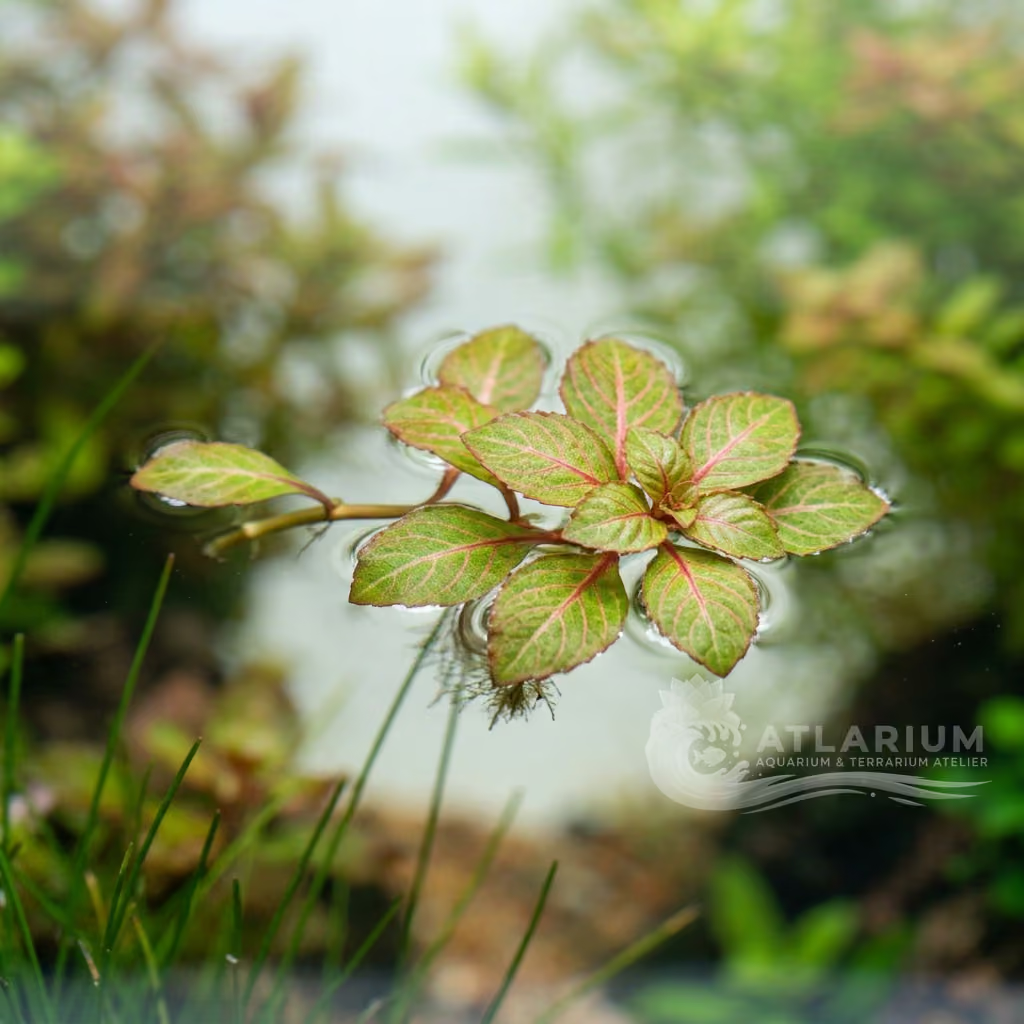
Physical Structure: The submerged architecture is caulescent and bushy. It possesses pale, fleshy, and soft stems. The leaves are not arranged in whorls, but are alternate, flat, strictly linear, or lanceolate. They grow in a compact rosette at the apex of the stem, creating a sort of small geometric star, hence the common Anglo-Saxon name "Star Grass". It emits white adventitious roots in profusion on the lower and intermediate nodes.
Color & Texture: It provides one of the brightest and most luminous greens available in the planted aquarium hobby: a vital and almost golden light green under the lights, capable of breaking the monotony of the dark reds or somber greens of neighboring plants. It never takes on reddish hues. The submerged leaf is smooth and very soft, making the bush extremely buoyant and dancing under the filter current.

Care, breeding and tankmates
Lighting & CO2: Extremely demanding if you want to achieve the perfect "star" bush. The plant does not tolerate shadows: if the light is weak (PAR < 50), it blackens at the base, elongates the internodes out of proportion, and loses the underlying leaves (etiolation). With very strong light (PAR > 80), it grows thick, horizontal, and shrinks the apical stars. CO2 is practically mandatory to make it shine and guarantee lush growth rates; otherwise, the plant degrades or dies of carbon starvation.
Nutrition & Substrate: An authentic indicator (biosensor) for nitrates and phosphates. It roots powerfully in fertile substrates (allophanes or enriched sands) but feeds greedily on dissolved compounds in the water. A water column lacking macronutrients (NO3 < 5 ppm) causes Heteranthera to turn yellow, stop growing, and turn black within three days. A substantial weekly water column fertilization plan is essential for its well-being.
Water Chemistry: Like most Amazonian endemics, it loves the soft, warm, and acidic waters classic of the South American biotope (pH 6.0-6.8, GH 3-8, Temperature 22-27°C). Very hard waters or those with a strongly alkaline pH hinder the absorption of iron and cause chlorosis, with apices turning white or transparent instead of bright green.
Space Management & Placement: The undisputed star for creating the iconic horizontal "streets" (Dutch street) in Dutch Style aquascaping. It should be positioned in the midground or background. Planting it in asymmetrical bunches or ascending terraces, placing the shortest cuttings in front and the longest behind, will create a formidable compact green block with an almost lawn-like but elevated appearance.
Pruning: If the conditions are suitable, the growth rate approaches the monstrous. Ruthless weekly topping must be carried out, drastically lowering the height of the bush. The axillary buds will explode, producing very thick branches in two days. Have no mercy, or the plant will touch the surface, expanding horizontally and suffocating everything below with darkness (only to rot at the base itself).
Risks & Diseases: In addition to the lethal risk of Nitrate and CO2 deficiency, which literally dissolves its stems into green mush, the true chemical "Achilles' heel" of Zosterifolia is Iron. An Fe deficiency is noticed instantly: the new apical shoots blacken and die (meristem necrosis), irreparably blocking the growth of the top, forcing you to cut below the necrosis.

Geographic origin and distribution
Heteranthera zosterifolia, simply known as "Heteranthera" or Stargrass, is a spectacular amphibious stem plant endemic to Brazil, Argentina, and vast areas of the Amazon rainforest (South America). It evolves along the banks, in flooded ditches, in muddy swamps, and in slow-flowing or stagnant rivers (igarapés). Seasonal variations (rainy season and dry season) force this plant to frequently switch from the submerged to the emersed form and vice versa.
Origin
Amazon, Orinoco, and GuianasExtra-Amazon South America

Plant profile
- Placement
- Midground
- This extremely versatile stem plant is typically used in the midground or background, depending on how it is maintained. When trimmed regularly, it forms a dense, bushy mound perfect for the midground. If left unpruned, it will quickly reach the surface of the aquarium and create a beautiful, trailing canopy.
- Botanical form
- Stem
- It is characterized by delicate, lanceolate leaves arranged in an alternating star-like pattern around a fragile stem. The leaves are a striking, bright chartreuse green that stands out brilliantly against darker plants. When it reaches the water's surface, it may produce small, beautiful blue flowers if left to grow emersed.
- Growth
- Fast
- Under high light and CO2 injection, Star Grass is one of the fastest-growing aquarium plants available. It can easily grow several inches a week, demanding frequent maintenance to keep it from overtaking the tank. In low-tech setups, its growth is slower and its internodes become longer, but it remains a vigorous grower.
- Substrate
- Medium
- Heteranthera zosterifolia develops a widespread root system and greatly benefits from a nutrient-rich aqua soil to sustain its fast, vigorous growth. The substrate should be finely textured and roughly 5-7 cm deep, allowing its delicate roots to penetrate easily and anchor the bushy stems. While it can absorb significant nutrients from the water column, root absorption of iron and trace elements is vital to prevent leaf blackening. Regular enrichment of the substrate ensures its striking, star-shaped foliage remains vibrant and dense.
- Column fertilization
- Recommended
- It relies heavily on liquid fertilizers, eagerly absorbing dissolved nutrients from the water column through its fine leaves. A daily dosing regimen is highly recommended to keep up with its rapid metabolism and prevent sudden deficiencies. Potassium and trace elements are crucial for keeping the leaf edges sharp and the color vibrant.
- Root fertilization
- None
- While it draws most of its required nutrients from the water column, it develops a substantial, white root system that benefits from a fertile substrate. Planting it in a high-quality aquasoil provides a nutrient buffer that supports more robust stem development. However, root tabs are generally not required if water column dosing is adequate.
- Trimming
- Occasional
- Frequent and aggressive pruning is mandatory to manage its rapid growth and encourage a bushy, compact form. It tolerates heavy trimming exceptionally well, with multiple side shoots sprouting from each cut stem. Without regular pruning, the lower portions of the plant will be shaded out by the dense upper canopy and will quickly rot away.
- Propagation
- Cuttings
- Propagation is incredibly simple and highly prolific. To propagate, simply cut the top portions of healthy stems and replant them into the substrate, leaving a small gap between each stem for light penetration. They will root within a matter of days and immediately begin growing towards the light.
- Sensitivity
- Moderate
- Its most notable sensitivity is to sudden drops in macronutrients, which causes the plant to melt and turn black almost overnight. It is also quite brittle; its stems can snap easily during planting or aggressive maintenance. Poor water flow can lead to debris accumulation in its dense thickets, encouraging algae growth.
- Layout role
- Midground, Background
- Star Grass is a quintessential background or midground bush in Dutch-style and nature aquariums. Its bright, star-shaped foliage provides a vivid splash of light green that perfectly highlights red plants or dark hardscape materials. Its dense growth also makes it an ideal hiding spot and spawning ground for small fish and shrimp.

Image gallery
Licensed images linked to the species or, when marked, to the closest representative taxon.

Related species
Recommendations grouped by close relatives, companion choices, and similar care.