Eichhornia heterosperma
Pontederia heterosperma
A beautiful floating and submerged plant from South America, ideal for well-lit aquariums. Needs moderate to intense lighting and CO2 to promote compact leaf growth.
Water Temperature
18 - 28 °C
pH Value
5.5 - 7.5
Water type
Freshwater
Light
Medium - High
CO2
Medium - High
GH
0 - 20 dGH
KH
0 - 14 dKH

Species description
Geographical Origin and Habitat: Native to South America and parts of Central America. It grows in shallow, stagnant, or slow-flowing waters, such as swamps, lagoons, and well-lit canals, often in association with other floating plants.
Taxonomy & Genetics: It is part of the Pontederiaceae family. Compared to other Eichhornia species, it has a more stable submerged growth habit and does not tend to break the water surface as quickly if conditions are controlled.
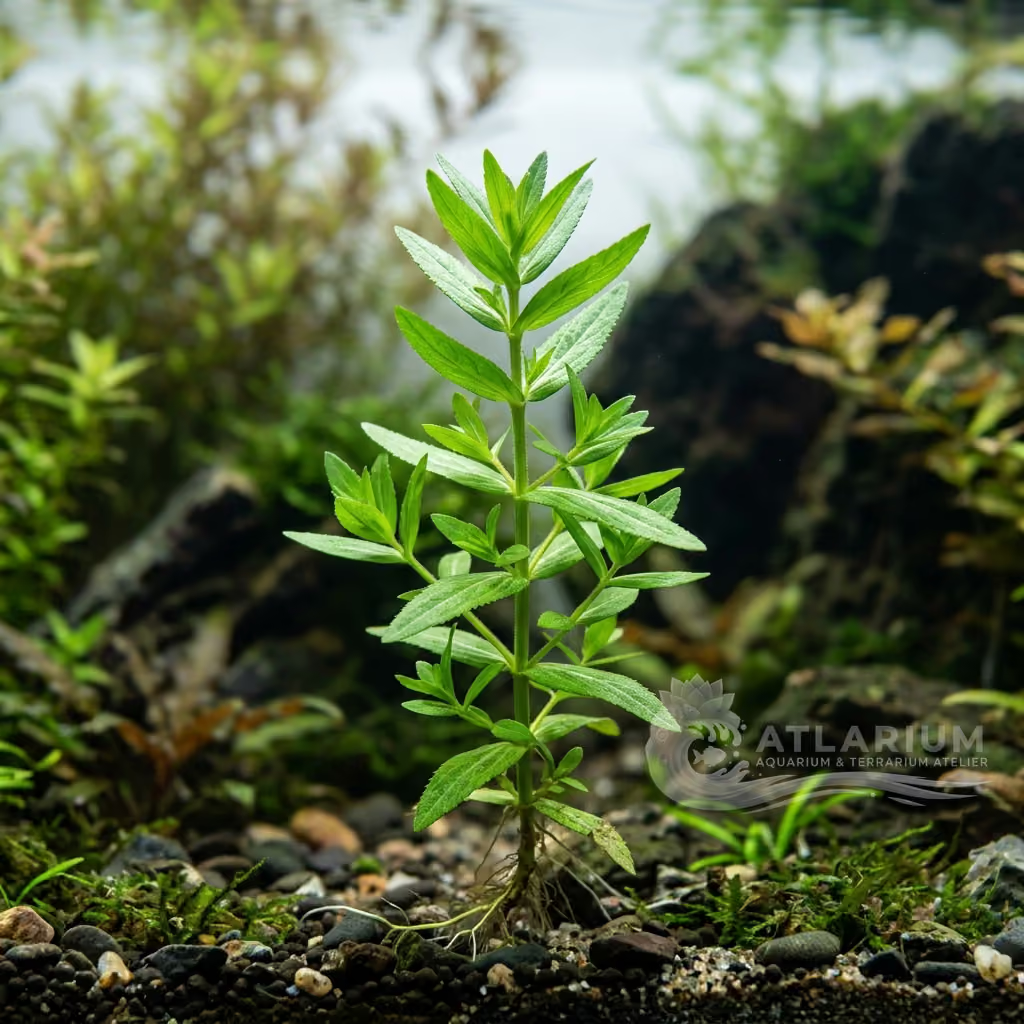
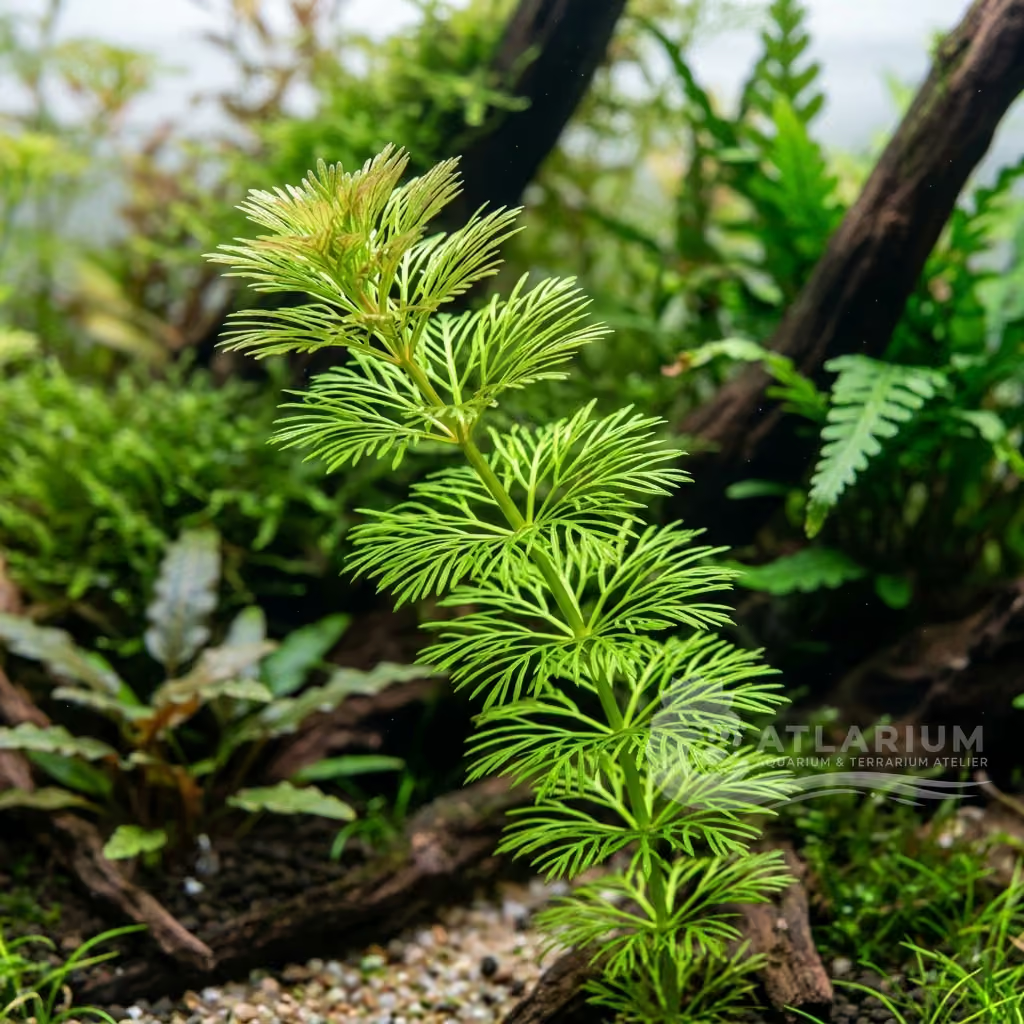
Physical Structure: It develops a flexible and relatively thin stem. The leaves are arranged alternately, long and narrow, and tend to lie horizontally relative to the stem axis.
Color & Texture: It features a bright green or light olive green coloration. The leaves have a smooth and flexible texture, which sways gently with the movement of the water.

Care, breeding and tankmates
Lighting & CO2: Requires moderate to intense lighting. CO2 promotes more compact growth and prevents bleaching of the apical leaves.
Nutrition & Substrate: A fertile substrate greatly helps initial rooting. It benefits from regular fertilization with microelements, especially iron.
Water Chemistry: Adapts to different ranges, preferring soft to medium water (KH 1-12) and pH between 5.5 and 7.5. The optimal temperature is between 18 and 30 °C.
Space Management & Placement: Great for the midground or background of medium-sized aquariums. It should be planted in small, tidy groups.
Pruning: Pruning is done by cutting the stems to the desired height. The cut stems can be replanted to expand the group.
Risks & Diseases: Can suffer if shaded by larger plants. Nutrient deficiencies manifest as weak stems and leaf loss in the lower part.

Geographic origin and distribution
Native to South America and parts of Central America. It grows in shallow, stagnant, or slow-flowing waters, such as swamps, lagoons, and well-lit canals, often in association with other floating plants.
Origin
Amazon, Orinoco, and GuianasExtra-Amazon South AmericaCentral America and Caribbean

Plant profile
- Placement
- Midground
- This stem plant is best utilized in the midground or background of the aquarium, where its vertical growth can be accommodated. It should be planted in small groups, ensuring adequate spacing between individual stems so light can penetrate down to the substrate. Crowding will lead to the lower leaves being shaded out and dropping off. It requires an unobstructed path to the light source.
- Botanical form
- Stem
- In its submerged form, it features striking, alternately arranged leaves that are linear to lanceolate in shape. The leaves are typically a vibrant, fresh green, growing densely along a somewhat brittle stem. Its appearance is similar to E. diversifolia but with subtle differences in leaf geometry and spacing. If it breaches the surface, it will attempt to form floating leaves.
- Growth
- Medium
- When provided with optimal lighting and a rich nutrient regimen, Eichhornia heterosperma grows very rapidly. This fast growth rate necessitates frequent maintenance to prevent the stems from reaching the surface and blocking light. Its vigorous metabolism makes it a strong competitor for nutrients, aiding in algae prevention. Slower growth is a strong indicator of suboptimal conditions.
- Substrate
- Medium
- This moderately demanding stem plant performs best when provided with a supportive, slightly enriched substrate. Eichhornia heterosperma uses its root system both for anchorage and nutrient uptake, adapting well to aquatic soils or enriched sand setups. A depth of about 5 centimeters is recommended to give the roots enough space to spread and stabilize the plant against water movement. The substrate should be loose enough to allow unhindered root penetration.
- Column fertilization
- Recommended
- Liquid column fertilization is the primary and most vital method for feeding Eichhornia heterosperma. Its delicate submerged leaves are highly efficient at drawing nutrients directly from the water column. A comprehensive daily dosing schedule is highly recommended to keep up with its rapid nutrient uptake. Skipping doses can quickly lead to visible deficiencies.
- Root fertilization
- None
- While it draws most of its sustenance from the water, planting it in a nutrient-rich aquasoil provides a beneficial secondary nutrient source. A healthy root system developed in good substrate helps anchor the buoyant stems securely. However, substrate fertilization alone cannot compensate for a lack of nutrients in the water column.
- Trimming
- Occasional
- The most effective trimming method is to uproot the stem, discard the older bottom section, and replant the healthy, vibrant top cutting. Simply cutting the stem midway often results in poor, stunted regrowth from the remaining stump. Replanting the tops ensures the plant group remains lush and visually appealing from top to bottom. It is a high-maintenance plant.
- Propagation
- Cuttings
- Propagation is straightforward and relies on taking cuttings from the top of healthy stems and replanting them in the substrate. Occasionally, healthy established plants may produce lateral side shoots that can also be separated and planted. New cuttings must receive high-intensity light immediately to encourage quick rooting and establish growth.
- Sensitivity
- Moderate
- This species is extremely sensitive to shading; even minor light deprivation will cause the lower leaves to turn black and disintegrate. It is also highly intolerant of fluctuating CO2 levels and sudden changes in water parameters. The stems are fragile and can be easily crushed by heavy tweezers during planting. Herbivorous tank mates should be avoided.
- Layout role
- Midground, Background
- Eichhornia heterosperma is used to create strong, vertical green accents in the aquascape, particularly in Dutch-style aquariums. Its alternating leaf pattern provides excellent textural contrast against both broad-leaved plants and fine-leaved background species. It serves as a beautiful but demanding focal group that draws the eye upward.

Related species
Recommendations grouped by close relatives, companion choices, and similar care.