Heteranthera dubia
Heteranthera dubia
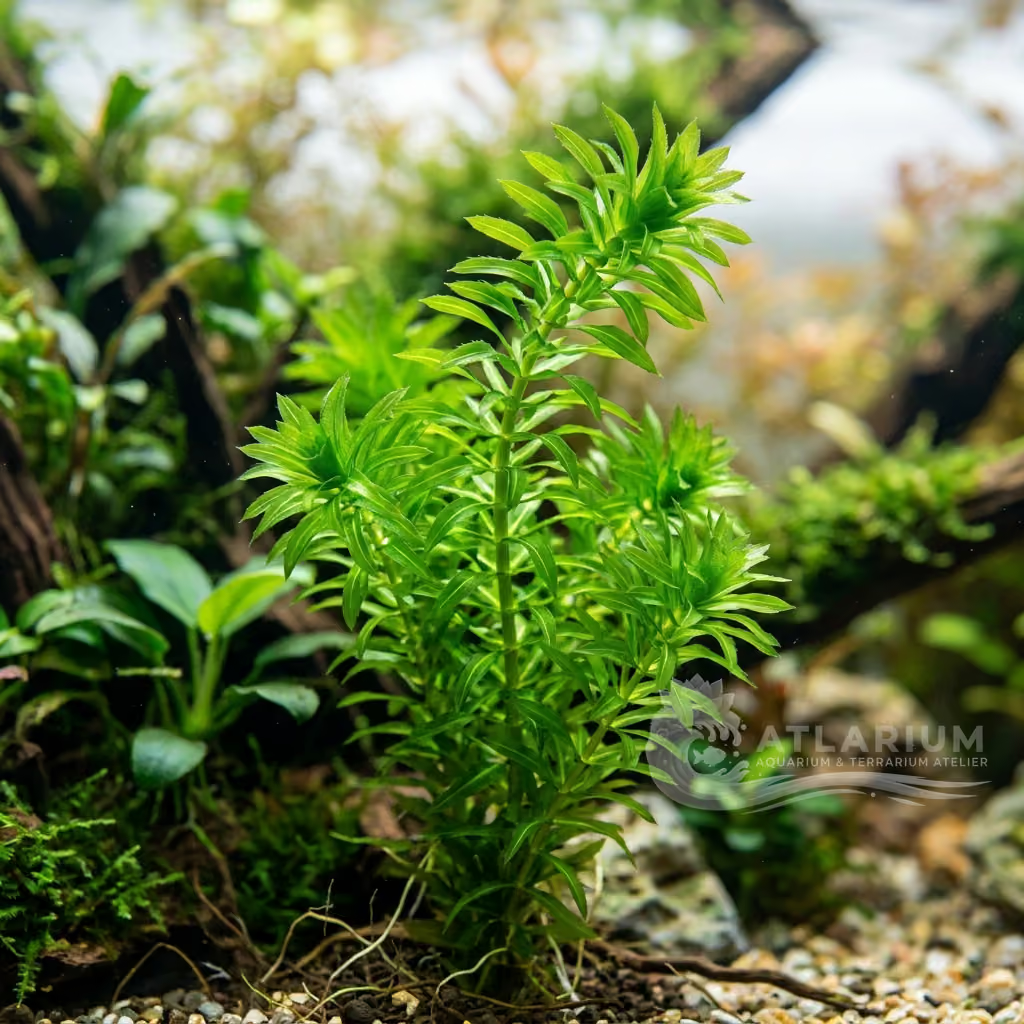
Heteranthera dubia: a robust, very fast-growing stem plant for the midground or background. Develops translucent light green leaves and small yellow flowers.
Water Temperature
5 - 30 °C
pH Value
5 - 9
Water type
Freshwater
Light
Medium - High
CO2
Low
Expected height
100 cm
Expected width
20 cm
GH
2 - 15 dGH
KH
3 - 30 dKH

Species description
Geographical Origin and Habitat: Heteranthera dubia, commonly known as Water Stargrass, is native to North America, widely distributed from the United States to Mexico and southern Canada. It inhabits a wide range of freshwater habitats, including lakes, calm ponds, irrigation canals, and slow-moving rivers, growing both submerged and emersed on wet muddy banks.
Taxonomy & Genetics: It belongs to the Pontederiaceae family and is closely related to the genus Eichhornia. It is a highly adaptable plant showing notable leaf polymorphism: the submerged form has thin, ribbon-like leaves, while the emersed form develops shorter stems, thicker leaves, and small star-shaped yellow flowers.
Physical Structure: It features flexible, branched, and elongated stems that can easily exceed one meter in length in the aquarium. The submerged leaves are alternate, sessile, without petioles, linear-lanceolate in shape with parallel veins. The root system is fibrous and efficient at colonizing clay or sandy soils.
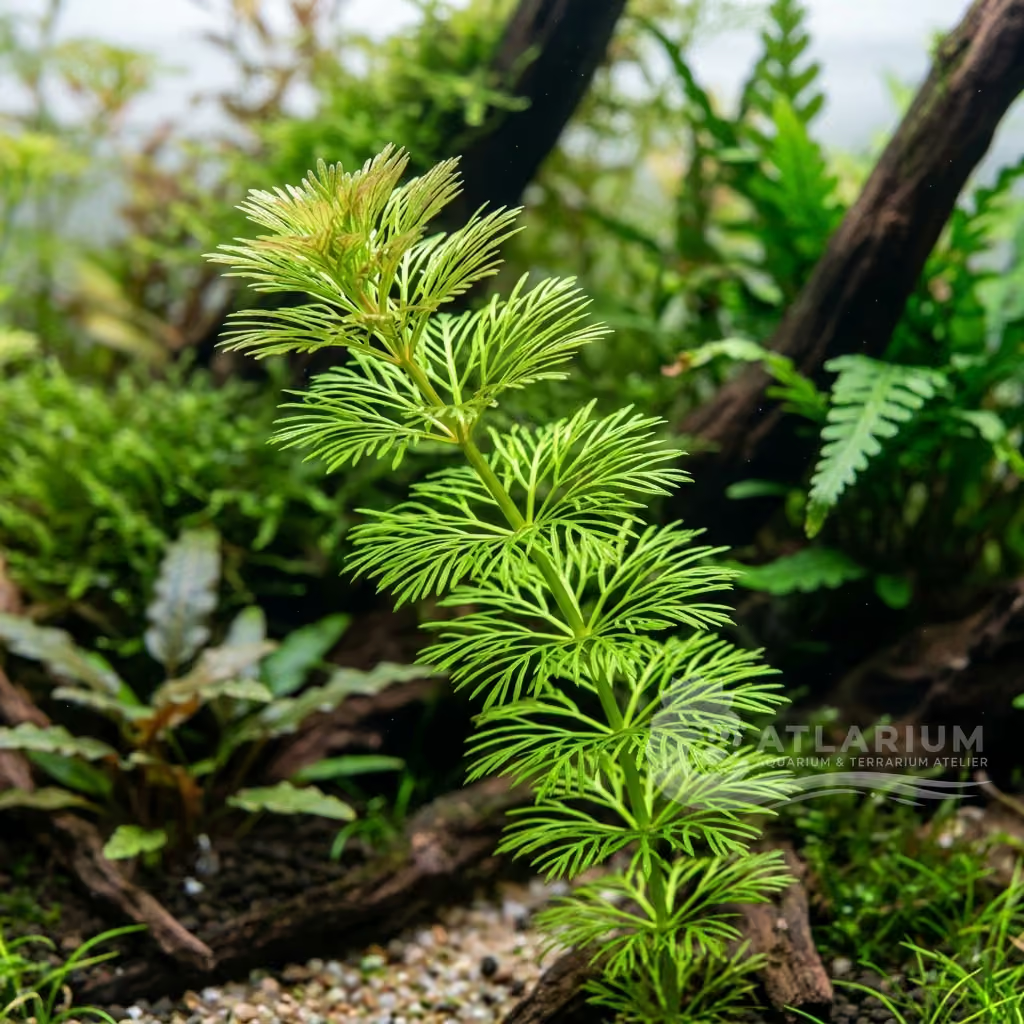
Color & Texture: Submerged leaves have a fresh, bright light green color with a slightly translucent texture that catches light. The fine, elongated texture adds a sense of movement and lightness to the aquascape, swaying elegantly with the movement of the water.

Care, breeding and tankmates
Lighting & CO2: Prefers moderate to intense lighting to prevent lower stems from losing leaves. CO2 injection is recommended to support its exceptionally fast growth rate, although it grows decently without it.
Nutrition & Substrate: It is a hardy plant that absorbs nutrients from both the substrate and the
Water Chemistry: Shows extraordinary chemical tolerance: tolerates pH from 5.0 to 9.0, KH from 3 to 30, and temperatures from 5 to 30 °C. It prefers alkaline and moderately hard water, making it suitable even for cichlid aquariums.
Space Management & Placement: Suited for the midground or background. Given its extremely fast growth, it can quickly invade the surrounding space, so it should be placed behind more stable plants and pruned regularly to avoid shading other species.
Pruning: Pruning is done by cutting the main stems to the desired height. The removed tops can be replanted directly to form new bushes, while the mother plant will quickly produce new lateral shoots from the nodes.
Risks & Diseases: The main risk is associated with its growth rate: if not pruned frequently, it reaches the water surface, forming dense floating carpets that block light to the plants below. It is a highly pest-resistant plant.

Geographic origin and distribution
Heteranthera dubia, commonly known as Water Stargrass, is native to North America, widely distributed from the United States to Mexico and southern Canada. It inhabits a wide range of freshwater habitats, including lakes, calm ponds, irrigation canals, and slow-moving rivers, growing both submerged and emersed on wet muddy banks.
Origin
North America

Plant profile
- Placement
- Midground
- It is highly versatile and can be used in the midground or background of the aquarium depending on the tank size and trimming frequency. If left to grow, its long, grass-like stems will reach the surface and trail elegantly across the top. With frequent pruning, it can form dense, bushy midground clumps.
- Botanical form
- Stem
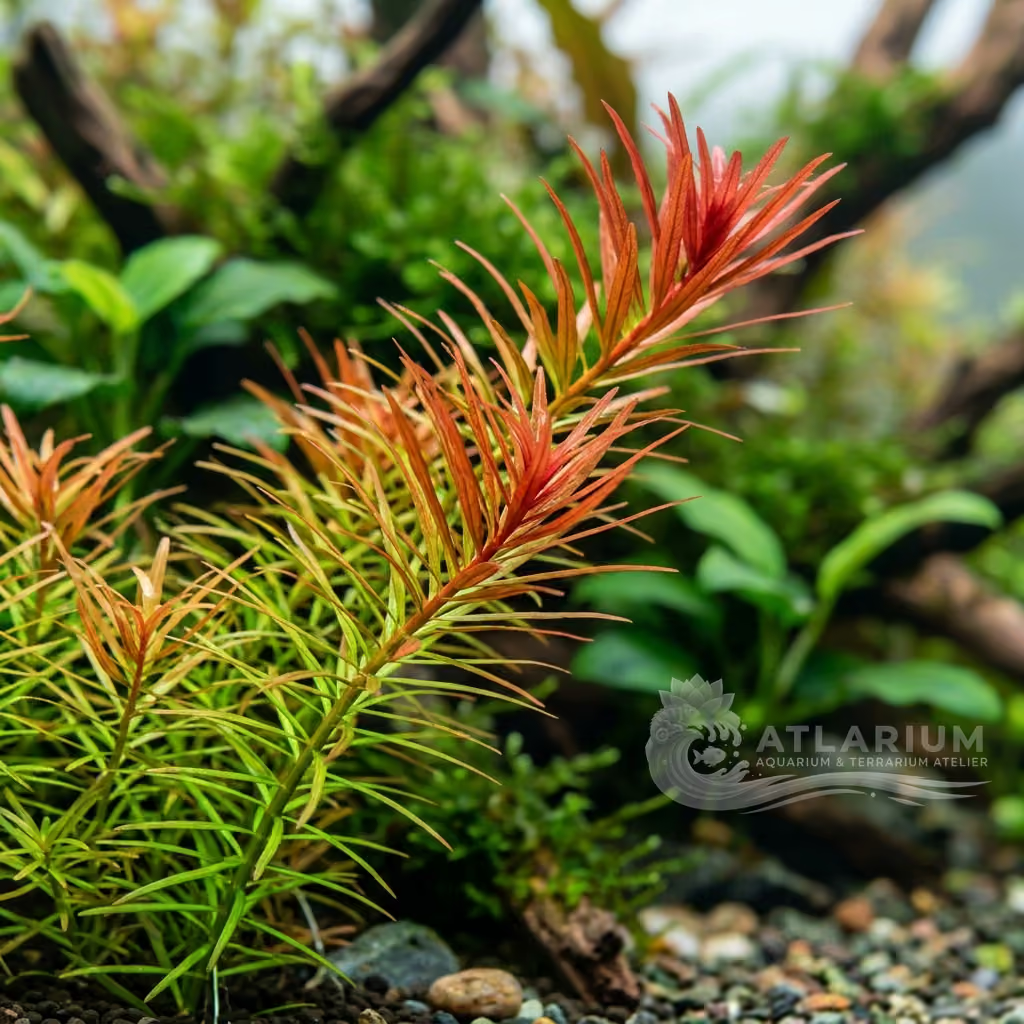
- Water Stargrass features long, narrow, alternating leaves that strongly resemble grass blades, arranged along a central flexible stem. The leaves are typically a bright, light green color. Under very intense lighting and with good nutrients, the stems may develop a slightly reddish or brownish tint near the surface.
- Growth
- VERY_FAST
- This plant is characterized by a very fast growth rate, especially when provided with strong lighting and CO2 supplementation. In low-tech setups, its growth slows down but remains steady, making it a great choice for beginners. Its rapid uptake of nutrients makes it excellent for helping to combat algae in newly set up aquariums.
- Substrate
- Low
- Heteranthera dubia is an adaptable aquatic plant that roots easily in a variety of substrates, ranging from plain sand to coarse gravel. While it has low demands and draws many of its nutrients directly from the water, planting it in a nutrient-rich aqua soil will visibly boost its growth rate and vitality. A substrate thickness of 4-6 cm provides adequate space for its root network to establish firmly. In heavily planted setups, supplementing an inert substrate with root tabs ensures its bright green, grass-like leaves remain healthy.
- Column fertilization
- Recommended
- Liquid fertilization is highly effective for this species as it readily absorbs dissolved nutrients through its extensive leaf surface. Regular dosing of a complete fertilizer containing trace elements prevents the pale, yellowish growth often associated with iron or nitrogen deficiencies. Consistent nutrient availability promotes robust, thick stems.
- Root fertilization
- None
- While it draws heavily from the water column, it also develops an extensive white root system that appreciates a nutrient-rich substrate. Using a quality aquasoil or supplementing inert gravel with root tabs will provide a strong foundation and encourage faster, healthier growth. A healthy root system is key to its resilience after aggressive trimming.
- Trimming
- Occasional
- Because of its fast growth, frequent trimming is essential to prevent it from shading out lower-growing plants or becoming an untangled mess at the surface. You can trim it by simply cutting the stems at the desired height; the remaining stem will quickly sprout new side shoots. Regular pruning encourages a much denser, bushier appearance.
- Propagation
- Cuttings
- Propagation is incredibly simple: simply take stem cuttings from the top portion of the plant and replant them into the substrate. The cuttings will root quickly and establish themselves within a few days. Even stems that are left floating in the water column will continue to grow and develop adventitious roots.
- Sensitivity
- Moderate
- Heteranthera dubia is generally quite hardy, but it will suffer if lighting is extremely low, causing its lower leaves to blacken and fall off. It prefers stable water parameters and may momentarily halt growth if moved between tanks with drastically different conditions. It is also sensitive to certain algaecides and copper-based medications.
- Layout role
- Midground, Background
- Its grass-like appearance makes it a fantastic background plant, providing a soft, natural texture that sways gently in the water current. It contrasts beautifully against broad-leaved plants like Echinodorus or reddish stem plants. When pruned to form a dense midground bush, it adds a bright green, lively element to the aquascape.

Image gallery
Licensed images linked to the species or, when marked, to the closest representative taxon.

Related species
Recommendations grouped by close relatives, companion choices, and similar care.