Eichhornia azurea (red-stemmed form) — Rotstangelige Form
Pontederia azurea
Eichhornia azurea (red-stemmed form): a rare, fast-growing variant characterized by reddish stems and fan-shaped leaves, ideal for the midground and background.
Water Temperature
6 - 33 °C
pH Value
5 - 7.5
Water type
Freshwater
Light
Medium - High
CO2
Medium - High
GH
0 - 20 dGH
KH
0 - 10 dKH

Species description
Geographical Origin and Habitat: This particular variant comes from the marshes and tropical waterways of South America. It grows in calm or slow-moving waters, very rich in organic nutrients and well lit, often forming dense floating or semi-submerged barriers near the banks.
Taxonomy & Genetics: It belongs to the Pontederiaceae family. It is a special botanical form of the species Eichhornia azurea, selected for the reddish
Color & Texture: ation of the stem that contrasts with the typical green-stemmed form. The plant's genetics determine its rapid metabolic rate.
Physical Structure: It exhibits a robust stem structure on which the leaves are arranged alternately, forming a highly geometric two-dimensional fan. The internodes can elongate quickly in the presence of insufficient light, while under optimal conditions the plant remains compact.
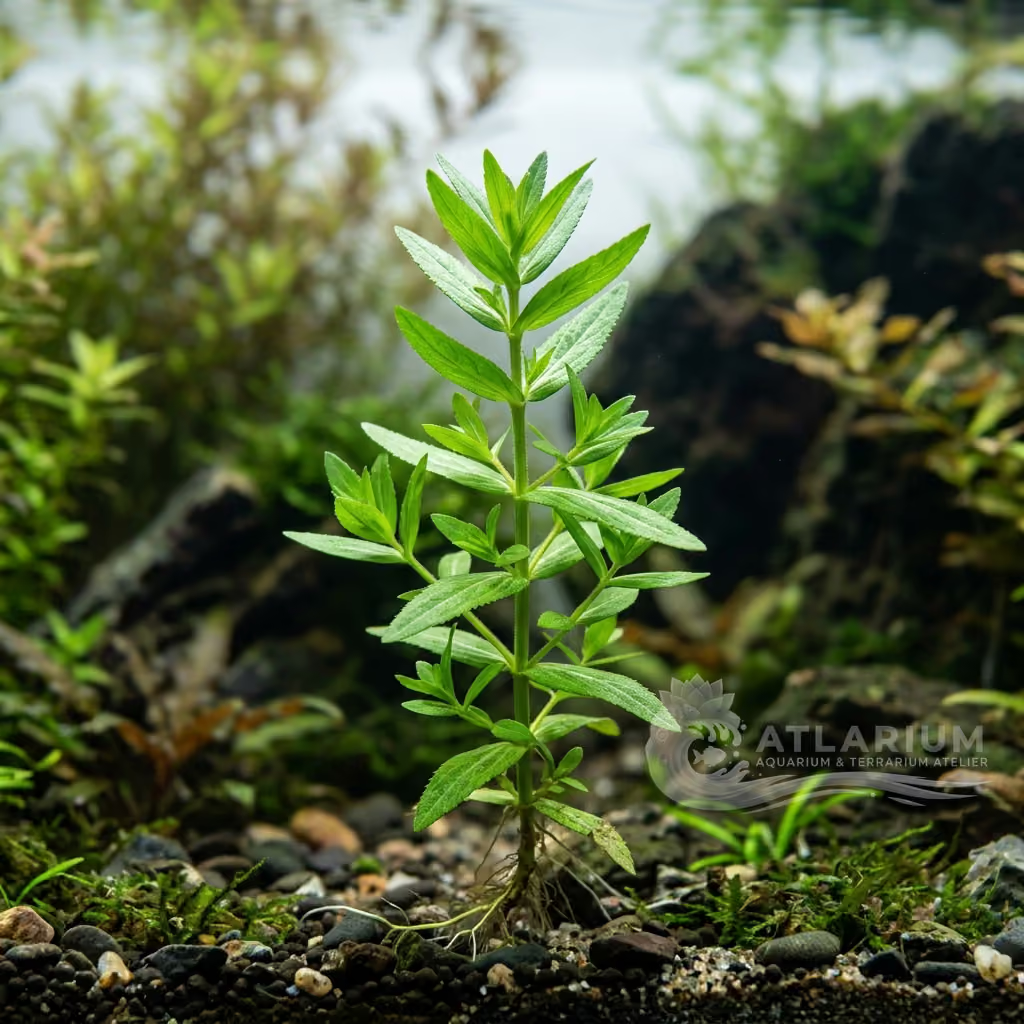
Color & Texture: The peculiar feature is the red-brown or purplish stem, combined with bright light green leaves. The leaf texture is smooth and slightly glossy, creating a strong decorative impact in the aquascape.

Care, breeding and tankmates
Lighting & CO2: Requires intense lighting to maintain the red stem coloration and prevent the elongation of internodes. CO2 is necessary to sustain its fast growth.
Nutrition & Substrate: Being a fast-growing plant, it consumes many nutrients. It requires regular liquid fertilization in the
Water Chemistry: Tolerates a wide temperature range (6-33 °C) but prefers warm water (22-28 °C). The ideal pH is acidic or neutral (5.0-7.5) with low hardness (KH 0-10).
Space Management & Placement: Should be placed in the midground or background. Being fast-growing, it needs space to expand without choking neighboring plants.
Pruning: Pruning must be constant. It is recommended to cut the top part and replant it, discarding the old base if it becomes too bare.
Risks & Diseases: Iron deficiency manifests quickly through the loss of the red stem color and yellowing of the leaves. It is also prone to rotting if lighting is insufficient.

Geographic origin and distribution
This particular variant comes from the marshes and tropical waterways of South America. It grows in calm or slow-moving waters, very rich in organic nutrients and well lit, often forming dense floating or semi-submerged barriers near the banks.
Origin
Amazon, Orinoco, and GuianasExtra-Amazon South America

Plant profile
- Placement
- Midground
- This dramatic species functions best as a dominant midground or background focal point in large, spacious aquariums. Its rapid upward growth and large palmate leaves mean it requires substantial vertical and horizontal space to spread without shading its neighbors. Placing it in an open area ensures it receives maximum light and flow. It is completely unsuitable for small or nano aquariums.
- Botanical form
- Stem
- This variant shares the highly distinctive, alternately arranged, palm-frond-like leaves of the standard species. However, it is distinguished by a thick, fleshy stem that turns a beautiful reddish to purplish hue under strong light. The contrast between the bright green lanceolate leaves and the deep red stem makes it visually captivating. Emergent growth features round, leathery leaves and blue flowers.
- Growth
- Fast
- When provided with intense lighting, CO2 injection, and rich fertilization, this plant exhibits a very fast growth rate. It quickly stretches towards the water surface, demanding regular and attentive maintenance. Its high metabolic rate means it acts as an excellent nutrient sink, helping to balance heavy biolodes. If left unmanaged, it will breach the surface rapidly.
- Substrate
- High
- Similar to the standard form, this red-stemmed variant of Eichhornia azurea requires a highly fertile substrate to maintain its striking coloration and robust growth. A deep layer of nutrient-rich aqua soil is ideal to support its substantial root network. It anchors firmly into the substrate, drawing essential macronutrients that fuel its rapid development. Providing a substrate depth of 5-7 centimeters ensures stability for its thick, vibrant stems.
- Column fertilization
- Recommended
- Liquid column fertilization is the most critical feeding pathway for this demanding plant. It absorbs nutrients aggressively directly through its leaves and large stem. Dosing a comprehensive liquid fertilizer daily or multiple times a week is recommended. Extra iron supplements will specifically enhance the desired red stem coloration.
- Root fertilization
- None
- While it is a heavy column feeder, providing a nutrient-rich substrate or root tabs significantly boosts its stability and health. A vigorous root system helps anchor the buoyant, thick stems in the substrate against water movement. Combining both root and column feeding protocols yields the best possible growth and coloration.
- Trimming
- Regular
- Trimming requires care, as cutting the main stem does not typically yield prolific branching. The preferred method is uprooting the stem, discarding the older or shaded lower section, and replanting the vibrant, healthy crown. This keeps the plant looking fresh and maintains its submerged form. Allowing it to reach the surface will ruin its underwater palm-like appearance.
- Propagation
- Cuttings
- Propagation is generally achieved by taking top cuttings and replanting them deeply into the substrate. Occasionally, healthy established stems will produce lateral shoots which can be separated once they reach a reasonable size. Fresh cuttings must be provided with unhindered light to ensure they root and establish quickly. High light is essential for successful propagation.
- Sensitivity
- Moderate
- This red-stemmed variant is incredibly sensitive to shading and low CO2 levels; lower leaves will rapidly melt and blacken under subpar conditions. It reacts poorly to abrupt changes in water chemistry or sudden drops in nutrient availability. The stems can be quite brittle and must be handled gently during maintenance. Herbivorous fish may also nip at the delicate foliage.
- Layout role
- Midground, Background
- In the aquascape, it serves as an extraordinary specimen plant, offering a texture and color contrast rarely seen in aquatic flora. It works wonderfully as a structural pillar in Dutch aquariums or as a dramatic centerpiece in larger setups. Its bold, palm-like appearance combined with a red stem requires careful placement to avoid visually overpowering the rest of the layout.

Related species
Recommendations grouped by close relatives, companion choices, and similar care.